

CNA Training Requirements and Certification Guide
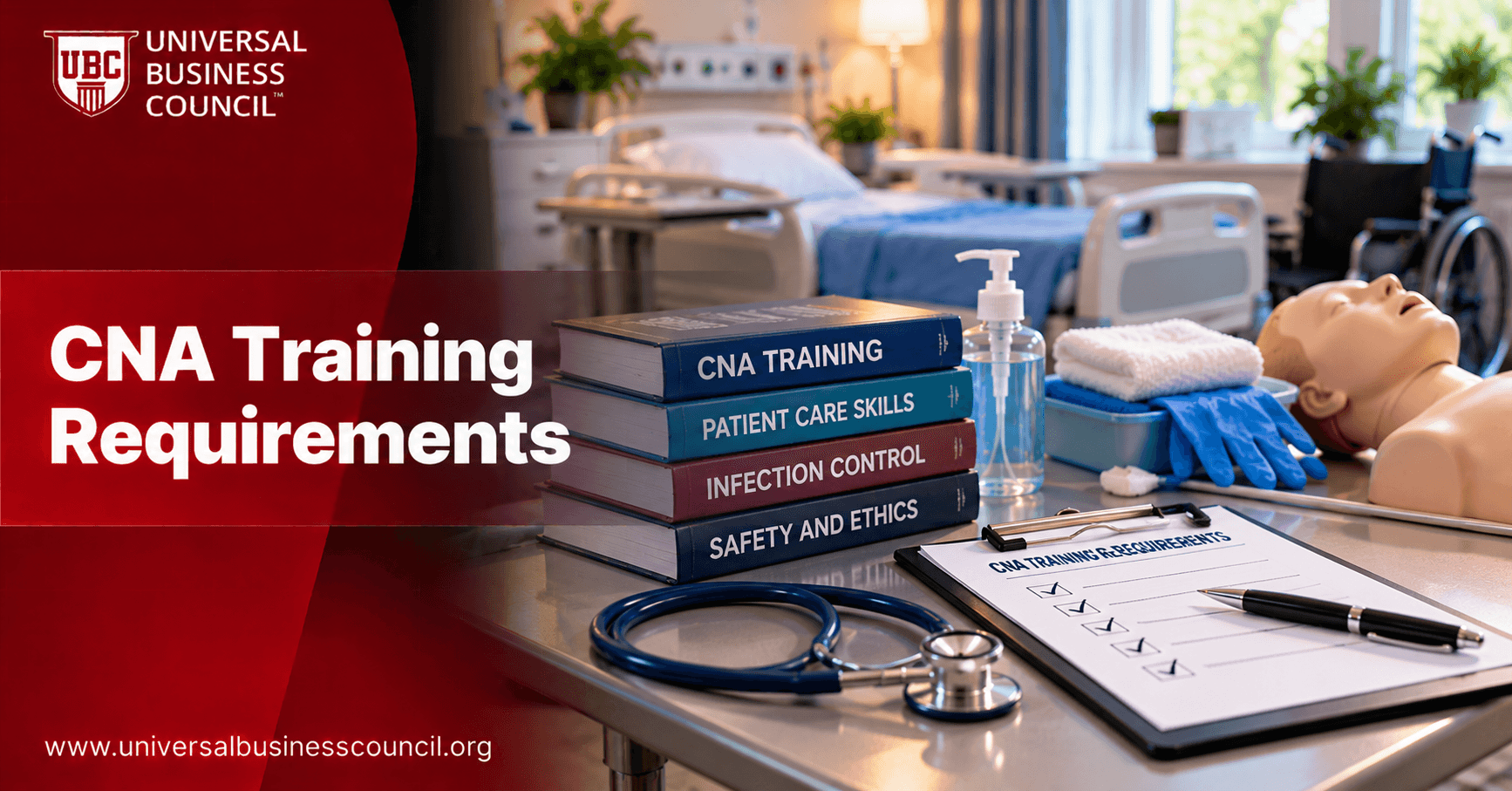
Becoming a CNA follows a fixed sequence: finish an approved training program, pass a competency exam, get listed on the state registry and keep the credential current. Each step has its own paperwork, and the details change from state to state. This guide explains CNA training requirements and CNA certification in plain terms, so a candidate knows what to expect before enrolling. Anyone ready to begin can explore the certified nursing assistant certification route and compare it with local rules.
What is CNA certification?
CNA stands for certified nursing assistant. Certification is the formal confirmation that a person has completed approved training and shown the skills needed to give basic care under the supervision of a licensed nurse. In most places it also means the person is listed on an official registry that employers can check.

The title and the exact process differ by state, and some employers use terms like nurse aide for the same role. Candidates should always confirm requirements with their state health department or nursing board before choosing a program.
CNA training requirements
Training programs are built to teach both knowledge and hands-on skill. Most approved programs combine two parts.
Classroom learning
The classroom portion covers patient rights, infection control, communication, basic anatomy, safety and personal care. Students learn why each task is done a certain way, which is what makes the skills stick on the job.
Clinical practice
Clinical practice takes place in a real care setting, such as a nursing home, with an instructor watching. Students practice bathing, feeding, moving patients and taking vital signs on real people.
Supervision during clinical hours
Students work under close supervision during clinical practice, and they are expected to stay within what they have been taught. This is the first lesson in scope of practice, which governs the whole career.
Eligibility basics
Each state and program sets its own entry rules, but candidates are commonly asked for:
Proof of identity and a minimum age
A required level of schooling or equivalent
A background check
Health screening and immunization records
Because these conditions vary, it is worth checking the list before paying any fee. A program that is not state approved may leave a student unable to sit for the exam.
The competency exam
After training, candidates take a competency exam. It usually has a knowledge part and a skills part, and both must be passed. The knowledge part tests what was learned in class, such as safety and patient rights.
The skills evaluation
In the skills part, candidates perform selected care tasks in front of an evaluator. Handwashing, measuring vital signs and safe patient transfers are typical examples. Evaluators look for correct steps, attention to infection control and respect for privacy, so rushing through a task can cost marks even if the outcome looks fine.
Registry listing and renewal
Passing the exam normally leads to a listing on the state nurse aide registry. The listing shows that a person is certified and in good standing, and employers use it to confirm status. Certification does not last forever. States set renewal cycles, and some ask for proof of recent paid work or continuing education. Missing a renewal can place a person's status on hold until it is fixed, so the dates should go in a calendar.
Background checks and credential verification
Employers in care settings verify who they hire. They check registry status, certification dates and work history, and they run background screening. Providers such as HireValid support that kind of verification. Candidates make the process faster when their details match across every document and when they answer questions honestly.
Documents to keep ready
A tidy file saves time at every stage, from enrollment to hiring to renewal. A candidate should keep copies of:
Government-issued identification
The training completion certificate
Exam results and the registry number
Immunization and health screening records
Renewal dates and any continuing education proof
Digital skills for the modern CNA
Most care settings now record patient information electronically. Nursing assistants who are comfortable with basic software enter data faster and make fewer mistakes. Some build that confidence with tech certifications, which can also support a later move toward health informatics.
What comes after certification
Certification is a starting point. Many CNAs gain experience for a while and then move toward nursing degrees, specialty units or supervisory roles. Healthcare is also adopting artificial intelligence and secure data systems, and deep tech certifications give workers one way to learn how those tools work.
Why accurate program information matters
Training providers compete for students, and the temptation to oversell is real. Clear, accurate descriptions of what a program includes and whether it is state approved protect students and the provider alike. A digital marketing course can help training organizations explain their programs honestly online, which keeps their public claims within legal and ethical limits.
Conclusion
CNA training requirements and certification come down to a clear sequence. Choose a state-approved program, complete the classroom and clinical parts, meet the eligibility conditions, pass both parts of the competency exam, join the state registry and renew on time. Employers verify credentials and run background checks, so records should be accurate and easy to find. Details vary by state, which is why local rules should always be confirmed first. Candidates who treat the CNA certification guide as a checklist, and keep their documents organized, move through the process with fewer surprises and a stronger start to their care career.
Frequently asked questions
These are the questions candidates ask most often before enrolling.
1. What are the basic CNA training requirements?
Completing a state-approved program with classroom learning and supervised clinical practice, then passing a competency exam.
2. Is CNA certification required to work as a nursing assistant?
In most places, yes, though rules vary by state and employer, so local requirements should be checked.
3. How long does CNA training take?
The length depends on the state and the program, but it is short compared with a nursing degree.
4. Can CNA training be done online?
Some programs offer part of the coursework online, but clinical practice is hands-on and takes place in person.
5. Who can enroll in a CNA program?
Entry rules vary, but programs commonly ask for identification, a minimum age, a schooling requirement and a background check.
6. What happens during clinical training?
Students practice care tasks in a real setting under the direct supervision of an instructor.
7. What is on the CNA competency exam?
It usually has a knowledge part and a skills part, covering topics like safety, patient rights and hands-on care tasks.
8. What if a candidate fails the exam?
Retake rules vary by state, so candidates should check how many attempts are allowed and any waiting period.
9. What is the state nurse aide registry?
It is an official list of certified nursing assistants that employers use to confirm status.
10. Do CNAs need a background check?
Many programs and employers require one, and requirements vary by state.
11. Can CNA certification transfer between states?
Many states have a process for it, but the steps differ, so the new state's rules should be confirmed first.
12. How often does CNA certification need renewal?
Renewal cycles are set by each state and may include proof of recent work or continuing education.
13. What happens if certification lapses?
The person may not be allowed to work as a CNA until the lapse is fixed under state rules.
14. Can an employer pay for CNA training?
Some employers offer training or tuition support, but offers differ, so it is worth asking before applying.
15. What documents should a candidate keep?
Keep identification, the training certificate, exam results, registry number, health records and renewal dates.
16. How can someone confirm a program is state approved?
Check the state health department or nursing board, which usually lists approved programs.
17. Does certification expire if a CNA stops working?
In some states it can, since renewal may depend on recent work, so the rules should be checked.
18. Can a CNA become a registered nurse?
Yes, by completing nursing school and passing the licensing exam, sometimes through a bridge program.
19. How do employers verify CNA certification?
They check the state registry and often use background and credential screening providers.
20. Where can candidates find the official state rules?
The state health department or board of nursing publishes the current requirements.
Related Articles
View All
Health
Fitness Instructor Certification Requirements
Learn about fitness instructor certification requirements, including the qualifications, training, and credentials needed to pursue a career in fitness instruction. Explore certification options, CPR and first aid training, practical experience, and key factors to consider when choosing a recognized certification program.
Health
First Aid Training Requirements for the Workplace
Explore the first aid training requirements for workplaces and understand why employee training is essential for handling medical emergencies. Learn about key training topics, certification considerations, workplace safety responsibilities, and how proper preparation helps employees respond confidently to emergencies.
Health
Is First Aid and CPR Certification Worth It?
Discover whether first aid and CPR certification is worth the time and investment. Explore the benefits of learning life-saving skills, improving workplace safety, responding confidently to emergencies, and building valuable skills that can support personal and professional growth.
Trending Articles
The Role of Blockchain in Ethical AI Development
How blockchain technology is being used to promote transparency and accountability in artificial intelligence systems.
AWS Career Roadmap
A step-by-step guide to building a successful career in Amazon Web Services cloud computing.
Top 5 DeFi Platforms
Explore the leading decentralized finance platforms and what makes each one unique in the evolving DeFi landscape.