

How to Perform CPR: Training and Safety Basics
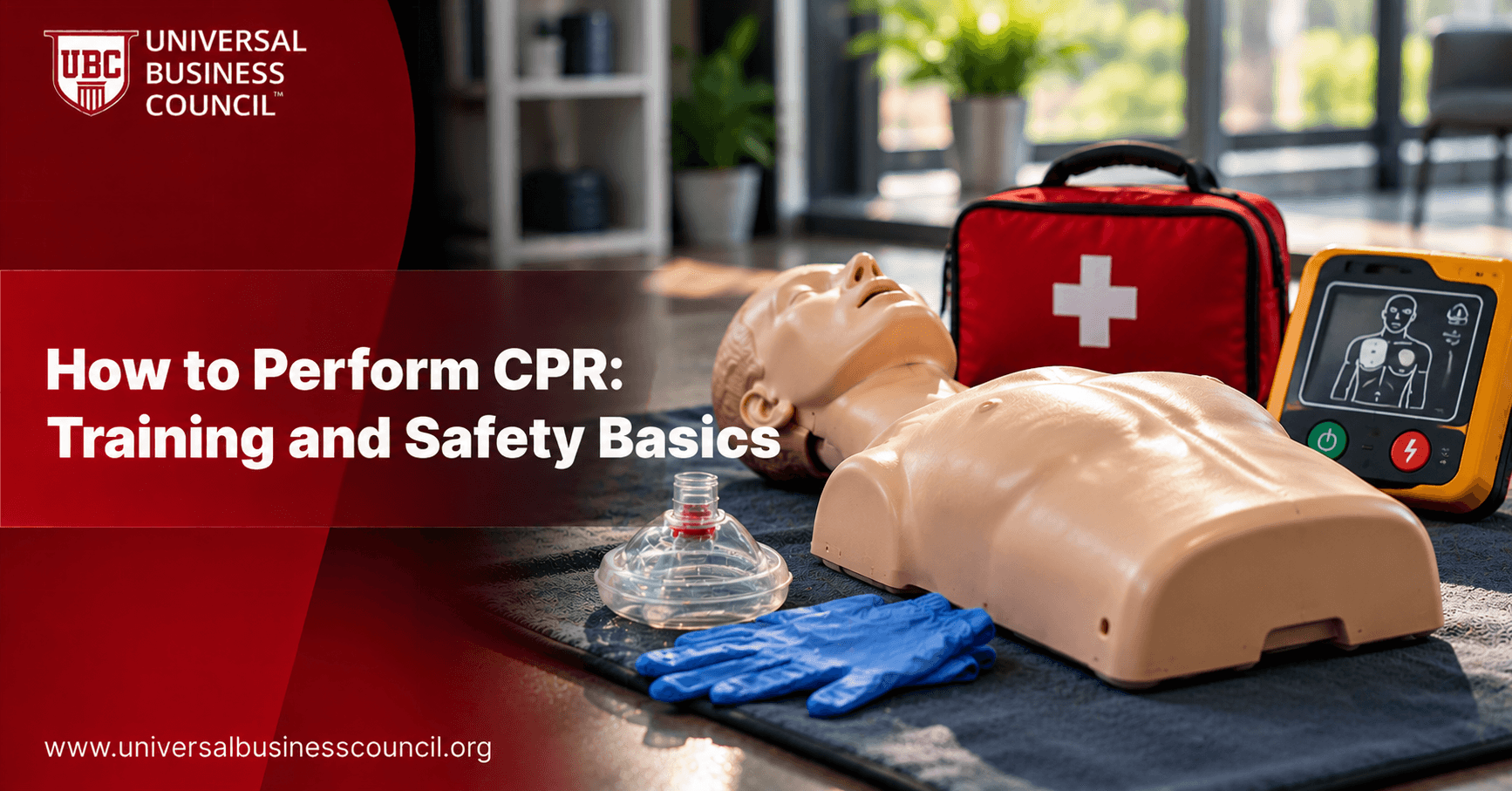
CPR is simple enough to learn in an afternoon and important enough to be worth learning properly. When a person's heart stops, the brain and other organs start losing oxygen within minutes, and chest compressions from a bystander can keep blood moving until professional help or a defibrillator arrives.
This guide explains how to perform CPR, what proper CPR training involves and the safety basics every rescuer should know. If you're considering a healthcare career, where CPR is a standard requirement, take a look at the Certified Nursing Assistant (CNA) certification from Universal Business Council. The sections below cover the steps, the training options and the mistakes to avoid.

What is CPR and why does it matter?
CPR, short for cardiopulmonary resuscitation, is an emergency technique that combines chest compressions with, in some cases, rescue breaths. It is used when someone is unresponsive and not breathing normally, which usually means sudden cardiac arrest. Cardiac arrest is different from a heart attack. A heart attack is a blockage that reduces blood flow to the heart, while cardiac arrest is an electrical problem that makes the heart stop pumping effectively.
Without blood flow, brain damage can begin within minutes. CPR cannot restart the heart on its own, but it buys time. Combined with early use of an automated external defibrillator and fast emergency medical care, it gives a person a far better chance of survival than waiting with no action at all.
How to perform CPR step by step
The details below follow widely taught guidelines from organizations such as the American Heart Association and the American Red Cross. A hands-on class is still the best way to practice them.
CPR for adults
Check that the scene is safe for you and the person.
Tap the person's shoulders and shout to see if they respond.
If there is no response and no normal breathing, or only gasping, call 911 or ask someone else to call. Send another person to find an AED.
Place the heel of one hand on the center of the chest, on the lower half of the breastbone, and put your other hand on top.
Push hard and fast, at least 2 inches deep, at a rate of 100 to 120 compressions per minute, letting the chest rise fully between pushes.
If you're trained and willing, give two rescue breaths after every 30 compressions. If not, keep doing hands-only compressions.
Use an AED as soon as it arrives, and keep going until emergency responders take over or the person starts to move or breathe normally.
CPR for children and infants
The sequence is similar, but the technique changes with body size:
For children, use one or two hands depending on size and press about one-third of the depth of the chest, roughly 2 inches
For infants, use two fingers in the center of the chest, just below the nipple line, and press about 1.5 inches
Rescue breaths matter more in children and infants because breathing problems are a common cause of cardiac arrest
If you are alone, give about two minutes of CPR before calling 911, unless you can use speakerphone
Hands-only CPR versus CPR with breaths
Hands-only CPR means continuous chest compressions with no breaths. It is recommended for untrained bystanders who see an adult suddenly collapse, because it is easier to remember and removes the hesitation some people feel about mouth-to-mouth contact. CPR with breaths, usually 30 compressions to two breaths, is taught in certified courses and is preferred for children, infants and cases where breathing problems caused the emergency.
CPR training and certification
Reading about CPR helps, but muscle memory comes from practice. Most certified courses run a few hours and combine instruction with skills practice on manikins. Many providers offer blended formats, where you complete the lessons online and then demonstrate your skills in person.
Common course types include:
Community courses for adults, children and infants, aimed at parents, teachers, coaches and the general public
Workplace courses that combine CPR, AED use and basic first aid
Healthcare provider courses, often called Basic Life Support, for nurses, nursing assistants and other clinical staff
Certifications usually last two years, so renewal reminders matter. Employers in healthcare, education, childcare and fitness often need proof of current certification, and services like HireValid help verify credentials and training records before a person starts work. Keep your card or digital certificate easy to find.
Safety basics for rescuers
Helping someone should never put you in danger. A few habits protect both you and the person you're helping:
Check for hazards such as traffic, fire, live wires or unstable surfaces before approaching
Use a barrier device or face shield for rescue breaths, and gloves if blood is present
Expect to hear or feel ribs crack during compressions, which is common and does not mean you should stop
Switch with another rescuer about every two minutes, since fatigue reduces the quality of compressions
Follow dispatcher instructions, which are designed to guide untrained callers
Good Samaritan laws in many places protect people who give reasonable help in an emergency, but the details vary by location. It's also normal to feel shaken afterward. Talking with someone you trust, or with a counselor, can help.
Common CPR mistakes to avoid
Most errors come from hesitation or poor technique, not bad intent. Watch for these:
Pressing too shallow or too slowly, which reduces blood flow
Leaning on the chest between compressions, which stops the heart from refilling
Pausing too long to check for a pulse or to reposition
Delaying the call to 911 or the search for an AED
Stopping early because it feels like nothing is working
Building your skills and keeping them current
Skills fade without practice, so refresh your training before certification expires and rehearse the steps with colleagues or family. Many workplaces now track certifications digitally, and short tech certifications can help safety coordinators and administrators manage training records and reminders more efficiently.
Training providers also need to reach the people who need them. A Digital Marketing Course can help safety trainers and clinics explain their classes clearly online. Looking ahead, wearable sensors, smartphone alerts and AI-assisted emergency dispatch are beginning to improve how cardiac arrests are detected and reported, and Deep Tech Certifications are one way to understand the technology behind those tools.
Conclusion
Knowing how to perform CPR takes a few clear steps: check safety, call 911, push hard and fast in the center of the chest, use an AED when one arrives and keep going until help takes over. Training makes those steps automatic, and certification keeps your skills current. Safety basics, such as barrier devices, scene checks and rotating rescuers, protect you while you help.
You don't need to be a medical professional to make a difference. Enroll in a certified class, practice regularly and talk to your family or coworkers about what to do. The FAQs below answer questions people often ask before they take a course.
Frequently asked questions
What does CPR stand for?
Cardiopulmonary resuscitation, an emergency technique that keeps blood moving when the heart stops.
When should I start CPR?
When a person is unresponsive and not breathing normally, or only gasping.
How fast should chest compressions be?
About 100 to 120 compressions per minute.
How deep should compressions be for an adult?
At least 2 inches, letting the chest rise fully each time.
What is hands-only CPR?
Continuous chest compressions without rescue breaths, recommended for untrained bystanders helping an adult.
Do I need to give rescue breaths?
If you're trained and willing, give two breaths after every 30 compressions. Otherwise, do compressions only.
Should I call 911 first?
Yes, or have someone else call while you begin compressions.
What is the difference between cardiac arrest and a heart attack?
A heart attack is a blockage in blood flow to the heart, while cardiac arrest is when the heart stops pumping effectively.
Can CPR hurt the person?
It can cause rib injuries, but those are far less serious than not helping.
How is CPR different for infants?
Use two fingers, press about 1.5 inches deep and include rescue breaths.
How is CPR different for children?
Use one or two hands and press about one-third of the chest depth.
How long should I continue CPR?
Until emergency responders take over, an AED tells you to stop, or the person responds.
Can I get in legal trouble for doing CPR?
Good Samaritan laws in many places protect reasonable help, though details vary by location.
How long does CPR certification last?
Usually two years, depending on the provider.
Is online-only CPR training valid?
Some employers require an in-person skills session, so check requirements before you enroll.
Who needs CPR certification?
Healthcare workers, teachers, childcare providers, lifeguards and many other roles, and it's useful for anyone.
Should I use an AED during CPR?
Yes. Turn it on as soon as it arrives and follow its voice prompts.
What if I'm afraid of doing it wrong?
Imperfect CPR is better than none, and dispatchers can coach you.
How often should I refresh my skills?
Renew certification on schedule and practice the steps every few months.
Where can I take a CPR class?
Look for courses from recognized providers such as the American Heart Association or the American Red Cross.
Related Articles
View All
Health
Patient Safety Basics for Nursing Assistants
Discover the fundamentals of patient safety for nursing assistants. Explore practical ways to prevent falls, maintain infection control, assist with safe patient transfers, identify potential risks, and protect patient comfort and well-being.
Health
Group Fitness Safety and Injury Prevention
Learn how to promote safety and prevent injuries during group fitness classes. Explore essential safety practices, proper exercise techniques, equipment checks, warm-up and cool-down routines, and ways to modify workouts for different fitness levels to create a safe and supportive exercise environment.
Health
Is First Aid and CPR Certification Worth It?
Discover whether first aid and CPR certification is worth the time and investment. Explore the benefits of learning life-saving skills, improving workplace safety, responding confidently to emergencies, and building valuable skills that can support personal and professional growth.
Trending Articles
The Role of Blockchain in Ethical AI Development
How blockchain technology is being used to promote transparency and accountability in artificial intelligence systems.
AWS Career Roadmap
A step-by-step guide to building a successful career in Amazon Web Services cloud computing.
Top 5 DeFi Platforms
Explore the leading decentralized finance platforms and what makes each one unique in the evolving DeFi landscape.