

Group Fitness Safety and Injury Prevention
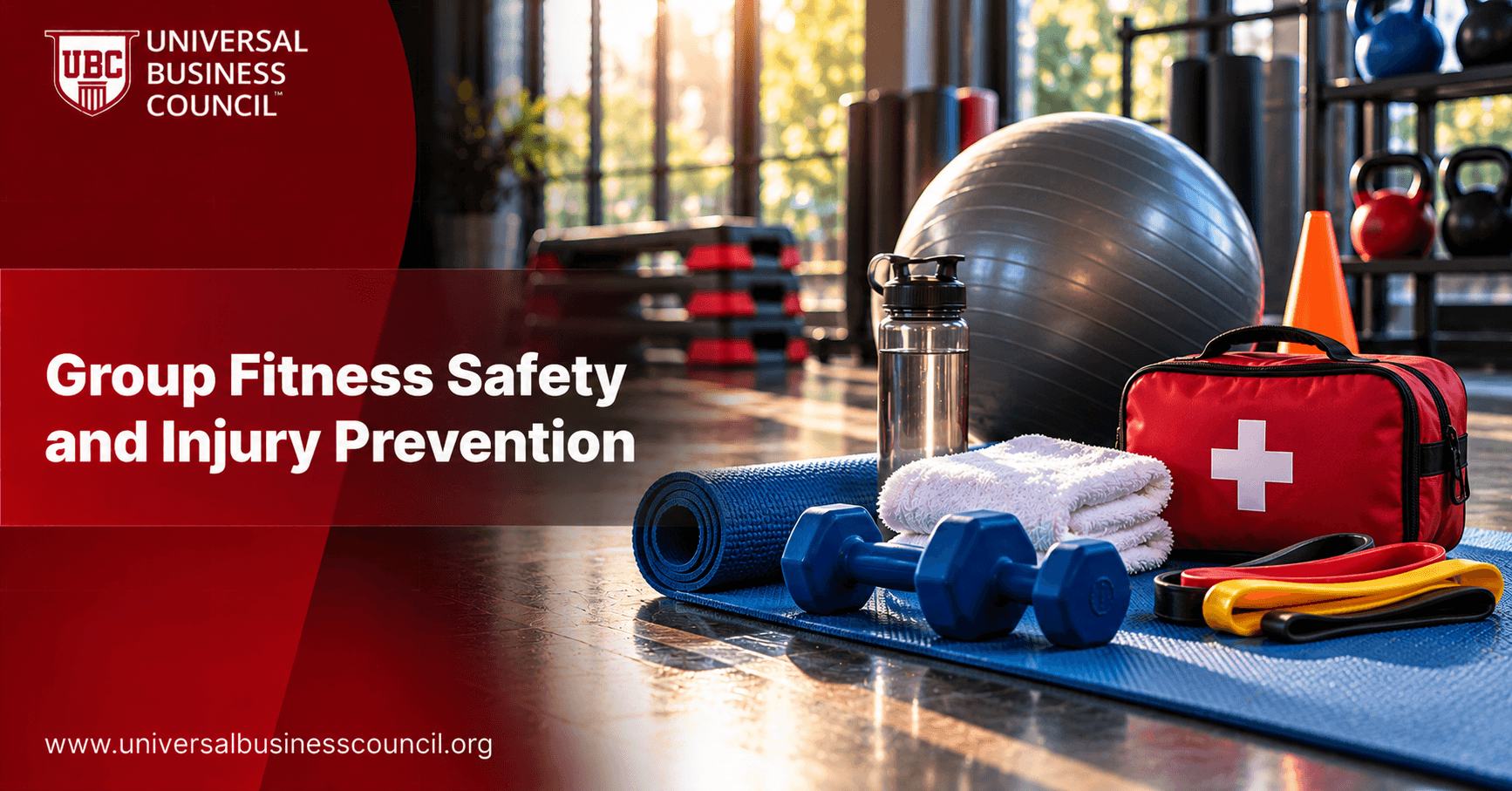
Injury prevention in group fitness works best as a habit built into every part of a class, not an announcement made at the start. Safe classes depend on preparation, clear communication, careful observation and a facility that takes its duty of care seriously. This guide explains group fitness safety and injury prevention for instructors, facilities and participants, covering screening, warm-ups, technique, equipment, the exercise environment, emergencies and the compliance responsibilities behind them. It is general information and not medical advice, and requirements vary by region, facility and class type. For readers interested in leading classes, the certified group fitness professional certification is one recognized way to begin.
What is group fitness safety?
Group fitness safety is the set of practices that reduce the risk of injury or illness during classes and that prepare staff to respond if something goes wrong. It covers how classes are designed, how participants are screened and coached, how equipment and spaces are maintained and how emergencies are handled.

Because instructors lead many people at once, safety depends on systems as much as on individual attention. Good planning and clear policies make it easier to keep everyone safe, even in a full room.
Screening and participant readiness
Safe classes begin before anyone moves. Many facilities use a health screening questionnaire when participants join, to identify people who may need medical advice before exercising. Instructors can reinforce this by inviting participants to mention injuries, conditions or concerns before class, and by reminding the group to listen to their bodies. Instructors do not diagnose or treat, so participants with concerns should be encouraged to speak with a doctor or other qualified health professional.
Warm-up, cool-down and class design
The structure of a class is itself a safety measure.
Warm-up
A good warm-up raises body temperature and prepares joints and muscles for the work ahead. It should include movements related to the main section and increase in intensity gradually.
Cool-down
A cool-down brings the heart rate down gradually and reduces the risk of dizziness after hard effort. Stretching or relaxation can follow, within the participants' comfort.
Progressing intensity sensibly
Avoid sudden jumps in intensity, volume or complexity. Build up over the class and across weeks, and watch for signs of fatigue, since technique often slips when people are tired.
Technique, coaching and modifications
Many injuries come from poor technique, excessive load or moving too quickly. Instructors reduce risk by coaching clearly and watching closely. Helpful practices include:
Demonstrating each exercise correctly before starting
Giving short, specific cues about posture and alignment
Offering easier and harder options for every key movement
Scanning the room constantly and correcting problems early
Encouraging participants to stop or modify if something does not feel right
Avoid pushing people beyond their ability or praising extreme effort in ways that discourage rest. Participants who feel safe to modify are less likely to injure themselves.
Environment and equipment
The space and equipment need regular checks. Floors should be clean, dry and suitable for the activity. The room should be well lit and ventilated, at a comfortable temperature, and large enough to allow space between participants. Equipment should be inspected for damage, stored safely and set up so that it can be used without risk of tripping or collision. Instructors should arrive early to check the room, and any hazard that cannot be fixed immediately should be reported and the area made safe.
Recognizing signs of distress
Instructors should know the warning signs that a participant needs to stop. These include chest pain, severe breathlessness, dizziness, fainting, confusion, unusual pallor, severe pain or swelling after a movement. Any such sign calls for stopping the activity, calling for help where needed and following the facility's emergency procedures. When in doubt, treat the situation as serious. Heat, humidity and dehydration can add risk, so remind participants to drink water and take breaks.
Emergency preparedness
Every instructor should know what to do before anything happens. That includes where the first aid kit and defibrillator are, how to call emergency services, who else is on site and what the facility's emergency plan says. Most employers expect current CPR and first aid certification, and often defibrillator training. After any incident, instructors should record what happened accurately and report it as policy requires, keeping the participant's information private.
Special groups and higher-risk classes
Some participants and formats need extra care. Children, older adults, people who are pregnant, people returning after illness or injury and participants with health conditions may need adjusted exercises, closer supervision or classes designed for them. High-intensity and heavy-load formats carry greater injury risk and need strong coaching and clear modifications. Instructors should only teach these groups and formats if they have the right training and qualifications.
Compliance, insurance and credentials
Safety is also a legal and professional responsibility. Facilities and instructors are generally expected to meet workplace and public safety rules, hold appropriate insurance, keep equipment maintained and document incidents. Employers verify instructor credentials, including certification and CPR and first aid records, and for roles involving children or vulnerable adults, background screening. Services such as HireValid support credential and background verification. Organized, accurate records make audits and investigations far easier.
Technology and records
Facilities increasingly use digital tools for screening forms, attendance, equipment checks and incident reports. These systems help spot patterns and prove compliance, but they hold sensitive information that must be protected. Staff who understand digital tools manage them more safely, and some build those skills through tech certifications. As artificial intelligence and secure data systems reach the fitness industry, deep tech certifications offer one way to understand how such technologies handle personal health data.
Honest communication about safety
Facilities and instructors should describe classes accurately, including level, intensity and any prerequisites, so participants choose suitable sessions. Overstated claims about results or safety can create false expectations and legal risk. A digital marketing course can help facilities communicate clearly online and within legal and ethical limits.
Conclusion
Group fitness safety and injury prevention depend on habits built into every part of a class. Screen participants, structure sessions with a warm-up and cool-down, coach technique clearly and offer modifications. Keep the environment and equipment safe, recognize signs of distress and be ready for emergencies with CPR, first aid and a clear plan. Take extra care with special groups and demanding formats. Facilities and instructors carry compliance duties around insurance, credentials, maintenance and records, and honest communication helps participants choose safely. Safe classes are not an accident. They are the result of planning, training and attention.
Frequently asked questions
These are the questions instructors and participants ask most about safety.
1. What is group fitness safety?
The practices that reduce injury risk during classes and prepare staff to respond to emergencies.
2. Why is a warm-up important?
It prepares the body for exercise and lowers the risk of injury.
3. Why do I need a cool-down?
It brings the heart rate down gradually and reduces dizziness after hard effort.
4. What is health screening?
A questionnaire that helps identify participants who may need medical advice before exercising.
5. Can instructors give medical advice?
No. They should refer participants to qualified health professionals.
6. How do instructors prevent injuries?
By coaching technique, offering modifications, watching the room and building intensity sensibly.
7. What are warning signs a participant should stop?
Chest pain, severe breathlessness, dizziness, fainting, confusion, severe pain or swelling.
8. What should I do if someone faints?
Stop the activity, call for help, follow facility procedures and give first aid within your training.
9. How do I keep the room safe?
Check the floor, space, lighting, ventilation and equipment before every class.
10. How often should equipment be checked?
Before each class and through regular maintenance as set by facility policy.
11. What about heat and hydration?
Remind participants to drink water and take breaks, and watch for signs of overheating.
12. Are high-intensity classes riskier?
They can be, so strong coaching, clear modifications and gradual progression matter.
13. Who needs extra care?
Children, older adults, pregnant participants and people with health conditions or returning from injury.
14. Do instructors need CPR and first aid?
Most employers expect current certification, and often defibrillator training.
15. Where should I know the emergency equipment is?
Know the locations of the first aid kit and defibrillator and how to call emergency services before every class.
16. Should incidents be recorded?
Yes. Accurate, private records support safety and compliance.
17. Do instructors need insurance?
Often, especially independent contractors, so confirm what applies locally.
18. How do employers verify credentials?
They check certificates and records, often with credential screening providers.
19. Can participants make classes safer?
Yes, by sharing concerns, listening to their bodies and choosing classes that suit their level.
20. How should classes be described?
Accurately, stating level and intensity, and without guaranteeing results.
Related Articles
View All
Health
How to Adapt Group Workouts for Different Fitness Levels
Learn how to adapt group workouts for participants with different fitness levels, abilities, and experience. Explore exercise modifications, intensity adjustments, low-impact alternatives, and progression techniques that help instructors create inclusive, effective, and safe fitness classes for everyone.
Health
Types of Group Fitness Classes Explained
Explore the different types of group fitness classes and what each has to offer. Learn about popular options such as yoga, Pilates, cycling, dance fitness, strength training, and HIIT, along with their benefits and intensity levels, to understand which classes best suit different fitness goals and preferences.
Health
How to Plan an Effective Group Fitness Class
Learn how to plan an effective group fitness class that keeps participants engaged, motivated, and safe. Explore how to set class goals, choose suitable exercises, structure warm-ups and cool-downs, manage time, and adapt workouts to different fitness levels.
Trending Articles
The Role of Blockchain in Ethical AI Development
How blockchain technology is being used to promote transparency and accountability in artificial intelligence systems.
AWS Career Roadmap
A step-by-step guide to building a successful career in Amazon Web Services cloud computing.
Top 5 DeFi Platforms
Explore the leading decentralized finance platforms and what makes each one unique in the evolving DeFi landscape.