

Types of Group Fitness Classes Explained
Class names often say more about branding than about what actually happens in the room, so understanding the main categories makes choosing and teaching them far easier. Group fitness has grown into a wide range of formats, from high-energy cardio to quiet mind-body sessions, each with its own purpose, intensity and safety considerations. This guide explains the main types of group fitness classes, who they suit, what instructors need to know and how participants can choose well. It also covers the qualification, safety and compliance points behind them. It is general information, and anyone with a health condition should speak with a doctor before starting a new exercise program. Those who want to build credibility as an instructor may also explore the certified group fitness professional certification.
What are group fitness classes?
Group fitness classes are instructor-led exercise sessions for several participants at once. They combine structure, coaching, music and social energy, and they are offered in gyms, studios, community centers, workplaces, schools and online.

Classes are usually grouped by their main goal, such as improving heart and lung fitness, building strength, increasing flexibility or relaxing the mind and body. Many classes blend more than one goal, and names vary between venues.
Cardio-based classes
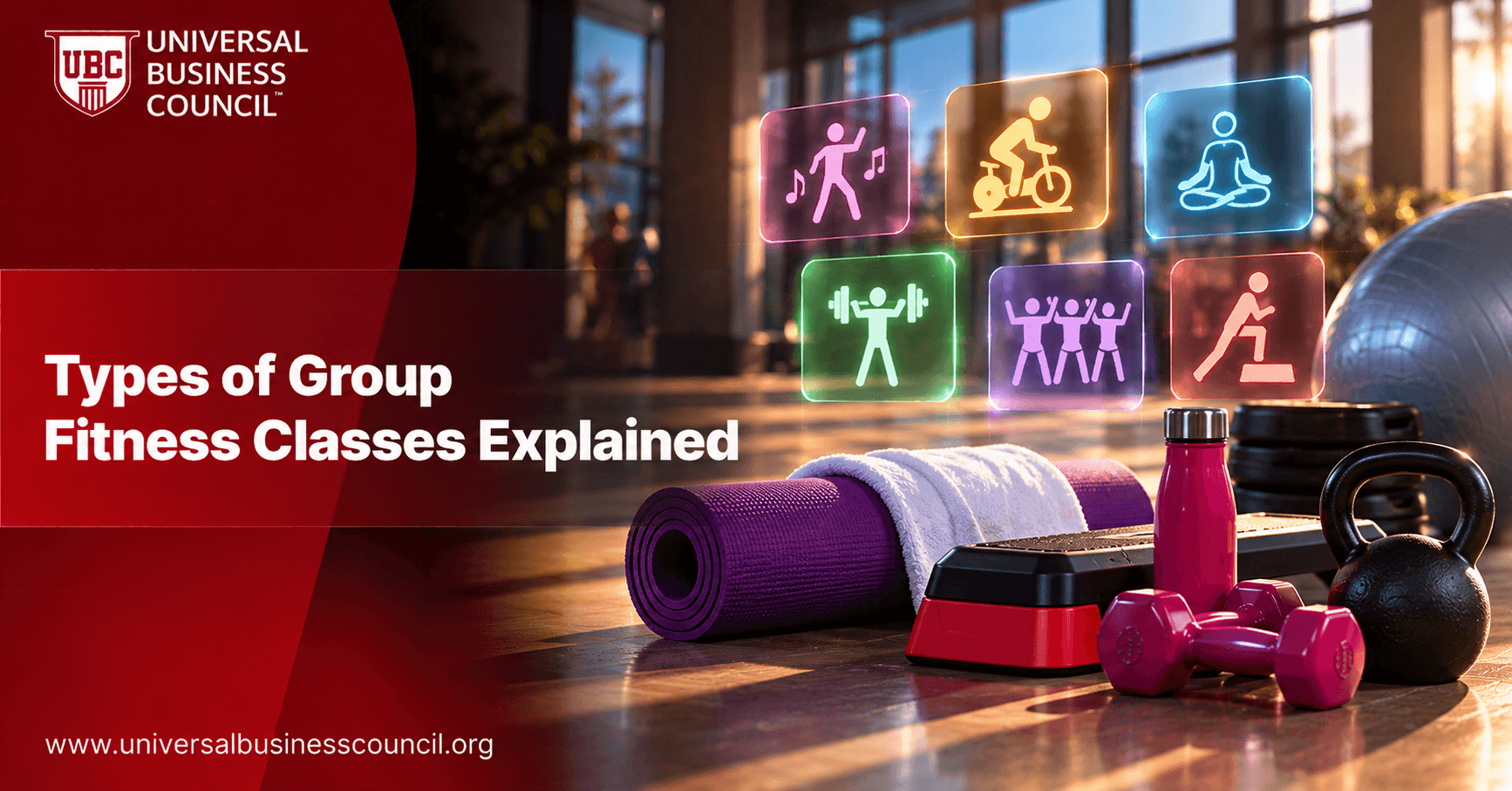
Cardio classes aim to raise the heart rate and build endurance. Typical formats include aerobics-style sessions, step classes, indoor cycling and dance-based workouts. They tend to be energetic, music-driven and easy to follow, with choreography or rhythm guiding the pace. They suit people who enjoy movement to music and want to improve stamina. Participants with joint issues or limited fitness may need lower-impact options, and instructors should demonstrate those clearly.
Strength and conditioning classes
Strength-focused classes build muscle and conditioning, often using bodyweight, light weights, resistance bands or other equipment.
Circuit and interval formats
Circuit classes move participants through stations of different exercises, while interval classes alternate periods of effort and rest. Both can be adapted for different levels by changing work and rest times or choosing easier and harder versions of exercises.
Bootcamp and high-intensity styles
Bootcamp-style and high-intensity classes combine strength and cardio at a demanding pace. They can be very effective, but they carry greater injury risk if technique slips or the pace is too high, so strong coaching and clear modifications are important.
Safety in demanding classes
Newcomers should be encouraged to start at a manageable pace and build up gradually. Instructors should watch technique closely, especially when participants are tired, and should have a plan for those who need to ease off.
Mind-body classes
Mind-body classes focus on control, flexibility, balance and relaxation. Common formats include yoga, Pilates, tai chi and stretching sessions. They are generally lower in intensity, although some can be physically challenging. They suit people who want to improve mobility and posture, manage stress or complement more intense training. Instructors in these formats often hold specific training for the discipline, and participants should choose a level that matches their experience.
Low-impact and older adult classes
Some classes are designed for people who prefer gentle movement or have particular needs. Low-impact cardio, chair-based exercise, balance classes and gentle strength sessions can help older adults and people returning to exercise stay active safely. Instructors working with these groups should hold appropriate qualifications, understand common health considerations and know when to recommend that a participant speak with a healthcare professional.
Aquatic classes
Water-based classes use the resistance and support of water. They are often gentler on joints and can suit people who find land-based exercise uncomfortable, as well as those who simply enjoy the pool. Instructors need training in water-based exercise and must follow pool safety rules, including those for supervision and emergency response.
Specialty and life-stage classes
Some classes serve specific groups. Examples include prenatal and postnatal fitness, children's and teen classes and sessions adapted for people with disabilities or health conditions. These formats require additional qualifications and extra care. Instructors should not teach these groups without the right training, and participants should get advice from a health professional before joining where appropriate.
Combat-inspired, dance and outdoor classes
Many studios offer classes inspired by martial arts and boxing, dance styles from different cultures and outdoor sessions in parks and open spaces. Combat-inspired classes usually focus on fitness movements without contact. Dance classes emphasize rhythm and coordination, and outdoor classes add variety and weather considerations. Each format has its own technical and safety needs, which instructors should be trained for.
Online and hybrid classes
Live-streamed and on-demand classes make group fitness available at home. They offer convenience, but the instructor cannot see everyone closely, so clear instructions, modification options and safety reminders matter even more. Participants should have enough space, appropriate equipment and the ability to stop and rest. Instructors should understand the privacy and consent issues that come with recording and streaming classes.
How to choose the right class
Choosing well starts with honest answers to a few questions. Consider these points:
What is your main goal: fitness, strength, flexibility or relaxation?
What is your current fitness level and experience?
Do you have any injuries or health conditions to discuss with a doctor?
Is the class level clearly described, with options for beginners?
Is the instructor qualified and experienced in this format?
Trying a beginner or trial class is a sensible way to find out whether a format suits you.
Instructor qualifications and verification
Different formats call for different training. Facilities expect recognized certification, current CPR and first aid training and, for specialty classes, additional qualifications. They verify credentials before scheduling instructors, and services such as HireValid support credential and background verification. Participants can ask about an instructor's qualifications, which is a reasonable and responsible question.
Technology and data
Studios use booking systems, apps and wearable devices to manage classes and track participation. These tools collect personal information, so privacy and secure handling matter. Instructors and staff who are comfortable with digital systems manage them more safely, and some build those skills through tech certifications. As artificial intelligence and secure data systems reach the fitness industry, deep tech certifications offer one way to understand how such technologies handle personal health data.
Describing classes accurately
Clear class names, levels and descriptions help people choose well and reduce injuries and disappointment. Claims about results should be realistic, and descriptions should say what the class involves and who it suits. A digital marketing course can help studios and instructors describe their classes honestly online and within legal and ethical limits.
Conclusion
The main types of group fitness classes are cardio-based, strength and conditioning, mind-body, low-impact and older adult, aquatic, specialty and life-stage, combat-inspired, dance and outdoor, and online or hybrid formats. Each has a purpose, an intensity and specific safety considerations. Choosing well depends on goals, fitness level, health advice and the qualifications of the instructor. Facilities expect certified, verified instructors and should describe classes accurately. A trial class is often the best way to find the right fit.
Frequently asked questions
These are the questions people ask most about class types.
1. What are the main types of group fitness classes?
Cardio, strength and conditioning, mind-body, low-impact, aquatic, specialty, combat-inspired, dance, outdoor and online formats.
2. Which class is best for beginners?
A class labeled for beginners or low impact, with clear options, is a good place to start.
3. What are cardio classes?
Classes that raise the heart rate and build endurance, such as aerobics, step, cycling and dance workouts.
4. What is a circuit class?
A class in which participants move through stations of different exercises.
5. What is an interval class?
A class that alternates periods of effort with periods of rest.
6. Are high-intensity classes safe?
They can be with good coaching and modifications, but they carry greater injury risk if technique slips.
7. What are mind-body classes?
Classes focusing on control, flexibility, balance and relaxation, such as yoga and Pilates.
8. Are mind-body classes always gentle?
Not always. Some can be physically challenging, so choose a suitable level.
9. What classes suit older adults?
Low-impact, balance, chair-based and gentle strength classes led by suitably qualified instructors.
10. What are aquatic classes?
Water-based exercise that uses the resistance and support of water, often gentler on joints.
11. Are there classes for pregnant participants?
Yes, prenatal and postnatal classes exist and require instructors with additional training.
12. Do I need to see a doctor before joining?
If you have a health condition or injury, speak with a doctor before starting a new program.
13. What are combat-inspired classes?
Fitness classes based on martial arts or boxing movements, usually without contact.
14. Are online classes as effective?
They can be, but safety instructions and modification options matter even more.
15. How do I choose a class?
Consider your goals, fitness level, health advice, class level and the instructor's qualifications.
16. Should I try a trial class?
Yes. It is a sensible way to find out whether a format suits you.
17. What qualifications do instructors need?
Recognized certification, current CPR and first aid training, and extra training for specialty classes.
18. How do employers verify instructors?
They check certificates and records, often with credential screening providers.
19. Is my data safe when booking classes?
Reputable studios protect personal information, and it is reasonable to ask how it is stored.
20. What should class descriptions include?
The level, intensity, what to expect and who the class suits, without guaranteeing results.
Related Articles
View All
Health
How to Adapt Group Workouts for Different Fitness Levels
Learn how to adapt group workouts for participants with different fitness levels, abilities, and experience. Explore exercise modifications, intensity adjustments, low-impact alternatives, and progression techniques that help instructors create inclusive, effective, and safe fitness classes for everyone.
Health
Group Fitness Safety and Injury Prevention
Learn how to promote safety and prevent injuries during group fitness classes. Explore essential safety practices, proper exercise techniques, equipment checks, warm-up and cool-down routines, and ways to modify workouts for different fitness levels to create a safe and supportive exercise environment.
Health
How to Motivate Participants in Fitness Classes
Learn how to motivate participants in fitness classes and create an engaging, supportive workout environment. Explore effective communication techniques, positive reinforcement, goal setting, music selection, and strategies for encouraging participants of different fitness levels to stay active and committed to their goals.
Trending Articles
The Role of Blockchain in Ethical AI Development
How blockchain technology is being used to promote transparency and accountability in artificial intelligence systems.
AWS Career Roadmap
A step-by-step guide to building a successful career in Amazon Web Services cloud computing.
Top 5 DeFi Platforms
Explore the leading decentralized finance platforms and what makes each one unique in the evolving DeFi landscape.