

Group Fitness Instructor vs Personal Trainer
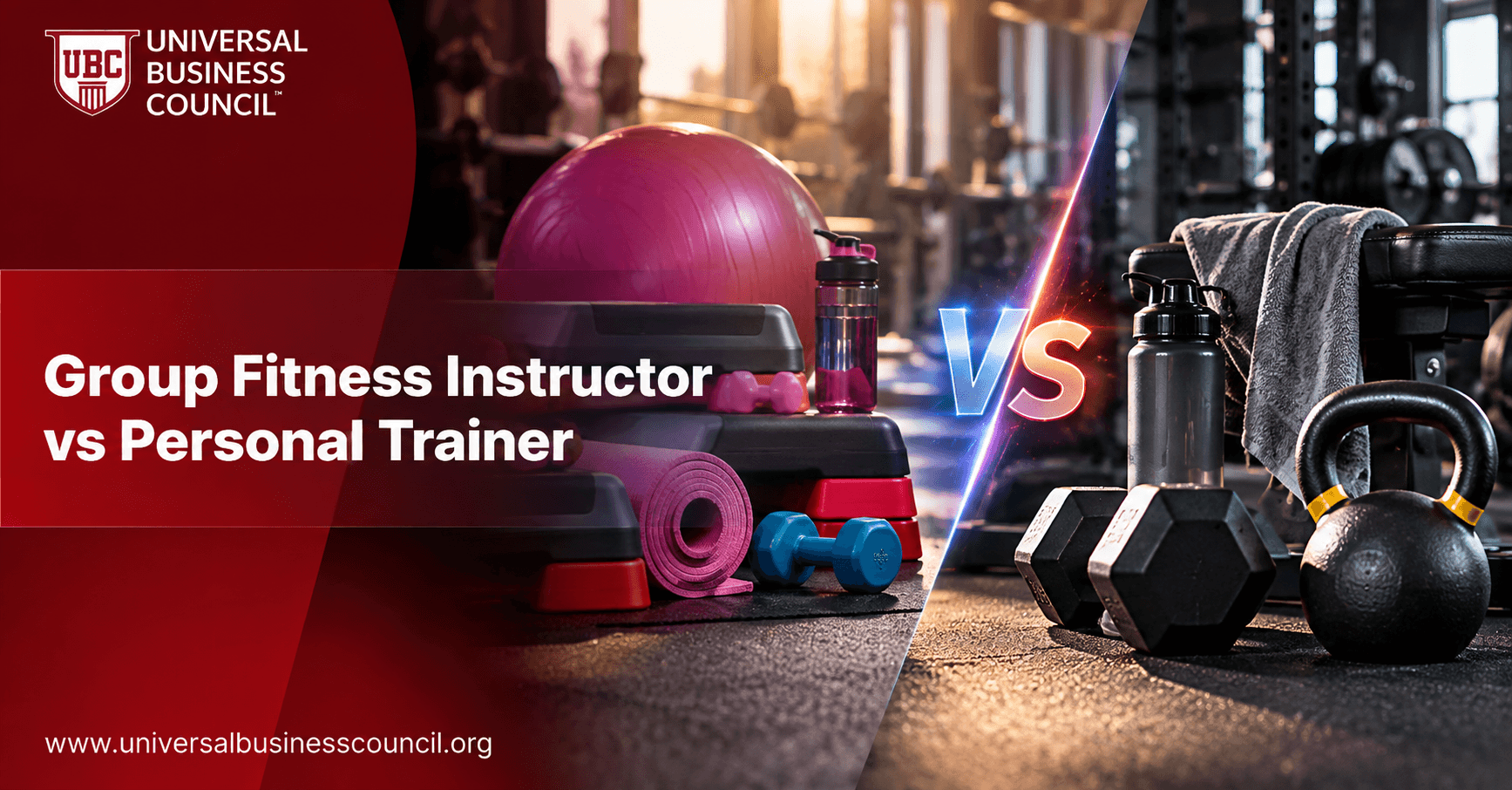
The simplest difference is how many people are looking at you. A group fitness instructor leads many participants through one shared session, while a personal trainer works with one person, or a very small group, on a plan built around that individual. That single difference changes the training, the skills, the way the work is organized and the compliance responsibilities that come with it. This guide compares the two roles side by side, explains where they overlap and helps readers decide which suits them. It is general information, and requirements vary by region and employer. Anyone planning a career in fitness instruction can also look at the certified group fitness professional certification as a practical starting point.
What is the difference between a group fitness instructor and a personal trainer?
A group fitness instructor leads classes for multiple participants at once. The session is planned in advance, the exercises are chosen to suit a range of abilities and the instructor adapts them on the spot with options and cues.

A personal trainer works one-on-one, or with a small group, and builds a program around a specific person's goals, health history, fitness level and preferences. The relationship is closer, the planning is more individual and the trainer tracks progress over time.
Day-to-day work
The daily rhythm of the two roles differs in important ways.
Group fitness instructor
Instructors prepare class plans and music, arrive early to set up, lead the session, watch the whole room and adapt movements for different levels. Their work is often scheduled in blocks around peak class times, and many teach at more than one venue.
Personal trainer
Trainers begin with an assessment of the client's goals and health, design a program, coach each session, track progress and adjust the plan. They also spend time on scheduling, client communication and record keeping.
Where the roles overlap
Both need strong communication, motivation, safe technique coaching and professionalism. Many fitness professionals do both, teaching classes while also training clients individually.
Key differences at a glance
A simple comparison shows how the roles diverge:
Audience: many participants at once versus one person or a small group
Planning: one class plan for a mixed group versus an individual program
Feedback: broad coaching to the room versus detailed, personal correction
Relationship: shared experience versus a close, ongoing working relationship
Business model: often scheduled class slots versus building and managing a client base
Training and certification
Both roles generally require recognized training, but the content differs. Group fitness certifications focus on class structure, cueing, music, modifications and leading groups. Personal training certifications usually go deeper into assessment, program design, nutrition awareness within scope, behavior change and working with individual health needs. Employers in both fields typically expect current CPR and first aid certification, and often defibrillator training. Requirements vary by country and employer, so check what is expected before choosing a course.
Scope of practice
Neither role diagnoses or treats medical conditions. Personal trainers, because they work closely with individuals, are more likely to encounter health histories, injuries and specific concerns, which makes recognizing the limits of their role especially important. They should refer clients to doctors or other qualified professionals for medical issues and should not prescribe diets or treatments beyond their training. Group fitness instructors face the same limit while managing a room of mixed abilities, which makes clear modification options essential.
Business, contracts and insurance
Employment arrangements differ. Many group fitness instructors teach as employees or independent contractors across several venues. Personal trainers are often self-employed or work under a facility arrangement in which they build their own client base. In either case, instructors and trainers should understand their contract, their insurance needs and their tax responsibilities. Liability insurance is commonly required or advisable, and facilities may have their own rules on trainers working with clients on their premises.
Compliance, privacy and credentials
Personal trainers often collect more personal information, such as health history, measurements and goals, so privacy and secure record keeping matter even more. Both roles need to follow facility policy, keep boundaries professional and respect confidentiality. Employers verify credentials before hiring or approving trainers, and services such as HireValid support credential and background verification. Professionals who work with children or vulnerable adults may need additional screening.
Technology and data
Both roles use technology. Instructors use booking systems, music and sometimes online platforms, while trainers use client management tools, program apps and wearable data. Whenever health information is stored, security and consent become important. Some professionals build confidence with digital tools through tech certifications. As artificial intelligence and secure data systems reach the fitness industry, deep tech certifications offer one way to understand how such technologies handle personal health data.
Marketing and building a client base
Marketing matters in both roles but works differently. Instructors tend to promote classes and a teaching style, while trainers promote themselves and their results to attract individual clients. In both cases, descriptions should be accurate and claims realistic, without guaranteeing outcomes or using misleading before and after promises. A digital marketing course can help fitness professionals promote their services while staying within legal and ethical limits.
Which role is right for you?
The better fit depends on temperament and goals. People who enjoy energy, leading a crowd and a structured schedule often prefer group fitness. People who enjoy detailed coaching, long-term relationships and building a personal client base often prefer personal training. Neither choice is permanent, and many professionals start in one and add the other. Shadowing both roles for a while, or trying a few sessions of each, can clear up the decision quickly.
Conclusion
The difference between a group fitness instructor and a personal trainer comes down to audience, planning and relationship. Instructors lead many people through a shared, adaptable session, while trainers design and coach individual programs. Training, scope of practice, business arrangements and privacy responsibilities reflect that difference, and both roles expect current CPR and first aid certification and verified credentials. Many fitness professionals combine the two as their careers develop. Choosing well means being honest about what kind of work energizes you, and confirming local requirements before investing in a course.
Frequently asked questions
These are the questions people ask most when comparing the two roles.
1. What is the main difference between the two roles?
Group instructors lead many participants at once, while personal trainers work one-on-one or with a small group on individual programs.
2. Can one person do both?
Yes. Many fitness professionals teach classes and train individual clients.
3. Which role needs more training?
It depends on the certification and employer, as the content differs more than the length.
4. Do both need CPR and first aid?
Most employers expect current CPR and first aid certification for both.
5. Who designs individual programs?
Personal trainers build programs around a client's goals, health and fitness level.
6. Who plans group classes?
Group fitness instructors, who design sessions with options for different abilities.
7. Which role involves more health information?
Personal trainers usually collect more individual information, so privacy matters even more.
8. Can either role give medical advice?
No. Both should refer people to qualified health professionals.
9. Are they employees or self-employed?
Both arrangements exist, and trainers are often self-employed or under facility agreements.
10. Do they need insurance?
Liability insurance is commonly required or advisable, so confirm what applies locally.
11. How do employers verify credentials?
They check certificates and records, often with credential screening providers.
12. Which role is better for beginners?
Either can work. Many start with group classes to build confidence, while others begin with training.
13. Is marketing different in each role?
Yes. Instructors promote classes, while trainers promote themselves to attract clients.
14. Can I move from one role to the other?
Yes, usually with additional training and meeting employer requirements.
15. Which role suits an energetic personality?
Group fitness often suits people who enjoy leading and energizing a crowd.
16. Which role suits detail-focused coaching?
Personal training often suits people who enjoy individual progress and long-term relationships.
17. Do both roles use technology?
Yes, for scheduling, music, client management and tracking, with data privacy in mind.
18. Do they need background checks?
Roles involving children or vulnerable people often require them, depending on local rules.
19. Can both teach online?
Yes, with the same safety and professional standards.
20. How do I decide?
Shadow both roles, think about your preferred way of working and check local requirements.
Related Articles
View All
Health
How to Become a Group Fitness Instructor
Learn how to become a group fitness instructor, from developing your fitness knowledge to earning relevant certifications and gaining practical experience. Explore the essential skills, qualifications, training options, and career steps needed to lead group exercise classes and help participants achieve their fitness goals.
Health
What Is a Group Fitness Instructor?
Learn what a group fitness instructor does, including their key responsibilities, skills, and role in leading group exercise classes. Explore the types of fitness programs they teach, the qualifications needed, and how they help participants stay motivated, active, and committed to their fitness goals.
Health
Fitness Instructor Certification Requirements
Learn about fitness instructor certification requirements, including the qualifications, training, and credentials needed to pursue a career in fitness instruction. Explore certification options, CPR and first aid training, practical experience, and key factors to consider when choosing a recognized certification program.
Trending Articles
The Role of Blockchain in Ethical AI Development
How blockchain technology is being used to promote transparency and accountability in artificial intelligence systems.
AWS Career Roadmap
A step-by-step guide to building a successful career in Amazon Web Services cloud computing.
Top 5 DeFi Platforms
Explore the leading decentralized finance platforms and what makes each one unique in the evolving DeFi landscape.