

How to Plan an Effective Group Fitness Class
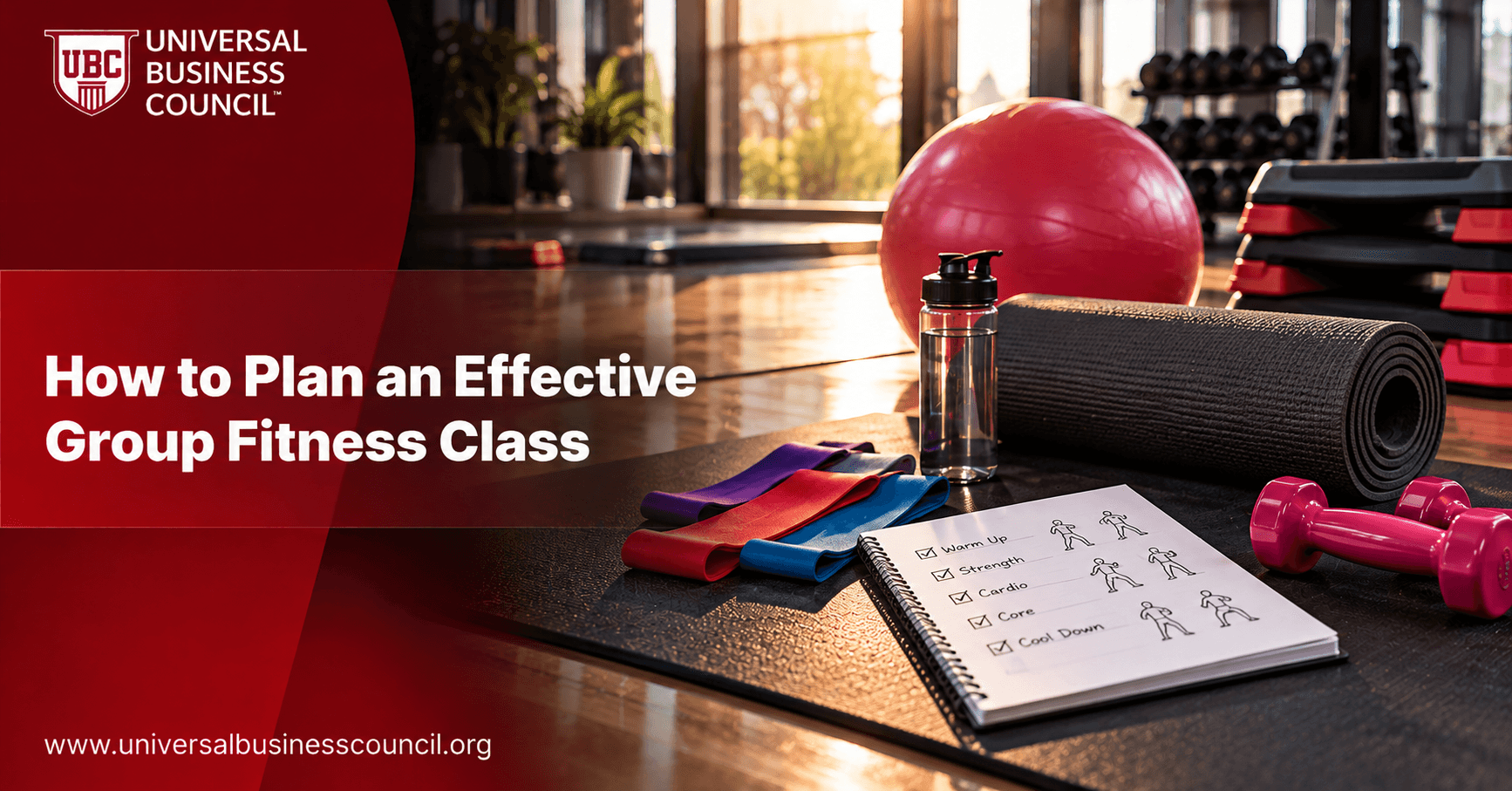
Planning is the part of teaching that participants never see and always feel. A well-planned class flows smoothly, keeps people safe, suits a mix of abilities and leaves participants wanting to return. A poorly planned one drifts, overworks some people and loses others. This guide explains how to plan an effective group fitness class, from setting a purpose and structuring the session to choosing exercises, preparing the space and reviewing afterward. It also covers the safety and compliance points that sit behind good planning. It is general information, and requirements vary by region and employer. For readers interested in leading classes, the certified group fitness professional certification is one recognized way to begin.
What is an effective group fitness class?
An effective group fitness class achieves its purpose safely for the people in the room. It has a clear aim, a logical structure, exercises that suit the group's abilities, instructions that are easy to follow and an atmosphere that makes participants feel welcome.

Effectiveness is not the same as intensity. A gentle class that suits its group, keeps everyone moving safely and leaves them feeling good can be far more effective than a hard class that overwhelms half the room.
Step 1: Know your purpose and audience
Every plan starts with two questions: what is this class for, and who is it for? The purpose might be building strength, improving cardio fitness, increasing flexibility or simply enjoying movement with others. The audience might be beginners, regulars, older adults, busy workers or a mix. Knowing both shapes everything that follows, from exercise choice to pace and language. Check the class description so that the plan matches what participants were promised.
Step 2: Build a clear structure
A reliable structure keeps classes safe and balanced.
Warm-up
The warm-up raises body temperature and prepares joints and muscles for the main work. It should include movements related to what is coming and increase gradually in intensity. Rushing or skipping it raises the risk of injury.
Main section
The main section delivers the purpose of the class. Sequence exercises thoughtfully so that muscle groups are not overworked, transitions are smooth and intensity builds and varies in a planned way.
Cool-down
A cool-down brings heart rate and breathing down gradually and often includes stretching or relaxation. It also gives a moment to reflect and to thank participants, which leaves them with a positive final impression.
Step 3: Choose and sequence exercises
Selection matters as much as intensity. Good choices share a few qualities:
They match the class aim and the group's likely abilities
They can be explained and demonstrated simply
They have easier and harder versions ready
They fit the space and the equipment available
They flow into one another without confusing transitions
Avoid exercises that you cannot coach safely or that put unnecessary stress on joints. When in doubt, choose simpler movements performed well over complicated ones performed badly.
Step 4: Plan progressions and regressions
A group will always include different levels, so every key exercise needs at least two or three options. A regression makes a movement easier or lower impact, and a progression makes it harder. Plan them in advance and present them as normal choices, not as labels for stronger and weaker participants. This keeps everyone working at a suitable level and helps beginners feel included.
Step 5: Plan music, timing and cues
Music sets the energy and helps with timing, but it should support the session and not drown out your voice. Choose tracks that suit each section of the class, with a calmer tempo for the warm-up and cool-down. Plan your cues in advance for each exercise, including how you will demonstrate, what you will say about technique and when you will give the next instruction. Check that your music use is covered by the appropriate licensing, since rules differ by place.
Step 6: Prepare the space and equipment
Arrive early to check the room. Look at the floor, lighting, ventilation and temperature, and make sure there is enough space between participants. Inspect equipment for damage and set it up so it can be reached safely. Know where the first aid kit and defibrillator are, and be familiar with the facility's emergency procedures. Small checks before class prevent bigger problems during it.
Step 7: Prepare for the unexpected
Even the best plan meets surprises. Participants may arrive late, equipment may be missing, the room may be crowded or someone may feel unwell. Have a backup plan, such as an alternative exercise or a shorter main section. Brief the group at the start with simple safety reminders, including listening to their bodies, adjusting or stopping if something does not feel right and telling you about concerns. If a medical emergency occurs, follow the facility's procedures and give first aid within your training.
Step 8: Review and improve
Planning continues after the class. Make brief notes on what worked, what confused people and what to change. Ask for feedback from participants and managers, and watch attendance patterns for clues about what people enjoy. Keep notes organized so that good classes can be repeated and adapted. Over time, this habit builds a personal library of reliable plans.
Compliance and credentials behind the plan
Effective classes sit inside a framework of professional requirements. Instructors are generally expected to hold recognized certification, current CPR and first aid training, insurance where required and, for roles with children or vulnerable people, background screening. Facilities verify these credentials before scheduling instructors, and services such as HireValid support credential and background verification. Class records, attendance lists and incident reports should be kept accurately and securely, with participants' personal information treated as confidential.
Using technology to plan
Apps and software can help with class planning, music playlists, timers, attendance tracking and participant communication. Instructors who are comfortable with these tools plan faster and keep better records. Some build confidence through tech certifications. As artificial intelligence and secure data systems reach the fitness industry, deep tech certifications offer one way to understand how such technologies handle personal health data.
Describing your class honestly
A good plan also needs participants. Class names and descriptions should state the level, intensity and what to expect, so people choose classes that suit them. Avoid claims that guarantee results. A digital marketing course can help instructors promote classes clearly and accurately while keeping messages within legal and ethical limits.
Conclusion
Planning an effective group fitness class means knowing the purpose and audience, building a clear structure with a warm-up, main section and cool-down, and choosing exercises that can be coached safely. Plan progressions and regressions for every key movement, prepare music and cues, check the space and equipment and have a backup for the unexpected. Review each class and keep notes so that planning improves over time. Behind it all sit certification, CPR and first aid training, accurate records and honest promotion. Good planning is what makes a class feel effortless to the people in it.
Frequently asked questions
These are the questions instructors ask most about class planning.
1. How do I plan a group fitness class?
Set a purpose, know your audience, structure the session, choose exercises, plan options, prepare the space and review afterward.
2. What should every class include?
A warm-up, a main section and a cool-down.
3. Why is the warm-up important?
It prepares the body for exercise and lowers the risk of injury.
4. How do I choose exercises?
Match them to the class aim and the group's abilities, and make sure you can coach them safely.
5. What are progressions and regressions?
Harder and easier versions of an exercise that let each person work at a suitable level.
6. How do I include beginners?
Offer easier options as normal choices and use welcoming, inclusive language.
7. How important is music?
It sets energy and timing, but it should not drown out your voice.
8. Do I need a music license?
Rules vary by place, so check what applies to your facility and classes.
9. What should I check before class?
The room, floor, space, equipment, and the location of first aid equipment and defibrillators.
10. What if participants arrive late?
Follow facility policy and have a plan to include them safely without disrupting the warm-up.
11. What if equipment is missing?
Keep alternative exercises ready that use bodyweight or available equipment.
12. What safety reminders should I give?
Listen to your body, adjust or stop if something feels wrong and tell the instructor about concerns.
13. What if someone feels unwell?
Stop the activity for that person, follow facility procedures and give first aid within your training.
14. How long should each section be?
It depends on the class type and length, so plan timing to suit your format and group.
15. Should I keep class notes?
Yes. Notes help you repeat what works and improve what does not.
16. How do I get feedback?
Ask participants and managers, and watch attendance for clues.
17. Do I need CPR and first aid certification?
Most employers expect current certification, and sometimes defibrillator training.
18. How do employers verify credentials?
They check certificates and records, often with credential screening providers.
19. How should I describe my class?
Accurately, stating level and intensity, without guaranteeing results.
20. Can technology help with planning?
Yes, for playlists, timers, attendance and communication, with privacy in mind.
Related Articles
View All
Health
How to Adapt Group Workouts for Different Fitness Levels
Learn how to adapt group workouts for participants with different fitness levels, abilities, and experience. Explore exercise modifications, intensity adjustments, low-impact alternatives, and progression techniques that help instructors create inclusive, effective, and safe fitness classes for everyone.
Health
Group Fitness Safety and Injury Prevention
Learn how to promote safety and prevent injuries during group fitness classes. Explore essential safety practices, proper exercise techniques, equipment checks, warm-up and cool-down routines, and ways to modify workouts for different fitness levels to create a safe and supportive exercise environment.
Health
Types of Group Fitness Classes Explained
Explore the different types of group fitness classes and what each has to offer. Learn about popular options such as yoga, Pilates, cycling, dance fitness, strength training, and HIIT, along with their benefits and intensity levels, to understand which classes best suit different fitness goals and preferences.
Trending Articles
The Role of Blockchain in Ethical AI Development
How blockchain technology is being used to promote transparency and accountability in artificial intelligence systems.
AWS Career Roadmap
A step-by-step guide to building a successful career in Amazon Web Services cloud computing.
Top 5 DeFi Platforms
Explore the leading decentralized finance platforms and what makes each one unique in the evolving DeFi landscape.