

Oracle Layoffs and 6 AM Termination Emails: HR and Leadership Lessons
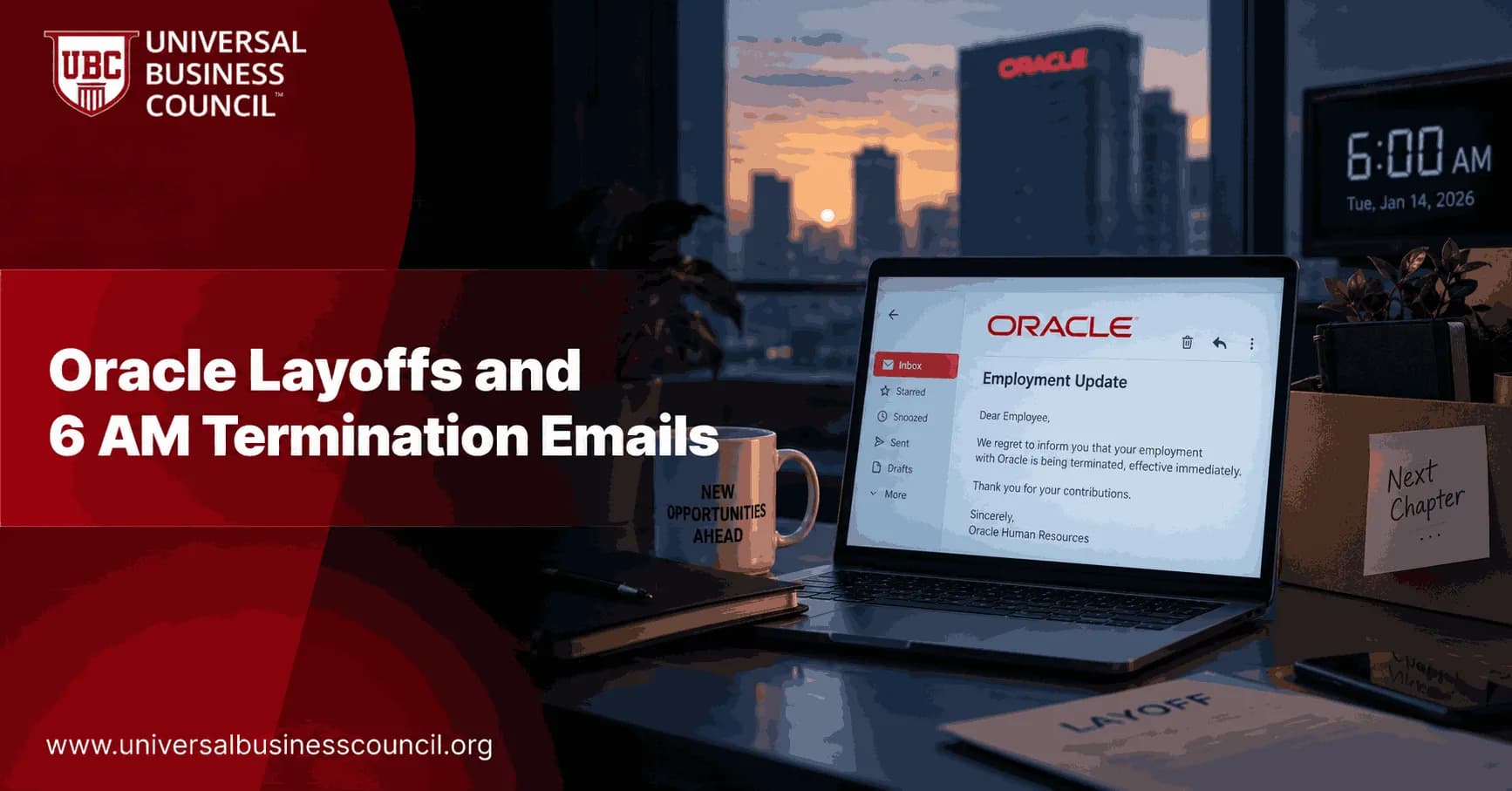
Oracle layoffs tied to AI infrastructure spending have become a sharp case study for business leaders, and not only because of the headcount numbers. The real lessons sit in governance, trust, customer risk, and how people get treated when the company no longer has a role for them.
For professionals examining how major technology shifts affect customer perception, workforce communication, and organizational reputation, a Marketing Certification can provide useful context for understanding the business impact of decisions like these.

Public filings and major business outlets including Reuters, Bloomberg, CNBC, BBC, The Guardian, CIO, Quartz, and Business Insider have reported a large fiscal 2026 restructuring at Oracle. The detail everyone fixed on was blunt: some employees reportedly learned they were out through termination emails sent around 6 a.m. local time. That timing turned an operational decision into a leadership lesson.
What Happened in the Oracle Layoffs
Oracle disclosed a fiscal 2026 restructuring plan with expected costs initially estimated at up to about 2.1 billion dollars, largely for severance and related expenses. Later filings raised the estimate by roughly 700 million dollars, bringing projected restructuring costs to around 2.8 billion dollars.
The workforce impact was material. Reporting based on Oracle disclosures indicated that full-time employee numbers fell from roughly 162,000 to about 141,000 over a year. That is a reduction of about 21,000 roles, close to 13 percent. Some industry estimates suggest the eventual impact across multiple waves could run higher, though those larger figures go beyond what Oracle's own filings confirm.
This was not a small team cleanup. It was a large, staged restructuring linked to AI deployment, cloud priorities, and capital-intensive data center expansion. Reuters, Bloomberg, CNBC, and Quartz have all connected the cuts to Oracle's push to fund AI infrastructure while reducing payroll costs.
Why the 6 AM Termination Email Became the Story
Because AI investment sits behind part of the restructuring context, professionals who need a stronger grounding in how these technologies work may find the Certified Artificial Intelligence (AI) Expert relevant when evaluating the technical and business implications of AI adoption.
Business Insider reported that affected employees received standardized termination emails, some arriving around 6 a.m. local time. The format reportedly included the role elimination notice, severance information, access changes, and instructions for returning company property.
That kind of template can help legal and HR teams keep language consistent. Fine. But consistency is not the same as humanity.
When a person wakes up, checks a phone, and sees their job has ended before they have spoken to a manager, the company has made a choice. It has put control ahead of dignity. Employees remember that. So do candidates, customers, and the people who stay.
Legal Compliance Is Not the Same as Trust
Oracle filed WARN notices for 491 employees in Washington state and Seattle, which shows formal notice obligations were part of the process. The US Worker Adjustment and Retraining Notification Act requires advance notice for certain mass layoffs and plant closings.
HR leaders should be careful here, though. Meeting a legal threshold does not make the process feel fair. In global restructurings, employees work under different notice rules, consultation duties, severance norms, and cultural expectations. A process that is lawful in one country can look careless in another.
The AI Workforce Planning Lesson
The Oracle layoffs matter because they sit at the center of a wider shift. Companies are moving budget from people to AI infrastructure. That can be rational. Data centers, GPUs, cloud platforms, and automation programs all demand huge capital commitments. But leaders should not pretend AI strategy is only a finance question.
You need a workforce plan that answers three questions before cuts begin:
Which tasks are being automated? Be precise. Do not say support is being transformed if you mean tier-one ticket triage is being reduced.
Which roles will change rather than disappear? Many jobs lose 30 percent of their repetitive work but still need judgment, customer context, and escalation skill.
Which new roles will be created? AI operations, data center reliability, model governance, security, and product integration may grow, but rarely at a one-to-one replacement ratio.
This is where executive teams get sloppy. They model payroll savings in a spreadsheet but never price the loss of institutional knowledge. A support engineer who knows why a legacy customer runs a strange database configuration can save a seven-figure renewal during an outage. That value is easy to miss until the person is gone.
An Emerging AI Application: AI Microdrama
One emerging application is AI microdrama, where generative AI helps bring serialized stories, characters, and fictional worlds to life.
Customer Risk Is Workforce Risk
CIO reporting raised a practical concern: cuts to support and engineering can damage product roadmaps, incident response, and enterprise customer experience. That is not theoretical.
In large B2B firms, leadership teams often watch metrics such as:
Priority one and priority two incident backlog
Mean time to acknowledge and mean time to resolve
Customer health scores in Salesforce or Gainsight
Renewal risk by account tier
Net revenue retention and churn
Product release slippage
Here is what people outside operations miss. A layoff can look clean on the org chart and still create a mess in the queue. I have watched teams cut senior support capacity by less than 10 percent, then see escalation aging double within a month, because the people who left were the informal fixers. They never showed up in strategy decks. They showed up at 2 a.m. during customer incidents.
How Leaders Should Handle Layoff Communication
If you are planning a restructuring, do not copy the coldest parts of the Oracle story. Use it as a warning.
1. Use Manager-Led Conversations First Where Possible
A written notice is necessary. It protects accuracy. But it should not be the first human moment. Train managers to deliver the message clearly, briefly, and respectfully. Give them a script, a decision tree, and an HR partner on standby.
Do not let managers improvise severance details. That causes errors. But do require them to own the conversation.
2. Do Not Send Termination Notices Before People Are Awake
Early morning emails may cut coordination risk, but they add shock. If there is no legal or operational reason to send at 6 a.m., do not. Schedule notifications during normal working hours, with a live meeting invite and immediate access to HR support.
For teams trying to understand the technologies driving AI-focused organizational change, Artificial Intelligence Certifications can provide additional learning paths around AI concepts and their growing role in business operations.
3. Separate Access Control From Human Treatment
Security teams often want access pulled fast. They are not wrong. But a locked laptop before a conversation feels punitive, especially for employees with no misconduct issue. Build a sequence: manager conversation, written confirmation, HR support link, then access changes with clear timing.
4. Tell Remaining Employees the Truth
The people who stay are watching closely. Vague language like strategic realignment will not answer their real questions. Say what is changing, which work continues, what support customers will receive, and when teams will get updated operating plans.
If more rounds are likely, do not imply the pain is over. False reassurance has a short shelf life.
Governance: Treat Layoffs as Enterprise Risk
A restructuring with multibillion-dollar costs belongs on the board risk agenda. It is not just an HR program.
Boards and executive committees should require evidence on:
Financial case: severance cost, contractor backfill, productivity loss, and expected cash flow effect
Legal exposure: WARN compliance, local labor consultation, protected class impact analysis, and documentation quality
Customer continuity: named account coverage, incident response staffing, renewal risk, and service level obligations
Talent risk: regrettable attrition among the people who remain, critical skills gaps, and hiring plans for AI or cloud roles
Brand risk: media exposure, employee review platforms, candidate sentiment, and partner confidence
One practical test works well. Ask each executive to name the five operational risks that get worse after the layoff. If the answer is only about cost, the review is not ready.
What HR Teams Can Learn From Oracle's Case
HR should not be the department that cleans up a financial decision. In AI-driven restructuring, HR needs a seat at the table before targets are finalized.
Use this checklist:
Map roles by tasks, not job titles alone
Identify internal mobility paths before termination lists are locked
Run adverse impact analysis early
Prepare country-specific communication plans
Train managers on exact language and emotional control
Create a live FAQ for severance, benefits, references, and equipment
Offer outplacement, counseling, and practical job search support
Track post-layoff service levels and employee engagement for at least two quarters
For candidates studying HR, leadership, or strategic management through Universal Business Council programs, this case is useful because it connects theory to messy reality. Tie it to courses in human resources management, business management, leadership, strategic management, and risk governance. The frameworks matter. Execution matters more.
The Leadership Trade-Off: Speed Versus Dignity
Some leaders defend mass emails because large global layoffs are complex. They are right about the complexity. Time zones, labor laws, market disclosure rules, system access, and manager leaks all pile on pressure.
Speed still has a cost. A company can save a few hours of coordination and lose years of employee trust. That trade-off should be explicit, not accidental.
My view is blunt. Email-only termination is the wrong default for professional workforces. Use email for documentation. Use people for the message.
Next Step for Business Leaders
Before your organization announces an AI restructuring, run a tabletop exercise with HR, legal, finance, IT security, communications, customer success, and line managers. Test the exact employee experience from first notice to system access removal. Then test the customer experience for the next 90 days.
To build the skills behind that process, use this case as a study topic in Universal Business Council learning paths for HR management, leadership, strategic management, and enterprise risk. Start with one question: if your layoff email were published tomorrow morning, would it show discipline and respect, or only control?
Professionals who want to broaden their understanding of the technology environment behind AI, cloud infrastructure, automation, and digital transformation can also consider a Tech Certification as part of their continuing technical education.
FAQs
1. What Happened With the Oracle Layoffs?
Oracle carried out significant workforce reductions in 2026 as the company reorganized while investing heavily in AI infrastructure and data centers. Oracle's workforce had already declined by about 21,000 employees, or 13%, during the fiscal year ending May 31, 2026.
2. Why Did Oracle Employees Receive 6 AM Termination Emails?
Reports indicated that affected employees received termination notifications early in the morning, with some employees losing access to corporate systems around the same period. The approach appears designed to coordinate a large-scale workforce action and protect company systems, but it also generated criticism about the employee experience.
3. What Was the Main Problem With the 6 AM Layoff Emails?
The biggest concern was not simply that the company used email. It was the lack of personal communication, limited explanation, and immediate nature of the termination. HR professionals have argued that leaders should take responsibility for communicating major employment decisions rather than leaving employees with a short automated-feeling message.
4. Should Companies Announce Layoffs by Email?
Email can be necessary for large-scale or security-sensitive workforce reductions, particularly when system access must be restricted. However, companies should provide clear information about the decision, severance, benefits, next steps, support resources, and whom employees can contact for questions.
5. What Should Leaders Learn From the Oracle Layoffs?
One major lesson is that how a difficult decision is communicated matters almost as much as the decision itself. Even when layoffs are strategically necessary, leadership can reduce additional harm through transparency, empathy, preparation, and direct communication.
6. What Role Should HR Play During Mass Layoffs?
HR should coordinate the legal, operational, financial, and employee-support aspects of a workforce reduction. This includes preparing accurate documentation, severance information, benefits guidance, transition support, manager communication, and channels for employee questions.
7. Should CEOs and Senior Leaders Personally Communicate Layoffs?
Senior leaders should take visible responsibility for major workforce decisions. HR can manage the process, but employees and remaining teams should understand the strategic reasons behind the restructuring and hear directly from accountable leadership when appropriate. HR experts cited after the Oracle layoffs emphasized that layoff communication should not simply be delegated to HR.
8. How Can Companies Make Layoff Communication More Human?
Companies can provide advance preparation where legally and operationally possible, use respectful language, explain what happens next, and provide access to severance and support information. Affected employees should not have to search through disconnected systems to understand their benefits or termination arrangements.
9. Why Is Empathy Important During Workforce Reductions?
A layoff affects more than an employee's income. It can affect their career plans, family finances, professional identity, and trust in the organization. Empathetic communication cannot eliminate the impact of job loss, but it can prevent the organization from creating additional unnecessary distress.
10. What Can HR Learn From Oracle's System Lockouts?
Security and employee dignity need to be balanced. Rapidly disabling access can be appropriate when protecting confidential information is necessary, but employees should receive essential separation information through a reliable channel before or alongside the access shutdown whenever possible.
11. How Do Layoffs Affect Remaining Employees?
Layoffs can create uncertainty, lower morale, reduce trust, and increase anxiety among employees who remain. Leadership should therefore communicate the future organizational structure, explain priorities, and clarify how workloads and responsibilities will change.
12. Can Poor Layoff Communication Damage Employer Brand?
Yes. Employees can share their experiences publicly through professional networks and social platforms, meaning the way layoffs are handled can influence how potential employees perceive the company. HR professionals have specifically warned that insensitive layoff communication can damage employer brand and morale among retained employees.
13. What Should Companies Tell Employees Who Keep Their Jobs?
Leaders should explain why the restructuring occurred, what has changed, what remains uncertain, and how the organization will operate going forward. Employees need clarity about priorities, reporting structures, workload expectations, and the company's strategy.
14. Should Performance Ratings Determine Who Gets Laid Off?
Performance is only one possible factor in workforce restructuring. Layoffs can be driven by organizational redesign, elimination of roles, changing business priorities, location, skills requirements, or financial considerations, so a strong performance record does not necessarily guarantee job security.
15. How Can Leaders Maintain Trust After Layoffs?
Leaders should communicate consistently, avoid making promises they cannot guarantee, acknowledge uncertainty, and provide concrete information whenever it becomes available. Trust is rebuilt through repeated evidence that leadership is communicating honestly and treating employees fairly.
16. What Is the Importance of Severance and Transition Support?
Severance provides financial assistance during the transition, while benefits continuation, outplacement services, references, networking assistance, and career resources can provide additional support. HR experts have recommended broader transition assistance as part of responsible layoff practices.
17. What Does Oracle's Restructuring Say About AI and Jobs?
Oracle's restructuring illustrates a broader tension in the technology industry: companies are simultaneously reducing costs in some areas while investing heavily in AI and infrastructure. Oracle reported $28.5 billion in first-quarter fiscal 2027 capital expenditures and maintained a fiscal 2027 capital expenditure forecast of $90 billion to $95 billion.
18. Does a Layoff Mean the Company Is Failing?
Not necessarily. Companies can reduce headcount because of restructuring, changing skill requirements, cost optimization, strategic shifts, acquisitions, automation, or capital reallocation. Layoffs should therefore be evaluated alongside revenue, profitability, investment strategy, business performance, and organizational changes.
19. What Is the Biggest HR Lesson From the Oracle Layoffs?
The central lesson is that operational efficiency should not eliminate human communication. A company can execute a workforce reduction quickly while still providing clear explanations, respectful communication, fair treatment, and meaningful transition support.
20. What Can Business Leaders Do Better During Future Layoffs?
A stronger approach combines strategic clarity, legal compliance, security, empathy, direct leadership communication, and employee support. The goal should not only be to execute the restructuring efficiently but also to protect the dignity of departing employees and maintain trust among those who remain.
Related Articles
View All
Info
AI prompt for kids photoshoot
Artificial intelligence is rapidly transforming creative industries, and photography is one of the biggest sectors benefiting from this evolution. One of the latest digital trends is the growing use of AI prompts for kids pthoshoot. Parents, photographers, digital marketers, fashion brands, and…
Info
Apollo Institute Of Medical Sciences And Research
The Apollo Institute of Medical Sciences and Research (AIMSR) is a premier medical institution committed to providing world-class education and healthcare services. With state-of-the-art infrastructure, experienced faculty, and a student-centric approach, AIMSR stands as a beacon of excellence in…
Info
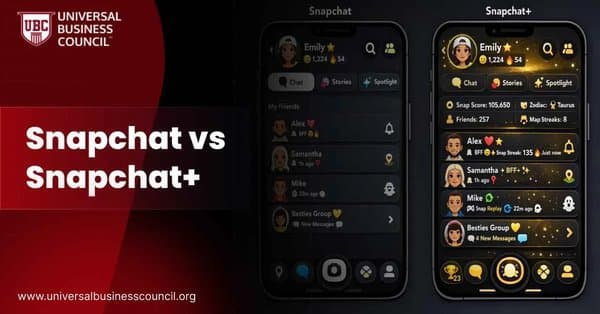
Snapchat vs Snapchat+
Snapchat is the free version of the app that most users know. Snapchat+ is a paid subscription that adds customization, early access to features, and a small set of exclusive tools. There is no difference in basic messaging or story posting. The decision comes down to whether personalization and…
Trending Articles
The Role of Blockchain in Ethical AI Development
How blockchain technology is being used to promote transparency and accountability in artificial intelligence systems.
AWS Career Roadmap
A step-by-step guide to building a successful career in Amazon Web Services cloud computing.
Top 5 DeFi Platforms
Explore the leading decentralized finance platforms and what makes each one unique in the evolving DeFi landscape.