

Reels That Convert: Content Frameworks and Hooks to Drive Leads from Instagram
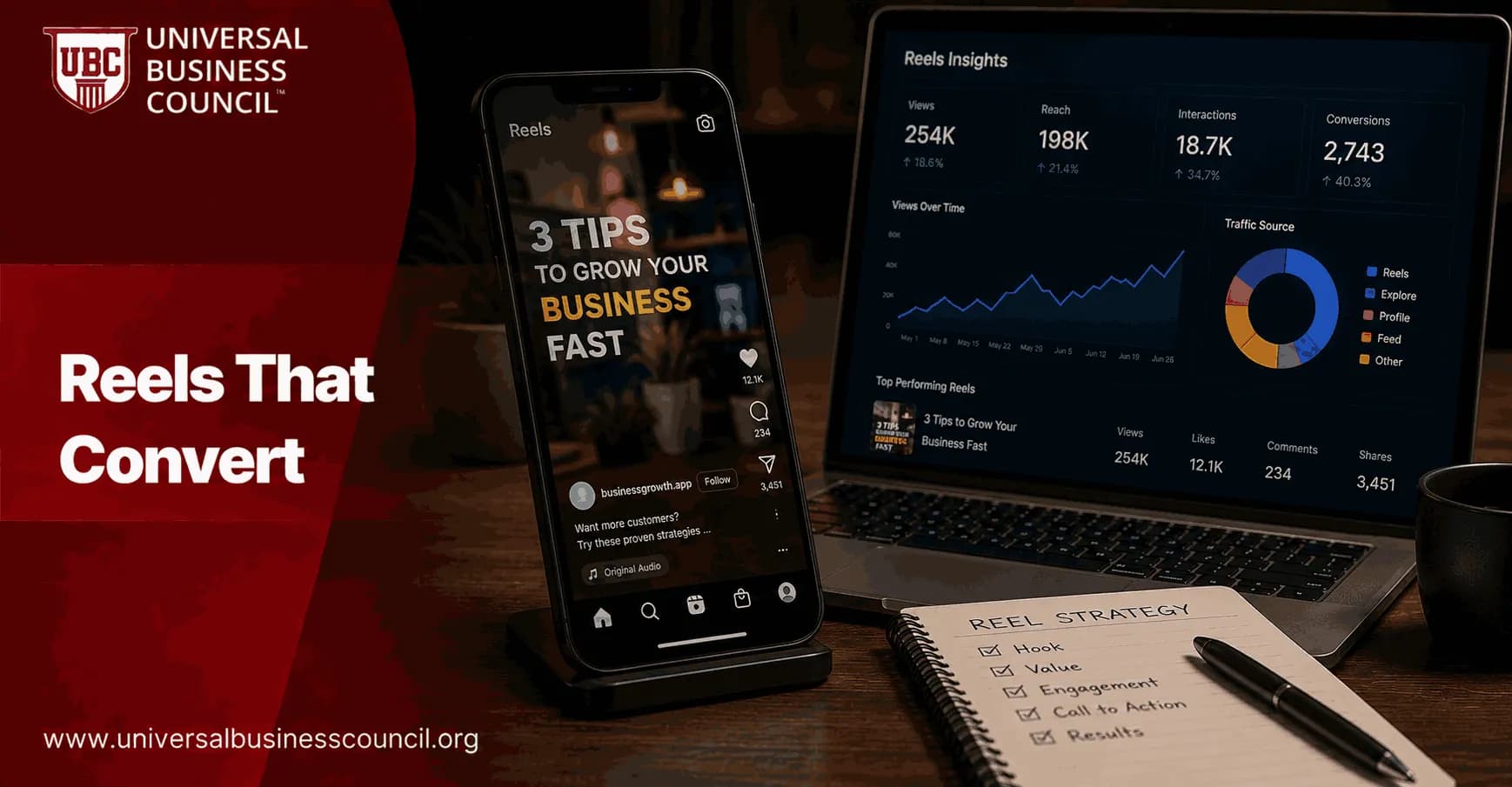
Reels That Convert are not the same as Reels that simply reach people. If your goal is to drive leads from Instagram, a Reel needs to function like a response-generating asset: a strong first-second hook, one clear audience, one clear call to action, and a comment-to-DM path that captures intent immediately.
The shift across current industry practice is clear: lead generation on Instagram increasingly prioritizes conversation over passive views. In practice, that means designing Reels to earn a comment, trigger a DM, and move an interested viewer into a private, trackable next step.

Why Reels That Convert are built for conversations, not vanity metrics
Reels remain one of Instagram's strongest discovery formats. Industry-reported benchmarks frequently cite an average reach rate of around 30.81% for Reels, which helps explain why they often outperform feed-only strategies for top-of-funnel distribution. The more important consideration, however, is what happens after the view.
Many teams now treat Reels as the front door to a conversation funnel:
Comment keyword (signals intent)
Keyword-triggered DM (delivers the asset and starts a dialogue)
Fast response (keeps momentum and reduces drop-off)
Lead capture (email opt-in, booking link, qualification questions)
Widely cited marketing benchmarks suggest Instagram DM open rates can reach around 90% and reply rates around 50% to 60%, compared with typical email marketing open rates of 20% to 35% and click-through rates of 1% to 5%. These figures come primarily from marketing vendors and industry blogs rather than official platform reporting, so treat them as directional indicators. Even so, the practical lesson holds: DMs are a high-attention channel when the outreach is timely and relevant.
As social selling, automation, and platform-driven lead generation continue to evolve, a Tech Certification can help professionals develop practical skills in digital tools, marketing technology, automation workflows, and customer engagement strategies that support measurable business growth.
The lead-gen Reel formula: one audience, one idea, one action
To build Reels That Convert, simplify the goal of each post. High-performing lead-gen Reels typically follow this structure:
Target one audience (be specific enough that the right people self-identify)
Open with one strong hook (clarity plus curiosity in the first second)
Deliver one useful idea (a quick win, framework, or proof point)
Use one CTA (a single next step, not multiple options)
Trigger one DM action (keyword comment that starts the funnel)
Automate and follow up (fast replies and consistent handoff)
This approach also supports a measurable performance standard: success is defined not by views alone, but by comments, DMs, saves, and booked calls.
Content frameworks for Reels That Convert
The following frameworks are field-tested across industries, from coaching and consulting to B2B teams and e-commerce creators.
1) Problem-agitate-solution in 15 to 30 seconds
This conversion structure creates relevance quickly and resolves it with a clear next step.
Hook: Name the pain precisely.
Agitate: Clarify the consequence of staying stuck.
Solution: Offer a practical fix and a keyword CTA.
Example: "If your Reels get views but no leads, this is why. Most people ask for action before showing value. Comment GUIDE and I'll DM the checklist."
2) Teach, then trigger a DM
One of the most effective Instagram lead-gen mechanics: teach a small, valuable insight, then use a keyword comment to move the viewer into DMs.
Teach: one tip, one framework, one script, or one checklist.
Trigger: "Comment PDF and I'll send it."
Deliver: DM the resource and ask one qualification question.
This works because the Reel demonstrates value publicly while the conversion step remains low-friction. For teams that also need email capture, many practitioners report higher opt-in rates through DM-led capture than through traditional web forms, though this reflects industry observation rather than official platform data.
3) Comparison or "vs." framework
Comparison Reels create a natural decision point and hold attention through contrast.
Set the test: "I tried X vs Y for 7 days."
Reveal the difference: one metric that matters to the buyer.
CTA: "Comment WINNER for the breakdown."
This structure is particularly useful for e-commerce, affiliates, and software categories where viewers are actively weighing options.
4) Proof-first testimonial format
Instead of introducing yourself or your brand at the start, open with an outcome. Proof reduces skepticism and improves retention, which means more viewers reach the CTA.
Hook with outcome: "This 2-line script doubled booked calls."
Show proof: screenshot, result statement, or brief case detail.
CTA: "Comment SCRIPT and I'll DM the template."
Keep claims honest, specific, and contextual. If results vary across contexts, say so in the caption.
5) Repurpose a framework carousel into Reel narration
If your carousels already teach well, convert them into short Reel beats. Each step becomes a new on-screen text frame with brief narration.
Step 1: Identify the exact pain point
Step 2: Show a quick win
Step 3: Give the next action
CTA: "Comment FRAMEWORK for the full PDF."
This approach supports a consistent content system and scales easily across multiple audience segments.
6) Hook variation testing
Some teams now use a bulk-production workflow: create multiple versions of the same Reel concept with different hooks, on-screen text, and opening frames. The objective is straightforward - find which first second earns attention and which CTA earns comments.
A practical method:
Write 10 hook variants for one offer or lead magnet.
Use the same body content and B-roll across variants for consistency.
Publish variants over a set period.
Track comments, DMs started, and downstream outcomes such as calls booked and opt-ins.
Hook patterns that drive action (not just views)
Hooks that convert share four traits: they are specific, curiosity-driven, audience-targeted, and action-oriented. Use these patterns as templates, then adapt the details to your niche.
Problem hook: "If your Reels get views but no clients, watch this."
Contrarian hook: "Stop saying 'link in bio' if you want more leads."
Identity hook: "For coaches who need more discovery calls from Instagram."
Curiosity hook: "I found the fastest way to turn Reel views into DMs."
Result hook: "This Reel format brought in 17 qualified leads."
Comparison hook: "I tried two posting styles for 7 days. One won."
Mistake hook: "Most people lose leads in the first 3 seconds of a Reel."
Implementation tip: Make the opening frame visually obvious. Put the outcome or pain point in on-screen text immediately, and keep introductions short.
Designing the comment-to-DM funnel
Reels That Convert depend on strong follow-through. Some industry sources suggest responding within one minute can materially improve conversion compared with waiting 30 or more minutes. Regardless of the exact multiplier, speed consistently matters because intent decays quickly after a viewer finishes watching.
A simple DM flow for lead capture:
DM delivery: "Here's the checklist. Want the version for coaches or for agencies?"
Qualification: Ask one question that segments the lead.
Next step: Share a booking link, free consult prompt, or resource hub.
Capture: Offer email delivery for updates or the full resource kit.
Keep the language conversational and specific. Avoid presenting the lead with multiple links or competing options at once.
Many marketers now use AI-powered tools to assist with content creation, audience analysis, DM automation, lead qualification, and campaign optimization. An AI Certification can help professionals understand how to apply artificial intelligence effectively and responsibly across modern social media and lead-generation workflows.
Recommended content mix and how Reels fit
Some lead-gen playbooks recommend a distribution mix of roughly 60% Reels, 25% carousels, and 15% Stories for consistent growth and conversion. Treat this as a starting point rather than a fixed rule. The best mix depends on your sales cycle, audience maturity, and production capacity.
For teams looking to build formal capability in this area, linking Instagram execution to structured learning - such as a Digital Marketing, Social Media Marketing, or Performance Marketing certification - can improve results. Reel performance improves when practitioners understand positioning, funnel design, and measurement, not just video editing.
Conclusion: build Reels That Convert as repeatable lead assets
Reels That Convert are built with intent: a hook that earns attention, a message that speaks to one audience, a quick payload of value, and a single CTA that triggers a DM. Combine this with automation-assisted follow-up and a fast response habit, and your Reels shift from awareness-only content to a functioning lead capture system.
Start by choosing one framework from this article, write 10 hook variations, and test them over two weeks. Measure comments, DMs started, and downstream outcomes. The winning combination is rarely the most polished Reel. It is usually the clearest one with the most frictionless path to conversation.
FAQs
What are Reels that convert?
Reels that convert are Instagram Reels designed to achieve specific business goals, such as generating leads, increasing sales, driving website traffic, or encouraging audience actions.
Why are Instagram Reels effective for conversions?
Instagram Reels receive strong visibility through recommendations and can quickly capture attention, helping brands reach new audiences and drive engagement.
What makes a Reel convert viewers into customers?
Successful Reels combine engaging content, a clear message, audience relevance, strong storytelling, and a compelling call to action.
How important is the first few seconds of a Reel?
The first three seconds are critical because they determine whether viewers continue watching or scroll away.
What types of Reels generate the highest conversions?
Product demonstrations, tutorials, customer testimonials, before-and-after videos, educational content, and problem-solving Reels often perform well.
How can storytelling improve Reel conversions?
Storytelling creates emotional connections, builds trust, and keeps viewers engaged long enough to understand the value of an offer.
What role does a call to action play in Reels?
A call to action guides viewers toward the next step, such as visiting a website, following an account, downloading a resource, or making a purchase.
How can businesses showcase products effectively in Reels?
Businesses can highlight product benefits, demonstrate real-world use cases, solve customer problems, and feature authentic customer experiences.
Does video quality affect Reel performance?
Yes. Clear visuals, good lighting, clean audio, and professional editing improve viewer retention and credibility.
How can captions improve Reel conversions?
Captions make content accessible, reinforce key messages, and help viewers understand the content even when watching without sound.
What is the ideal Reel length for conversions?
The ideal length depends on the content, but shorter Reels that deliver value quickly often perform better for engagement and conversions.
How important are trending sounds for conversion-focused Reels?
Trending sounds can increase reach, but the content and message must remain aligned with business objectives and audience interests.
Can educational Reels drive conversions?
Yes. Educational Reels build authority, demonstrate expertise, and create trust, making viewers more likely to take action.
How do customer testimonials help increase conversions?
Testimonials provide social proof and help potential customers see real-world results and experiences from existing users.
What role does audience targeting play in Reel success?
Creating content tailored to a specific audience increases relevance, engagement, and the likelihood of conversions.
How can businesses use AI to improve Reel performance?
AI tools can assist with content ideas, script generation, audience analysis, performance tracking, caption creation, and trend identification.
What metrics should be tracked for Reel conversions?
Important metrics include watch time, completion rate, engagement rate, profile visits, link clicks, leads generated, and sales conversions.
What are common mistakes that reduce Reel conversions?
Common mistakes include weak hooks, unclear messaging, poor video quality, lack of a call to action, excessive promotion, and targeting the wrong audience.
How often should businesses post conversion-focused Reels?
Consistency is important. Posting regularly helps build audience trust, improve visibility, and create more opportunities for conversions.
What are the best practices for creating Reels that convert?
Start with a strong hook, focus on solving a problem, deliver value quickly, use engaging visuals, include captions, showcase social proof, maintain brand consistency, and end with a clear call to action.
Related Articles
View All
Content Calendar System for Instagram: Plan 30 Days of Posts, Reels, and Stories
Learn a repeatable content calendar system for Instagram to plan 30 days of posts, Reels, and Stories using pillars, batching, scheduling, and analytics.
How to Make Instagram Reels Go Viral in 2025
If you want your Instagram Reels to go viral in 2025, you need to understand how to grab attention quickly and keep viewers engaged. The key to virality lies in creating content that resonates with your audience, is timely, and leverages the latest trends. In this article, you’ll learn the best…

Best Instagram Content Ideas for Product-Based Businesses
Looking for Instagram content ideas that actually help you sell more products in 2025? This article covers proven formats that drive views, build trust, and boost conversions — even if you’re just starting out. Why Content Strategy Matters for Product-Based Brands You can’t rely on product…
Trending Articles
The Role of Blockchain in Ethical AI Development
How blockchain technology is being used to promote transparency and accountability in artificial intelligence systems.
AWS Career Roadmap
A step-by-step guide to building a successful career in Amazon Web Services cloud computing.
Top 5 DeFi Platforms
Explore the leading decentralized finance platforms and what makes each one unique in the evolving DeFi landscape.