

Instagram SEO Explained: How to Rank in Search, Choose Keywords, and Optimize Captions
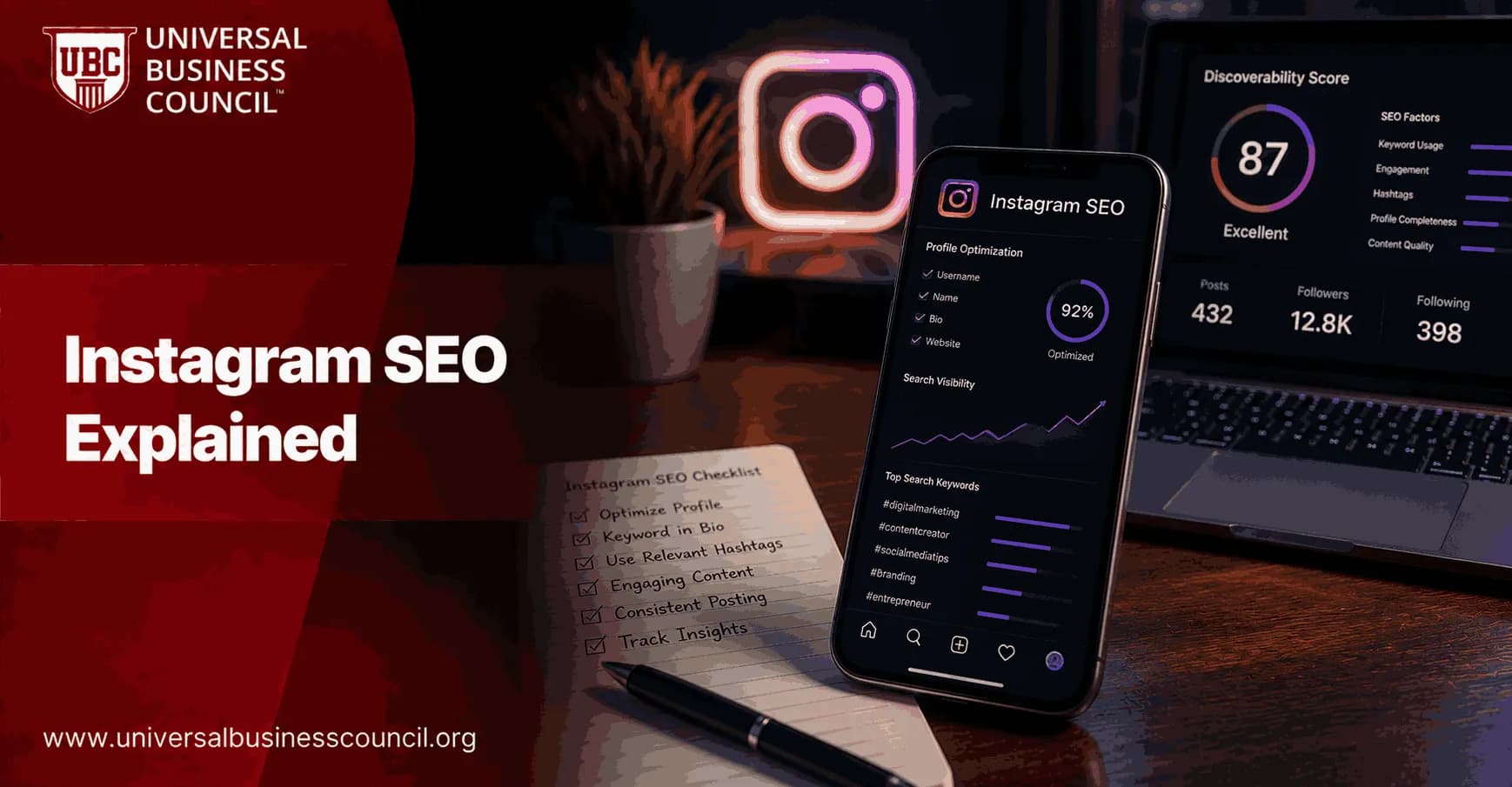
Instagram SEO has shifted from a niche tactic to a practical requirement for discoverability. It now matters across two systems simultaneously: Instagram's internal search and recommendation surfaces, and Google's ability to index public content from professional Instagram accounts. Since July 2025, eligible public photos, videos, Reels, and carousels from professional accounts can appear in search engine results, raising the value of clear keywords, descriptive captions, and well-optimized profile fields.
This guide explains how Instagram SEO works, what changed in 2025 and 2026, which keywords to use, and how to optimize captions so your content can rank in both Instagram search and broader web search.

What Changed for Instagram SEO in 2025 and 2026
Three developments increased the importance of Instagram SEO for brands, creators, and enterprises:
Public professional content can be indexed by Google: A 2025 update made public professional account content eligible to surface in search engine results, which increases the value of keyword-rich captions and profiles.
Instagram uses multiple ranking systems: Feed, Reels, Explore, and other surfaces each use different signals such as recency, engagement, watch time, and content similarity, so optimization is no longer one-size-fits-all.
Social SEO is now mainstream: Adobe research found that 53% of business owners and marketers know Instagram content can appear in Google results, 30% have already changed how they post, and 62% expect social SEO to become more important for discovery over the next one to two years.
As social platforms continue integrating search, AI, and recommendation technologies, a Tech Certification can help professionals stay current with emerging digital tools, platform updates, and modern search optimization practices that influence online visibility.
How Instagram SEO Works
Instagram SEO is the practice of making your account and posts easier for algorithms and search engines to understand. In practice, it combines two types of signals:
Relevance signals from keywords and descriptive metadata, including the name field, bio, captions, alt text, and hashtags.
Performance signals from audience behavior, including saves, shares, comments, watch time, and other engagement quality indicators.
Ranking Inside Instagram
Instagram's internal search and recommendations consider signals that vary by surface. Common signals include:
Recency: newer posts often have an advantage, particularly for fast-moving topics.
Relationship signals: prior interactions between a user and a creator can affect visibility.
Engagement quality: saves, shares, comments, and watch time tend to be stronger relevance indicators than likes alone.
Content relevance: similarity to content a user already engages with influences recommendations.
Ranking in Google Search
For Google, the priority is indexable, descriptive context. Google needs to understand what a post is about, which makes your captions, profile fields, and on-post text more important. Posts that lack descriptive language are less likely to match real search queries.
Where to Place Keywords for Instagram SEO
To improve findability, place keywords where both people and algorithms can easily interpret them. Focus on these locations:
Name field: often one of the strongest places for a primary keyword, for example, "Aisha Khan - B2B Content Strategist."
Bio: describe what you do, who you help, and your niche in plain language.
Captions: describe the post clearly, include the primary keyword early, and add related phrases naturally.
Alt text: write a descriptive explanation of what the image shows and what the post is about.
Hashtags: use a focused set of relevant tags that reflect topics and intent rather than broad, generic terms.
Adobe's research found that marketers adapting their Instagram approach often start by optimizing bios and writing longer, keyword-rich captions. The goal is not to write for bots, but to write with enough specificity that your content matches how people actually search.
Keywords to Use: A Practical Framework
The most effective Instagram SEO keywords mirror the language your audience already uses. Build a keyword set across five categories:
Brand keywords: company name, product names, creator name, and signature offer names.
Topic keywords: your core themes, such as "digital marketing strategy," "B2B SaaS," or "project management."
Problem keywords: pain-point queries such as "how to improve Instagram reach" or "reduce customer churn."
Intent keywords: action terms like "best," "template," "checklist," "ideas," "tool," "pricing," or "workflow."
Local keywords: city, area, or region terms when discovery is location-sensitive.
Building a strong keyword strategy requires understanding search intent, content structure, and audience behavior across platforms. Becoming an SEO Expert can help professionals develop advanced skills in keyword research, search optimization, and content discoverability for both social media and traditional search engines.
How to Find the Right Instagram SEO Keywords
Use Instagram search suggestions: start typing your topic and note the suggested queries that appear.
Review high-performing posts: identify repeated phrases in captions and on-screen text that correlate with saves and shares.
Map keywords to content formats: tutorials and checklists often align with "how to" and "tips" queries, while carousels can target "best practices" and frameworks.
Build topic clusters: cover a theme across multiple posts, for example, "Instagram SEO," "caption optimization," "bio keywords," "alt text," and "local discovery."
Caption Optimization Tips That Improve Ranking
A strong caption supports both Instagram and Google discovery by clarifying meaning, reinforcing relevance, and encouraging engagement. Use this checklist:
Put the primary keyword early: ideally in the first sentence, where it reads naturally.
Describe the content explicitly: state what the Reel, carousel, or image teaches or shows.
Add supporting keywords: include related phrases, synonyms, and context such as audience, industry, tools, and outcomes.
Write scannable first lines: the opening should explain the value quickly before the caption is truncated.
Include a clear call to action: ask for a save, comment, or share based on the post's purpose.
Avoid keyword stuffing: repetition reduces readability and can weaken perceived relevance.
AI-powered tools are increasingly used for keyword research, content planning, caption generation, and performance analysis. An AI Certification can help professionals understand how to apply artificial intelligence effectively and responsibly within modern SEO, content marketing, and social media strategies.
Example: Weak vs. Strong Caption
Weak: "Marketing tips. Marketing tips. Marketing tips."
Better: "Instagram SEO tips for small businesses: how to optimize captions, bios, and Reels so your content is easier to find in search."
A Reusable Caption Template for Instagram SEO
This structure can be adapted across niches and content types:
Hook with keyword: "Instagram SEO for [audience]: [result]"
One-sentence description: what the post covers and who it is for
3 to 6 actionable bullets: steps, dos and don'ts, or a concise framework
Engagement CTA: "Save this for later," "Comment your industry," "Share with a teammate"
Real-World Use Cases for Instagram SEO
Instagram SEO delivers the clearest results when keywords align with specific business outcomes:
Local business discovery: use neighborhood plus service keywords, location tags, and a descriptive bio, for example, "physiotherapy clinic in Manchester" or "wedding photographer in Austin."
B2B lead generation: target problem-aware queries like "workflow automation tips" or "CRM best practices" using educational carousels and Reels.
Creator discovery: build keyword clusters such as "beginner strength training," "home workout plan," or "postpartum fitness" and use them consistently across posts.
Product discovery: include product names, category terms, and use cases, for example, "stainless steel water bottle for hiking."
Adobe's survey data points to commercial impact: 23% of respondents said SEO-optimized Instagram posts consistently outperform paid ads or other SEO content for their brand, while 51% said they sometimes do. Respondents also cited benefits beyond reach, including increased engagement, website traffic, and follower growth.
How to Measure Whether Your Instagram SEO Is Working
Track outcomes that reflect both relevance and engagement quality:
Instagram Insights: saves, shares, comments, reach, and watch time, particularly for Reels.
Profile activity: profile visits, follows, and website clicks following keyword updates.
Search visibility signals: increases in discovery from non-followers and content appearing for more intent-driven queries over time.
Organizations looking to build a structured, repeatable approach to Instagram SEO can benefit from training that connects content strategy, analytics, and search principles. Universal Business Council certifications in Digital Marketing, Social Media Marketing, and SEO provide frameworks that apply directly to building consistent Instagram SEO workflows across teams.
Conclusion: Treat Instagram Posts as Searchable Assets
Instagram SEO now sits at the intersection of social discovery and traditional search. With public professional Instagram content eligible for Google indexing, your captions, bio, and keywords influence not only in-app reach but also broader web visibility. The most resilient approach is straightforward: publish original, useful content; describe it clearly using the same phrases your audience searches; and optimize for engagement signals like saves, shares, and watch time.
Applying this consistently turns Instagram from a short-lived posting channel into a library of searchable assets that can drive discovery, traffic, and demand well beyond the first 48 hours after publishing.
FAQs
What is Instagram SEO?
Instagram SEO is the practice of optimizing your Instagram profile, content, and posts to improve discoverability in Instagram search results and recommendation feeds.
Why is Instagram SEO important?
Instagram SEO helps increase visibility, attract relevant followers, improve engagement, and make it easier for users to find your content.
How does Instagram's search algorithm work?
Instagram's search algorithm considers factors such as keywords, profile information, captions, hashtags, engagement signals, and user behavior to rank content.
What role do keywords play in Instagram SEO?
Keywords help Instagram understand your content and profile, making it more likely to appear in relevant searches and recommendations.
Where should keywords be placed on Instagram?
Keywords should be included in your username, display name, bio, captions, alt text, and relevant content descriptions.
How can optimizing your Instagram profile improve SEO?
A well-optimized profile with a clear username, keyword-rich display name, informative bio, and relevant category helps improve search visibility.
Are hashtags still important for Instagram SEO?
Yes. Hashtags help categorize content and increase discoverability, although keywords and engagement have become increasingly important ranking factors.
How many hashtags should you use on Instagram?
The ideal number varies, but using a mix of highly relevant hashtags rather than excessive or unrelated ones generally produces better results.
What is the importance of captions in Instagram SEO?
Captions provide context to Instagram's algorithm and can improve discoverability when they include relevant keywords and valuable information.
How does engagement affect Instagram SEO?
Higher engagement through likes, comments, shares, saves, and watch time signals content quality and can improve visibility in search and recommendations.
What is Instagram alt text?
Alt text is a description of an image that helps Instagram understand visual content and improves accessibility for users with visual impairments.
How can creators optimize Instagram Reels for SEO?
Creators can use relevant keywords in titles, captions, on-screen text, hashtags, and audio descriptions to improve Reel discoverability.
Does location tagging help Instagram SEO?
Yes. Location tags can increase visibility among users searching for content, businesses, events, or services in specific geographic areas.
How important is consistency for Instagram SEO?
Consistent posting helps build audience engagement, signals account activity, and can improve content visibility over time.
Can Instagram SEO help businesses generate leads?
Yes. Improved visibility can attract targeted audiences, increase profile visits, drive website traffic, and generate leads or sales.
What are common Instagram SEO mistakes?
Common mistakes include keyword stuffing, using irrelevant hashtags, neglecting profile optimization, inconsistent posting, and ignoring engagement.
How does Instagram SEO differ from Google SEO?
Instagram SEO focuses on social platform discovery, engagement, and content relevance, while Google SEO emphasizes website authority, backlinks, and search rankings.
Can AI tools help with Instagram SEO?
Yes. AI tools can assist with keyword research, caption creation, hashtag recommendations, content planning, audience analysis, and performance optimization.
What metrics should be tracked for Instagram SEO success?
Important metrics include profile visits, reach, impressions, follower growth, engagement rate, saves, shares, website clicks, and search-driven discovery.
What are the best practices for Instagram SEO in 2026?
Optimize your profile with keywords, create high-quality content, use strategic hashtags, write descriptive captions, add alt text, leverage Reels, encourage engagement, use location tags, and consistently publish valuable content.
Related Articles
View All
Instagram SEO
Introduction In today’s digital era, Instagram SEO plays a crucial role in enhancing visibility and engagement. With over 2 billion active users, Instagram is no longer just a social media platform; it’s a powerful search engine where people discover brands, influencers, and content. By…

Content Calendar System for Instagram: Plan 30 Days of Posts, Reels, and Stories
Learn a repeatable content calendar system for Instagram to plan 30 days of posts, Reels, and Stories using pillars, batching, scheduling, and analytics.

Building a High-Converting Instagram Funnel: Profile to DM Automation
Learn how to build a high-converting Instagram funnel with profile optimization, Reels and Stories nurture, and DM automation that qualifies leads and drives bookings or sales.
Trending Articles
The Role of Blockchain in Ethical AI Development
How blockchain technology is being used to promote transparency and accountability in artificial intelligence systems.
AWS Career Roadmap
A step-by-step guide to building a successful career in Amazon Web Services cloud computing.
Top 5 DeFi Platforms
Explore the leading decentralized finance platforms and what makes each one unique in the evolving DeFi landscape.