

Six Sigma and Machine Learning: Predicting Defects Before They Occur
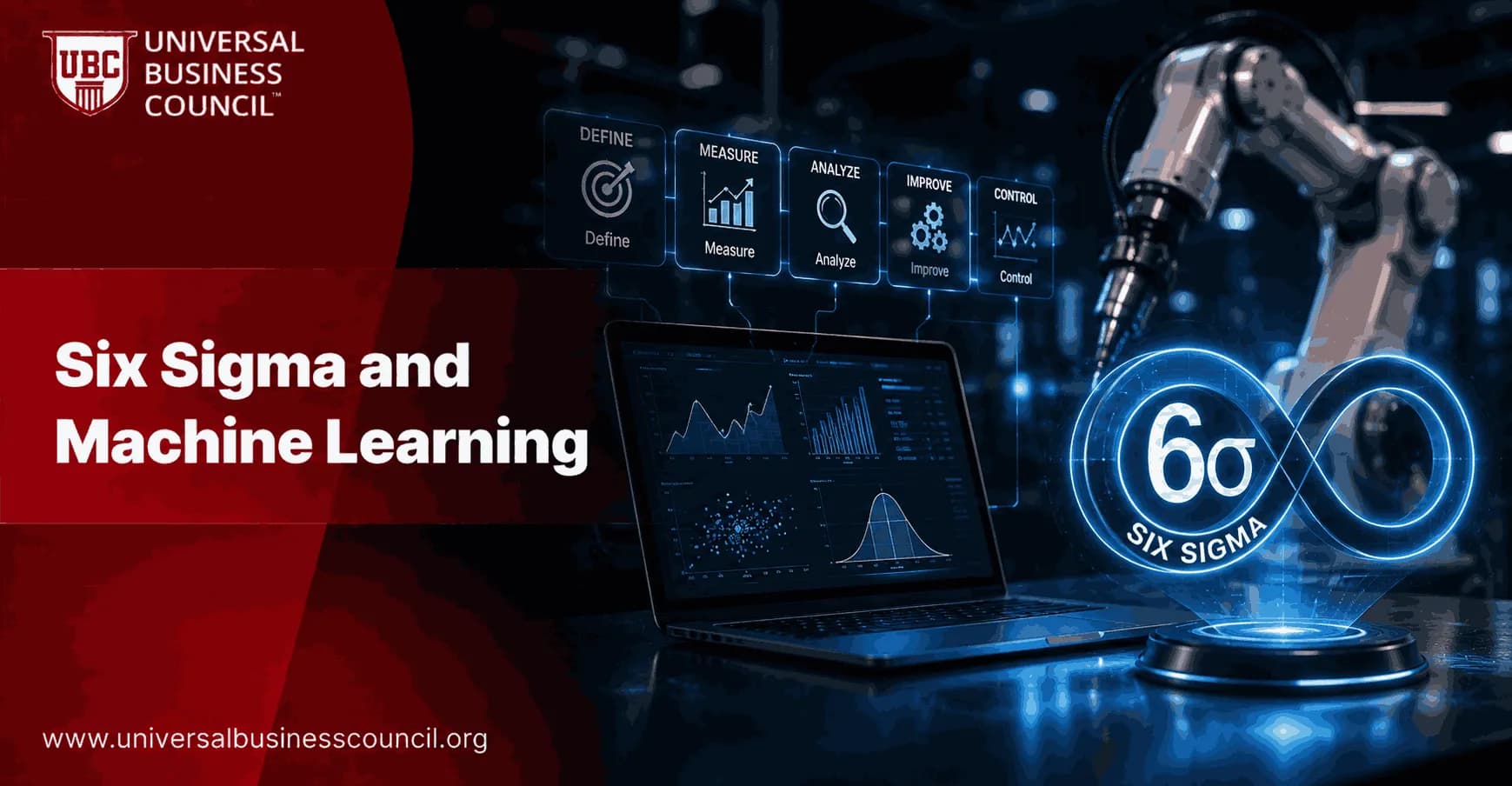
Six Sigma and machine learning work best together when the goal is not faster inspection, but earlier prevention. Six Sigma gives you the discipline: DMAIC, control plans, root cause analysis, FMEA, SPC, and capability studies. Machine learning brings pattern recognition across sensor data, images, machine logs, complaints, and time series signals that humans rarely review at full depth. For professionals looking to strengthen their expertise in process improvement and quality management, a Certified Six Sigma Expert pathway can complement this practical understanding of predictive quality.
The shift is practical. Industrial case reports show double digit reductions in defects, scrap, rework, and unplanned downtime when predictive models are built into the Six Sigma lifecycle rather than bolted on as a separate analytics project.

Why Six Sigma Needs Machine Learning for Predictive Quality
Traditional Six Sigma is strong at explaining variation after enough evidence is collected. That works. But by the time a control chart signals, the line may already have produced a pallet of suspect parts.
Machine learning changes the timing. Instead of waiting for finished-product defects, models can score defect risk from upstream inputs such as temperature, vibration, pressure, torque, viscosity, machine speed, fabric width, material batch, or camera images.
To be blunt, the model is not the hard part in many plants. The painful detail is timestamp alignment. If the oven sensor logs every second, the inspection station logs every unit, and the MES records batches in ten-minute windows, your random forest will learn noise unless someone fixes the data join.
If you are planning your learning path, connect this topic with Management Certifications covering areas such as process improvement, leadership, and management. This can help professionals connect technical quality methods with the broader organizational skills required to implement predictive improvement programs successfully.
Where Machine Learning Fits Inside DMAIC
The best use of Six Sigma and machine learning is structured. Do not let a data science team build a defect model in isolation and then hand quality engineers a dashboard nobody trusts. Put the model inside DMAIC.
Define
Use NLP and text mining to analyse complaints, service logs, nonconformance reports, and warranty notes. In telecom settings, support vector machines and NLP have been used within Six Sigma projects to sift tens of thousands of complaints, predict churn, and surface the critical-to-quality themes hiding in free text.
Measure
Collect reliable inputs before modeling. IoT sensors, machine logs, vision systems, and inspection records need common IDs, consistent sampling, and clear labels. If operators use five names for the same defect, fix that first.
Analyze
Machine learning can rank likely defect drivers and uncover interactions that standard regression may miss. Predictive Six Sigma studies in manufacturing have tested multiple linear regression, neural networks, random forests, gradient boosting machines, and k-nearest neighbors on the same problem. Artificial neural networks, gradient boosting, and random forests tend to produce the strongest defect predictions, with variables such as machine speed and fabric width emerging as key drivers.
Improve
Use models to simulate proposed changes before changing the line. This is where Six Sigma discipline matters. A model can suggest that lowering speed reduces defects, but your team still needs DOE, cost analysis, throughput checks, and operator feedback.
Control
Control plans should include model monitoring. Track false alarms, missed defects, drift, retraining dates, and who is allowed to act on a model recommendation. In regulated sectors, that governance is not optional.
Models Commonly Used in Predictive Six Sigma
You do not need the most complex algorithm first. Start with the model that your quality team can understand and validate.
Decision trees: useful when engineers need clear split rules, such as temperature above a threshold plus low pressure.
Random forests: strong for nonlinear defect patterns and variable importance rankings.
Gradient boosting machines: often accurate on structured process data, but they need careful tuning.
Neural networks: useful for images, complex sensor patterns, and large datasets.
Support vector machines: effective in some classification tasks, including text and smaller high-dimensional datasets.
Time series models: valuable for drift detection and forecasting defects before they appear at final inspection.
For rare defects, class imbalance is a real problem. Research on steel plate defect classification has paired SMOTE with edited nearest neighbor sampling and a deep neural network to push classification accuracy above 99%. That result is impressive, but the lesson for practitioners is simpler: if defects are rare, accuracy alone can mislead you. Watch recall, precision, false negatives, and cost per miss.
Evidence From Manufacturing, MedTech, and Services
The business case is becoming clearer. Case studies combining AI-enhanced statistical methods with Six Sigma have reported large reductions in defect and rework rates across semiconductor etching, automotive torque correction, and aerospace fabrication.
In spot welding, intelligent defect prediction has been used to lift process performance from below 2 sigma toward roughly 4.8 sigma after optimization. That is not a minor gain. It means the process moved from frequent failures toward a level where quality teams can manage variation with far more confidence.
In MedTech coating inspection, computer vision models have detected defective coatings at rates well above human inspectors, who typically miss more borderline cases. In packaging, a Lean Six Sigma plus AI quality implementation cut scrap from 5% to 1.5% within six months by detecting defects earlier and focusing improvement work on the true process causes.
Predictive maintenance in aviation shows the same pattern. Combining predictive AI with Six Sigma practices, engine operators have reduced unplanned maintenance events by around 30%. That example matters because it shows predictive quality is not just factory inspection. It can affect uptime, lifecycle cost, and service reliability.
Common Mistakes When Combining Six Sigma and Machine Learning
Skipping measurement system analysis: if inspection labels are unreliable, the model learns bad truth.
Optimizing for accuracy only: a model can look accurate while missing the rare defects you care about.
Ignoring process knowledge: a feature may be predictive because it is a proxy, not a cause.
Failing to update the control plan: alerts mean little if nobody owns the response.
Using black-box models too early: in regulated settings, explainability and traceability matter.
Skills Professionals Need Next
Quality professionals do not need to become full-time data scientists, but they do need enough machine learning literacy to challenge model outputs. Developers and analysts need the reverse: enough Six Sigma knowledge to understand CTQs, process capability, control limits, and the cost of poor quality.
If you are planning your learning path, connect this topic with Universal Business Council certification resources in Six Sigma, Lean Six Sigma, business analytics, and management. Those pathways fit professionals who want to move from project execution to predictive quality leadership.
How to Start a Predictive Defect Project
Pick one high-cost defect with enough historical data.
Map the process and define the CTQ in plain operational terms.
Validate measurement quality before training any model.
Build a baseline using regression or a decision tree before trying neural networks.
Compare models using recall, precision, defect cost, and operator usability.
Pilot alerts in shadow mode before changing process settings.
Add model monitoring to the Six Sigma control plan.
Next step: choose one defect family, pull six months of process and inspection data, and run a DMAIC review before modeling. If you cannot explain the CTQ, measurement method, and likely process drivers on one page, the machine learning work is not ready yet.
For professionals moving deeper into advanced technology, Deep Tech Certification can also broaden the technical foundation needed to understand emerging technologies that increasingly support intelligent manufacturing, automation, and predictive systems.
As predictive quality becomes more connected to AI, automation, and data-driven operations, broader technical knowledge can also be valuable. A Tech Certification pathway can help professionals build complementary technology skills alongside their Six Sigma and machine learning knowledge.
FAQs
1. What is the connection between Six Sigma and machine learning?
Six Sigma and machine learning combine process improvement methods with advanced data analysis to predict and prevent quality problems. Six Sigma provides structured frameworks such as DMAIC (Define, Measure, Analyze, Improve, Control), while machine learning identifies hidden patterns in large datasets. Together, they help organizations move from reacting to defects after they happen toward predicting and preventing failures before they occur.
2. How does machine learning improve Six Sigma projects?
Machine learning improves Six Sigma projects by analyzing large volumes of process data, detecting complex relationships, and identifying factors that contribute to defects. Traditional Six Sigma tools rely heavily on statistical analysis, while machine learning can discover patterns that may be difficult for humans to detect. This helps teams make faster, data-driven improvement decisions.
3. Can machine learning predict defects before they occur?
Yes. Machine learning models can analyze historical production, process, equipment, and quality data to predict the likelihood of future defects. For example, models can identify patterns in temperature, pressure, machine settings, or material conditions that often lead to failures. Predictive defect detection allows organizations to take corrective action before defective products reach customers.
4. How is predictive analytics used in Six Sigma?
Predictive analytics extends Six Sigma by using historical and real-time data to forecast future outcomes. In a Six Sigma environment, predictive analytics can identify defect risks, estimate process performance, predict equipment failures, and recommend improvement actions. This supports the goal of reducing variation and improving process capability.
5. What role does machine learning play in the DMAIC methodology?
Machine learning can enhance every stage of DMAIC:
Define: Identify quality problems using customer and operational data.
Measure: Analyze large datasets for process performance insights.
Analyze: Discover root causes and hidden patterns.
Improve: Recommend optimized process settings.
Control: Monitor processes and predict future deviations.
Machine learning does not replace DMAIC; it gives Six Sigma teams a more powerful analytical engine.
6. How can machine learning identify root causes of defects?
Machine learning algorithms can examine relationships between process variables and quality outcomes. Techniques such as decision trees, regression models, clustering, and neural networks can reveal which factors contribute most to defects. These insights help Six Sigma teams focus improvement efforts on the highest-impact causes rather than investigating every possible variable.
7. What types of machine learning models are used in Six Sigma?
Common machine learning models used in Six Sigma include:
Regression algorithms for predicting defect rates
Classification models for identifying pass/fail outcomes
Decision trees for root-cause analysis
Random forests for complex quality prediction
Neural networks for advanced pattern recognition
Clustering algorithms for identifying process groups
The right model depends on the data, process complexity, and business objective.
8. How does machine learning reduce manufacturing defects?
Machine learning reduces manufacturing defects by continuously analyzing production data and identifying early warning signals. It can detect abnormal machine behavior, predict quality failures, and recommend process adjustments. Manufacturers can use these predictions to prevent defects instead of discovering them during inspection, which is usually the expensive moment when everyone suddenly becomes interested.
9. Can Six Sigma and machine learning improve predictive maintenance?
Yes. Machine learning can analyze equipment sensor data to predict when machines are likely to fail. Six Sigma methods can then help improve maintenance processes, reduce downtime, and eliminate sources of variation. This combination supports preventive and predictive maintenance strategies that improve reliability and operational efficiency.
10. How does AI-powered Six Sigma differ from traditional Six Sigma?
Traditional Six Sigma relies mainly on statistical tools, expert analysis, and structured improvement methods. AI-powered Six Sigma adds machine learning, automation, and real-time predictive capabilities. Instead of analyzing problems only after they occur, AI-enabled systems can identify risks earlier and continuously monitor process performance.
11. What data is needed for machine learning in Six Sigma?
Machine learning requires reliable process data such as:
Production measurements
Defect records
Equipment sensor data
Quality inspection results
Environmental conditions
Customer complaints
Supply chain information
Process parameters
High-quality data is essential because predictive models are only as good as the information used to train them.
12. How can machine learning improve process control?
Machine learning improves process control by continuously monitoring operational data and detecting deviations from desired performance. Predictive models can identify when a process is likely to move outside acceptable limits and trigger corrective actions. This supports the Six Sigma goal of maintaining stable, predictable processes.
13. What are examples of Six Sigma and machine learning applications?
Examples include:
Predicting manufacturing defects
Forecasting equipment failures
Improving supply chain quality
Detecting financial transaction errors
Predicting healthcare risks
Optimizing production parameters
Reducing service process failures
Industries use these methods wherever variation, quality, and reliability matter.
14. How does machine learning support statistical process control (SPC)?
Machine learning enhances SPC by analyzing more complex patterns than traditional control charts may detect. While SPC monitors process stability using statistical limits, machine learning can identify nonlinear relationships and subtle warning signals. Combining both approaches provides stronger monitoring and earlier defect detection.
15. What are the challenges of using machine learning in Six Sigma?
Common challenges include:
Poor data quality
Lack of machine learning expertise
Difficulty interpreting complex models
Integration with existing systems
Resistance to technology adoption
Data privacy concerns
Organizations need both Six Sigma knowledge and analytics skills to successfully apply machine learning.
16. Can machine learning automate Six Sigma analysis?
Machine learning can automate parts of Six Sigma analysis, including pattern detection, anomaly identification, prediction, and reporting. However, human expertise remains important for defining problems, understanding business context, validating results, and implementing improvements. Automation can process information quickly, but it does not understand organizational politics or why a “temporary workaround” has existed for seven years.
17. How does machine learning improve quality management systems?
Machine learning improves quality management systems by enabling real-time monitoring, predictive alerts, automated reporting, and proactive problem-solving. Organizations can move from reactive quality control toward preventive quality management. This improves customer satisfaction, reduces waste, and increases process reliability.
18. What industries benefit from Six Sigma and machine learning?
Industries benefiting from this combination include:
Manufacturing
Automotive
Aerospace
Healthcare
Finance
Logistics
Supply chain
Software and IT services
Energy
Any industry with measurable processes and quality objectives can potentially apply predictive Six Sigma approaches.
19. What skills are needed to apply machine learning in Six Sigma?
Professionals need a combination of:
Six Sigma methodology knowledge
Statistical analysis skills
Data visualization abilities
Machine learning fundamentals
Process improvement expertise
Business understanding
Data management skills
The strongest practitioners combine quality engineering knowledge with modern analytics capabilities.
20. What is the future of Six Sigma with machine learning?
The future of Six Sigma will increasingly involve AI-driven prediction, automated analysis, and real-time process optimization. Machine learning will help organizations identify defects earlier, reduce variation faster, and improve decision-making. Six Sigma provides the improvement discipline, while machine learning provides the predictive intelligence. Together, they shift quality management from fixing yesterday’s problems toward preventing tomorrow’s failures.
Related Articles
View All
Six Sigma
Six Sigma in Software Development: Reducing Defects and Rework
Learn how Six Sigma in software development reduces defects, rework, cycle time, and cost of poor quality through DMAIC, Lean methods, and metrics.

Six Sigma
Six Sigma in Manufacturing: Reducing Defects on the Production Floor
Learn how Six Sigma in manufacturing reduces defects, cuts rework, improves DPMO, and strengthens production floor quality through DMAIC and Lean Six Sigma.
Six Sigma
Six Sigma DPMO Explained: Defects Per Million Opportunities Made Simple
Learn Six Sigma DPMO in plain language, including the formula, sigma level connection, examples, common mistakes, and practical quality uses.
Trending Articles
The Role of Blockchain in Ethical AI Development
How blockchain technology is being used to promote transparency and accountability in artificial intelligence systems.
AWS Career Roadmap
A step-by-step guide to building a successful career in Amazon Web Services cloud computing.
Top 5 DeFi Platforms
Explore the leading decentralized finance platforms and what makes each one unique in the evolving DeFi landscape.