

Six Sigma Change Management: Getting Stakeholder Buy-In for Improvements
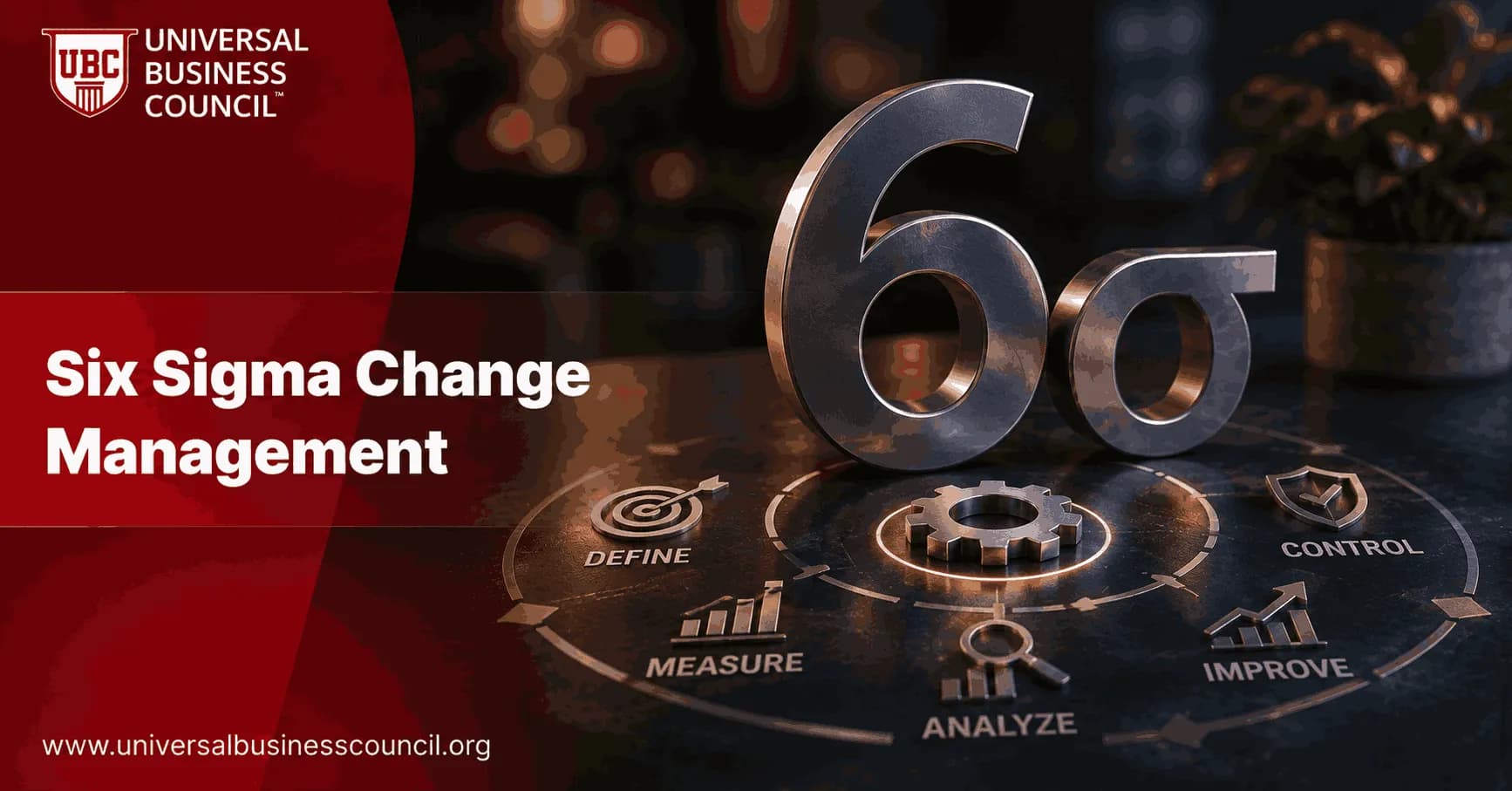
Six Sigma change management fails when people treat DMAIC as a technical exercise only. The charts may be correct. The control plan may be tidy. Still, if supervisors, operators, analysts, clinicians, or finance leaders do not accept the change, the process drifts back by Friday afternoon. Professionals who want to close that gap often go beyond a single belt and pursue a broader credential such as the Certified Six Sigma Expert designation, which covers both the statistical toolkit and the stakeholder-facing side of running a project end to end.
Six Sigma aims to reduce process variation to 3.4 defects per million opportunities, often described as a 99.9997 percent success rate. That target is technical. Getting there is social too. ASQ guidance on Lean and Six Sigma consistently stresses stakeholder buy-in, communication, risk planning, and collaboration across the project life cycle. The same pattern shows up in project management research: weak stakeholder communication is a major reason projects miss their targets.

Why Stakeholder Buy-In Determines Six Sigma Results
Plenty of improvement teams can run a fishbone diagram or calculate process capability. Fewer can persuade a night-shift team to change a handoff routine that has been unofficial standard work for six years. That is where Six Sigma change management becomes practical.
Research on process improvement projects reports that a lack of employee buy-in accounts for a large share of failures. Studies of stakeholder engagement also show a sharp gap between projects with high engagement and those with low engagement. Success rates run near 78 percent for highly engaged projects, against roughly 40 percent when engagement is weak.
A Lean Six Sigma study in a large healthcare organization reported a 66 percent success rate for completed projects and found that active engagement of affected staff had one of the strongest statistical relationships with success. That matches what practitioners see every day: the people closest to the work know where the workaround lives.
Start Stakeholder Work in Define, Not After Improve
The biggest mistake is waiting until the solution is ready. By then, you are not asking for input. You are asking for compliance. People can tell the difference.
In the Define phase, build a stakeholder register alongside the project charter. Keep it simple, but make it real:
Who is affected? Include frontline staff, process owners, customers, compliance, IT, finance, suppliers, and managers.
Who can block the work? A low-title scheduler with system knowledge can stop adoption faster than a director.
Who benefits? Name the groups that will see less rework, faster cycle time, fewer defects, or lower risk.
Who loses something? Time, autonomy, budget control, status, overtime, or a familiar routine.
Use a power and interest grid. High power, high interest stakeholders need close management. High power, low interest stakeholders need short, factual updates tied to business outcomes. Low power, high interest stakeholders often become your best testers and your early warning system. This is also where a lot of Six Sigma leads quietly run out of vocabulary, since stakeholder mapping, sponsorship models, and influence planning are covered more thoroughly in general Management Certifications than in most belt curricula, and borrowing from that material tends to sharpen a Define-phase stakeholder register considerably.
Build the Case for Change With Data People Care About
Do not open with sigma levels if the stakeholder cares about missed discharge times, denied claims, scrap cost, or customer complaints. Translate the defect into their language.
A strong case for change includes:
Baseline performance: defect rate, lead time, rework hours, cost of poor quality, complaints, or risk events.
Business link: customer experience, regulatory exposure, margin, capacity, safety, or strategic objectives.
Local impact: what changes for each group, including tasks, systems, measures, and decision rights.
Evidence: charts, process maps, voice of customer findings, audit results, or financial analysis.
A useful healthcare example comes from University Hospital Federico II in Italy. A Lean Six Sigma project on orthopedic prosthesis surgery reduced average length of stay from 18.9 days to 10.6 days, a 44 percent reduction. That result was not just a better process map. It required multidisciplinary involvement, updated audit checklists, periodic reviews, and ongoing monitoring. That is stakeholder buy-in in operational form.
Use DMAIC as a Change Management Structure
Define: Map Influence Early
Identify sponsors, process owners, affected teams, and likely resistors. Ask one blunt question in interviews: What would make this project fail here? You will hear about system constraints, union rules, customer exceptions, bad prior projects, and reporting gaps. Write them down.
Measure: Let Stakeholders Validate the Baseline
If people do not trust the baseline, they will not trust the recommendation. Invite operators or service teams to review data definitions. In call centers, average handle time can hide transfers and after-call work. In manufacturing, scrap codes may be inconsistent from shift to shift. Settle the measurement argument before you argue about solutions. In sectors that are moving toward automated, tamper-resistant recordkeeping, this baseline-validation step increasingly overlaps with data integrity work, and improvement leads who also hold a Deep Tech Certification tend to have an easier time explaining to skeptical stakeholders why a distributed ledger or audit trail can settle a measurement dispute faster than a shared spreadsheet.
Analyze: Involve the People Who Touch the Process
Root cause sessions should not be management theater. Bring in the people who enter the order, clean the instrument, approve the claim, pick the part, or close the ticket. They know which step quietly burns time.
Improve: Pilot Before You Mandate
Run a controlled pilot with a clear success measure. A pilot reduces fear because stakeholders can see the change without betting the whole operation. Publish short-term wins, but do not overstate them. If the first week is messy, say so.
Control: Make Adoption Measurable
Control plans often track process KPIs but ignore adoption. Add stakeholder measures such as training completion, checklist use, audit pass rate, exception volume, participation rate, and decision turnaround time. The Stakeholder Engagement Level concept, drawn from PMI-style guidance, uses participation, contribution quality, and decision ownership as measurable signals. That beats asking, Are people on board?
How to Manage Resistance Without Making It Worse
Resistance is data. Treat it that way.
Meet key resistors one to one. Public confrontation usually hardens positions.
Separate fear from objection. A person worried about job loss needs a different response than someone challenging the data.
Give managers a script. Middle managers often support the project privately but explain it badly to their teams.
Train before launch. Do not announce a new process and then schedule training two weeks later.
Keep sponsors visible. A sponsor who only appears at kickoff is a warning sign.
To be blunt, a Green Belt can rarely compensate for an absent sponsor. Research on Six Sigma sponsorship repeatedly shows better results when leaders actively back projects, remove barriers, and review progress.
Skills Professionals Should Build Next
If you lead improvement work, strengthen both sides of the discipline: statistical thinking and change leadership. Universal Business Council readers can connect this topic with related Six Sigma certification courses, project management learning, and management development resources as internal study paths. If your projects increasingly touch software rollouts, automation, or platform migrations alongside the process work, it is also worth looking at a general Tech Certification so your technical credentials keep pace with how much of change management now happens through systems rather than paperwork.
For certification candidates, watch for exam questions that describe a technically correct solution with weak stakeholder engagement. The best answer is often not another analysis tool. It is stakeholder mapping, sponsor alignment, communication planning, or pilot-based adoption.
Your next step: take one active DMAIC project and create a one-page stakeholder plan today. List the top ten stakeholders, their current attitude, desired attitude, main concern, preferred communication channel, and owner. Then review it with your sponsor before the next tollgate. That single page may save the project.
FAQs
1. What is change management in Six Sigma?
Change management in Six Sigma is the structured process of helping employees, managers, customers, and other stakeholders understand, accept, implement, and sustain process improvements. Six Sigma identifies and validates improvements using data, while change management addresses communication, resistance, leadership alignment, training, accountability, and adoption.
2. Why is change management important in Six Sigma?
A statistically valid solution creates little value if employees do not adopt it. Change management helps convert a technically sound Six Sigma recommendation into new day-to-day behavior. It identifies affected stakeholders, addresses concerns, builds leadership support, provides training, and creates mechanisms that help the improved process become the normal way of working.
3. What is stakeholder buy-in in Six Sigma?
Stakeholder buy-in means that people affected by or responsible for a process understand the proposed improvement and are sufficiently committed to supporting its implementation. Buy-in does not require everyone to enthusiastically agree with every decision. It means key stakeholders understand the rationale, have appropriate opportunities to contribute, and are prepared to perform their role in the change.
4. Who are the key stakeholders in a Six Sigma project?
Stakeholders can include executive sponsors, process owners, frontline employees, customers, suppliers, functional managers, finance teams, IT teams, compliance specialists, and other groups affected by the change.
A stakeholder analysis should identify each group's influence, level of impact, concerns, decision authority, and desired involvement. Not every stakeholder requires the same communication or engagement strategy.
5. How do you get stakeholder buy-in for a Six Sigma project?
Begin by explaining the business problem in terms relevant to each stakeholder. Use credible baseline data to demonstrate why improvement is needed, involve affected employees in identifying root causes, and communicate how proposed changes affect their work.
Buy-in generally increases when stakeholders participate in designing the solution instead of receiving a finished process accompanied by a cheerful email announcing that everything changes Monday.
6. How do you identify resistance to Six Sigma improvements?
Resistance can appear as direct disagreement, delayed decisions, low participation, workarounds, missed training, poor data sharing, or continued use of the old process.
Project teams should investigate the reason rather than simply label people “resistant.” Concerns may involve workload, job security, unclear benefits, previous failed initiatives, insufficient training, loss of authority, or legitimate weaknesses in the proposed solution.
7. How should Six Sigma teams manage resistance to change?
Start by understanding the source of resistance. Then respond with evidence, participation, communication, training, process redesign, or leadership intervention as appropriate.
Some resistance contains useful information. Frontline employees may identify operational problems that project teams have overlooked. Effective change management distinguishes between misinformation, understandable anxiety, conflicting incentives, and valid criticism.
8. What is the role of executive sponsorship in Six Sigma change management?
Executive sponsors provide authority, resources, visibility, and escalation support. They can remove organizational barriers, resolve cross-functional conflicts, reinforce priorities, and hold leaders accountable for implementation.
Strong sponsors should do more than approve the project charter. They should visibly support the change, review progress, make timely decisions, and reinforce the desired behavior after implementation.
9. How does stakeholder analysis support Six Sigma projects?
Stakeholder analysis helps teams determine who will influence or be affected by a project.
A useful framework considers:
Influence → Impact → Attitude → Concerns → Required Action
High-influence, high-impact stakeholders generally require close engagement. Lower-impact groups may need periodic communication rather than continuous involvement.
This prevents teams from treating every stakeholder as though one enormous email distribution list constitutes a communication strategy.
10. How should Six Sigma improvements be communicated?
Communication should explain the problem, evidence, proposed change, expected benefits, implementation timeline, responsibilities, and support available.
Different stakeholders require different messages. Executives may focus on financial and strategic outcomes, managers on operational impacts, and frontline employees on changes to daily work.
Communication should also allow questions and feedback rather than functioning solely as one-way broadcasting.
11. How can data help gain stakeholder support?
Data can establish the size of the problem and demonstrate whether proposed improvements actually work.
Useful evidence may include defect rates, cycle times, costs, customer complaints, process capability, productivity, or error rates.
However, data should be translated into business consequences. Saying cycle time fell by 28% is useful. Explaining that this allows customers to receive service two days sooner makes the improvement easier to understand.
12. How does the DMAIC framework support change management?
Change management can be integrated throughout DMAIC.
Define: Identify stakeholders and establish the case for change.
Measure: Build agreement around current performance.
Analyze: Involve stakeholders in identifying root causes.
Improve: Co-design, test, and communicate solutions.
Control: Reinforce new behaviors, monitor adoption, and prevent regression.
Waiting until Improve to consider people affected by the project is usually unnecessarily adventurous.
13. How should employees be involved in Six Sigma improvements?
Employees who perform the process should participate in process mapping, root-cause analysis, solution development, testing, and implementation where appropriate.
Their practical knowledge can expose differences between documented procedures and actual workflows.
Participation also increases ownership. People are generally more willing to support a process they helped improve than one delivered to them as an unexplained decree.
14. What role does training play in Six Sigma change management?
Training converts process changes into practical capability. It should explain not only what employees must do differently but also why the change is being made and how successful performance will be measured.
Training may include workshops, demonstrations, job aids, simulations, coaching, and supervised practice.
Teams should verify competency after training rather than assuming attendance at a presentation has mysteriously transferred operational expertise.
15. How do you measure adoption of a Six Sigma improvement?
Adoption metrics should measure whether the new process is actually being used.
Examples include:
Process compliance
Training completion and competency
New-system usage
Error rates
Cycle time
Workaround frequency
Employee feedback
Customer outcomes
Adoption measures should be monitored alongside process-performance metrics because improved results may disappear if employees gradually return to old methods.
16. How can pilot programs improve stakeholder buy-in?
Pilots allow organizations to test an improvement on a controlled scale before wider implementation.
A successful pilot provides evidence that the proposed change works, reveals unexpected problems, and allows employees to provide feedback.
Pilot participants can also become credible advocates during broader rollout because they have direct experience with the improved process rather than merely hearing promises about it.
17. How does Six Sigma prevent teams from returning to old processes?
The Control phase is designed to sustain improvements.
Control mechanisms can include standard operating procedures, dashboards, control charts, audits, process ownership, automated controls, training, and escalation thresholds.
Change-management measures should reinforce these controls through coaching, leadership accountability, recognition, and continued communication until the new process becomes routine.
18. How can Six Sigma work with ADKAR or other change-management frameworks?
Six Sigma and structured change-management frameworks can complement each other.
DMAIC focuses heavily on improving process performance, while models such as ADKAR address individual adoption through awareness, desire, knowledge, ability, and reinforcement.
Organizations may also combine Six Sigma with approaches such as Kotter's change framework. The important point is to integrate technical process improvement with deliberate adoption rather than treating them as unrelated programs.
19. What mistakes cause Six Sigma change initiatives to fail?
Common mistakes include weak executive sponsorship, inadequate stakeholder analysis, poor communication, insufficient employee involvement, inadequate training, unclear accountability, unrealistic timelines, and failure to measure adoption.
Another major mistake is assuming resistance means employees simply dislike change. Sometimes the proposed solution genuinely creates operational problems. Effective teams investigate resistance before deciding how to respond.
20. What is the best Six Sigma change-management strategy for stakeholder buy-in?
A practical strategy can be built around seven stages:
1. Establish the Case for Change
Begin with measurable evidence.
Define:
Current Performance → Business Impact → Desired Outcome
Explain why the existing process needs improvement and what happens if nothing changes.
2. Map the Stakeholders
Identify:
Who is affected?
Who controls resources?
Who can block implementation?
Who has frontline knowledge?
Who owns the process after the project ends?
Then assess influence, impact, attitude, and concerns.
3. Involve Stakeholders Early
Do not wait until a solution has already been selected.
Use process mapping, Voice of the Customer, workshops, interviews, root-cause analysis, and pilot design to involve relevant people during Define, Measure, and Analyze.
Participation can improve both the technical solution and willingness to adopt it.
4. Translate Data Into Meaning
Six Sigma teams often produce substantial analysis.
Stakeholders generally need the conclusion.
Instead of only saying:
“Defect rate is 4.8%.”
Explain:
“These defects create 1,200 rework cases annually, costing approximately $300,000 and delaying customer delivery.”
The data establishes credibility. The business impact creates relevance.
5. Pilot the Improvement
Test the proposed solution with a controlled group.
Measure:
Performance + Adoption + Employee Feedback + Customer Impact
Use pilot evidence to refine the process before wider implementation.
6. Build Adoption Into Implementation
Provide:
Communication → Training → Job Aids → Coaching → Clear Ownership → Support
Managers should reinforce the new process consistently.
Systems, incentives, procedures, and performance measures should also support the desired behavior. Asking employees to follow a new process while rewarding the old behavior is a remarkably efficient method of defeating one's own project.
7. Sustain the Change
The Control phase should monitor both process results and adoption.
Track:
Process KPI + Adoption KPI + Control Limit + Process Owner + Escalation Action
For example:
Cycle Time → Process Compliance → Weekly Dashboard → Operations Manager → Corrective Action
The most effective formula is:
Technical Solution + Stakeholder Ownership + Leadership Support + Adoption + Control = Sustainable Improvement
Six Sigma answers:
“What should we improve, and does the evidence support it?”
Change management answers:
“How do we get the organization to actually work this way?”
Both are necessary.
A flawless statistical analysis that nobody implements has approximately the same operational value as a beautifully formatted report sitting unread in a shared drive.
Successful Six Sigma leaders therefore do more than reduce variation.
They create enough understanding, participation, capability, and accountability for the improved process to survive after the project team leaves.
Related Articles
View All
Six Sigma
Six Sigma vs Quality Management: Where Six Sigma Fits
Six Sigma vs Quality Management explained: learn how Six Sigma fits within quality systems as a data-driven method for reducing defects and variation.
Six Sigma
Six Sigma vs Project Management: Methods, Tools, and Career Paths
Compare Six Sigma vs Project Management across methods, tools, salaries, and career paths. Learn when to use DMAIC, Agile, Waterfall, or both.
Six Sigma
How Six Sigma Complements Total Quality Management in Enterprise Quality Programs
Learn how Six Sigma complements Total Quality Management by adding DMAIC, analytics, and project discipline to enterprise quality programs.
Trending Articles
The Role of Blockchain in Ethical AI Development
How blockchain technology is being used to promote transparency and accountability in artificial intelligence systems.
AWS Career Roadmap
A step-by-step guide to building a successful career in Amazon Web Services cloud computing.
Top 5 DeFi Platforms
Explore the leading decentralized finance platforms and what makes each one unique in the evolving DeFi landscape.