

Six Sigma vs Quality Management: Where Six Sigma Fits
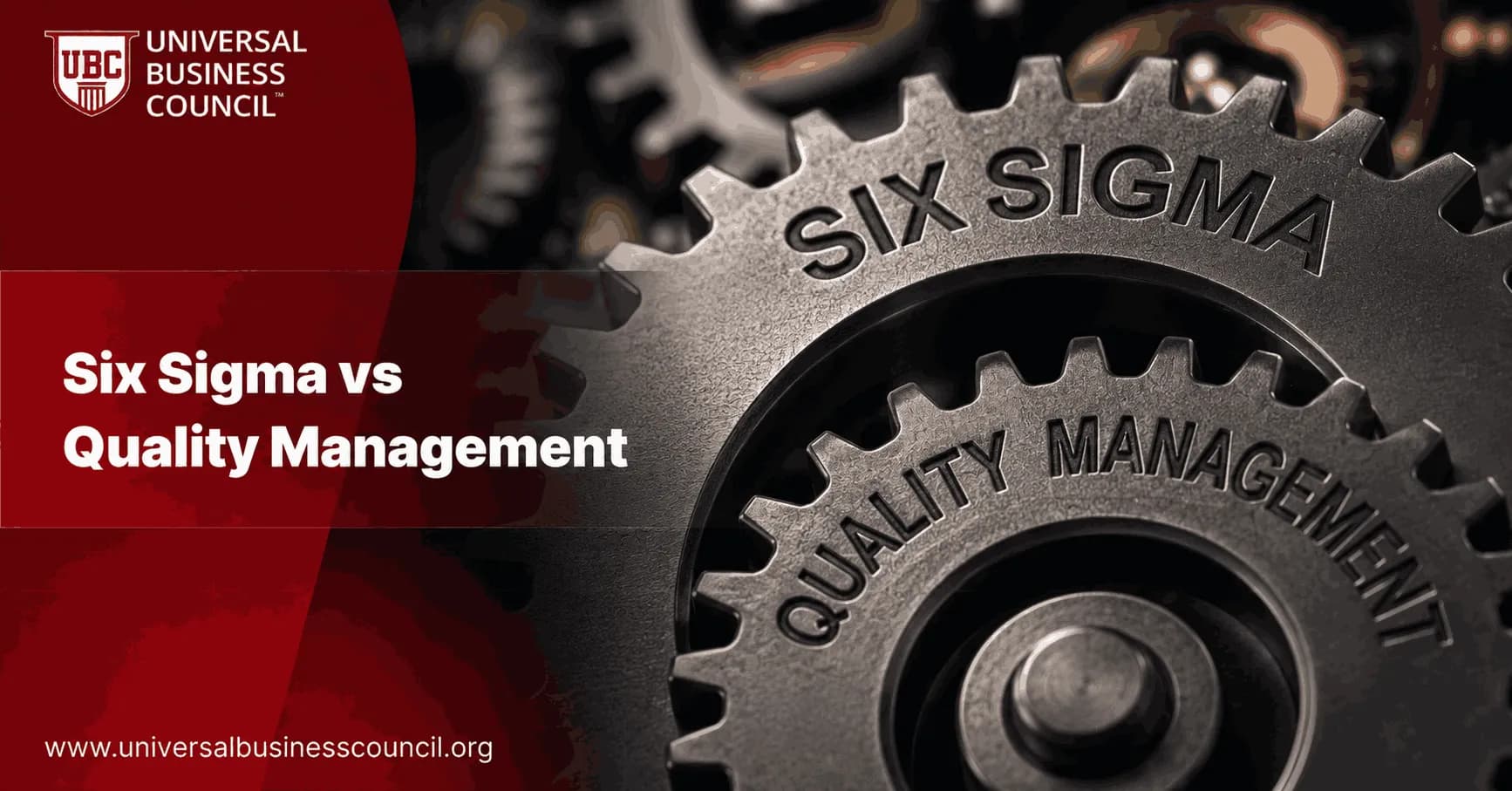
Six Sigma vs Quality Management is not an either-or choice. Quality management sets the system, culture, standards, and customer expectations. Six Sigma gives you a disciplined way to fix process problems where variation, defects, cost, or risk are measurable enough to attack with data. Professionals looking to formalize this skill set often start with a Certified Six Sigma Expert credential, which builds the statistical and project-management foundation needed to run these efforts properly.
That distinction matters. I have seen teams call every improvement effort a Six Sigma project, then drown in data they did not need. A simple checklist error does not always require regression analysis. But if a billing process produces repeat errors, or a production line drifts outside tolerance every Thursday night shift, Six Sigma belongs in the conversation.

What Quality Management Covers
Quality management is the wider discipline. It includes policies, operating procedures, audits, training, customer feedback, supplier controls, corrective actions, and leadership habits. Total Quality Management, or TQM, is one well-known approach within this field. It stresses continuous improvement, employee involvement, customer focus, and prevention across the organization. Leaders who want a broader grounding in this discipline can explore the Management Certifications offered alongside Six Sigma pathways, which cover the operational and leadership side of running a quality system.
Think of quality management as the operating system for quality. It answers questions such as:
What does the customer define as acceptable?
Which standards must the organization meet?
How are processes documented, audited, and improved?
Who owns quality when a problem crosses departments?
ISO 9001, TQM, Lean, audit programs, supplier quality management, and customer satisfaction systems can all sit inside this umbrella. Six Sigma fits inside it too, but with a narrower job.
Where Six Sigma Fits
Six Sigma is a statistically grounded process improvement methodology focused on reducing defects and variation. Its well-known performance benchmark is 3.4 defects per million opportunities, a level associated with very high process capability. In practice, most teams use Six Sigma less as a slogan and more as a project method for solving expensive or risky process problems.
The usual structure is DMAIC:
Define the problem, scope, customer requirement, and business case.
Measure the current process and confirm the data can be trusted.
Analyze root causes using evidence, not opinion.
Improve the process and test countermeasures.
Control the gains with monitoring, ownership, and response plans.
This is why Six Sigma works well as the analytical core of a quality management system. It brings role discipline, project governance, and statistical tools to problems that broad quality programs may identify but not fully solve.
Six Sigma vs TQM: The Practical Difference
TQM and Six Sigma overlap, but they do not do the same job.
Scope
TQM aims to shape the whole organization. It pushes everyone to improve work every day. Six Sigma usually targets selected processes through defined projects. You do not Six Sigma everything. Please do not try.
Method
TQM often relies on culture, leadership commitment, training, teamwork, and customer focus. Six Sigma relies heavily on measurement, statistical analysis, defect definitions, capability studies, and verified root causes. As process problems increasingly involve automated systems, sensors, and connected data pipelines, some quality teams are pairing this statistical grounding with a Deep Tech Certification to better understand the technology generating the data they analyze.
Roles
Six Sigma uses formal roles such as Green Belts, Black Belts, Master Black Belts, and Champions. TQM tends to spread responsibility more broadly, with less emphasis on specialist certification.
Evidence
Research on Six Sigma and quality management, including work published in the Journal of Operations Management, has found that Six Sigma practices such as role structure, structured improvement procedures, and metric focus are distinct from traditional quality management practices, yet complementary to them. That supports the view most experienced quality leaders already hold: Six Sigma strengthens quality management, but it does not replace it.
When Six Sigma Is the Right Tool
Use Six Sigma when the problem is measurable, repeatable, and important enough to justify the effort. Good candidates include:
High scrap, rework, or warranty cost in manufacturing
Long and inconsistent turnaround times in a laboratory or service center
Frequent billing, claims, or order-entry errors
Customer complaints linked to process variation
Compliance risk where process capability must be demonstrated
Six Sigma is especially useful in regulated sectors such as medical devices, pharmaceuticals, laboratories, aerospace, and financial services. Leaders in these environments need proof, not good intentions. Control charts, capability indices, hypothesis tests, and measurement system analysis provide that proof.
When Six Sigma Is the Wrong Tool
To be blunt, Six Sigma is overbuilt for some problems. If the fix is obvious, fix it. If staff are not following a documented procedure, start with training, supervision, mistake-proofing, or a simpler workflow. If the process is chaotic and undocumented, basic quality management comes first.
A common mistake is launching DMAIC before confirming the measurement system. If two inspectors classify the same defect differently, your analysis will look precise and still be wrong. Certification candidates often trip on this too: defects, defective units, and defect opportunities are not interchangeable when calculating DPMO.
How Lean Six Sigma Changes the Picture
Lean Six Sigma combines Lean's focus on waste removal with Six Sigma's focus on variation reduction. It is a strong fit when a process is both slow and inconsistent. Take a hospital discharge process. It may have unnecessary waiting, unclear handoffs, and variation in documentation quality. Lean helps remove the waiting and rework. Six Sigma helps prove which inputs drive errors or delays.
Still, do not treat Lean Six Sigma as a label for every improvement workshop. Use Lean tools for flow problems. Use Six Sigma tools when variation and defects require deeper analysis. Use both when the process demands both.
What Professionals Should Learn Next
If you work in operations, technology, healthcare, supply chain, or service delivery, build your quality knowledge in layers. Start with quality management principles: customer requirements, process ownership, corrective action, audit thinking, and continuous improvement. Then add Six Sigma if your role involves data, defects, process capability, or measurable performance targets. For those whose quality work increasingly touches software, automation, or digital systems, a broader Tech Certification can round out the skill set and connect process improvement thinking with the technical systems it depends on.
On the Universal Business Council site, this article pairs naturally with related certification pages in Six Sigma, quality management, operations management, project management, business analytics, and management leadership. Those learning paths help professionals connect statistical improvement work with wider business execution.
Your next step is simple. Choose one recurring quality problem in your team, define the defect clearly, collect baseline data for at least several cycles, and decide whether it needs a DMAIC project or a basic quality management fix. That decision is where good quality work starts.
FAQs
1. Is Six Sigma the same as quality management?
No. Quality management is the broader discipline of establishing, maintaining, controlling, and improving the quality of products, services, and processes. Six Sigma is a structured, data-driven methodology used to reduce defects, control variation, and improve process performance.
Six Sigma can therefore operate as one component of an organization's overall quality management system.
2. What is quality management?
Quality management is the coordinated approach an organization uses to ensure products, services, and processes consistently meet customer, regulatory, and business requirements.
It commonly includes:
Quality Planning → Quality Assurance → Quality Control → Quality Improvement
Quality management can involve policies, standards, procedures, audits, inspections, performance measurement, corrective actions, risk management, and continuous improvement.
3. What is Six Sigma in quality management?
Six Sigma is a process-improvement methodology that uses data and analytical techniques to identify causes of defects and variation.
Within quality management, Six Sigma can be used to solve recurring performance problems, improve process capability, reduce errors, lower Cost of Poor Quality, and establish controls that sustain improved performance.
Its best-known improvement framework is DMAIC.
4. What is DMAIC in Six Sigma?
DMAIC stands for:
Define → Measure → Analyze → Improve → Control
Define: Establish the problem, customer requirements, scope, and goals.
Measure: Determine current process performance.
Analyze: Identify and validate root causes.
Improve: Develop and implement solutions.
Control: Sustain the improved process.
DMAIC gives quality teams a structured method for solving problems whose causes are not already known.
5. What is the main difference between Six Sigma and quality management?
The primary difference is scope.
Quality Management = Organization-wide framework for managing quality
Six Sigma = Methodology for solving specific performance and quality problems
A quality management system may operate continuously across an organization, while a Six Sigma project usually targets a defined problem with measurable objectives and a project team.
6. What are the four components of quality management?
Quality management is commonly described through four major components:
Quality Planning: Determining quality objectives and how to achieve them.
Quality Assurance: Establishing confidence that processes can meet requirements.
Quality Control: Monitoring outputs and identifying nonconformities.
Quality Improvement: Increasing the organization's ability to meet requirements and improve performance.
Six Sigma primarily contributes to the improvement component, although its tools can support the others as well.
7. What is the difference between Six Sigma and quality control?
Quality control focuses on detecting whether products, services, or outputs meet specified requirements.
Six Sigma goes further by investigating why defects or variation occur and changing the underlying process.
For example, inspection might identify 500 defective units. A Six Sigma project would analyze process data to determine why those defects occur and reduce their recurrence.
Detection finds the defect. Improvement tries to stop producing it.
8. What is the difference between Six Sigma and quality assurance?
Quality assurance focuses on establishing processes, standards, procedures, and controls intended to prevent quality problems.
Six Sigma is generally used to improve process performance when measurable problems or opportunities exist.
Quality assurance may define how work should be performed, while Six Sigma can analyze whether that process is capable, stable, and producing the required results.
9. What is the difference between Six Sigma and Total Quality Management?
Total Quality Management, or TQM, is a broad management philosophy emphasizing organization-wide quality, customer focus, employee involvement, leadership, and continuous improvement.
Six Sigma is generally more project-oriented and data-driven, with defined roles, structured methodologies such as DMAIC, and greater emphasis on statistical analysis.
Organizations can use principles from both approaches rather than treating them as mutually exclusive systems.
10. What is the difference between ISO 9001 and Six Sigma?
ISO 9001 specifies requirements for a Quality Management System. It focuses on areas such as process management, customer requirements, leadership, documented information, performance evaluation, risk-based thinking, and continual improvement.
Six Sigma provides tools and methods for improving specific processes.
An organization can therefore use an ISO 9001-based quality system and apply Six Sigma projects within that system to address performance problems.
11. Is Six Sigma only about reducing defects?
No. Defect reduction is central to Six Sigma, but the methodology can also improve cycle time, productivity, process capability, consistency, cost, customer satisfaction, and operational performance.
The important requirement is that the problem can be defined and measured.
A Six Sigma project might therefore target billing errors, delivery variation, patient waiting time, transaction failures, rework, or another measurable performance gap.
12. How does Six Sigma improve quality?
Six Sigma improves quality by identifying the factors causing undesirable process outcomes and implementing evidence-based solutions.
A simplified improvement chain is:
Customer Requirement → Process Metric → Baseline Performance → Root Cause → Improvement → Control
Rather than relying solely on inspection, Six Sigma seeks to improve the process producing the output.
This shifts attention from repeatedly correcting failures toward reducing their causes.
13. What Six Sigma tools are useful in quality management?
Common tools include:
SIPOC
Voice of the Customer
Critical-to-Quality analysis
Process mapping
Pareto charts
Fishbone diagrams
5 Whys
FMEA
Control charts
Process capability analysis
Measurement System Analysis
Hypothesis testing
Regression
Design of Experiments
The appropriate tools depend on the problem and DMAIC phase. Using every tool merely because a template contains a box for it is not a quality requirement.
14. How does Six Sigma relate to the Cost of Poor Quality?
Six Sigma can help identify and reduce Cost of Poor Quality (COPQ).
COPQ can include:
Scrap + Rework + Downtime + Returns + Warranty + Complaints + Service Recovery
Six Sigma teams can quantify these losses, identify their root causes, implement improvements, and validate financial benefits.
This helps connect quality improvement directly with business performance.
15. Can Six Sigma be used with ISO quality systems?
Yes. Six Sigma can complement an ISO-based Quality Management System.
The QMS provides the broader structure for managing processes, responsibilities, documentation, audits, risks, and continual improvement.
Six Sigma provides a rigorous improvement methodology for selected problems within that environment.
For example, audit findings or performance data from the QMS may identify an opportunity that becomes a Six Sigma DMAIC project.
16. Is Six Sigma better than traditional quality management?
Neither is universally better because they serve different purposes.
Organizations need systems for maintaining quality, meeting requirements, managing risks, conducting audits, controlling documents, and handling nonconformities. Six Sigma does not replace all of those activities.
Six Sigma becomes particularly valuable when an organization needs structured analysis of recurring defects, variation, or performance problems.
The methods are generally complementary rather than competing.
17. Do quality professionals need Six Sigma certification?
Not necessarily, but Six Sigma knowledge can be valuable for Quality Engineers, Quality Managers, Continuous Improvement Specialists, Operations Managers, Process Engineers, and Operational Excellence professionals.
Certification can demonstrate structured knowledge of DMAIC and analytical tools. Its value increases when candidates can also demonstrate successful projects and measurable improvements.
A belt is considerably more persuasive when attached to evidence.
18. Can Six Sigma be used outside a quality department?
Yes. Six Sigma can be applied across manufacturing, supply chain, finance, healthcare, logistics, customer service, IT, sales operations, and other functions.
A project does not need to carry the word “quality” to address a quality-related process problem.
Reducing invoice errors, shortening patient waiting times, improving delivery consistency, or reducing failed transactions can all involve Six Sigma methods.
19. How do Lean, Six Sigma, and quality management fit together?
A useful distinction is:
Quality Management → Manages overall quality
Lean → Reduces waste and improves flow
Six Sigma → Reduces defects and variation
Lean Six Sigma → Combines flow, waste, defect, and variation improvement
These approaches can operate together. A Quality Management System can provide the organizational framework while Lean and Six Sigma provide methods for improving specific processes.
20. Where does Six Sigma fit within an organization's quality management system?
Think of quality management as the overall operating framework for quality.
It may contain:
Quality Policy
↓
Quality Objectives
↓
Quality Planning
↓
Quality Assurance
↓
Quality Control
↓
Quality Improvement
Six Sigma fits most directly into Quality Improvement.
Suppose a manufacturer has a Quality Management System that establishes product specifications, inspection procedures, supplier requirements, audit schedules, corrective-action processes, and performance metrics.
Monthly quality data then reveals:
Defect Rate: 6.5%
Target: Below 2%
Routine quality control can detect the defective output, but management now needs to determine why the process consistently misses its target.
A Six Sigma project can begin:
Define
Establish the business problem, customer impact, project scope, and improvement target.
Measure
Validate the measurement system and establish baseline defect performance.
Analyze
Identify and statistically validate the causes driving defects.
Improve
Change the process to address those causes.
Control
Implement monitoring, standard work, control plans, and ownership to prevent regression.
The relationship therefore looks like:
Quality Management System
→ establishes how quality is managed.
Quality Control
→ detects whether requirements are being met.
Quality Assurance
→ builds confidence that processes can meet requirements.
Six Sigma
→ systematically improves processes when performance needs to change.
Consider another example.
A hospital's quality system may establish patient-safety standards and monitor waiting times.
If emergency-department waiting times vary significantly and consistently exceed targets, a Six Sigma team could use DMAIC to identify the causes of variation and redesign the process.
The QMS continues after that project ends.
Six Sigma does not replace it.
For professionals, a strong quality career can therefore combine:
Quality Management + ISO/QMS Knowledge + Lean + Six Sigma + Data Analysis + Risk Management + Change Management
The distinction matters because organizations need both control and improvement.
Without quality management, improvements may lack governance and consistency.
Without improvement methods, organizations can become extremely efficient at documenting the fact that the same problem happened again.
The simplest answer is:
Quality management is the system. Six Sigma is one of the methods that can improve the system's processes.
Knowing where Six Sigma fits allows professionals to use it where it adds value rather than trying to turn every audit finding, customer complaint, and crooked spreadsheet column into a Black Belt project.
Related Articles
View All
Six Sigma
How Six Sigma Complements Total Quality Management in Enterprise Quality Programs
Learn how Six Sigma complements Total Quality Management by adding DMAIC, analytics, and project discipline to enterprise quality programs.
Six Sigma
Six Sigma vs TQM: Which Quality Approach Fits Your Goal?
Compare Six Sigma vs TQM across focus, tools, metrics, roles, and use cases. Learn when to use each approach and why many firms combine both.
Six Sigma
Six Sigma in Project Management: Better Scope, Schedule, and Quality Control
Learn how Six Sigma in project management improves scope control, schedule reliability, and quality using DMAIC, CTQs, control charts, and change governance.
Trending Articles
The Role of Blockchain in Ethical AI Development
How blockchain technology is being used to promote transparency and accountability in artificial intelligence systems.
AWS Career Roadmap
A step-by-step guide to building a successful career in Amazon Web Services cloud computing.
Top 5 DeFi Platforms
Explore the leading decentralized finance platforms and what makes each one unique in the evolving DeFi landscape.