

Six Sigma Digital Quality Management: Tools, Systems, and Best Practices
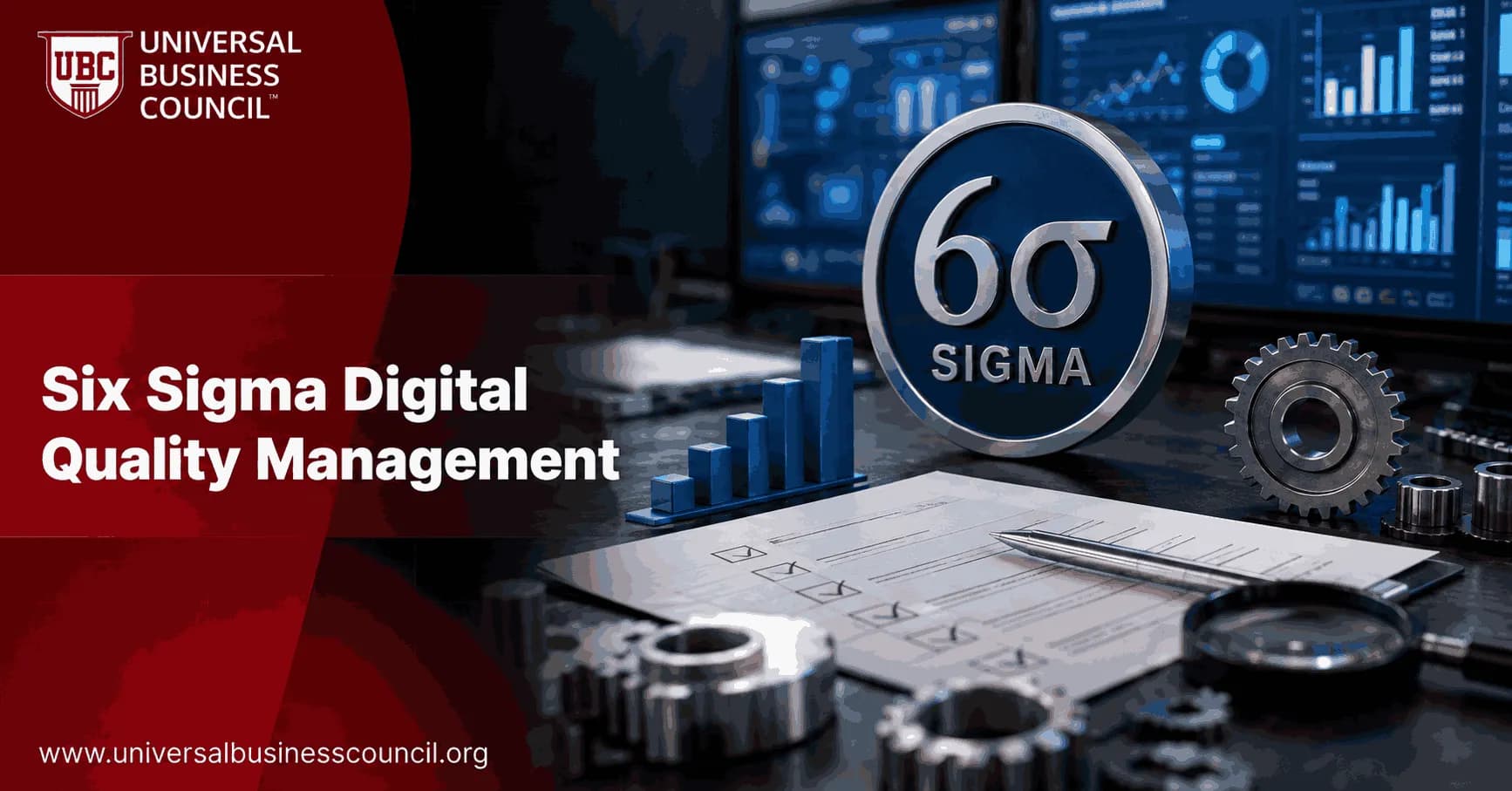
Six Sigma digital quality management keeps DMAIC at the center, but changes the evidence you use. Instead of waiting for monthly defect reports, you work with IoT sensor data, process mining logs, digital QMS records, and AI-based anomaly alerts. That is a big shift. It is also where many teams get stuck. Professionals who want to lead this kind of work rather than just experiment with it often start with the Certified Six Sigma Expert credential, which covers the DMAIC discipline this article is built around.
The best digital quality teams do not start with a model. They start with a process problem, a clean measurement plan, and a realistic control method. I have watched teams spend weeks tuning a dashboard while the operator still records scrap reason codes in a free-text field. The chart looked impressive. The data was nearly useless.

What Six Sigma digital quality management means
Six Sigma is still a structured method for reducing variation and defects through Define, Measure, Analyze, Improve, and Control. Digital quality management adds connected systems, automated records, analytics, cloud workflows, and real-time monitoring. Because rolling out this kind of transformation touches quality, IT, operations, and compliance leadership all at once, organizations often pair Six Sigma work with broader Management Certifications, since governing a digital quality program across that many functions is as much a leadership skill as a statistical one.
Quality 4.0 is the wider label for applying Industry 4.0 technologies to quality management. That covers IoT, cloud platforms, AI, advanced analytics, process mining, augmented reality, and digital QMS systems. Digital Six Sigma, sometimes called Six Sigma 4.0, puts those tools inside DMAIC rather than treating them as a separate transformation program.
Why digital Six Sigma is gaining attention
The performance data is hard to ignore. Reviews of Six Sigma 4.0 report typical results of 30-60% defect reduction, 20-45% cycle time improvement, and 15-40% energy efficiency gains. Some cases also report carbon emission reductions of up to 30%.
AI makes the biggest difference when the process generates frequent, high-quality data. Machine learning can spot patterns that standard control charts miss, especially in sensor-heavy environments. Studies of AI-augmented Six Sigma suggest an additional 15-30% defect reduction compared with conventional statistical control.
Still, adoption is uneven. Quality 4.0 implementation success rates are often estimated at only 13-20%. One manufacturing survey found that 84% of companies were not yet using Quality 4.0 methods. The lesson is blunt: buying software is easier than changing how people measure, investigate, and control work.
Core tools and systems
Digital QMS platforms
A digital QMS brings document control, CAPA, change management, audits, training, electronic signatures, and nonconformance workflows into one controlled environment. In regulated sectors this matters, because regulators expect traceable records, validated systems, complete audit trails, and secure electronic data.
FDA guidance on computer software assurance supports a risk-based approach to validating production and quality system software. FDA guidance on remote oversight also points to live video, electronic batch records, remote QMS access, and secure audit trails as part of modern quality assurance.
IoT and real-time measurement
IoT sensors support the Measure phase by capturing temperature, pressure, torque, vibration, cycle time, humidity, and other process parameters as they occur. This is useful only if the measurement system is trusted. Before you run a neural network, check calibration, missing values, timestamp accuracy, and how operators classify defects.
A practical rule: if your team cannot explain the data lineage from machine to dashboard, the AI result should not drive a quality decision.
Process mining
Process mining reconstructs actual process flows from event logs in ERP, CRM, MES, workflow, or ITSM systems. A useful event log needs at least a case ID, an activity name, and a timestamp. Resource, cost, region, channel, product line, and defect code make the analysis stronger.
In DMAIC, process mining helps you:
Define the real process scope, not the version drawn in a workshop.
Measure cycle time, rework, waiting time, and variation across the full population.
Analyze process variants that create defects or delays.
Improve by simulating changes before rollout.
Control with conformance monitoring and automated alerts.
AI and advanced analytics
Traditional Six Sigma tools still matter: SIPOC, FMEA, Pareto analysis, regression, hypothesis testing, control charts, and design of experiments. AI does not replace them. It extends them.
Use machine learning when the relationship is nonlinear, the dataset is large, or the process changes quickly. Predictive models, anomaly detection, ensemble methods, support vector machines, and neural networks can help anticipate defects before final inspection. But choose interpretable models when operators must act on the result. A black-box alert that says 'risk high' is weaker than a model showing that vibration drift, tool age, and ambient humidity are driving the signal. Practitioners who want to work this closely with the underlying AI, IoT, and process mining stack, rather than just consume the dashboards, often build that footing with a Deep Tech Certification, since it covers the emerging-technology fundamentals sitting behind these Quality 4.0 systems.
Best practices for implementation
Start with a business problem. Pick chronic defects, long cycle times, repeated CAPAs, scrap, warranty claims, or compliance risks. Do not start with 'we need AI'.
Map data to DMAIC. Use cloud project tools in Define, IoT and dashboards in Measure, statistics and AI in Analyze, simulations in Improve, and digital QMS plus alerts in Control.
Fix data quality early. ISO 9001:2015 treats information as a resource in the quality management system. If poor data affects product or process objectives, treat it as a quality risk.
Use process mining before workshops get political. Event logs often show rework loops and approval delays that nobody mentions in interviews.
Keep humans in the loop. Quality 4.0 needs transparent analytics, operator validation, model governance, cybersecurity, and clear ownership.
Train for mixed skills. Your team needs Six Sigma, statistics, process knowledge, data engineering, and change management. One person rarely has all of it.
Where professionals should build capability next
If you are preparing for a quality, operations, or transformation role, learn classical DMAIC first. Then add digital QMS, process mining, AI literacy, and data governance. That order matters. Candidates often struggle when they can describe a machine learning model but cannot choose the right control chart or define a CTQ clearly.
Connect this topic with the relevant Universal Business Council Six Sigma certification pages, data analytics courses, project management training, and operations management programs. If your goal is to lead digital quality projects, start by documenting one live DMAIC project with a clean measurement plan, a verified baseline, and a control method your team will actually use next month. If your own gap sits more on the systems and infrastructure side, a general Tech Certification can help round out that technical foundation.
FAQs
1. What is Six Sigma digital quality management?
Six Sigma digital quality management combines Six Sigma process improvement principles with digital technologies used to measure, monitor, analyze, and improve quality. Organizations can integrate statistical analysis, electronic Quality Management Systems (eQMS), IoT sensors, cloud platforms, dashboards, automation, process mining, and artificial intelligence with DMAIC. This approach allows teams to work with larger volumes of real-time data, detect quality problems earlier, reduce process variation, and maintain more consistent quality controls across increasingly connected operations.
2. How does digital transformation improve Six Sigma quality management?
Digital transformation can improve Six Sigma by making process data faster to collect, analyze, visualize, and share. Traditional Six Sigma projects may depend heavily on manually collected samples, whereas connected systems can continuously capture information from equipment, transactions, inspections, and workflows. Teams can use this data to identify variation and defects sooner. Digital tools also support automated reporting, remote collaboration, and continuous monitoring, allowing Six Sigma to evolve from periodic analysis toward more responsive quality management.
3. What digital tools are commonly used with Six Sigma?
Common digital tools include statistical software such as Minitab and JMP, spreadsheets, business intelligence platforms, electronic Quality Management Systems, Statistical Process Control software, process mining tools, IoT platforms, cloud databases, workflow automation, and AI-powered analytics. R and Python may also be used for advanced statistical or predictive analysis. The appropriate technology stack depends on process complexity, industry requirements, data volume, existing systems, security needs, and the analytical skills available within the organization.
4. What is a digital Quality Management System in Six Sigma?
A digital or electronic Quality Management System (eQMS) is a software platform used to manage quality processes and records electronically. Depending on the system, it may support document control, audits, corrective and preventive actions, nonconformances, training, supplier quality, risk management, and change control. Six Sigma teams can use eQMS data to identify recurring defects and improvement opportunities. Combining structured quality records with DMAIC analysis can connect day-to-day quality management with continuous process improvement.
5. How does digital quality management support DMAIC?
Digital quality management can support every DMAIC phase. During Define, digital systems provide customer and process information. During Measure, connected systems can collect baseline data automatically. During Analyze, statistical and visualization tools help identify root causes. During Improve, simulation, analytics, and digital workflows can support solution testing. During Control, dashboards, SPC systems, and automated alerts can monitor performance. Technology accelerates the cycle, although it still cannot rescue a DMAIC project whose original problem statement is hopelessly vague.
6. How can real-time data improve Six Sigma projects?
Real-time data allows Six Sigma teams to identify changes in process behavior much sooner than periodic reporting. Sensors, manufacturing systems, transaction platforms, and other connected sources can continuously provide information about quality characteristics and process conditions. Teams can monitor trends, detect unusual variation, and investigate problems before they produce larger quantities of defects. Real-time data is most useful when measurement systems are reliable and organizations have clearly defined rules for responding to abnormal conditions.
7. How is Statistical Process Control used in digital quality management?
Digital Statistical Process Control (SPC) uses software and connected data sources to monitor process stability through control charts and related statistical methods. Instead of manually updating charts, systems can automatically collect measurements, calculate control limits, and identify signals requiring investigation. Alerts may notify process owners when unusual variation occurs. Digital SPC can therefore support faster responses to process changes, although control rules, sampling methods, measurement systems, and escalation procedures must still be designed correctly.
8. How can AI improve Six Sigma digital quality management?
Artificial intelligence can analyze large and complex datasets to identify patterns, classify defects, detect anomalies, and predict quality problems. Machine learning models may reveal relationships among process variables that are difficult to identify using simpler analysis. Six Sigma provides a structured framework for validating these findings and converting them into process improvements. AI should complement statistical analysis and process expertise rather than automatically replacing them, particularly in regulated, safety-critical, or high-risk environments.
9. How can IoT sensors support Six Sigma quality improvement?
IoT sensors can continuously capture process variables such as temperature, pressure, vibration, speed, humidity, energy consumption, and equipment conditions. Six Sigma teams can connect these measurements with quality outcomes to identify factors associated with defects or instability. Continuous sensor data can also support predictive maintenance and real-time process control. Reliable calibration, cybersecurity, data governance, and Measurement System Analysis remain important because collecting inaccurate measurements more frequently merely creates bad data with impressive efficiency.
10. What KPIs should be tracked in digital Six Sigma quality management?
Useful KPIs include defect rate, DPMO, first-pass yield, rolled throughput yield, scrap and rework rates, process capability, cycle time, Cost of Poor Quality, customer complaints, equipment downtime, and corrective-action closure time. Digital systems may also track alert response times, data completeness, automation accuracy, and predictive-model performance. KPI selection should reflect customer requirements and improvement objectives. A digital dashboard containing fifty unrelated metrics is still clutter, only now it refreshes automatically.
11. How can digital dashboards improve Six Sigma performance monitoring?
Digital dashboards provide centralized visibility into process and quality performance by combining KPIs, trends, charts, alerts, and other operational information. Six Sigma teams can use dashboards to monitor improvements during the Control phase and identify emerging deviations. Effective dashboards should emphasize actionable metrics, show performance against meaningful targets, and allow users to investigate underlying data. Role-based dashboards can also ensure executives, quality professionals, and process owners receive information appropriate to their responsibilities.
12. How does process mining support Six Sigma projects?
Process mining uses event data from information systems to reconstruct how processes actually operate. Six Sigma teams can use it to identify bottlenecks, rework loops, unnecessary handoffs, process deviations, and differences between documented and actual workflows. These insights can strengthen the Measure and Analyze phases of DMAIC by providing evidence about process behavior. Process mining is especially useful for transactional processes where large volumes of timestamped digital records already exist across ERP, CRM, finance, healthcare, or service-management systems.
13. How can automation improve Six Sigma quality processes?
Automation can reduce repetitive manual activities such as data entry, inspection recording, report generation, workflow routing, approvals, and notifications. Six Sigma analysis can help organizations determine which activities should be automated and whether automation actually improves performance. Automating a poorly designed process can simply reproduce defects faster, so teams should simplify and stabilize workflows before extensive automation. Well-designed automation can reduce human error, improve consistency, shorten cycle times, and provide better process traceability.
14. How does cloud technology support digital quality management?
Cloud platforms can centralize quality information and make it accessible across facilities, teams, suppliers, and geographic locations. Cloud-based quality systems may support document management, analytics, dashboards, audit workflows, corrective actions, and collaboration. They can also simplify integration with other digital systems. Organizations should evaluate cybersecurity, privacy, data residency, availability, access control, backup, vendor management, and applicable regulatory requirements before moving sensitive quality information into cloud environments.
15. What are the risks of digital Six Sigma quality management?
Key risks include poor data quality, cybersecurity threats, system integration failures, inaccurate automated decisions, excessive reliance on algorithms, weak access controls, and inadequate employee training. AI models may introduce additional risks such as bias, model drift, and limited explainability. Digital transformation can also create unnecessary complexity if organizations deploy technology without clearly defined improvement objectives. Strong governance, validation, monitoring, security, human oversight, and process ownership are therefore essential parts of digital quality management.
16. What are the best practices for implementing digital Six Sigma?
Best practices include starting with clearly defined business problems, establishing reliable measurement systems, selecting technology based on process requirements, and integrating tools with a structured DMAIC approach. Organizations should standardize data definitions, establish governance, train users, protect sensitive information, and pilot new systems before large-scale deployment. They should also define ownership for both process and technology performance. Digitalization should solve measurable quality problems rather than becoming an expensive project whose primary achievement is that everything now has a login screen.
17. How can digital Six Sigma improve compliance and audit readiness?
Digital quality systems can improve compliance and audit readiness by maintaining structured records, approval histories, corrective actions, training records, process changes, and other quality documentation. Automated workflows can help ensure required steps are completed and provide traceability for reviews. Six Sigma analysis can identify recurring compliance-related process failures and support corrective improvements. Organizations should configure and validate systems according to applicable regulatory, industry, privacy, security, and record-retention requirements.
18. How can digital quality management improve customer satisfaction?
Digital quality management can improve customer satisfaction by helping organizations detect defects, complaints, delays, and service problems faster. Customer feedback from surveys, support systems, warranty claims, reviews, and other channels can be analyzed alongside operational data. Six Sigma teams can translate these insights into Critical-to-Quality requirements and prioritize improvement projects accordingly. Faster detection and resolution of recurring quality problems can improve product reliability, service consistency, response times, and the overall customer experience.
19. What is the difference between traditional and digital Six Sigma?
Traditional and digital Six Sigma share the same fundamental goal of reducing defects and process variation through evidence-based improvement. The main difference is the technology available for collecting, analyzing, and monitoring data. Traditional projects may rely more heavily on samples, spreadsheets, and periodic analysis, while digital Six Sigma can incorporate real-time sensors, automated workflows, process mining, AI, cloud analytics, and connected quality systems. Digital tools expand analytical capability, but the underlying need for disciplined problem-solving remains unchanged.
20. What is the future of Six Sigma digital quality management?
The future of Six Sigma digital quality management is likely to involve increasingly connected, predictive, and automated quality systems. AI, digital twins, IoT, computer vision, process mining, predictive analytics, and intelligent automation can enable organizations to identify risks before defects occur. Six Sigma can provide the methodological discipline needed to validate these technologies and measure their impact. The strongest future quality systems will combine real-time data and automation with statistical rigor, governance, cybersecurity, process expertise, and accountable human decision-making.
Related Articles
View All
Six Sigma
Six Sigma vs Quality Management: Where Six Sigma Fits
Six Sigma vs Quality Management explained: learn how Six Sigma fits within quality systems as a data-driven method for reducing defects and variation.
Six Sigma
Six Sigma vs Project Management: Methods, Tools, and Career Paths
Compare Six Sigma vs Project Management across methods, tools, salaries, and career paths. Learn when to use DMAIC, Agile, Waterfall, or both.
Six Sigma
How Six Sigma Complements Total Quality Management in Enterprise Quality Programs
Learn how Six Sigma complements Total Quality Management by adding DMAIC, analytics, and project discipline to enterprise quality programs.
Trending Articles
The Role of Blockchain in Ethical AI Development
How blockchain technology is being used to promote transparency and accountability in artificial intelligence systems.
AWS Career Roadmap
A step-by-step guide to building a successful career in Amazon Web Services cloud computing.
Top 5 DeFi Platforms
Explore the leading decentralized finance platforms and what makes each one unique in the evolving DeFi landscape.