

Six Sigma Continuous Improvement: Building a Culture of Excellence
Six Sigma continuous improvement works when it becomes part of how people manage work every day, not when it sits in a quality department binder. The method gives you a disciplined way to reduce defects, control variation, and make better decisions with data. The culture piece is harder. It asks leaders, analysts, developers, supervisors, and frontline teams to stop guessing and start proving what really causes poor performance. For professionals building formal expertise in this area, a Certified Six Sigma Expert pathway can provide a structured foundation for applying continuous improvement principles to real business processes.
What Six Sigma Continuous Improvement Means
Six Sigma is a statistically based improvement method aimed at reducing defects and process variation. Its well-known performance target is 3.4 defects per million opportunities. Most organizations, though, use Six Sigma less as a purity test and more as a structured system for improving quality, cost, delivery, safety, and customer experience.

The core method is DMAIC:
Define the problem, customer need, project scope, and expected business impact.
Measure the current process with reliable data.
Analyze root causes rather than symptoms.
Improve the process through tested countermeasures.
Control the gains with standards, dashboards, and ownership.
A strong Six Sigma culture uses this logic over and over. Not only for factory defects. Also for loan processing delays, software bugs, hospital discharge errors, warehouse picking mistakes, and customer support abandonment.
From Quality Toolset to Management System
Motorola pioneered Six Sigma in the 1980s, and General Electric later made it famous through enterprise-wide deployment. What many organizations missed was the management system behind the tools. Belts, control charts, Pareto analysis, and process maps help. But they do not create excellence by themselves.
Six Sigma continuous improvement becomes powerful when projects tie to strategic goals. If the executive team is tracking cost of poor quality, first-call resolution, patient wait time, post-release defects, or regulatory rework, Six Sigma projects should point directly at those numbers.
To be blunt, a project that improves a local metric but does not matter to the business is training practice, not operational excellence.
For organizations developing broader leadership capability alongside process improvement, Management Certifications can complement Six Sigma learning by connecting process discipline with management, decision-making, and operational leadership.
Why Lean Six Sigma Is Now the Common Standard
Most organizations now use Lean Six Sigma, which pairs Lean's focus on flow and waste reduction with Six Sigma's statistical discipline. Lean helps teams see waiting, handoffs, overprocessing, excess inventory, and motion. Six Sigma helps them prove which variables actually drive defects or delay.
That combination matters in services. A bank can map a loan approval process and find five unnecessary handoffs quickly. But if approval errors spike only for certain document types, customer segments, or compliance checks, DMAIC gives the team a better way to test the cause.
Where Six Sigma Delivers Results
Manufacturing: Case reports show electronics manufacturers cutting final assembly defects sharply through DMAIC, statistical process control, and operator training.
Healthcare: Hospitals have used Six Sigma methods to reduce patient waiting times and cut medication administration errors.
Banking: Bank of America publicly applied Six Sigma across operations in the early 2000s, and other financial institutions report shorter loan approval cycles and fewer transaction errors.
Technology: Software teams have used DMAIC to reduce post-deployment defects in CI/CD pipelines by tracking where bugs enter the release flow.
Logistics: Delivery firms have used Six Sigma to reduce packaging and handling errors, supporting high on-time performance.
The lesson is simple. Wherever work follows a process, variation can be measured. Once you measure it well, you can improve it.
Building a Culture of Excellence with Six Sigma
1. Choose Projects That Matter
Start with business pain. High scrap cost, long quote turnaround, recurring audit findings, unstable sprint quality, or poor customer retention are better targets than vague goals such as "improve efficiency." A good Define phase should make the cost of the problem visible.
One practical test: if leadership would not review the metric in a monthly operating meeting, do not make it a major Six Sigma project.
2. Train People in a Common Problem-Solving Language
Yellow Belt, Green Belt, and Black Belt structures work because they create shared expectations. Teams learn how to frame problems, collect baseline data, use root-cause tools, and sustain controls. For professionals planning a formal development path, Universal Business Council certification and training programmes cover Six Sigma, project management, business management, and operational leadership.
3. Fix the Measurement System First
Bad data ruins good projects. In service teams, the first problem often shows up in timestamp data. A CRM field gets overwritten when a ticket changes status, so the reported cycle time looks cleaner than reality. Before you analyze anything, confirm definitions, data sources, sample sizes, and how fields are created.
Use process capability analysis, statistical process control, dashboards, and measurement system analysis where they fit. In software teams, add deployment frequency, change failure rate, defect escape rate, mean time to restore, and rework hours.
4. Embed Improvement in Daily Management
Six Sigma should not feel like a special event. Put the control metrics into daily huddles, visual boards, sprint reviews, operations reviews, and management dashboards. When a metric moves outside tolerance, the team should know who investigates, how fast, and what evidence is needed.
5. Reward Measured Learning, Not Heroics
A culture of excellence does not depend on the person who always saves the day at 8 p.m. It depends on standard work, error-proofing, and clear controls. Recognize teams that remove recurring problems for good. That sends the right signal.
Six Sigma 4.0: AI, Analytics, and Real-Time Control
The next stage is often called Lean Six Sigma 4.0. It connects DMAIC with AI, machine learning, industrial IoT, robotic process automation, DevOps, and predictive analytics.
In manufacturing, sensors can detect process drift before scrap reaches the customer. In financial services, RPA can standardize high-volume KYC and document checks. In DevOps, event logs can show where defects enter the release pipeline. AI can spot patterns faster, but it does not replace process knowledge. If your data definitions are weak, the algorithm will only make weak assumptions faster.
As these practices increasingly overlap with advanced technology, professionals may also find a Deep Tech Certification useful for building technology-oriented knowledge alongside process improvement capabilities.
When Six Sigma Is the Wrong Fit
Six Sigma is not right for every problem. If you need rapid product discovery, use Agile experiments, customer interviews, and prototypes first. If the process is chaotic and undocumented, begin with basic Lean mapping and standard work before deep statistical analysis. Six Sigma is strongest when the process repeats often enough to produce meaningful data.
Your Next Step
Choose one measurable problem this week: defect escapes, invoice errors, delivery delays, patient wait time, or sprint rework. Define it clearly, confirm the baseline, and run a small DMAIC project. Then connect your learning path to Universal Business Council training in Six Sigma and management, so you can turn isolated wins into a repeatable leadership capability.
As your work expands into analytics, automation, software systems, and digital operations, complementary technology learning can also strengthen how you apply continuous improvement. A Tech Certification can provide that additional technology-focused foundation while you continue developing your Six Sigma expertise.
FAQs
1. What is Six Sigma continuous improvement?
Six Sigma continuous improvement is a systematic approach to improving processes by reducing defects, controlling variation, solving root causes, and sustaining better performance over time.
Rather than treating improvement as a one-time event, organizations repeatedly identify performance gaps, analyze their causes, implement solutions, and monitor results.
A common framework is DMAIC: Define, Measure, Analyze, Improve, and Control.
The larger objective is to make evidence-based improvement part of normal work rather than something employees suddenly remember during the annual “excellence initiative.”
2. How does Six Sigma support continuous improvement?
Six Sigma provides a repeatable method for turning process problems into measurable improvements.
The DMAIC cycle begins by defining an important problem, measuring current performance, analyzing root causes, testing improvements, and establishing controls.
Once the improved process is stable, teams can identify the next important opportunity.
This creates a cycle of:
Measure → Learn → Improve → Control → Review → Improve Again
The emphasis on measurement helps organizations determine whether changes actually produce better results rather than merely producing more activity.
3. What does a culture of excellence mean in Six Sigma?
A culture of excellence exists when employees and leaders consistently focus on customer requirements, process performance, evidence-based decisions, problem prevention, and continuous learning.
In such a culture, improvement is not owned only by the quality department.
Leaders sponsor meaningful projects, managers remove barriers, employees identify problems, process owners sustain gains, and improvement specialists provide analytical support.
The aim is to make better process performance part of everyday management rather than a collection of isolated Six Sigma projects.
4. Why is organizational culture important for Six Sigma?
Six Sigma requires people to question existing processes, examine evidence, collaborate across departments, and change established working methods.
A culture that punishes people for exposing problems can undermine improvement because employees learn to hide defects rather than investigate them.
A stronger culture treats process problems as opportunities to understand and improve the system while maintaining appropriate accountability.
Reliable data also depends on psychological and operational conditions where people can report what is actually happening rather than what the dashboard is expected to say.
5. What role does leadership play in Six Sigma continuous improvement?
Leadership determines whether Six Sigma becomes an operational discipline or another temporary corporate program.
Leaders should connect improvement priorities with strategy, allocate resources, select meaningful projects, review results, remove organizational barriers, and hold Process Owners accountable for sustained performance.
They should also use data consistently in their own decisions.
Employees notice rather quickly when leaders demand evidence from everyone else but return to intuition whenever the evidence becomes inconvenient.
6. How does Voice of the Customer support a culture of excellence?
Voice of the Customer (VOC) helps organizations focus improvement on outcomes customers actually value.
Customer needs can be translated into measurable Critical-to-Quality characteristics (CTQs).
For example:
VOC: “Your service takes too long.”
Customer Need: Faster service.
CTQ: End-to-end response time.
Requirement: ≤ 4 hours.
Continuous improvement then focuses on closing the gap between current process performance and the customer requirement.
This prevents internal efficiency measures from becoming detached from the actual customer experience.
7. How does DMAIC create a continuous improvement mindset?
DMAIC encourages employees to approach recurring problems through a disciplined sequence:
Define → What problem matters?
Measure → What is actually happening?
Analyze → Why is it happening?
Improve → What changes will address the causes?
Control → How will we sustain the result?
Repeated use of this logic develops stronger problem-solving habits.
Instead of immediately asking, “What solution should we implement?”, teams learn to ask, “What evidence do we have about the problem and its causes?”
A modest change in wording, occasionally worth millions.
8. How does Six Sigma encourage data-driven decision-making?
Six Sigma emphasizes operational definitions, reliable measurement, representative data, statistical reasoning, and verification of results.
Depending on the problem, teams may use Pareto analysis, control charts, capability analysis, confidence intervals, hypothesis testing, regression, ANOVA, and Design of Experiments.
The goal is not to eliminate human judgment. It is to improve judgment with evidence.
A mature improvement culture knows when detailed statistical analysis is necessary and when a simple process observation already provides enough information to act.
9. What is the role of employees in continuous improvement?
Employees are essential because they often have the closest understanding of how processes actually operate.
They can identify recurring problems, waste, workarounds, customer pain points, handoff failures, and improvement opportunities that may not be visible to management.
Employees may participate through improvement teams, Kaizen events, DMAIC projects, suggestion systems, daily management, and local problem-solving.
Their involvement should extend beyond submitting ideas. Strong improvement systems provide mechanisms for evaluating, testing, implementing, and recognizing useful changes.
10. How do Six Sigma belts support continuous improvement culture?
Six Sigma belts create different levels of improvement capability throughout the organization.
Yellow Belts contribute process knowledge and support projects. Green Belts lead moderate improvement initiatives. Black Belts manage complex cross-functional projects. Master Black Belts coach practitioners and support broader deployment.
Champions and Process Owners provide leadership and sustainability.
The purpose is not to accumulate belt certifications. It is to distribute enough problem-solving capability across the organization that improvement does not depend entirely on a small central quality team.
11. How do Lean and Six Sigma work together for continuous improvement?
Lean focuses strongly on eliminating waste and improving process flow, while Six Sigma emphasizes reducing variation and defects through data-driven analysis.
Together, Lean Six Sigma can address both speed and consistency.
For example, Lean analysis might identify unnecessary approval steps that create delays. Six Sigma analysis might identify the variables responsible for inconsistent processing time.
Combining the approaches can help organizations create processes that are both faster and more reliable, which customers tend to prefer over receiving only one of those qualities.
12. What role does Kaizen play in Six Sigma continuous improvement?
Kaizen emphasizes frequent, incremental improvements involving employees close to the work.
Six Sigma DMAIC is often better suited to complex problems requiring deeper measurement and analysis.
Organizations can use both approaches.
A straightforward workstation or workflow problem may be addressed through Kaizen, while a chronic defect problem with uncertain causes may require DMAIC.
The useful principle is to match the improvement method to the problem rather than forcing every inconvenience through the same ceremonial framework.
13. How can organizations encourage employees to identify improvement opportunities?
Organizations should make improvement opportunities visible, easy to report, and reasonably quick to evaluate.
Employees need clear channels for raising problems and ideas, access to process-performance information, and confidence that useful suggestions will receive serious consideration.
Managers should distinguish between reporting a problem and causing one.
If employees repeatedly raise issues and nothing happens, the organization teaches them a very efficient lesson: stop raising issues.
A sustainable improvement culture requires visible follow-through.
14. How does standard work support continuous improvement?
Standard work establishes the best currently approved method for performing a process.
It provides a stable baseline from which performance can be measured and improvements evaluated.
When a better method is proven, the standard can be updated.
The cycle becomes:
Standardize → Measure → Identify Gap → Improve → Verify → Establish New Standard
Without standard work, employees may use different methods, making it difficult to determine whether performance differences come from the process, the improvement, or inconsistent execution.
15. Why is the Control phase important for continuous improvement?
The Control phase ensures that successful improvements become part of normal operations.
Teams may establish Control Plans, control charts, standard procedures, visual management, training, reaction plans, process ownership, and ongoing KPI reviews.
Without Control, improvements can gradually disappear as employees change, equipment deteriorates, demand shifts, or old habits return.
Continuous improvement should mean improving from the new performance level, not periodically climbing back to the same level after falling off it.
16. What KPIs should organizations track for continuous improvement?
KPIs should connect improvement activity with customer, operational, and financial outcomes.
Depending on the process, useful measures may include defect rate, first-pass yield, cycle time, on-time delivery, process capability, customer complaints, customer satisfaction, productivity, Cost of Poor Quality, rework, and financial benefits.
Organizations should avoid relying only on activity metrics such as number of projects launched or employees trained.
Those measures indicate that an improvement program exists. They do not prove anything improved.
17. What prevents organizations from building a continuous improvement culture?
Common barriers include weak leadership commitment, poor project selection, inadequate training, unreliable data, departmental silos, resistance to change, excessive bureaucracy, lack of employee involvement, and failure to sustain improvements.
Another major barrier is treating improvement as an additional task rather than part of normal management.
If employees are expected to improve processes while every performance target rewards only immediate output, improvement work will predictably lose.
Culture is shaped substantially by what leaders measure, reward, tolerate, and repeatedly prioritize.
18. How can organizations prevent Six Sigma from becoming bureaucratic?
Six Sigma should be scaled according to the complexity and risk of the problem.
Simple problems may require basic root cause analysis or Kaizen. Moderate problems may suit Green Belt-level DMAIC. Complex, high-impact problems may justify Black Belt leadership and advanced statistics.
Documentation should support decisions rather than exist solely to satisfy methodology.
A useful test is whether a tool or document helps answer an important project question.
If nobody can explain why a 14-page template exists except “the methodology requires it,” the methodology may be developing administrative ambitions.
19. How long does it take to build a Six Sigma culture?
Building a sustainable improvement culture generally takes longer than completing individual DMAIC projects.
Organizations must develop leadership behaviors, employee capability, project-selection systems, measurement infrastructure, coaching, governance, and process ownership.
Early projects can demonstrate value relatively quickly, but cultural change requires repeated evidence that improvement is genuinely expected and supported.
The organization must move from:
“We are running Six Sigma projects”
to:
“This is how we identify and solve process problems.”
That transition occurs through consistent behavior, not slogans.
20. How can an organization build a sustainable Six Sigma culture of excellence?
A practical approach begins with business priorities and customer needs, not with certification targets.
The organization first identifies important customer and operational performance gaps. Leadership then establishes clear improvement priorities and assigns accountable Process Owners.
Employees receive training appropriate to their roles, from basic problem-solving knowledge to Green Belt, Black Belt, and Master Black Belt capability where needed.
Projects are selected according to measurable business value and customer impact. DMAIC is used for complex problems, while simpler approaches such as Kaizen are applied where appropriate.
Project results are then incorporated into normal operations through standard work, Control Plans, monitoring, reaction procedures, training, and clear ownership.
The broader progression is:
Customer Needs → Strategic Priorities → Process Metrics → Improvement Opportunities → Appropriate Method → Root Cause Analysis → Tested Solutions → Standardization → Control → Review → Next Improvement
Over time, this creates a cycle:
Identify → Measure → Learn → Improve → Sustain → Repeat
A genuine culture of excellence is visible when employees no longer treat process problems as isolated annoyances to work around. They identify them, measure them, investigate them, improve them, and prevent recurrence.
Leadership plays the decisive role by ensuring that evidence matters, problems can be surfaced without being concealed, resources are available for meaningful improvement, and successful changes become part of standard operations.
The objective is not perfection. No methodology has yet managed to persuade reality to cooperate that thoroughly.
The objective is an organization that becomes systematically better at learning from process performance and converting that learning into measurable, sustained improvement.
That is the difference between having a Six Sigma program and developing a continuous improvement culture.
Related Articles
View All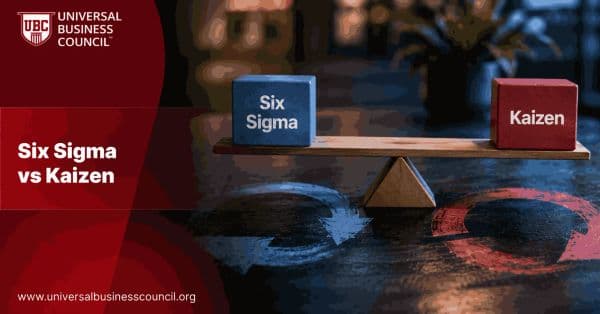
Six Sigma
Six Sigma vs Kaizen: Continuous Improvement Approaches Compared
Compare Six Sigma vs Kaizen by focus, tools, cost, metrics, and use cases. Learn when to use each approach and how they work together.
Six Sigma
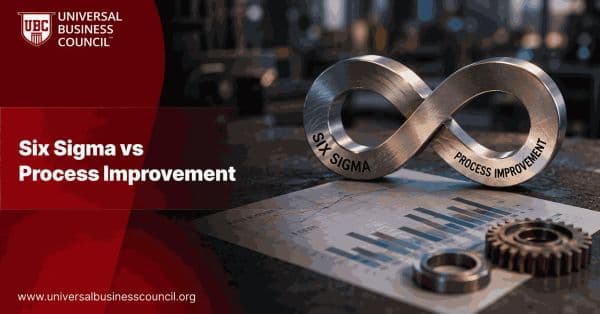
Six Sigma vs Process Improvement: Is Six Sigma the Same Thing?
Six Sigma is a structured process improvement method, not a synonym for process improvement. Learn when to use Six Sigma, Lean, Kaizen, or simpler workflow fixes.
Six Sigma
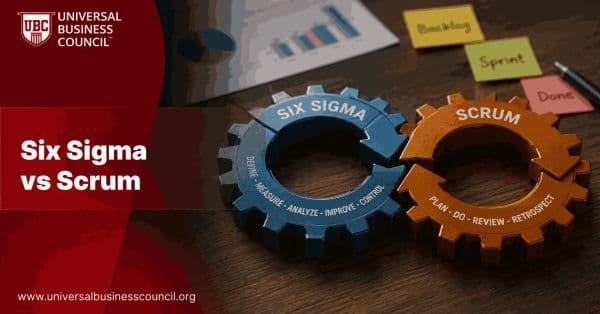
Six Sigma vs Scrum: Quality Improvement and Iterative Delivery Compared
Six Sigma vs Scrum explained for professionals comparing quality improvement, defect reduction, Agile delivery, certification paths, and hybrid use cases.
Trending Articles
The Role of Blockchain in Ethical AI Development
How blockchain technology is being used to promote transparency and accountability in artificial intelligence systems.
AWS Career Roadmap
A step-by-step guide to building a successful career in Amazon Web Services cloud computing.
Top 5 DeFi Platforms
Explore the leading decentralized finance platforms and what makes each one unique in the evolving DeFi landscape.