

Six Sigma in Construction: Reducing Rework and Project Variability
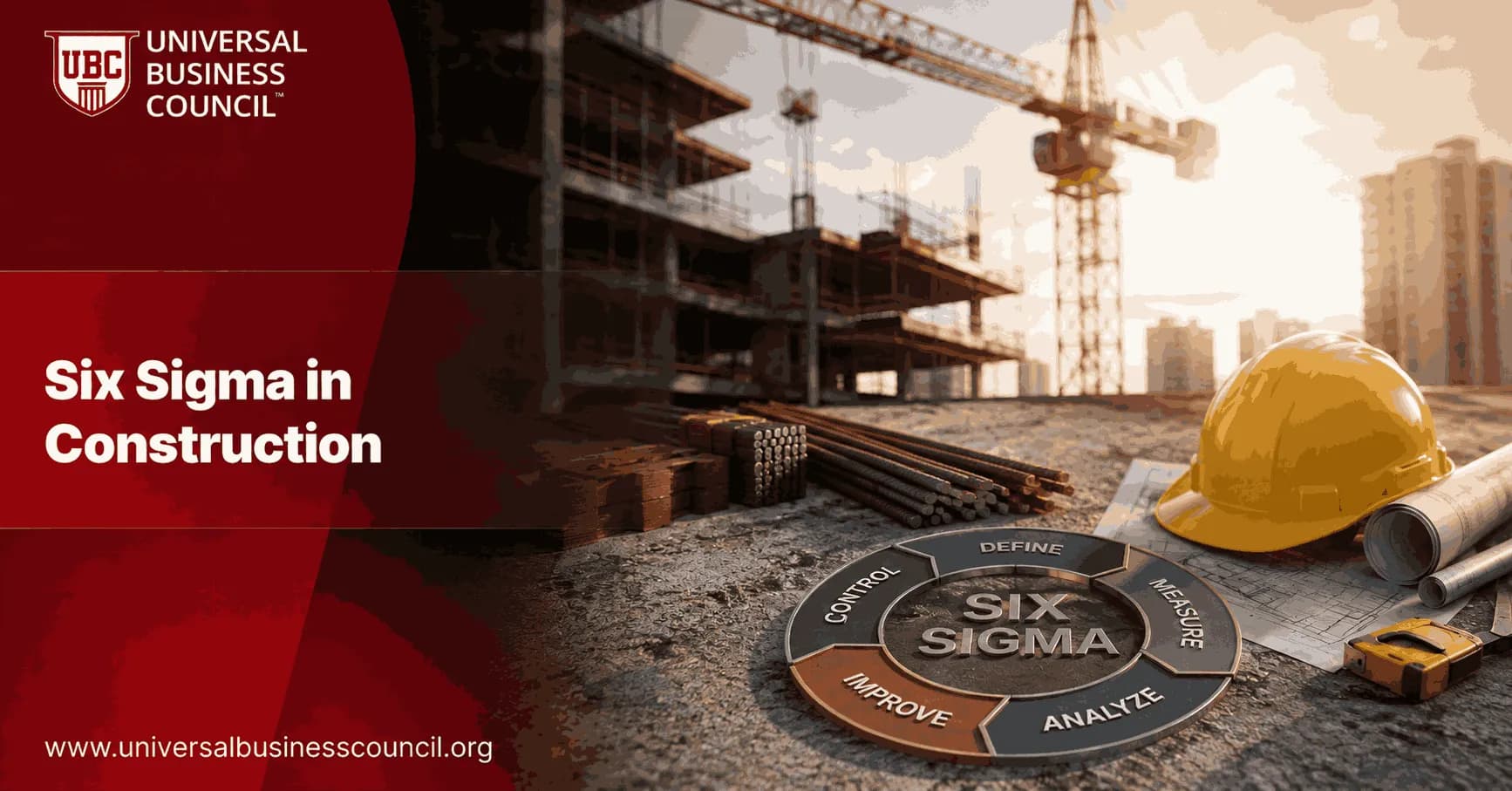
Six Sigma in construction works best when it is aimed at the messy parts of a project: rework, defects, late handoffs, crew waiting time, and the process variation that quietly eats your margin. Paired with Lean construction, it gives you a practical way to find repeat defects, prove root causes with data, and keep the fix in place after the first good week. Site and quality leaders who want to run this discipline properly, rather than just borrow the vocabulary, often start with the Certified Six Sigma Expert credential, which covers the DMAIC framework this article is built around.
That matters because rework is rarely caused by one careless trade. On real sites, it usually starts upstream: unclear drawings, late RFIs, MEP clashes, weak supervision, poor material checks, or a method statement that nobody follows after Wednesday. Six Sigma will not make construction predictable overnight. It does force the team to stop guessing.

Why construction projects need Six Sigma
Construction adopted Six Sigma later than manufacturing, but documented applications now show steady use across building, infrastructure, modular construction, specialty trades, and supply chains. The strongest pattern is not pure Six Sigma on its own. It is Lean Six Sigma construction, often combined with project management controls. Because fixing rework usually means coordinating design, procurement, supervision, and site trades all at once, project leaders often pair Six Sigma training with broader Management Certifications, since running a cross-functional improvement program on site is as much a leadership skill as a statistical one.
The reason is simple. Lean removes waste from the workflow. Six Sigma reduces variation in the process. You need both. A site can look busy and still be unstable. If a finishing crew completes 14 apartments one week, 7 the next, and 11 the week after, your schedule is not controlled. It is just moving.
Research reviews report wider use of DMAIC, value stream mapping, 5S, Last Planner style planning, Just in Time delivery, sigma levels, DPMO, and cost variance tracking in construction improvement programs. This is the right direction, provided the data is collected close to the work and reviewed by people who can actually change the process.
Where rework and variability usually start
Rework shows up at the end, but its cause is often hidden earlier. Common sources include:
Late material and equipment delivery
Design errors and unresolved change orders
MEP coordination clashes
Equipment breakdowns and tool failures
Improper crew loading or trade stacking
Weather, access constraints, and safety incidents
Weak standard operating procedures
Low skill levels, poor supervision, or skipped inspections
Structural concrete studies have found recurring defects such as porous concrete, uneven surfaces, and slab and beam problems tied to poor execution. One hotel extension study recorded 76 structural concrete defects across columns, slabs, beams, and stairs. Root causes included unskilled labour, weak supervision, poor SOP compliance, improper mixing, low quality materials, and inadequate tools.
Another building project study in Amman found that four issue groups, excavation collapse, defective roof waterproofing, poor rainwater drainage, and lack of ventilation, accounted for 52.2 percent of observed problems. That is a classic Pareto lesson. Fix the vital few, not the noisy many.
How DMAIC reduces rework on site
The DMAIC cycle gives construction teams a disciplined sequence. Do not skip Measure. That is where many first attempts fail.
Define: Pick one defect or variability problem. For example, concrete honeycombing, bathroom waterproofing failure, welding defects, or delayed panel installation.
Measure: Set the baseline. Count defects per floor, DPMO, cycle time, inspection failures, RFIs per drawing package, or percent plan complete.
Analyze: Use cause and effect diagrams, Pareto analysis, process maps, control charts, and site observation. Ask where the defect is created, not where it is found.
Improve: Change the method. That might mean mock-ups, pre-task checklists, supplier checks, revised sequencing, crew training, hold points, or BIM clash review before installation.
Control: Keep it from sliding back. Add visual standards, inspection gates, daily defect boards, and weekly trend reviews.
A practical tip: run the review at the start of the site coordination meeting, not at the end when everyone is packing up. Ten minutes on yesterday's top three defects usually beats a 40-slide quality report nobody reads. As more of this tracking moves onto BIM clash detection, sensor-based monitoring, and digital site data, some project teams also pair this work with a Deep Tech Certification to build a stronger footing in the emerging technology now feeding these defect boards.
Evidence from construction case studies
Published results are useful because they show that Six Sigma in construction is not just a classroom method.
A major Korean construction company applied Six Sigma across 258 projects and improved its average sigma level from 2.8 to 3.6. Its construction management sigma level rose from 1.3 to 2.6, alongside reductions in quality costs.
In the Hilton Garden Inn extension case, structural concrete defect control reached an average sigma level of about 3.83 with DPMO near 75,394 after targeted analysis and intervention.
A Lean Six Sigma project management study reduced delays to 7 percent and cost overruns to 6 percent, reported as 68 percent and 66 percent improvements against prior performance.
The same study reported a 40 percent reduction in non value added activities and about 30 percent gains in labour productivity and stakeholder satisfaction.
Other Lean Six Sigma case examples include a United States commercial project with 30 percent lower schedule variance, an Indian highway project with 20 percent lower material costs, and a Malaysian housing project with 40 percent fewer defects.
Infrastructure teams can learn from railway station work in London, where a Six Sigma project on concrete longitudinal beams treated the task more like a production line. It reduced process variability, improved team coordination, and cut delays.
When Six Sigma is the wrong tool
Use judgment. Six Sigma is poor value when the process is not repeated, when data is unavailable, or when leadership only wants a certificate on the wall. It also struggles when procurement, design, and site teams do not share information. To be blunt, a control chart cannot fix a subcontractor who receives revised drawings two days late every week.
Use Lean first when the issue is obvious waste: long walks, missing tools, double handling, or waiting for approvals. Use Six Sigma when the same defect or cycle time variation keeps returning and you need proof of cause.
Skills construction professionals should build
If you manage projects, quality, operations, or site delivery, build competence in:
DMAIC and problem definition
Pareto charts, control charts, DPMO, and sigma levels
Root cause analysis and process mapping
Lean tools such as 5S, value stream mapping, and Last Planner practices
Construction-specific metrics such as percent plan complete, rework cost, NCR rate, RFI aging, cost variance, and schedule variance
For structured learning, connect this topic with Universal Business Council certification and course options in Six Sigma, Lean Six Sigma, project management, operations management, and quality management. If you are preparing for a certification assessment, practice interpreting data tables. Candidates often know the DMAIC definitions cold but miss the questions that ask which metric actually proves variation has reduced.
Next step: start with one repeat defect
Pick one repeat source of rework on your current project this week. Count it. Map where it starts. Find the top cause. Test one fix. Then track whether the defect rate or cycle time variation falls over the next three reporting periods. That small DMAIC project will teach you more than any generic quality slogan. If your own role also touches the digital tools behind that tracking, from BIM platforms to site reporting software, a general Tech Certification can help round out that technical side of the work.
FAQs
1. What is Six Sigma in construction?
Six Sigma in construction is a data-driven process improvement methodology used to reduce defects, rework, delays, waste, and variability across construction projects. It applies structured techniques such as DMAIC, root cause analysis, process mapping, and statistical measurement to improve project performance. Construction companies can use Six Sigma across design coordination, procurement, scheduling, site execution, quality control, safety processes, and handover. The goal is to create more predictable processes that consistently meet quality, cost, schedule, and client requirements.
2. How does Six Sigma reduce rework in construction projects?
Six Sigma reduces construction rework by identifying why defects and errors occur rather than repeatedly correcting the finished work. Teams can analyze rework data related to design errors, incorrect installation, material defects, communication failures, workmanship issues, and specification changes. Tools such as Pareto charts, the 5 Whys, and fishbone diagrams help identify the most significant root causes. Corrective actions can then be introduced to prevent recurrence, reducing wasted labor, materials, equipment time, and project costs.
3. How can Six Sigma reduce project variability in construction?
Six Sigma reduces project variability by standardizing critical construction processes and measuring deviations from expected performance. Variability may appear in activity durations, labor productivity, material quality, inspection results, equipment performance, or subcontractor output. Six Sigma helps teams establish performance baselines, identify sources of variation, and introduce process controls. More consistent processes make project costs, schedules, quality outcomes, and resource requirements easier to predict, which is rather useful in an industry where surprises tend to arrive wearing expensive boots.
4. What is DMAIC in Six Sigma for construction?
DMAIC stands for Define, Measure, Analyze, Improve, and Control. It is a structured Six Sigma approach for improving existing construction processes. A contractor might define excessive concrete rework as the problem, measure current defect and rework rates, analyze the main causes, implement process improvements, and establish controls to sustain better performance. DMAIC prevents teams from jumping directly from discovering a problem to implementing whatever solution happens to sound convincing in the next project meeting.
5. What are the benefits of Six Sigma in the construction industry?
The main benefits of Six Sigma in construction include lower rework costs, fewer defects, improved schedule reliability, reduced waste, better productivity, stronger quality control, and increased customer satisfaction. It can also improve coordination among contractors, subcontractors, designers, suppliers, and project managers. Because decisions are based on measurable data, organizations can identify which problems have the greatest impact and prioritize improvement initiatives that deliver meaningful financial and operational results.
6. What causes rework in construction projects?
Common causes of construction rework include design errors, incomplete drawings, specification changes, poor workmanship, incorrect installation, communication failures, material defects, inadequate supervision, coordination problems, and insufficient quality inspections. Late client changes and poor information management can also contribute significantly. Six Sigma helps organizations categorize these causes and analyze their frequency and impact. Instead of treating every defect as an isolated event, teams can identify recurring patterns and address the underlying processes responsible for repeated rework.
7. What Six Sigma tools are commonly used in construction?
Common Six Sigma tools for construction include SIPOC diagrams, process maps, Pareto charts, control charts, fishbone diagrams, the 5 Whys, Failure Mode and Effects Analysis (FMEA), statistical process control, and capability analysis. For example, Pareto analysis can identify the small number of defect categories responsible for most rework costs. FMEA can help teams anticipate potential failures before construction begins, allowing preventive actions to be introduced while changes are still relatively inexpensive.
8. How does Six Sigma improve construction quality management?
Six Sigma improves construction quality management by establishing measurable quality requirements and systematically reducing defects that prevent those requirements from being achieved. Teams can monitor inspection failures, non-conformance reports, punch-list items, material defects, and rework rates. The resulting data can reveal recurring quality problems across trades, locations, suppliers, or construction activities. Corrective and preventive actions can then be implemented, helping quality management shift from detecting defects after they happen toward preventing defects before they reach the client.
9. How can Six Sigma help reduce construction project costs?
Six Sigma can reduce project costs by minimizing activities that consume resources without creating value. Rework, material waste, idle labor, equipment downtime, repeated inspections, schedule delays, and inefficient workflows all increase construction costs. By measuring these losses and identifying their root causes, Six Sigma teams can implement targeted improvements. Even relatively small reductions in recurring defects or process variation can produce substantial savings when improvements are repeated across multiple activities and projects.
10. How does Six Sigma help prevent construction defects?
Six Sigma helps prevent defects by identifying potential failure points and controlling the factors that influence construction quality. Historical defect data, inspection records, and non-conformance reports can be analyzed to determine which activities create the greatest risk. Techniques such as FMEA can also identify potential failures before work begins. Preventive measures may include standardized work procedures, improved training, material verification, digital checklists, mock-ups, enhanced design reviews, and more effective inspection points.
11. What KPIs should be measured when applying Six Sigma in construction?
Useful Six Sigma construction KPIs include rework percentage, cost of poor quality, defect rate, schedule variance, cost variance, inspection pass rate, labor productivity, material waste, Request for Information (RFI) frequency, change-order frequency, punch-list items, and customer satisfaction. Organizations should select KPIs that directly reflect the problem being improved. Establishing a baseline before introducing changes is essential because without baseline data, declaring an improvement becomes suspiciously similar to congratulating yourself without keeping score.
12. How can Six Sigma improve construction project scheduling?
Six Sigma can improve scheduling by analyzing why construction activities consistently finish earlier or later than planned. Teams can examine variation caused by labor availability, material delivery, equipment downtime, approvals, design information, subcontractor performance, and workflow dependencies. Root causes of recurring delays can then be addressed through better planning, standardized processes, supplier improvements, or improved coordination. Reducing variation makes activity durations more predictable and helps project managers develop schedules that better reflect actual site performance.
13. How does Six Sigma improve subcontractor performance?
Six Sigma can improve subcontractor performance by establishing measurable expectations and evaluating performance using consistent data. Contractors can monitor defect rates, rework costs, schedule adherence, inspection results, safety performance, productivity, and response times for each subcontractor. Patterns can then be identified and discussed using objective evidence. Improvement plans may involve additional training, revised work procedures, stronger quality checks, better coordination, or supplier development initiatives, creating greater consistency across the project supply chain.
14. How can Six Sigma improve material management in construction?
Six Sigma improves material management by reducing variation and waste across ordering, delivery, storage, handling, and installation processes. Teams can measure damaged materials, incorrect deliveries, excessive inventory, shortages, waiting time, and material waste. Root cause analysis can identify whether problems originate with suppliers, inaccurate quantity estimates, poor storage practices, communication failures, or site handling. Improvements can reduce material costs while ensuring that required materials are available when construction activities need them.
15. What is the role of root cause analysis in reducing construction rework?
Root cause analysis helps construction teams determine why rework occurred rather than simply identifying what went wrong. Methods such as the 5 Whys and fishbone diagrams can investigate contributing factors involving people, materials, equipment, methods, design information, management, and environmental conditions. For example, incorrect installation may initially appear to be a workmanship problem, but deeper analysis could reveal unclear drawings or inadequate coordination. Addressing the root cause makes future defects less likely to recur.
16. How can Lean Six Sigma improve construction projects?
Lean Six Sigma combines Lean's focus on eliminating waste with Six Sigma's focus on reducing defects and process variation. In construction, Lean methods can reduce waiting, unnecessary movement, excess inventory, overprocessing, and inefficient workflows, while Six Sigma techniques address quality defects and inconsistent performance. Together, they can improve productivity, project flow, schedule reliability, cost control, and quality. Lean Six Sigma is particularly useful for repetitive construction processes where measurable improvements can be standardized across projects.
17. Can Six Sigma be used with BIM in construction?
Yes. Six Sigma and Building Information Modeling (BIM) can complement each other effectively. BIM provides digital information that can help teams detect clashes, coordinate designs, visualize construction sequences, and improve communication. Six Sigma provides a structured methodology for analyzing defects and improving the processes surrounding that information. Organizations can use BIM data alongside defect, RFI, change-order, and rework data to identify recurring coordination problems and develop measurable improvements in design and construction workflows.
18. What are the challenges of implementing Six Sigma in construction?
Common challenges include inconsistent project data, resistance to standardized processes, fragmented project teams, changing site conditions, subcontractor variability, limited Six Sigma expertise, and pressure to prioritize immediate project deadlines over long-term improvement. Construction projects are also temporary and involve many independent stakeholders, making process control more difficult than in repetitive manufacturing. Successful implementation therefore requires leadership support, reliable data collection, employee involvement, practical training, and improvement goals linked directly to project outcomes.
19. How does Six Sigma improve customer satisfaction in construction?
Six Sigma improves customer satisfaction by focusing process improvements on requirements that matter to clients, such as quality, timely completion, budget control, safety, reliability, and minimal defects at handover. Six Sigma refers to important customer requirements as Critical-to-Quality characteristics, or CTQs. By measuring performance against these requirements and reducing variation, contractors can deliver more consistent outcomes. Fewer defects, shorter punch lists, reduced delays, and smoother handovers can significantly improve the client's overall project experience.
20. Is Six Sigma suitable for modern construction and digital project management?
Yes. Six Sigma remains relevant in modern construction, particularly when combined with digital technologies such as BIM, digital twins, IoT sensors, drones, AI analytics, cloud-based project management systems, and automated quality reporting. These technologies generate increasingly detailed project data, while Six Sigma provides a disciplined framework for turning that data into process improvements. Used alongside Lean Construction and modern project management practices, Six Sigma can help contractors reduce rework, control variability, improve predictability, and continuously improve project delivery.
Related Articles
View All
Six Sigma
Six Sigma in Software Development: Reducing Defects and Rework
Learn how Six Sigma in software development reduces defects, rework, cycle time, and cost of poor quality through DMAIC, Lean methods, and metrics.

Six Sigma
How to Build a Six Sigma Project Charter Aligned with Business Goals
Learn how to build a Six Sigma project charter that connects scope, metrics, financial impact, and DMAIC goals to real business priorities.
Six Sigma
Six Sigma vs Project Management: Methods, Tools, and Career Paths
Compare Six Sigma vs Project Management across methods, tools, salaries, and career paths. Learn when to use DMAIC, Agile, Waterfall, or both.
Trending Articles
The Role of Blockchain in Ethical AI Development
How blockchain technology is being used to promote transparency and accountability in artificial intelligence systems.
AWS Career Roadmap
A step-by-step guide to building a successful career in Amazon Web Services cloud computing.
Top 5 DeFi Platforms
Explore the leading decentralized finance platforms and what makes each one unique in the evolving DeFi landscape.