

How to Build a Six Sigma Project Charter Aligned with Business Goals
A Six Sigma project charter is not a formality. It is the working agreement between the sponsor and the project team, and it should prove that the work supports a business goal worth funding. If the charter cannot connect a process problem to margin, customer experience, compliance, capacity, or growth, the project is probably not ready. This is also where many practitioners realize a single belt is not enough business fluency on its own, which is why a fair number pursue a broader credential such as the Certified Six Sigma Expert designation to strengthen exactly this kind of charter-level, business-case thinking.
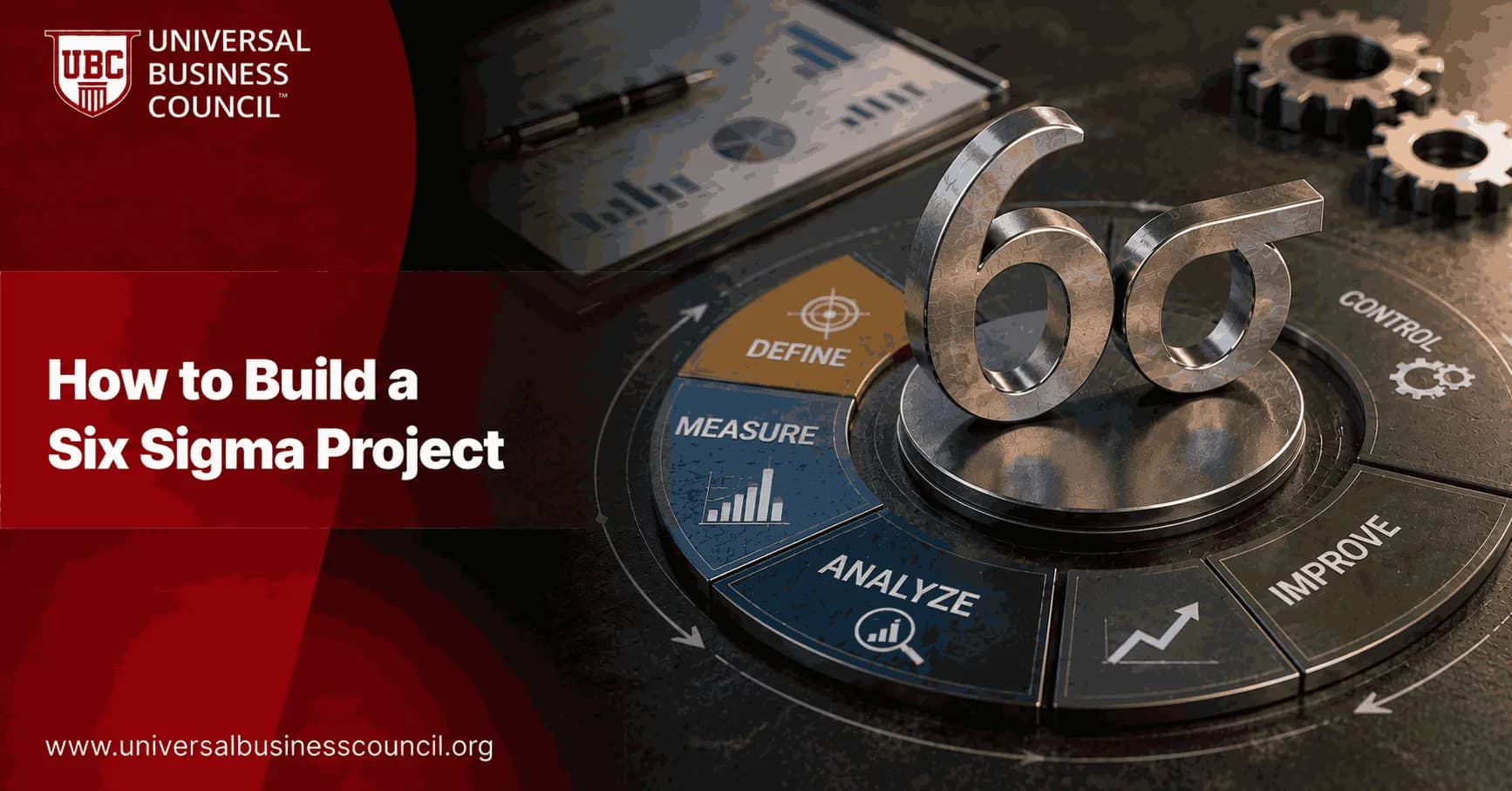
Good charters are short. Often one page. But short does not mean shallow. The best ones make the trade-offs visible before the team enters Measure in DMAIC, which ASQ defines as Define, Measure, Analyze, Improve, and Control.

Why business alignment belongs in the charter
A Six Sigma team can improve a metric that nobody in leadership cares about. I have seen it happen. One service team spent six weeks reducing an internal handoff delay from 14 hours to 9 hours, only to learn that the customer SLA was driven by a different queue. Nice improvement. Wrong target.
The charter prevents that mistake. It ties the problem, goal, scope, measures, and expected benefit to the organization's performance targets. Think CAC, LTV, scrap cost, first pass yield, Net Promoter Score, mean time to restore, regulatory findings, or on-time delivery.
Core elements of a business-aligned Six Sigma project charter
Most of what follows is standard DMAIC charter discipline, but a few of these elements, especially scope, governance, and financial sign-off, lean more on organizational leadership skill than statistics. Teams that feel shaky there often round things out with general Management Certifications rather than trying to stretch a Six Sigma curriculum to cover sponsorship and governance on its own.
1. Business case
The business case answers one blunt question: why should the organization care now?
Write it in business language, not quality jargon. Link the project to a strategic priority such as cost reduction, service reliability, customer retention, audit readiness, or throughput. Include the financial size of the problem where you can.
Weak: Improve invoice accuracy.
Better: Invoice rework is consuming an estimated 120 finance hours per month and delaying cash collection for enterprise accounts. The project supports the finance target to reduce order-to-cash cycle time this fiscal year.
2. Problem statement
The problem statement should describe what is wrong, where it occurs, when it occurs, and how large the gap is. Do not include the solution. Do not blame a department.
Use baseline data. A useful format is:
From January to March, 8.4 percent of Line 3 assemblies required rework.
The internal target is 3 percent.
The gap creates excess labor, material scrap, and delayed shipments for Product Family A.
This is the section that often trips certification candidates up. They write a goal or solution and call it a problem statement. Keep it factual.
3. Goal statement
The goal should be SMART: specific, measurable, achievable, relevant, and time-bound. It must match the business case and the problem statement.
For example: Reduce Line 3 assembly rework from 8.4 percent to 3.5 percent by 30 September, without increasing inspection headcount.
That last phrase matters. Constraints stop the team from calling extra inspection a process improvement when it is really cost transfer.
4. Scope in and scope out
Scope keeps the project survivable. Define process start and end points, locations, products, customer segments, systems, and departments.
Use two lists:
In scope: Line 3, Product Family A, first-shift assembly steps from kitting to final test.
Out of scope: supplier qualification, Product Family B, second-shift staffing model, warehouse picking.
Be strict. A charter that tries to fix the whole value stream usually fixes nothing on time.
5. Metrics and financial impact
Every Six Sigma project charter needs operational and business measures. Pair them clearly.
Operational metric: defect rate, rework hours, cycle time, first pass yield, wait time, error rate.
Business metric: scrap cost, labor cost, revenue leakage, service penalties, churn risk, capacity gained.
Separate hard and soft benefits. Hard savings change the financials, such as lower material scrap. Soft benefits still matter, such as lower complaint volume or reduced compliance exposure, but they should not be dressed up as cash unless finance agrees.
6. Timeline and DMAIC milestones
Set a high-level schedule for Define, Measure, Analyze, Improve, and Control. Match it to business timing. If a process change must be stable before peak season, budget close, a product launch, or an audit window, say so in the charter.
Also name dependencies: data access, system changes, policy approval, union review, customer communication, or validation testing. Where system changes involve traceability, supplier records, or compliance evidence, some charters now reference a Deep Tech Certification as background reading for the team, since distributed ledger and audit-trail concepts are increasingly part of how validation testing and data access dependencies actually get resolved.
7. Team, sponsor, and governance
List the sponsor, process owner, Green Belt or Black Belt lead, team members, finance reviewer, and approval body. The sponsor should own the business result affected by the project. If the sponsor cannot approve scope or remove barriers, you have the wrong sponsor.
This is a useful place to connect learning pathways. Teams preparing for project leadership can link the charter review to relevant Universal Business Council Six Sigma certification courses and internal quality management training.
8. Risks, assumptions, and constraints
Do not hide the awkward parts. Put them in writing.
Data may be incomplete before April due to a system migration.
Engineering capacity is limited to four hours per week.
Any tooling change requires validation approval.
Customer disruption must remain zero during pilot testing.
These details help leadership make a real decision, not a ceremonial approval.
A practical step-by-step charter build
Start with strategy. Review the current KPI dashboard, OKRs, budget targets, customer complaints, VOC data, and audit findings.
Run a focused workshop. Ninety minutes is usually enough with the sponsor, process owner, project lead, and a finance contact.
Draft the business case and problem statement from data. Use the last 3 to 6 months where possible, not a single bad week.
Set the goal. Tie the target to the baseline and the business objective.
Lock scope boundaries. Ask what is explicitly out of scope. This saves arguments later.
Estimate benefit with finance. Agree on formulas before savings are reported.
Approve the charter. Get sponsor sign-off before the team moves deeply into Measure.
Update with discipline. Treat the charter as a living document, but require documented approval for changes to scope, goals, or benefits.
Six Sigma project charter template checklist
Business case linked to a strategic goal
Problem statement with baseline data
SMART goal with target date
Scope in and scope out
Operational metrics and financial impact
DMAIC milestones and key dependencies
Team roles, sponsor, and approval path
Risks, assumptions, and constraints
Build the charter before you build the solution
A strong Six Sigma project charter forces the hard conversations early: what matters, what does not, who owns the outcome, how success will be measured, and whether the benefit is real. That is the point.
If you are leading DMAIC work, draft your next charter against the checklist above, review it with the sponsor, and then deepen your capability through Universal Business Council's Six Sigma certification courses or related process improvement training. If your charters increasingly involve system rollouts, data platforms, or automation dependencies rather than pure process steps, a general Tech Certification is a practical way to round out that capability alongside your Six Sigma credentials.
FAQs
1. What is a Six Sigma project charter?
A Six Sigma project charter is a formal document that defines an improvement project's business case, problem statement, goal, scope, stakeholders, team, timeline, and expected benefits. It provides authorization and direction for the project and creates shared agreement about what the team will improve and how success will be measured.
2. Why is a project charter important in Six Sigma?
A project charter prevents teams from beginning analysis without a clearly defined problem or business objective. It aligns sponsors, process owners, and project teams around scope, priorities, responsibilities, metrics, and expected outcomes. A strong charter also reduces scope creep and provides a reference point for decisions throughout the DMAIC lifecycle.
3. When is the project charter created in DMAIC?
The project charter is normally developed during the Define phase of DMAIC.
At this stage, the team clarifies the business problem, customer requirements, project goals, boundaries, stakeholders, and expected benefits.
The charter can be refined as better information becomes available, but major changes should be reviewed with the project sponsor because they can affect resources, timelines, and expected results.
4. What should a Six Sigma project charter include?
A practical project charter commonly includes:
Project title
Business case
Problem statement
Goal statement
Project scope
Key metrics
Expected financial or operational benefits
Project team and roles
Sponsor and process owner
Milestones
Risks and constraints
Some organizations also include Voice of the Customer, CTQs, assumptions, and initial stakeholder analysis.
5. How do you align a Six Sigma project with business goals?
Start with an organizational priority and connect it to a measurable process outcome.
For example:
Business Goal: Improve customer retention
Process Issue: Excessive complaint-resolution time
Project Metric: Average resolution cycle time
Six Sigma Goal: Reduce average resolution time from 72 hours to 36 hours
This creates a clear connection between process improvement and business performance.
6. How do you write a Six Sigma business case?
A business case should explain why the project matters to the organization.
A useful structure is:
Business Problem + Operational/Customer Impact + Strategic Relevance + Expected Benefit
For example:
“Order-processing errors generate approximately $400,000 in annual rework and contribute to customer complaints. Reducing these errors supports the company's goals of lowering operating costs and improving customer retention.”
The business case should establish importance without prematurely prescribing a solution.
7. How do you write a Six Sigma problem statement?
A strong problem statement describes the current performance gap using evidence.
It should answer:
What is happening? Where? Since when? How large is the problem?
For example:
“During the previous six months, 7.2% of orders processed by the regional fulfillment center required correction, compared with the target of below 2%, resulting in approximately 1,400 hours of rework.”
Avoid including assumed causes or solutions before the Analyze phase.
8. What makes a good Six Sigma goal statement?
A good goal statement is specific, measurable, achievable, relevant, and time-bound.
For example:
“Reduce order-processing defects from 7.2% to below 3% by December 31 while maintaining current order cycle-time performance.”
A measurable goal gives the team a clear target and makes it possible to determine whether the project succeeded.
9. What is the difference between a problem statement and a goal statement?
The problem statement describes current undesirable performance.
The goal statement defines the desired future performance.
For example:
Problem: Customer onboarding averages 12 business days.
Goal: Reduce average onboarding time to 7 business days by the end of Q3.
The problem establishes the gap. The goal establishes the destination. Neither should contain an unvalidated solution.
10. How should project scope be defined in a Six Sigma charter?
Scope should specify what is included and excluded from the project.
Useful boundaries may involve:
Process Start → Process End → Location → Product → Customer Segment → System
For example:
In Scope: Domestic online orders from payment confirmation through warehouse dispatch.
Out of Scope: International orders, supplier procurement, and last-mile delivery.
Clear boundaries prevent the project from quietly expanding until the team is apparently responsible for improving the entire corporation.
11. How do you identify the right Six Sigma project metrics?
Select metrics directly connected to the problem and desired business outcome.
Common measures include:
Defect rate
Cycle time
First-pass yield
Cost per transaction
Scrap
Rework
Customer complaints
On-time delivery
Process capability
Teams may distinguish between a primary outcome metric and secondary or balancing metrics that ensure improvements do not create problems elsewhere.
12. How should financial benefits be included in a project charter?
Financial benefits should be estimated using documented assumptions and credible baseline data.
Potential benefits include:
Cost Reduction + Reduced Rework + Reduced Scrap + Capacity Improvement + Cost Avoidance + Revenue Protection
Finance representatives should validate significant benefit estimates where possible.
Teams should distinguish hard savings from cost avoidance and capacity benefits rather than placing every favorable number under “savings” and hoping accounting develops a sudden sense of humor.
13. Who should be included on a Six Sigma project team?
The team should include people with the knowledge and authority required to analyze and improve the process.
Typical roles include:
Executive Sponsor: Provides authority and removes barriers.
Process Owner: Owns ongoing process performance.
Black Belt/Green Belt: Leads the improvement methodology.
Subject Matter Experts: Provide technical or operational expertise.
Team Members: Support analysis and implementation.
Finance, IT, compliance, or customer representatives may also participate when relevant.
14. What is the role of the project sponsor?
The sponsor connects the Six Sigma project to organizational priorities and provides leadership support.
Responsibilities may include approving the charter, securing resources, resolving escalated issues, reviewing progress, removing organizational barriers, and ensuring the project remains strategically relevant.
Sponsors should be active enough to make decisions without attempting to perform the project team's analysis themselves.
15. How should project milestones be defined?
Milestones should reflect major DMAIC stages and important implementation decisions.
A simple timeline might include:
Define Complete → Measure Complete → Analyze Complete → Pilot Improvement → Improve Complete → Control Handover
Milestones should have realistic target dates based on project complexity, resource availability, data requirements, and operational constraints.
16. How can Voice of the Customer be incorporated into the charter?
Voice of the Customer can help identify requirements that matter to customers and translate them into Critical-to-Quality characteristics.
For example:
Customer Need: Fast delivery
CTQ: Order delivered within two business days
Metric: Percentage of orders delivered within target
Connecting customer expectations to measurable process requirements prevents teams from improving internal metrics that customers do not actually value.
17. What are common mistakes in Six Sigma project charters?
Common problems include vague problem statements, solution-focused wording, excessively broad scope, weak business justification, unrealistic goals, unclear ownership, unreliable financial estimates, and too many metrics.
Another frequent mistake is selecting a project because data happens to be available rather than because the problem matters strategically.
A perfectly measured trivial problem remains trivial.
18. How can a project charter prevent scope creep?
The charter establishes explicit process boundaries and defines what the project will and will not address.
When new issues appear, the team can ask whether they contribute directly to the chartered objective.
If a significant scope change is necessary, the sponsor should review its impact on resources, timeline, benefits, and project goals before approving it.
This keeps useful discoveries from turning one project into six accidental projects.
19. How do you know whether a Six Sigma project charter is strong?
A strong charter should allow a senior stakeholder to answer five questions quickly:
Why does this matter?
What exactly is wrong?
What improvement is expected?
What is inside and outside scope?
How will success be measured?
If those answers are unclear after reading the charter, the project probably needs further definition before progressing deeply into Measure and Analyze.
20. What is a practical Six Sigma project charter template?
A useful charter can be built using the following structure.
Project Title
Keep the title short and tied to the process or outcome.
Example:
Reduce Customer Onboarding Cycle Time
1. Strategic Alignment
Identify the organizational objective supported by the project.
Example:
Business Priority: Improve customer experience and reduce operating cost.
2. Business Case
Explain why the project deserves resources.
Example:
“Customer onboarding currently requires an average of 12 business days, contributing to customer complaints, abandoned applications, and approximately $250,000 in annual rework costs. Improving the process supports the company's customer-experience and operational-efficiency priorities.”
3. Problem Statement
State current performance without assuming the cause.
Example:
“From January through June, average onboarding cycle time was 12 business days against a target of 7 days, with 18% of applications exceeding 15 business days.”
4. Goal Statement
Define measurable desired performance.
Example:
“Reduce average onboarding cycle time from 12 to 7 business days or less by December 31 while maintaining compliance and quality requirements.”
5. Scope
Define clear boundaries.
In Scope:
Application submission through final account activation.
Out of Scope:
Marketing acquisition, product pricing, and post-activation servicing.
6. Primary Metric
Average Onboarding Cycle Time
7. Balancing Metrics
Compliance error rate
Customer complaints
Rework rate
Balancing metrics matter because reducing cycle time by skipping necessary controls would produce a very efficient regulatory problem.
8. Expected Benefits
Estimate:
Reduced Rework + Lower Operating Cost + Faster Customer Activation + Improved Customer Experience
Document assumptions and involve finance in validating material financial benefits.
9. Project Team
Identify:
Sponsor → Process Owner → Green/Black Belt → Subject Matter Experts → Supporting Functions
10. Milestones
Define:
Charter Approval → Measure → Analyze → Pilot → Improve → Control
11. Risks and Constraints
Examples include:
Limited data quality
Technology dependencies
Regulatory requirements
Resource constraints
Vendor dependencies
Peak operational periods
A simple alignment test can then be applied:
Business Goal → Process Problem → Project Metric → Improvement Target → Financial/Customer Benefit
For example:
Reduce Operating Cost
↓
High Rework
↓
Rework Hours per Transaction
↓
Reduce Rework by 40%
↓
$300,000 Estimated Annual Benefit
That chain is the heart of strategic alignment.
The best Six Sigma charter is not necessarily the longest document.
It is the one that creates enough clarity that the team, sponsor, process owner, and finance function agree on why the project exists, what it will improve, how much improvement is expected, and how the organization will know whether it worked.
If a project cannot establish those points during Define, adding more statistical sophistication later will not rescue it.
Six Sigma is rather inconsiderate that way. It keeps demanding that organizations define the problem before celebrating the solution.
Related Articles
View All
Six Sigma
Six Sigma vs Project Management: Methods, Tools, and Career Paths
Compare Six Sigma vs Project Management across methods, tools, salaries, and career paths. Learn when to use DMAIC, Agile, Waterfall, or both.
Six Sigma
Six Sigma vs Business Process Management: How They Work Together
Learn how Six Sigma and Business Process Management work together to reduce variation, improve workflows, and sustain process performance.
Six Sigma
Six Sigma in Business Operations: Streamlining Everyday Processes
Learn how Six Sigma in business operations reduces defects, cycle time, and rework in finance, healthcare, service, inventory, and daily workflows.
Trending Articles
The Role of Blockchain in Ethical AI Development
How blockchain technology is being used to promote transparency and accountability in artificial intelligence systems.
AWS Career Roadmap
A step-by-step guide to building a successful career in Amazon Web Services cloud computing.
Top 5 DeFi Platforms
Explore the leading decentralized finance platforms and what makes each one unique in the evolving DeFi landscape.