

Six Sigma in Business Operations: Streamlining Everyday Processes
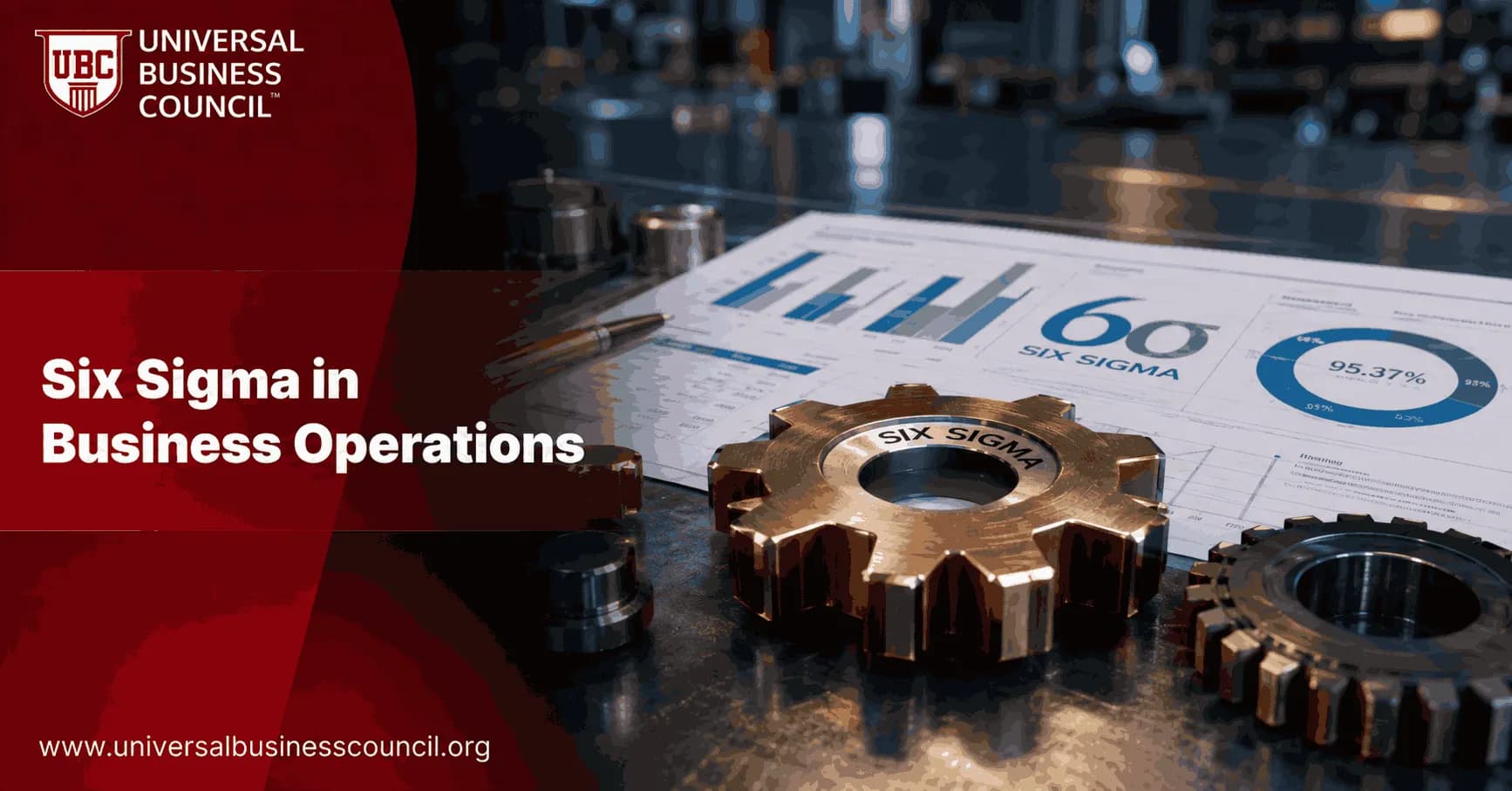
Six Sigma in business operations works best when you apply it to the ordinary process that keeps irritating customers, draining cash, or wasting staff time. Think invoice disputes, delayed purchase orders, repeat service tickets, lab scheduling, medication handoffs, or stockouts. Not glamorous. Very measurable. Operations professionals building this skill from scratch often start with a focused credential like the Certified Six Sigma Expert program, since DMAIC fluency is what turns a vague complaint into a project worth running.
The method is still rooted in reducing variation and defects, but modern practice is less about factory folklore and more about daily workflow control. Lean Six Sigma now combines waste removal with statistical analysis, using tools such as DMAIC, value stream mapping, control charts, root cause analysis, and dashboards.

What Six Sigma Means in Everyday Operations
Six Sigma is a data driven improvement method designed to reduce defects, variation, and cycle time. In business operations, that means you define what good looks like, measure the current process, identify causes of failure, improve the workflow, then control the new standard.
The DMAIC cycle is still the backbone:
Define: Pick a clear problem, such as late invoices or long customer onboarding times.
Measure: Collect baseline data. Do not trust anecdotes.
Analyze: Find the actual root causes, not the loudest opinion in the meeting.
Improve: Test changes, remove waste, and standardize the better path.
Control: Monitor the process so the old habits do not return.
Here is the part many first-time teams miss: a defect definition must be agreed before data collection starts. If one manager counts an invoice as late after 30 days and another uses 45 days, your baseline is already broken.
Why Lean Six Sigma Has Become the Default Approach
Pure Six Sigma focuses on variation and defects. Lean focuses on waste, handoffs, waiting, rework, and unnecessary movement. In real operations, you need both.
Take a customer service team that gives accurate answers but takes too long to respond. That is a flow problem. A billing team may process quickly but keep issuing credit notes because the invoice data is wrong. That is a defect problem. Lean Six Sigma gives you a practical way to address both without turning every improvement effort into a six-month statistics exercise.
This is why the method has moved far beyond manufacturing. It is now common in healthcare, banking, government, higher education, logistics, and digital service operations. Running that kind of cross-functional program well depends on more than statistics, which is why many operations leaders pair Six Sigma training with broader Management Certifications, covering the stakeholder alignment and team-leadership skills that decide whether an improvement effort survives beyond one department.
Where Six Sigma in Business Operations Delivers Results
Finance and administration
Accounts receivable is a classic Six Sigma target because delays hit cash flow directly. Improvement projects have cut average invoice collection time by fixing collection steps and resolving discrepancies earlier. That is not a vanity metric. It changes working capital.
Purchase order processing is another strong candidate. If approvals sit in email, supplier data is incomplete, and exception handling is informal, cycle time balloons fast.
Healthcare and pharmacy workflows
Hospitals and clinics use Six Sigma to reduce medication errors, patient waiting time, prescription backlogs, and billing delays. Reported projects show meaningful drops in medication errors after teams standardized protocols and analyzed key failure points. Healthcare is unforgiving. Small process variation can become a safety issue.
Inventory and fulfillment
Stockouts and excess stock are two sides of the same failure: poor process control. DMAIC based inventory projects tighten reorder points, clean up supplier data, and stabilize on time delivery. The payoff shows up as fewer stockouts, higher fill rates, and lower materials cost. That is Six Sigma solving an everyday operations problem, not a boardroom slogan.
Customer service and contact centers
Contact centers use Six Sigma to cut hold times and rework after analyzing customer data and redesigning workflows. In service teams, the best metric is rarely just average handle time. Watch first contact resolution, rework rate, escalation percentage, and customer effort score too.
Digital Tools Are Changing Six Sigma Practice
The method has not been replaced by analytics platforms. It has become better because of them.
Modern teams now use tools such as Google Analytics 4, Salesforce, HubSpot, Power BI, Tableau, Minitab, and process mining software to support the Measure and Analyze phases. Real time dashboards help teams see queue length, defect rate, SLA breaches, and rework trends without waiting for a monthly spreadsheet.
Discrete event simulation is also gaining ground. You can model a loan approval process, test staffing changes, and estimate queue impact before changing the live operation. Digital twins serve a similar purpose in complex environments where a failed process change would be costly.
Be careful, though. Automation does not fix a bad process. It usually makes the bad process faster and harder to unwind. When the real blocker is fragmented systems that will not feed clean data into these dashboards in the first place, a Deep Tech Certification from Blockchain Council can help teams understand how reliable, traceable data pipelines are built, since a dashboard is only as trustworthy as the systems behind it.
When Six Sigma Is the Right Tool, and When It Is Not
Use Six Sigma when the problem is repeatable, measurable, and important enough to justify structured analysis. It is a strong fit for:
High error rates in billing, claims, or order entry
Long approval or onboarding cycles
Inventory stockouts or excess stock
Service delays with clear timestamps
Compliance failures caused by process variation
Do not reach for full Six Sigma on every small annoyance. A two-step checklist fix may be enough. Very small firms can also struggle with formal Six Sigma programs because they may lack data systems, project time, or trained facilitators. Surveyed practitioners consistently report strong financial impact when programs are run well, but the method needs discipline to pay off.
How to Start a Six Sigma Operations Project
Start narrow. Pick one process with visible pain and available data. Then follow this sequence:
Write a problem statement: Use numbers, not frustration. For example, 18 percent of orders need manual correction.
Name the customer impact: Late delivery, billing confusion, safety risk, or extra waiting time.
Map the current process: Include handoffs, queues, approvals, and rework loops.
Measure the baseline: Capture defect rate, cycle time, cost per transaction, and volume.
Find root causes: Use Pareto analysis, fishbone diagrams, and hypothesis testing where appropriate.
Pilot the fix: Test before rollout. Small pilots protect credibility.
Build a control plan: Assign metric owners, review frequency, and escalation rules.
Skills Professionals Need Now
The strongest Six Sigma practitioners are no longer just statistics people. You need process mapping, facilitation, stakeholder management, data literacy, and enough technical fluency to work with analytics and automation teams.
If you are building your credentials, use this article as a starting point and explore the relevant Universal Business Council Six Sigma certification and process improvement course pages as internal next steps. Pair Six Sigma study with business analytics, project management, and operations management training if your goal is to lead cross functional improvement work.
Next Step
Choose one routine process this week. Pull the last 30 to 90 days of data, define one defect clearly, and calculate the baseline defect rate or cycle time. If the number matters to customers, cash flow, compliance, or staff capacity, it is a serious Six Sigma candidate. If your baseline keeps stalling because the underlying systems will not talk to each other, a Tech Certification from Global Tech Council is worth adding to your plan, since some operations bottlenecks need better systems integration, not another improvement workshop.
FAQs
1. How is Six Sigma used in business operations?
Six Sigma is used in business operations to identify inefficient processes, reduce errors and variation, shorten cycle times, control costs, and improve customer outcomes. Teams can apply DMAIC, process mapping, root-cause analysis, Pareto charts, control charts, and other tools to improve everyday workflows such as order processing, billing, approvals, customer service, procurement, and reporting.
2. What business processes can Six Sigma improve?
Six Sigma can improve many repetitive and measurable business processes, including:
Customer onboarding
Order processing
Billing and invoicing
Procurement
Customer support
Claims processing
Inventory management
Employee onboarding
Financial reporting
Approval workflows
The methodology is most useful when poor performance is recurring, measurable, and important enough to justify structured investigation.
3. How does DMAIC apply to everyday business operations?
DMAIC provides a five-phase improvement structure:
Define: Identify the operational problem and business impact.
Measure: Establish current performance.
Analyze: Determine the root causes.
Improve: Develop and implement solutions.
Control: Sustain the improved process.
For example, DMAIC could be used to reduce invoice-processing time from eight business days to four while maintaining accuracy.
4. How can Six Sigma reduce operational costs?
Six Sigma can reduce operational costs by identifying defects, rework, delays, unnecessary activities, repeated customer contacts, overtime, excess inventory, and inefficient resource use.
A team might calculate:
Operational Cost = Processing + Rework + Errors + Delays + Failure Costs
By eliminating the causes of recurring problems, organizations can reduce both visible expenses and hidden Cost of Poor Quality.
5. How can Six Sigma improve process efficiency?
Six Sigma improves efficiency by measuring how work actually flows and identifying the factors preventing consistent performance.
Teams can examine:
Inputs → Activities → Decisions → Handoffs → Outputs
Process maps reveal unnecessary complexity, while data analysis helps determine which steps or variables contribute most to poor outcomes.
Lean techniques are frequently combined with Six Sigma when waste and flow are also major concerns.
6. How can Six Sigma reduce business process cycle time?
Start by measuring total cycle time and breaking it into components such as:
Processing Time + Waiting Time + Approval Time + Rework Time
Teams can then determine where delays occur and why.
Potential improvements may include removing unnecessary approvals, standardizing inputs, redesigning handoffs, automating repetitive activities, or correcting upstream errors that create downstream rework.
7. How can Six Sigma reduce errors in office processes?
Office processes generate defects just as manufacturing processes do.
Examples include:
Incorrect invoices
Missing customer information
Duplicate data entry
Reporting errors
Incorrect approvals
Contract mistakes
Payment errors
Data-entry defects
Six Sigma helps teams define these errors as measurable defects, identify their causes, and redesign processes to reduce recurrence.
8. What Six Sigma tools are useful in business operations?
Common tools include:
SIPOC: Defines the high-level process.
Process Mapping: Shows workflow and handoffs.
Pareto Analysis: Identifies high-impact problems.
5 Whys: Explores potential root causes.
Fishbone Diagram: Organizes possible causes.
FMEA: Evaluates potential failures and risks.
Control Charts: Monitor process behavior over time.
Process Capability: Evaluates performance against requirements.
More advanced statistical methods can be used when the problem requires them.
9. How can Six Sigma improve customer service operations?
Six Sigma can help customer-service teams reduce waiting times, repeated contacts, escalations, resolution errors, and inconsistent service.
For example, a team might track:
First Contact Resolution
Average Resolution Time
Repeat Contact Rate
Complaint Rate
Customer Satisfaction
DMAIC can then identify the process factors associated with poor customer outcomes and guide targeted improvements.
10. How can Six Sigma improve order processing?
Order-processing improvements can focus on accuracy, speed, handoffs, inventory availability, approvals, and fulfillment.
Suppose 7% of orders require correction.
A Six Sigma team can segment defects by:
Error Type → Channel → Product → Team → Process Step
Pareto and root-cause analysis can identify where most failures originate, allowing the organization to address the underlying process rather than repeatedly correcting individual orders.
11. How can Six Sigma improve billing and invoicing?
Billing processes can suffer from incorrect prices, duplicate invoices, missing information, delayed approvals, tax errors, and mismatched purchase orders.
A Six Sigma project can measure:
Invoice Accuracy + Processing Time + Rework + Disputes + Cost per Invoice
Root-cause analysis can then guide standardization, system validation, training, workflow redesign, or automation.
12. How can Six Sigma improve employee productivity?
Six Sigma can improve productivity by reducing the amount of time employees spend on non-value-added work.
Examples include:
Searching for Information → Re-entering Data → Correcting Errors → Waiting for Approval → Handling Avoidable Escalations
The objective should not simply be making employees work faster.
It should be designing processes that require less unnecessary effort to produce the required outcome.
13. How can Six Sigma improve approval workflows?
Approval processes frequently accumulate extra steps over time.
Teams can map:
Request → Review → Approval → Processing → Completion
Then evaluate each approval:
Does it manage a real risk?
Is it legally or financially required?
Does it add customer or business value?
Can rules automate the decision?
Removing unnecessary approvals can reduce cycle time while retaining controls that genuinely matter.
14. How can Six Sigma help with process standardization?
Variation in how employees perform the same task can create inconsistent quality and cycle times.
Six Sigma can identify which practices produce better results and translate validated improvements into:
Standard Work + Procedures + Training + System Rules + Process Controls
Standardization should establish a reliable baseline while still allowing appropriate exceptions and future improvement.
15. How does Six Sigma work with automation?
Six Sigma can help determine what should be improved before automation is introduced.
A sensible sequence is:
Understand → Measure → Simplify → Improve → Standardize → Automate → Monitor
Automation can then reduce manual effort and improve consistency.
Automating a poorly designed process without improving it first can merely ensure that unnecessary work happens faster and with impressive digital consistency.
16. How can Six Sigma work with AI in business operations?
AI can complement Six Sigma through classification, forecasting, anomaly detection, document processing, predictive analytics, and decision support.
Six Sigma can help establish:
Problem → Baseline → Critical Variables → Performance Requirements
AI can then be applied where it produces measurable value.
Organizations should continue monitoring accuracy, risk, controls, and process outcomes rather than assuming an AI implementation automatically represents an improvement.
17. How does Six Sigma improve cross-functional processes?
Many business processes cross departmental boundaries.
For example:
Sales → Finance → Operations → Logistics → Customer Service
Six Sigma process mapping can expose handoff failures, conflicting targets, repeated data entry, unclear ownership, and waiting between functions.
Cross-functional teams can then redesign the end-to-end process around customer and business outcomes rather than optimizing individual departments in isolation.
18. What KPIs should be used for Six Sigma in business operations?
Useful operational KPIs include:
Defect rate
Cycle time
First-pass yield
Cost per transaction
Rework rate
Backlog
SLA achievement
Customer complaints
First-contact resolution
On-time completion
Productivity
Cost of Poor Quality
A project should have a small number of metrics directly connected to its objective rather than a dashboard resembling an aircraft cockpit designed by accountants.
19. Which business operations professionals benefit from Six Sigma skills?
Six Sigma can be useful for:
Operations Managers
Business Analysts
Process Improvement Specialists
Business Operations Managers
Quality Professionals
Supply Chain Professionals
Customer Operations Leaders
Finance Operations Professionals
Transformation Managers
Operational Excellence Professionals
Useful complementary skills include Lean, data analytics, project management, process mining, automation, and change management.
20. What is the best Six Sigma framework for streamlining everyday business processes?
A practical framework begins by identifying high-volume, repetitive processes where small inefficiencies create large cumulative losses.
Start with a process inventory.
Examples include:
Order-to-Cash
Procure-to-Pay
Customer Onboarding
Invoice Processing
Claims Processing
Employee Onboarding
Customer Support
Then rank processes according to:
Volume + Cost + Defects + Cycle Time + Customer Impact + Business Risk
Suppose customer onboarding has:
Average Cycle Time: 10 days
Target: 5 days
Rework Rate: 18%
Annual Volume: 30,000 applications
This creates a meaningful improvement opportunity.
Apply DMAIC.
Define
Create a clear project charter.
Example:
“Reduce average customer onboarding cycle time from 10 days to 5 days within six months while reducing rework from 18% to below 8%.”
Connect the goal to business outcomes such as:
Customer Experience + Operating Cost + Employee Capacity + Revenue Activation
Measure
Map the current process:
Application
↓
Data Entry
↓
Verification
↓
Risk Review
↓
Approval
↓
Account Activation
Measure:
Processing Time | Waiting Time | Rework | Errors | Handoffs
Suppose the 10-day cycle contains:
Actual Processing: 2 days
Waiting: 6 days
Rework: 2 days
The team now knows that asking employees to process forms faster will not solve most of the problem.
Analyze
Use Pareto analysis to identify major delay categories.
Investigate root causes through:
Fishbone → 5 Whys → Process Data → Statistical Analysis
Suppose the analysis identifies:
Incomplete Applications
Duplicate Data Entry
Manual Verification
Approval Queues
These become improvement targets.
Improve
Potential changes might include:
Required-Field Validation
Single Data Entry
Automated Verification
Risk-Based Approval Rules
Parallel Processing
Simplified Handoffs
Pilot the redesigned workflow and compare results with baseline performance.
Suppose the pilot produces:
Cycle Time: 10 → 4.8 days
Rework: 18% → 6%
Customer Complaints: Down 32%
The organization now has evidence that the redesigned process performs better.
Control
Establish a dashboard tracking:
Cycle Time | Rework | Error Rate | SLA | Customer Complaints
Assign a process owner.
Create response thresholds.
For example:
Cycle Time > 6 Days → Investigate
Rework > 8% → Root-Cause Review
SLA < 95% → Management Escalation
The broader operational model becomes:
Identify Process
↓
Measure Performance
↓
Prioritize Problem
↓
Apply DMAIC
↓
Simplify
↓
Standardize
↓
Automate Where Valuable
↓
Monitor
↓
Continuously Improve
Organizations can combine Six Sigma with other methods according to the problem:
Lean → Remove waste
Six Sigma → Reduce variation and defects
BPM → Manage end-to-end processes
Process Mining → Discover actual workflow behavior
Automation → Reduce repetitive manual work
AI → Support prediction and decisions
Change Management → Drive adoption
The modern operational-improvement sequence is therefore:
Understand → Simplify → Improve → Standardize → Digitize → Monitor
For professionals, a useful skill stack is:
Six Sigma + Lean + Data Analytics + Process Mapping + Automation + Change Management
At leadership level, add:
Financial Analysis + Strategy + Process Governance + Coaching
Six Sigma in business operations is ultimately about turning everyday work into measurable processes that can be systematically improved.
You do not need a factory or production line.
An invoice can contain a defect.
An approval can create waste.
A customer-service process can have variation.
An onboarding workflow can have poor capability.
Once routine business activities are treated as processes with inputs, outputs, requirements, data, owners, and customers, Six Sigma becomes applicable far beyond manufacturing.
The objective is not to make ordinary work statistically complicated.
It is to stop organizations from accepting preventable delays, errors, rework, and unnecessary effort as simply “how we do things here.”
That phrase has probably protected more inefficient processes than any technical limitation ever invented.
Related Articles
View All
Six Sigma
Six Sigma Business Process Optimization: How to Streamline Operations
Learn how Six Sigma business process optimization uses DMAIC, Lean Six Sigma, and process capability tools to cut defects, cycle time, and cost.
Six Sigma
How to Build a Six Sigma Project Charter Aligned with Business Goals
Learn how to build a Six Sigma project charter that connects scope, metrics, financial impact, and DMAIC goals to real business priorities.
Six Sigma
Six Sigma vs Business Process Management: How They Work Together
Learn how Six Sigma and Business Process Management work together to reduce variation, improve workflows, and sustain process performance.
Trending Articles
The Role of Blockchain in Ethical AI Development
How blockchain technology is being used to promote transparency and accountability in artificial intelligence systems.
AWS Career Roadmap
A step-by-step guide to building a successful career in Amazon Web Services cloud computing.
Top 5 DeFi Platforms
Explore the leading decentralized finance platforms and what makes each one unique in the evolving DeFi landscape.