

Six Sigma in Retail: Enhancing Store Operations and Customer Experience
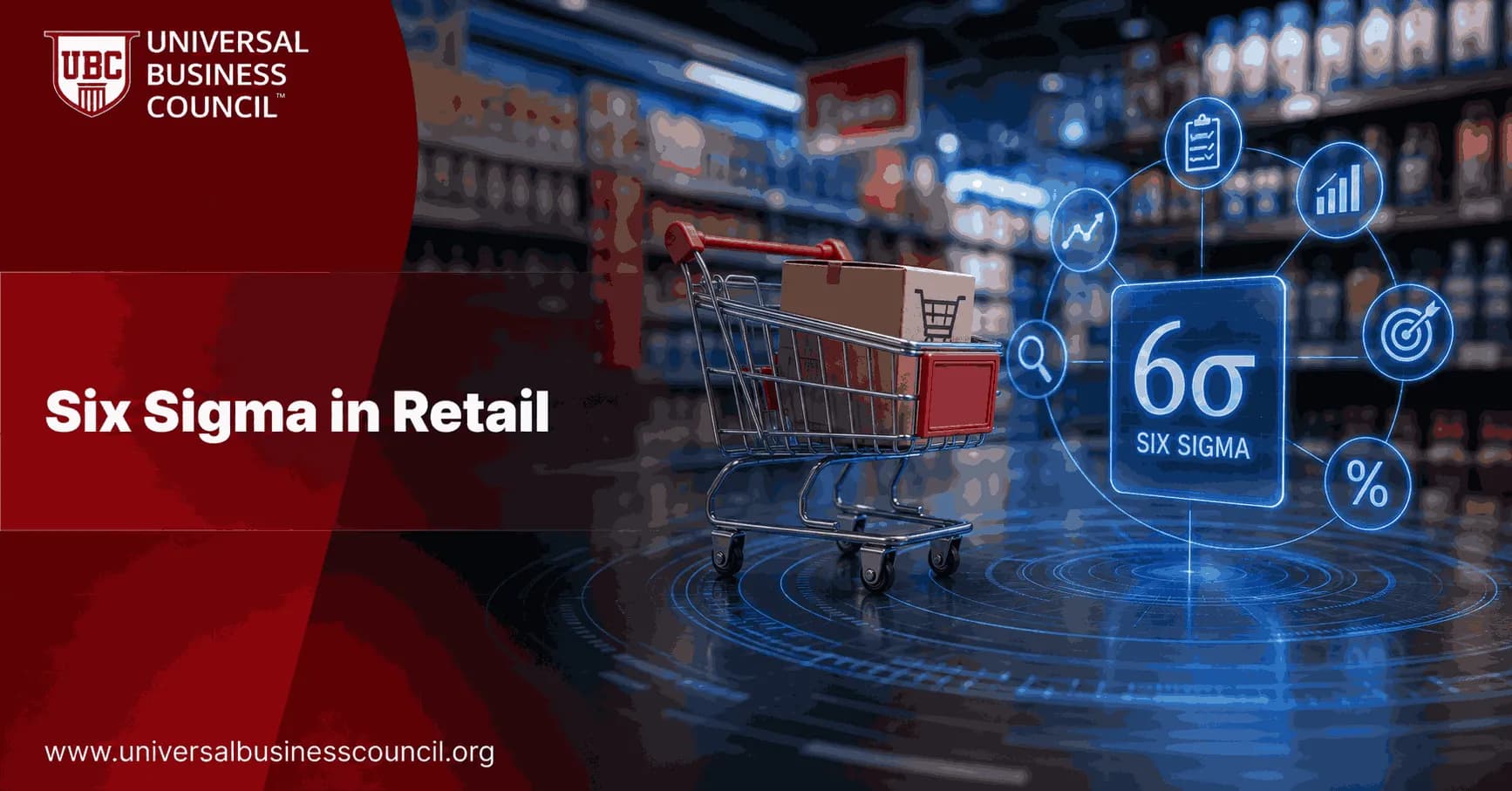
Six Sigma in retail works best when you aim it at the problems customers actually feel: empty shelves, slow checkout lines, late orders, confusing store flow, and service errors. The method is no longer just a manufacturing transplant. Retailers now use DMAIC, Lean tools, value stream mapping, SIPOC, FMEA, and process capability analysis to reduce variation across stores, supply chains, and digital fulfillment. Professionals who want to lead this kind of work rather than just support it often start with the Certified Six Sigma Expert credential, which covers the DMAIC discipline referenced throughout this guide.
The practical lesson is simple. If a process repeats hundreds or thousands of times a week, you can measure it, improve it, and control it. Retail gives you plenty of those processes.

Why Six Sigma Fits Retail Operations
Retail is full of variation. Monday morning demand does not look like Saturday afternoon demand. A promotion changes basket size. One cashier scans twice as fast as another. A delivery that misses its window creates stockouts three aisles away. Because fixing that variation touches checkout, inventory, supply chain, and store staffing all at once, retail leaders often pair Six Sigma training with broader Management Certifications, since coordinating improvement across that many functions is as much a leadership skill as a statistical one.
Lean removes waste. Six Sigma reduces variation. Together, Lean Six Sigma helps store leaders find where time, money, and customer trust leak out of the system. In my view, it is strongest in retail when tied to a few visible metrics rather than a long improvement wish list.
Checkout cycle time: average time, peak time, and 95th percentile time.
Inventory accuracy: system stock versus shelf reality.
Out-of-stock rate: especially for high-velocity SKUs.
Order fulfillment accuracy: critical for click-and-collect and ship-from-store.
Customer effort score and NPS: useful when paired with operational data.
A common mistake is tracking only average checkout time. Customers remember the bad queue, not the average one. If the mean is three minutes but the 95th percentile is twelve, you still have a service problem.
Real Results from Six Sigma in Retail
Published retail cases show why Six Sigma has become a serious operating discipline. Staples, working with Accenture, reported a four-week reduction in store setup time, a 3.3 million dollar inventory cost reduction, a 21 percent improvement in on-time to due date performance, and about 30 million dollars in supply chain budget benefit, with 13 million dollars directly linked to Lean Six Sigma projects.
Firefly Consulting has reported retail Lean Six Sigma projects across operations, finance, HR, supply chain, and e-commerce with average benefits of about 1 million dollars per project and typical project cycles of around six months. That timeline feels realistic. Anything promising a full retail transformation in six weeks is usually skipping the control phase.
In the Wine Thief specialty retail case, DMAIC was used to address product unavailability, long checkout times, and limited operating hours. The team used process mapping, SIPOC, and FMEA, then changed register use, payment streams, and staff allocation. Process capability improved from weaker levels to values above 1.00, which showed a better ability to meet customer requirements.
Starbucks has also been cited in industry case summaries for applying Six Sigma thinking to drink preparation flow. Repositioning barista stations and removing bottlenecks reduced wait times. The point was not a prettier layout. It was throughput at the moment customers were watching the clock.
Where to Apply Six Sigma in a Retail Store
Inventory Management and Stock Availability
Stockouts hurt twice. You lose the current sale, then you train the customer to check a competitor next time. Six Sigma projects can trace why shelf availability fails: poor forecasting, late replenishment, inaccurate receiving, planogram drift, or slow backroom-to-shelf movement.
Use value stream mapping from supplier order to shelf replenishment. Then separate true demand problems from process defects. A discount grocery case using Lean Six Sigma across the field-to-table chain showed how waste can hide across procurement, distribution, and store handling.
Checkout and Queue Management
Checkout is the most visible retail process. It is also one of the easiest to measure badly. Define the start and end points first. Does timing begin when the customer joins the queue, reaches the belt, starts scanning, or initiates payment?
Good DMAIC work might test:
Separate lanes for small baskets or digital payments.
Staff redeployment based on traffic windows, not fixed habits.
Register layout changes that reduce hand movement and bagging delays.
Self-checkout support ratios during peak periods.
Be careful with self-checkout. It can reduce labor pressure, but if error interventions rise, the customer experience may get worse. Measure interventions per 100 transactions, not just labor hours saved.
Store Layout and Customer Flow
Six Sigma tools such as service blueprints, cause-effect diagrams, and spaghetti diagrams help teams see physical friction. Staff walking 40 extra steps to collect tags or customers circling for promotional stock may look minor. Across a week, it adds up.
The Wine Thief case is a useful example because the improvement was not only speed. Dual-register operations and better staffing supported customer flow while preserving the store experience.
Omnichannel Fulfillment
For omnichannel retail, the store is now a warehouse, service desk, returns counter, and pickup point. Six Sigma helps because each handoff creates defects: wrong item picked, order not staged, substitution missed, customer notification delayed.
Track first-time-right fulfillment, pickup wait time, cancellation rate, and inventory mismatch rate. Developers and analytics teams should care here. Bad process design often looks like a platform problem, but the root cause may be scanning discipline, exception handling, or unclear ownership between store and e-commerce teams. As more of this handoff runs through point-of-sale platforms, inventory sensors, and real-time data feeds, some retail teams also pair this process work with a Deep Tech Certification to better understand the emerging-technology layer now sitting underneath omnichannel fulfillment.
Training and Certification for Retail Professionals
If you manage store operations, supply chain, retail analytics, or digital fulfillment, formal Six Sigma training gives you a shared language for improvement. Universal Business Council's Certified Six Sigma Expert is a relevant learning path for professionals who need deeper capability in DMAIC, statistical quality management, process optimization, and enterprise quality improvement. The credential was updated in February 2026 to reflect current practice.
Pair this topic with Universal Business Council courses in quality management, operations management, business analytics, and project management. Six Sigma projects fail less often when the project lead understands both the statistics and the business constraints.
How to Start a Retail Six Sigma Project
Start small. Pick one customer pain point with a measurable baseline. Do not begin with a vague goal like "improve store experience." Use something tighter.
Reduce peak checkout wait time from 10 minutes to 6 minutes.
Cut out-of-stock events for top 50 SKUs by 25 percent.
Improve click-and-collect first-time-right rate to 98 percent.
Reduce pharmacy handoff errors through mistake proofing.
Then run DMAIC properly: define the customer requirement, measure the current process, analyze root causes, improve the process, and control it with visible owners and daily checks. To be blunt, the control step is where many store projects die. A new lane rule or replenishment checklist means little if nobody reviews it after the district manager leaves.
The Next Step for Retail Teams
Choose one recurring retail defect this week and build a simple baseline from actual store data. If you want to lead larger cross-functional projects, study DMAIC in depth and consider Universal Business Council's Certified Six Sigma Expert as your next structured credential. If your role also involves the systems and platforms behind these projects, such as POS integrations or inventory tooling, a general Tech Certification can round out that technical side of the work.
FAQs
1. How is Six Sigma used in retail?
Six Sigma is used in retail to improve store operations, reduce checkout delays, increase inventory accuracy, lower return and complaint rates, reduce shrinkage, and improve customer experience. Retail teams can apply DMAIC, process mapping, Pareto analysis, root-cause analysis, control charts, and other tools to repetitive operational problems.
A simple retail process might be:
Customer Entry → Product Selection → Checkout → Payment → Return or Support
Six Sigma helps reduce defects and variation across that journey.
2. What retail problems can Six Sigma solve?
Six Sigma can help address problems such as:
Long checkout queues
Stockouts
Inventory inaccuracies
Pricing errors
High return rates
Poor shelf availability
Customer complaints
Slow replenishment
Excessive shrinkage
Inconsistent service
It is most useful when the problem is recurring, measurable, financially meaningful, and influenced by multiple process factors.
3. How does DMAIC apply to retail operations?
DMAIC provides a structured improvement sequence:
Define: Identify the retail problem and customer impact.
Measure: Establish current performance.
Analyze: Determine root causes.
Improve: Implement validated changes.
Control: Sustain the improvement.
For example, a retailer could use DMAIC to reduce average checkout waiting time from eight minutes to three minutes.
4. How can Six Sigma improve checkout speed?
Retailers can measure total checkout time and separate it into:
Queue Time + Scanning Time + Payment Time + Exception Handling
This helps identify where customers actually lose time.
Potential improvements may include staffing changes, queue design, self-checkout, payment optimization, better barcode quality, or simplified exception handling.
The goal is not merely to make cashiers scan faster if customers are spending most of their time waiting in line.
5. How can Six Sigma reduce customer waiting time in stores?
Teams can analyze waiting across checkout, returns, customer service, fitting rooms, pickup counters, or pharmacy departments.
Data can be segmented by:
Hour + Day + Store + Transaction Type + Staffing Level
Six Sigma can help identify patterns and determine whether long waits are caused by staffing mismatches, process complexity, poor layout, system delays, or demand variation.
6. How can Six Sigma improve inventory accuracy?
Inventory accuracy can be improved by identifying why physical stock does not match system records.
Possible causes include:
Receiving Errors + Theft + Misplaced Products + Return Processing + Scanning Errors + Damaged Stock
Teams can measure discrepancies by SKU, store, department, and transaction type and target the highest-impact causes.
Better inventory accuracy reduces stockouts, unnecessary replenishment, and disappointed customers.
7. How can Six Sigma reduce stockouts?
Stockouts can be analyzed through demand, replenishment, supplier, inventory, and store-process data.
Teams may examine:
Forecast Accuracy → Reorder Point → Supplier Lead Time → Shelf Replenishment → Inventory Accuracy
The root cause may not be insufficient inventory. A product may be physically present in the back room but unavailable on the shelf.
Six Sigma helps distinguish between those failure modes.
8. How can Six Sigma improve shelf availability?
Shelf availability depends on accurate inventory, replenishment timing, employee execution, planogram compliance, and supplier performance.
Teams can measure:
Out-of-Shelf Rate + Replenishment Time + Stock Accuracy + Lost Sales
Root-cause analysis can then identify whether failures occur because of forecasting, delayed replenishment, misplaced stock, poor store routines, or system errors.
9. How can Six Sigma reduce retail pricing errors?
Pricing errors may occur because of incorrect system data, delayed promotions, manual labeling, POS synchronization problems, or execution failures.
Six Sigma teams can categorize errors by:
Store + Product + Promotion + System + Process Step
Validated improvements may include automated updates, stronger data controls, better exception handling, or improved store procedures.
10. How can Six Sigma reduce product returns?
Returns can be categorized by reason:
Defective product
Wrong item
Wrong size
Product not as expected
Damaged packaging
Pricing issue
Customer preference
Fulfillment error
Pareto analysis can identify which return reasons are preventable.
Retailers can then target supplier quality, product information, merchandising, fulfillment, or store processes instead of treating every return as the same problem.
11. How can Six Sigma improve the returns process?
A retail returns process may include:
Customer Request → Eligibility Check → Product Inspection → Refund/Exchange → Inventory Update
Six Sigma can identify waiting, rework, manual approvals, inconsistent rules, and system delays.
Improvements may include standardized decision rules, faster payment processing, better POS integration, and clearer employee guidance.
The goal is to make legitimate returns efficient without weakening fraud controls.
12. How can Six Sigma reduce retail shrinkage?
Shrinkage can result from theft, administrative errors, supplier discrepancies, damaged goods, scanning problems, or process failures.
Six Sigma can help distinguish these categories using data and root-cause analysis.
For example, repeated inventory losses in one product category may result from incorrect receiving procedures rather than customer theft.
Reducing shrinkage requires understanding the actual loss mechanism before selecting controls.
13. How can Six Sigma improve retail staffing?
Retail staffing can be aligned more closely with customer demand by analyzing traffic, transactions, queue length, service time, and workload patterns.
Teams can compare:
Customer Demand by Hour
against
Available Labor Capacity
This can reveal overstaffed and understaffed periods.
Workforce optimization should balance labor cost with customer experience rather than simply minimizing scheduled hours.
14. How can Six Sigma improve customer service in retail stores?
Six Sigma can help reduce inconsistent service, long waits, repeated escalations, and complaint handling errors.
Useful metrics include:
Customer Wait Time + First-Contact Resolution + Complaint Rate + Service Recovery Time + Customer Satisfaction
Teams can analyze variation by store, department, issue type, or shift and target processes that create the most customer friction.
15. How does Voice of the Customer help retail Six Sigma projects?
Voice of the Customer helps retailers translate shopper expectations into measurable Critical-to-Quality requirements.
For example:
Customer Need: Fast checkout
↓
CTQ: Checkout completed within five minutes
Customer Need: Product availability
↓
CTQ: Shelf availability above 98%
This connects customer experience with operational measures that stores can actually improve.
16. How can Six Sigma improve omnichannel retail operations?
Omnichannel processes connect stores, ecommerce, inventory, fulfillment, pickup, returns, and customer support.
Six Sigma can analyze failures such as:
Incorrect Pickup Orders
Cancelled Orders
Inventory Mismatches
Delayed Curbside Delivery
Return Processing Errors
Because these workflows cross systems and departments, end-to-end process mapping is particularly valuable.
17. How can Six Sigma improve Buy Online, Pick Up In Store operations?
A BOPIS process might include:
Online Order → Inventory Confirmation → Store Picking → Staging → Customer Pickup
Teams can measure:
Order Accuracy + Pick Time + Ready-Time SLA + Cancellation Rate + Customer Wait Time
Root-cause analysis can identify problems involving inventory accuracy, picking, staging, communication, or staffing.
Validated improvements can then improve both operational efficiency and customer convenience.
18. What retail KPIs should Six Sigma teams track?
Useful KPIs include:
Checkout wait time
Inventory accuracy
Shelf availability
Stockout rate
Return rate
Pricing error rate
Shrinkage
Customer complaint rate
On-shelf replenishment time
BOPIS accuracy
Customer satisfaction
Cost of Poor Quality
The KPI set should remain focused on business and customer outcomes rather than becoming a museum of every metric the POS system can export.
19. Which retail professionals benefit from Six Sigma skills?
Six Sigma can be useful for:
Store Operations Managers
Retail Operations Analysts
Inventory Managers
Supply Chain Professionals
Customer Experience Managers
Loss Prevention Leaders
Quality Specialists
Business Analysts
Process Improvement Professionals
Operational Excellence Managers
Useful complementary skills include Lean, data analytics, workforce management, process mining, automation, and customer experience management.
20. What is the best Six Sigma framework for improving retail operations and customer experience?
Start with the end-to-end customer journey.
Map:
Enter Store
↓
Find Product
↓
Select Product
↓
Checkout
↓
Payment
↓
Post-Purchase Support or Return
Then identify the customer outcomes that matter most.
Suppose a retailer has:
Average Checkout Wait: 9 minutes
Shelf Availability: 91%
Inventory Accuracy: 94%
Return Rate: 12%
Customer Complaint Rate: 5.5%
The retailer can prioritize the issue creating the greatest customer and financial impact.
Assume checkout delays generate:
Abandoned Purchases
Customer Complaints
Overtime
Service Recovery
Lower Customer Satisfaction
A DMAIC project can begin.
Define
Create a project charter.
Example:
“Reduce average checkout waiting time from 9 minutes to below 4 minutes during peak periods while maintaining transaction accuracy above 99.5%.”
Measure
Map the checkout process:
Queue
→ Basket Unload
→ Scan
→ Discount/Exception Handling
→ Payment
→ Receipt
Measure:
Queue Time | Transaction Time | Payment Time | Exception Time | Staffing
Suppose the data shows:
Average Queue Time: 6.5 minutes
Actual Transaction Time: 2.5 minutes
Now the problem is clearer.
Telling employees to scan products faster would address only part of the delay.
Analyze
Segment performance by:
Store | Hour | Day | Staffing | Transaction Type | Payment Type
Suppose analysis identifies:
Staffing mismatch during peak periods
Manual price overrides
Coupon exceptions
as the largest contributors.
Improve
Potential changes might include:
Demand-Based Scheduling
Simplified Promotion Rules
More Self-Checkout Capacity
Mobile Checkout
Better Exception Training
Pilot the changes.
Suppose results show:
Checkout Wait: 9 → 3.6 minutes
Transaction Accuracy: 99.6%
Checkout Complaints: Down 42%
Now the improvement is measurable.
Next, apply Six Sigma to inventory.
Map:
Supplier Receipt
→ Backroom Inventory
→ Shelf Replenishment
→ Sale
→ Return
Track:
Inventory Accuracy | Shelf Availability | Stockouts | Lost Sales
Suppose the data shows a large share of stockouts occur even when system inventory says stock is available.
That points toward execution or record-accuracy problems rather than purchasing volume alone.
Potential improvements could include:
Improved Receiving Controls
Cycle Counting
Shelf Replenishment Triggers
Better Scan Discipline
RFID or Other Tracking Technology
Then address customer returns.
Separate:
Preventable Returns
from
Customer-Preference Returns
A defect, damaged product, incorrect price, or wrong fulfillment is potentially preventable.
A customer simply changing their mind may not indicate process failure.
Finally, build a retail control dashboard:
Checkout Wait | Inventory Accuracy | Shelf Availability | Return Rate | Complaints | Shrinkage
Assign process owners and action thresholds.
For example:
Checkout Wait > 5 Minutes → Staffing Review
Shelf Availability < 97% → Replenishment Analysis
Inventory Accuracy < 98% → Cycle Count Investigation
The broader retail improvement model becomes:
Voice of Customer
↓
Customer Journey
↓
CTQs
↓
Operational Data
↓
DMAIC
↓
Validated Improvement
↓
Standardization
↓
Automation Where Valuable
↓
Control
A strong retail improvement stack combines:
Six Sigma + Lean + Retail Analytics + Workforce Planning + Automation + Customer Experience
Six Sigma reduces defects and variation.
Lean removes unnecessary waiting and waste.
Analytics makes patterns visible.
Automation improves repeatability.
Customer Experience methods ensure operational improvements matter to shoppers.
The central principle is:
Optimize the customer journey, not isolated departmental metrics.
A store can reduce labor cost while creating longer queues.
It can reduce inventory while increasing stockouts.
It can tighten return policies while damaging customer loyalty.
Every local metric can look better while the overall experience gets worse.
Six Sigma works best when the retailer measures what the customer actually experiences:
Product available. Price correct. Checkout fast. Service consistent. Return simple when necessary.
That is the operational version of retail quality.
Everything else is just shelves, scanners, and dashboards trying to make it happen reliably.
Related Articles
View All
Six Sigma
Six Sigma in Business Operations: Streamlining Everyday Processes
Learn how Six Sigma in business operations reduces defects, cycle time, and rework in finance, healthcare, service, inventory, and daily workflows.
Six Sigma
Six Sigma in Customer Service: Reducing Complaints and Response Times
Learn how Six Sigma in Customer Service reduces complaints, wait times, callbacks, and response delays using DMAIC, Lean tools, and measurable CTQ metrics.

Six Sigma
Six Sigma Digital Transformation: Modernizing Quality and Operations
Learn how Six Sigma Digital Transformation uses Lean Six Sigma 4.0, AI, IoT, digital twins, and process mining to modernize quality and operations.
Trending Articles
The Role of Blockchain in Ethical AI Development
How blockchain technology is being used to promote transparency and accountability in artificial intelligence systems.
AWS Career Roadmap
A step-by-step guide to building a successful career in Amazon Web Services cloud computing.
Top 5 DeFi Platforms
Explore the leading decentralized finance platforms and what makes each one unique in the evolving DeFi landscape.