

Six Sigma Lean Manufacturing: Practical Tools for Factory Excellence
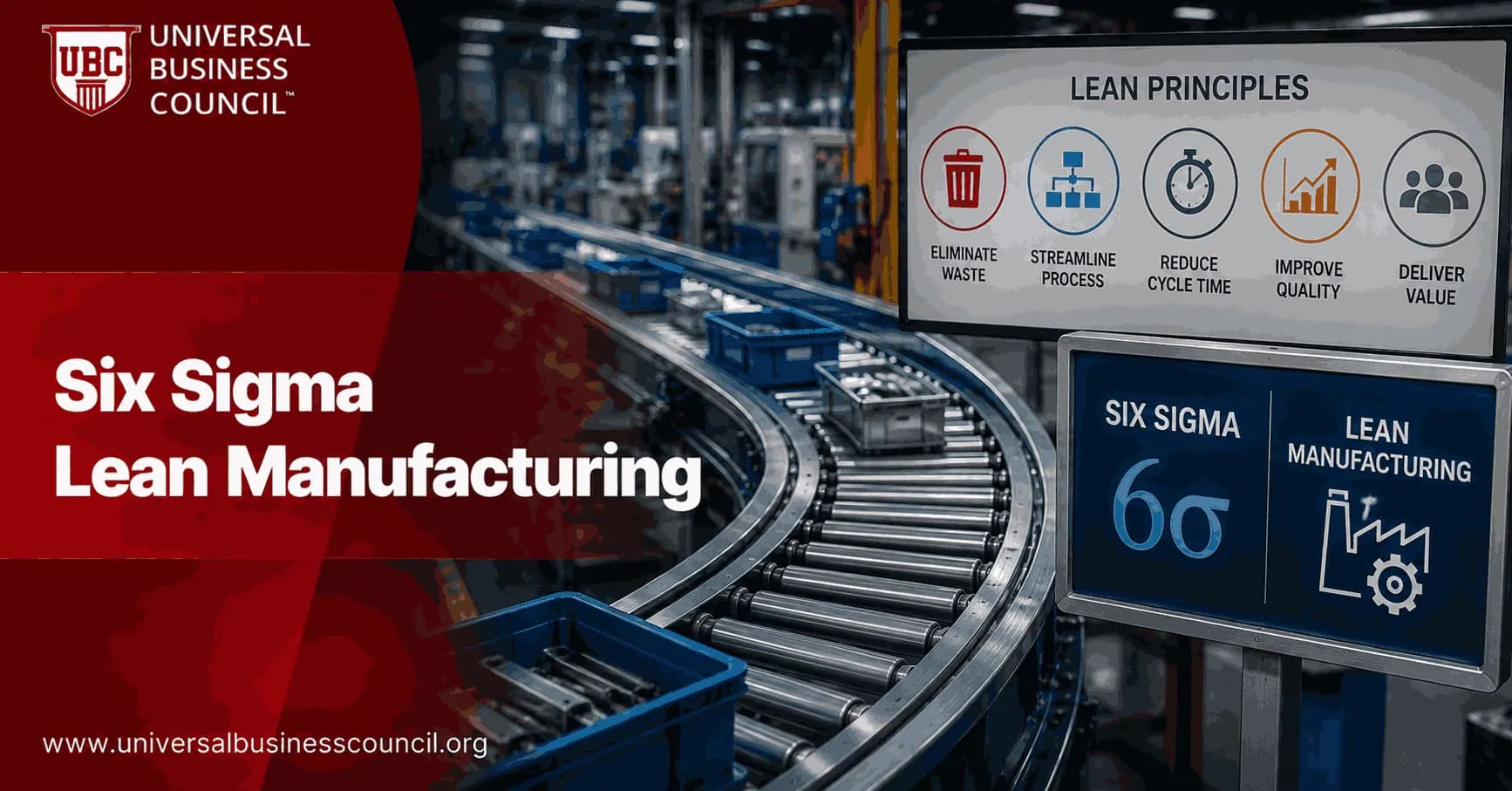
Six Sigma Lean Manufacturing works because it attacks two factory problems at the same time: waste in the flow and variation in the process. Lean asks, Why is this waiting, moving, or being reworked? Six Sigma asks, Why does this output keep changing? Put together, they give you a practical way to improve quality, throughput, safety, and overall equipment effectiveness without guessing. Professionals who want to lead this kind of work rather than just support it often start with the Certified Six Sigma Expert credential, which covers the DMAIC discipline this article is built around.
The mistake I see most often is tool shopping. A team runs 5S one month, a Pareto chart the next, then buys software before the process is stable. Start with the problem. Then choose the tool.

What Six Sigma Lean Manufacturing Means on the Factory Floor
Lean focuses on flow, waste removal, and shorter lead time. Six Sigma focuses on defect reduction and process variation, usually through DMAIC: Define, Measure, Analyze, Improve, Control. ASQ commonly describes the Six Sigma benchmark as 3.4 defects per million opportunities, a demanding target for any high-volume operation. Because a real Lean Six Sigma program touches production, quality, maintenance, and supply chain leadership together, plant leaders often pair Six Sigma training with broader Management Certifications, since coordinating improvement across that many functions is as much a leadership skill as a statistical one.
In manufacturing, the combined method usually covers:
Flow improvement: value stream mapping, Kanban, takt time, line balancing, cellular layouts.
Quality control: SPC, FMEA, control plans, Pareto analysis, root cause analysis.
Workplace discipline: 5S, visual management, standard work, layered audits.
Equipment performance: TPM, OEE tracking, planned maintenance, downtime analysis.
Good factories do not treat these as isolated events. They build them into daily management.
Start With Measurement, Not Motivation
Before launching a Lean Six Sigma manufacturing project, check your data. If downtime reason codes are mostly listed as other, your Pareto chart will lie to you. If scrap is counted once per shift instead of by product, tool, and operator condition, root cause analysis becomes a debate.
Track a few practical measures first:
OEE: availability, performance, and quality.
First pass yield: units that pass without rework.
WIP by process step: where inventory is stuck.
Changeover time: last good part to first good part.
Cp and Cpk: process capability for critical characteristics.
Modern factories increasingly collect this through lightweight MES tools, mobile checklists, barcode scans, SPC software, and digital work instructions. That is useful. Still, a clean manual check sheet for two weeks often beats a messy system implementation.
Core Lean Tools for Factory Excellence
Value Stream Mapping
Value stream mapping shows how material and information move from order to shipment. Use it when lead time is too long, WIP is high, or planners keep expediting. Mark cycle time, changeover time, uptime, batch size, queue time, and information triggers. The uncomfortable part is usually the waiting. A five-minute operation may sit in front of the next process for two days.
5S and Visual Management
5S is not housekeeping. It is a control system. Sort what is needed, set locations, clean to inspect, standardize the layout, and audit the routine. Start in one pilot area for four to six weeks. Do not roll it out across the whole plant on day one.
Visual management should make abnormal conditions obvious. Andon boards, color-coded kanban lanes, tool shadow boards, red tag areas, and hour-by-hour charts help supervisors respond before a small problem becomes the shift report headline.
Kanban and Takt Time
Kanban limits overproduction by linking replenishment to actual demand. It works best where demand is reasonably stable and parts repeat. If demand is highly erratic, use caution. You may need a finished goods strategy, supermarket sizing, or planning rules before kanban cards make sense.
Takt time keeps the line honest. The formula is simple: available production time divided by customer demand. If takt is 60 seconds and one station takes 84 seconds, motivational posters will not fix the bottleneck.
SMED for Changeover Reduction
SMED, or Single Minute Exchange of Dies, separates internal setup work from external setup work. Pre-stage tools, standardize clamps, prepare materials before the stop, and remove adjustment loops. This is one of the fastest ways to reduce batch size without buying another machine.
Six Sigma Tools That Stop Recurring Defects
The seven basic quality tools still earn their keep: check sheets, Pareto charts, histograms, scatter diagrams, control charts, fishbone diagrams, and stratification. Use them in that order more often than you think. Collect clean data first, then decide what matters.
For regulated or customer-audited manufacturing, go deeper. Automotive suppliers commonly use APQP, PPAP, FMEA, MSA, and SPC in line with AIAG and VDA practices, and these tools support IATF 16949 quality expectations. FMEA helps you predict failure modes before launch. MSA checks whether your measurement system can be trusted. SPC tells you whether the process is stable or just lucky today.
Root cause analysis should be disciplined. The 5 Whys can work, but only when each answer is backed by evidence. A fishbone diagram is useful for sorting causes across machine, method, material, measurement, people, and environment. An A3 is better when the issue crosses departments. As MES tools, barcode scans, SPC software, and digital work instructions take on a bigger share of this data collection, some plant quality teams also pair this work with a Deep Tech Certification to build a stronger footing in the emerging technology now feeding these digital shop floor systems.
A Practical 90-Day Implementation Plan
Days 1 to 15: choose one production family, define the problem, and verify baseline data.
Days 16 to 30: map the value stream, measure OEE, collect scrap data, and observe changeovers.
Days 31 to 50: run 5S, standard work updates, and visual controls in the pilot area.
Days 51 to 70: apply SMED, kanban rules, SPC, or root cause analysis based on the data.
Days 71 to 90: lock in control plans, train operators, audit the new method, and publish results.
Well-run Lean Six Sigma projects routinely cut work-in-process inventory by double-digit percentages. That kind of result usually comes from boring discipline: fewer queues, clearer triggers, smaller batches, and tighter process control.
Build Capability Through Certification
Lean Six Sigma depends on people who can frame problems, read data, facilitate teams, and hold the line when shortcuts appear. Belt-based learning still makes sense: White, Yellow, Green, Black, and Master Black Belt levels create a common language for project work.
If you are planning your development path, use this article as a study map before choosing a Universal Business Council Six Sigma or operations management certification course. Related UBC programmes in quality management, project management, operations strategy, and business analytics build on the same foundations.
Your Next Step
Pick one painful process this week. Measure its defect rate, WIP, changeover time, and OEE for five working days. Then run a DMAIC project with one Lean flow tool and one Six Sigma quality tool. Keep it small, prove the gain, and make the new standard visible on the floor. If your own role also touches the MES, SPC software, or digital work instruction systems behind that data, a general Tech Certification can help round out that technical side of the work.
FAQs
1. What is Six Sigma Lean Manufacturing?
Six Sigma Lean Manufacturing, more commonly called Lean Six Sigma, combines Lean manufacturing's focus on eliminating waste and improving flow with Six Sigma's focus on reducing defects and process variation. In factories, the approach is used to improve quality, productivity, delivery performance, equipment utilization, and cost.
2. What is the difference between Lean Manufacturing and Six Sigma?
Lean focuses primarily on removing waste, shortening lead times, and improving workflow. Six Sigma focuses on reducing variation, defects, and inconsistent process performance.
A simple distinction is:
Lean asks: What activities do not add value?
Six Sigma asks: Why does process performance vary?
Factories often need both because making a defective process faster is not exactly operational excellence.
3. What are the main wastes targeted by Lean Manufacturing?
Lean commonly identifies eight wastes, often summarized as DOWNTIME:
Defects
Overproduction
Waiting
Non-utilized talent
Transportation
Inventory
Motion
Extra-processing
Identifying these wastes helps teams distinguish customer-value activities from work consuming resources without creating corresponding value.
4. How does DMAIC support Lean Manufacturing?
DMAIC provides a structured improvement framework:
Define: Identify the factory problem and improvement objectives.
Measure: Establish baseline performance.
Analyze: Determine causes of waste, defects, and variation.
Improve: Implement and test solutions.
Control: Sustain improved performance.
Lean tools can be used throughout DMAIC, giving improvement teams both statistical discipline and practical shop-floor techniques.
5. What is Value Stream Mapping?
Value Stream Mapping (VSM) visualizes the flow of materials and information from supplier or production input through delivery to the customer. It records processing times, inventory, queues, information flows, and delays.
Teams create a current-state map, identify waste and constraints, and then develop a future-state map representing a more efficient production system.
6. What is 5S in Lean Six Sigma manufacturing?
5S is a workplace organization method:
Sort unnecessary items.
Set in Order necessary tools and materials.
Shine and inspect the workplace.
Standardize improved practices.
Sustain the standards.
Effective 5S reduces searching, unnecessary motion, safety problems, and process inconsistency. It is somewhat more ambitious than merely cleaning the factory and applying colored tape to everything.
7. What is Kaizen?
Kaizen is the practice of continuous, incremental improvement involving employees who perform and manage the work. Teams identify problems, test practical changes, and standardize successful improvements.
Kaizen events can focus on specific issues such as changeover time, factory layout, quality defects, excessive WIP, or material movement.
8. What is standardized work?
Standardized work defines the current best-known method for completing a production activity safely, consistently, and efficiently. It may specify work sequence, cycle time, quality requirements, standard WIP, equipment settings, and safety controls.
Standardization creates a baseline for improvement. When everyone performs the same job differently, determining what actually works becomes unnecessarily theatrical.
9. How does Poka-Yoke reduce manufacturing defects?
Poka-Yoke, or mistake-proofing, prevents errors or makes them immediately detectable.
Examples include fixtures that prevent incorrect assembly, sensors that detect missing components, barcode verification, keyed connectors, and software checks that block invalid settings.
Preventing defects at the source is generally more effective than relying entirely on final inspection.
10. What is Kanban in Lean Manufacturing?
Kanban is a visual or digital signaling method used to control production and material replenishment based on downstream demand. It supports pull production and limits excessive work-in-process.
Kanban can reduce overproduction, inventory, and waiting while making shortages and workflow problems more visible.
11. What is Just-in-Time manufacturing?
Just-in-Time (JIT) aims to provide the required item, in the required quantity, when it is needed. It reduces excessive inventory and exposes process problems that large inventory buffers can hide.
JIT requires reliable suppliers, stable processes, appropriate capacity, good quality, and disciplined production control. Removing inventory without improving reliability is less “Lean transformation” and more “scheduled panic.”
12. What is SMED?
Single-Minute Exchange of Die (SMED) is a methodology for reducing equipment setup and changeover times.
Teams separate internal setup activities, which require equipment to be stopped, from external activities that can occur while equipment operates. They then simplify, convert, and standardize activities to shorten changeovers.
Faster setups enable smaller production batches and greater flexibility.
13. What is Overall Equipment Effectiveness?
Overall Equipment Effectiveness (OEE) measures how effectively manufacturing equipment is used through three components:
OEE = Availability × Performance × Quality
Availability reflects operating time, performance reflects operating speed, and quality reflects good output.
OEE can reveal losses from downtime, reduced speed, and defects, although the component measures are often more diagnostically useful than obsessing over one headline percentage.
14. How does Total Productive Maintenance support Lean Six Sigma?
Total Productive Maintenance (TPM) focuses on improving equipment reliability and involving operators in appropriate routine maintenance activities.
TPM can reduce breakdowns, minor stops, speed losses, defects, and unplanned downtime. Six Sigma analysis can complement TPM by identifying recurring failure patterns and validating their root causes.
15. How is Statistical Process Control used in Lean Manufacturing?
Statistical Process Control (SPC) uses control charts and statistical methods to monitor process behavior over time. It helps distinguish common-cause variation from unusual special causes.
Lean improves process flow, while SPC helps ensure the resulting flow remains stable and predictable rather than simply moving defects through the factory more efficiently.
16. How can factory layouts be improved with Lean Six Sigma?
Teams can analyze product flow, employee movement, transportation distance, material handling, safety, and communication when redesigning layouts.
Cellular manufacturing and U-shaped cells may reduce travel and improve communication for appropriate product families. Spaghetti diagrams can visualize excessive movement and reveal layouts apparently designed by someone with a personal commitment to walking.
17. What Lean Six Sigma KPIs should factories track?
Useful manufacturing KPIs include:
First Pass Yield
Defect rate and DPMO
OEE
Cycle time
Lead time
Throughput
WIP
Scrap and rework
Changeover time
On-time delivery
Process capability
Cost of Poor Quality
Metrics should be connected to customer and business objectives rather than collected simply because the software permits another dashboard tile.
18. How can automation support Lean Six Sigma manufacturing?
Automation can improve consistency, collect production data, perform repetitive work, detect defects, and support real-time process control. Robotics, machine vision, IoT sensors, and manufacturing execution systems can strengthen Lean Six Sigma initiatives.
The sensible sequence is usually simplify → stabilize → standardize → automate. Automating waste merely creates technologically advanced waste.
19. How can AI improve Lean Six Sigma factories?
AI and machine learning can predict equipment failures, identify defect patterns, optimize production parameters, detect visual defects, and forecast bottlenecks. Digital twins and process analytics can also help teams test changes before modifying physical operations.
These technologies are most valuable when connected to clearly defined operational problems and reliable process data.
20. What is a practical Lean Six Sigma roadmap for factory excellence?
A practical roadmap is:
Define customer value → map the value stream → establish quality, flow, equipment, and cost baselines → identify waste and variation → stabilize critical processes → apply 5S and standardized work → improve changeovers and flow → mistake-proof recurring defects → strengthen equipment reliability → implement pull where appropriate → monitor performance with SPC and KPIs → continuously improve.
Factory excellence does not come from deploying every Lean acronym within walking distance of the production line. It comes from systematically creating safer work, better flow, fewer defects, reliable equipment, lower waste, and repeatable performance.
Related Articles
View All
Six Sigma
Six Sigma and Industry 4.0: Smart Manufacturing Meets Quality Excellence
Learn how Six Sigma and Industry 4.0 combine in Quality 4.0 to reduce defects, improve cycle time, and build smarter manufacturing systems.

Six Sigma
Six Sigma Root Cause Analysis: Tools, Steps, and Practical Examples
Learn Six Sigma root cause analysis tools, steps, and examples for finding verified causes of defects, delays, and process failures.
Six Sigma
Six Sigma vs Project Management: Methods, Tools, and Career Paths
Compare Six Sigma vs Project Management across methods, tools, salaries, and career paths. Learn when to use DMAIC, Agile, Waterfall, or both.
Trending Articles
The Role of Blockchain in Ethical AI Development
How blockchain technology is being used to promote transparency and accountability in artificial intelligence systems.
AWS Career Roadmap
A step-by-step guide to building a successful career in Amazon Web Services cloud computing.
Top 5 DeFi Platforms
Explore the leading decentralized finance platforms and what makes each one unique in the evolving DeFi landscape.