

Six Sigma in Pharmaceutical Manufacturing: Quality, Compliance, and Validation
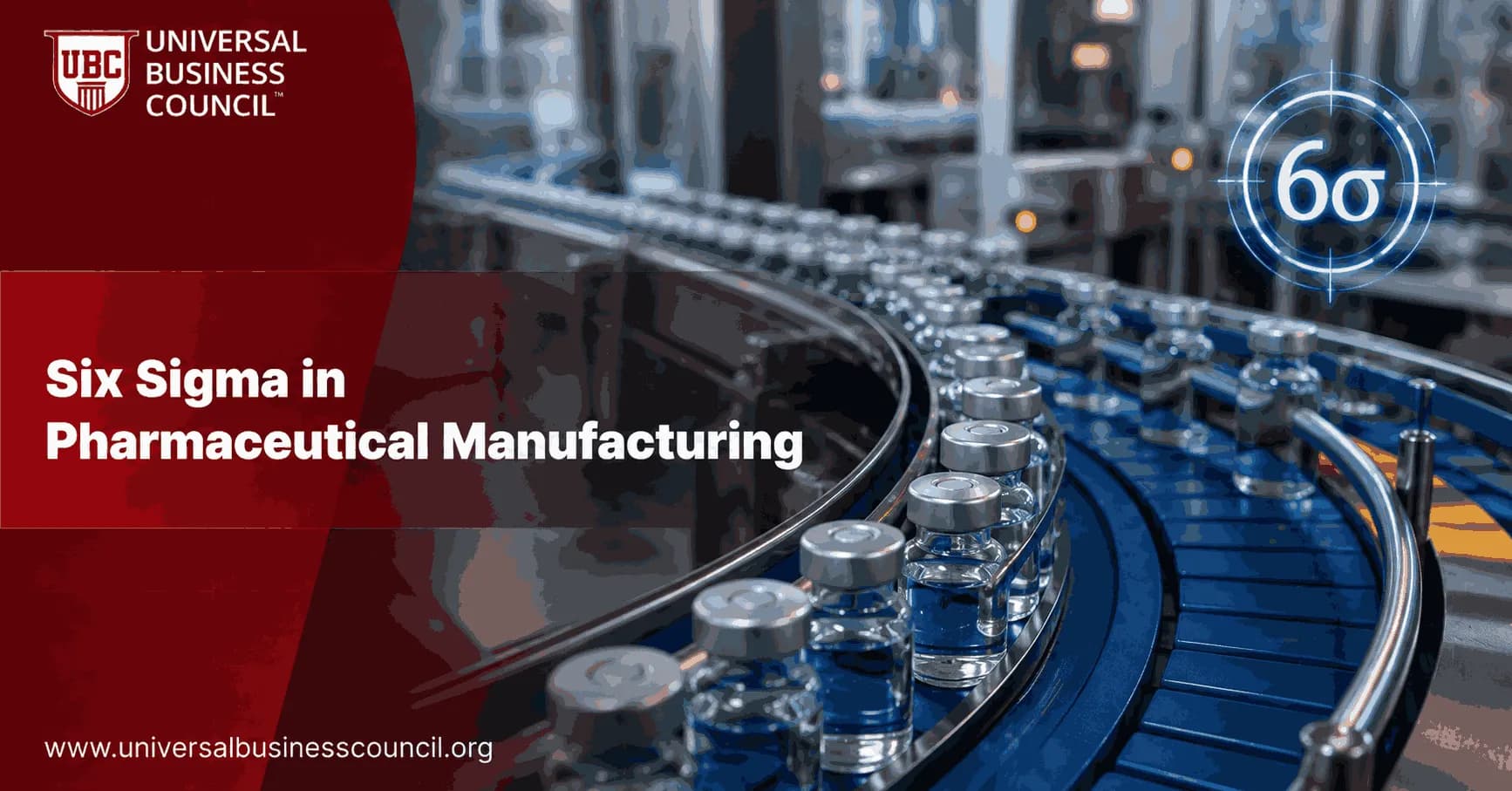
Six Sigma in pharmaceutical manufacturing gives quality teams a practical way to reduce defects, prove process control, and support GMP expectations with data regulators can inspect. The useful part is not the slogan about near-perfect quality. It is the discipline: define the defect, measure the process, find the root cause, fix it, then hold the gain when production pressure returns on Monday morning. Professionals looking to build this discipline formally often start with the Certified Six Sigma Expert credential, which covers the DMAIC framework referenced throughout this article.
That last part matters. I have seen packaging lines pass a short improvement trial, then drift within two weeks because no one owned the control chart review. Six Sigma only works in pharma when the Control phase is treated as part of the quality system, not as a project closeout slide.

Why Six Sigma Fits Pharmaceutical Quality Systems
Pharmaceutical manufacturing already runs on evidence. Batch records, deviation reports, validation protocols, out-of-specification investigations, and CAPA records all ask the same core question: can you prove the process is understood and controlled? Quality leaders who need to build this evidence-based discipline across an entire plant, not just one production line, often pair Six Sigma training with broader Management Certifications, since running a compliant quality system is as much an organizational challenge as a statistical one.
Six Sigma answers that question through DMAIC: Define, Measure, Analyze, Improve, and Control. In regulated plants, those steps map well to GMP, continued process verification, and risk-based quality management. The target often cited for Six Sigma quality is about 3.4 defects per million opportunities, a sharp contrast with two to three sigma processes that carry far higher defect levels.
Recent studies show Six Sigma and Lean Six Sigma being used across tablet compression, coating, sterile filling, packaging, labeling, laboratory turnaround, and support processes. The better programs do not run isolated improvement events. They build a portfolio around critical quality attributes, KPIs, and recurring regulatory risks.
Quality Improvement: From Defect Counts to Process Capability
In pharma, a lower defect rate is useful, but it is not enough. You also need capability. A process with fewer rejects this month can still be weak if it sits too close to a specification limit.
That is why capability indices such as Cp, Cpk, Pp, and Ppk matter. In one Syrian pharmaceutical case study, Six Sigma increased Ppk from 0.86 to 1.60, raised the sigma level from 2.5 to 4.8, and cut process variability by about 50 percent. That is not cosmetic improvement. A Ppk of 0.86 tells you the process is not consistently capable. A Ppk of 1.60 gives the validation and quality teams a much stronger argument that the process can meet specifications over time.
Tablet production and coating examples report yield improvements from 85 percent to 95 percent and defect reductions from 10 percent to 2 percent after DMAIC projects focused on temperature settings, raw material inspection, operator training, and automated checks. Those numbers line up with what practitioners usually find: the root cause is rarely one dramatic failure. It is often five small sources of variation adding up.
Compliance Benefits: Better CAPA, Better Audit Evidence
Regulators do not expect zero problems. They expect a reliable system for detecting, investigating, correcting, and preventing them. Six Sigma helps because it forces teams to quantify root causes rather than rely on familiar but weak explanations such as operator error.
A solid DMAIC file can strengthen compliance by creating:
Clear problem statements linked to deviations, rejects, complaints, or OOS results.
Baseline data from batch records, line logs, laboratory systems, or electronic batch records.
Pareto analysis to show which defects contribute most to risk or cost.
Fishbone diagrams and 5 Whys that document structured root cause thinking.
Control plans that define monitoring frequency, escalation triggers, and owners.
This is where Lean Six Sigma often beats pure Six Sigma. Lean removes waste, rework, waiting time, and excess movement. Six Sigma reduces variation. In high-volume packaging or compression areas, you usually need both. A fast process that produces frequent rejects is not compliant. A controlled process buried under avoidable queues and handoffs is not competitive.
Six Sigma and Pharmaceutical Validation
Six Sigma in pharmaceutical manufacturing earns its keep when tied to the lifecycle approach to process validation. During process design, tools such as design of experiments, FMEA, and capability studies help define operating ranges for critical process parameters. During qualification and continued process verification, control charts and capability metrics help confirm that the validated state is being maintained. Plants that are also modernizing data collection, automated line monitoring, or sensor-driven process control tend to pair this validation work with a Deep Tech Certification, since the underlying data infrastructure behind continued process verification increasingly overlaps with broader emerging-technology skills.
FMEA and Risk-Based Validation
Failure mode and effects analysis gives validation teams a practical bridge between process knowledge and control strategy. A study of injection medicine filling used DMAIC and FMEA to examine reject rates. The line averaged 3.2 percent rejects against a company limit of 2.0 percent, with a sigma level of 3.80 and DPMO of 10,630. Pareto analysis pointed to volume defects, poor sealing, and empty units. The highest risk priority number, 112, was tied to insufficient supervision.
That finding is not glamorous, but it is believable. In sterile operations, supervision routines, line clearance discipline, and response time to minor alarms can decide whether a process stays in control. The improvement actions were then converted into standard work and process controls, which is exactly what validation reviewers want to see.
Control Charts in Continued Process Verification
Control charts are often the underused workhorse. They show whether a process is stable, not just whether a batch passed. Catalent Pharma Solutions has been cited for applying automated data collection and control charts to a Zydis product process, helping prevent the loss of two batches worth about 50,000 pounds. The lesson is simple: late testing catches failure after money is spent. Process monitoring catches drift earlier.
Packaging, Labeling, and Other High-Risk Areas
Packaging deserves special attention because many serious pharma defects are not chemical. They are label, count, seal, print, and mix-up failures. A Lean Six Sigma packaging case reduced defects from 12 percent to 4.8 percent, improved the sigma level from 1.5 to 3.0, reached 99.6 percent compliance, and saved about 2 million dollars annually.
The practical countermeasures were familiar: machine upgrades, total productive maintenance, stronger supplier controls, material testing, standard work, training, environmental controls, sensors, and automated line stoppages. None of that is exotic. The value came from sequencing the work based on data rather than opinion.
Common Mistakes to Avoid
Starting with tools instead of the defect definition. If the defect is vague, every chart after it is suspect.
Using Cp when Ppk is the better question. Validation teams need real performance over time, not only short-term potential.
Treating training as the whole CAPA. Training may be needed, but it rarely fixes process design weakness by itself.
Closing the project too early. Wait until control data proves the gain survived routine production.
Skills Professionals Should Build Next
If you work in quality assurance, validation, production, engineering, or regulatory affairs, focus on the parts of Six Sigma that directly affect GMP evidence: DMAIC, statistical process control, capability analysis, FMEA, root cause analysis, and control planning. Universal Business Council Six Sigma courses can serve as internal learning pathways for teams that need a common language across QA, manufacturing, and operations excellence. As plants add more automated data collection, sensors, and digital batch records into that quality system, a general Tech Certification can help quality professionals keep pace with the systems generating the data they now rely on.
Start with one recurring deviation or reject category. Pull six to twelve months of data. Build a Pareto chart. Confirm the measurement system. Then run a disciplined DMAIC project and write the Control phase as if an auditor will read it, because eventually, someone will.
FAQs
1. How is Six Sigma used in pharmaceutical manufacturing?
Six Sigma is used in pharmaceutical manufacturing to reduce process variation, improve product quality, increase yield, lower deviation rates, reduce rework, and strengthen process consistency. Teams can apply DMAIC, process capability analysis, FMEA, control charts, Measurement System Analysis, and root-cause analysis while operating within established GMP, validation, quality-system, and regulatory requirements.
2. How can Six Sigma improve pharmaceutical quality?
Six Sigma improves pharmaceutical quality by helping teams identify the variables that influence Critical Quality Attributes and process outcomes. Manufacturers can analyze variation in parameters such as mixing time, temperature, pressure, tablet weight, coating thickness, moisture, fill volume, or environmental conditions. Validated improvements can make processes more consistent and reduce the probability of failures or out-of-specification results.
3. How does Six Sigma support GMP compliance?
Six Sigma can support Good Manufacturing Practice by strengthening process understanding, measurement, root-cause analysis, risk management, and control. It does not replace GMP requirements. Improvements must remain appropriately documented, reviewed, approved, validated where required, and managed through the pharmaceutical quality system. The objective is to improve performance while maintaining the controlled state expected in regulated manufacturing.
4. How does DMAIC work in pharmaceutical manufacturing?
DMAIC provides a structured approach:
Define: Identify the quality or process problem.
Measure: Establish reliable baseline performance.
Analyze: Determine and validate root causes.
Improve: Develop and test appropriate solutions.
Control: Sustain the improved process.
In pharmaceutical manufacturing, each phase should also account for GMP documentation, quality oversight, change control, validation status, and regulatory impact where applicable.
5. Can Six Sigma be used in validated pharmaceutical processes?
Yes, but changes to validated processes require appropriate evaluation and control. Six Sigma can help identify opportunities to improve process capability or reduce recurring failures, but proposed changes may need formal change control, risk assessment, validation, revalidation, documentation updates, and quality approval before implementation.
A statistically promising solution is not automatically ready for production merely because a regression model likes it.
6. How does Six Sigma support process validation?
Six Sigma can support process validation by improving understanding of process inputs, outputs, sources of variation, and operating ranges. Statistical analysis may help characterize process capability, identify important variables, and establish monitoring strategies. It can also support continued process verification by helping teams track whether a validated process remains stable and capable over time.
7. What pharmaceutical problems can Six Sigma solve?
Six Sigma can help address recurring problems such as:
Tablet-weight variation
Dissolution variability
Yield loss
Excessive rejects
Fill-volume errors
Packaging defects
Long batch-release times
Repeated deviations
Environmental monitoring variation
Cleaning-process inconsistency
Equipment-related failures
Laboratory testing delays
The methodology is especially valuable when causes are unclear and enough reliable data exists for structured analysis.
8. How can Six Sigma reduce pharmaceutical deviations?
Teams can categorize deviations by process step, equipment, product, shift, material, failure mode, or root-cause category. Pareto analysis can identify which deviation types create the greatest operational or quality impact. DMAIC can then investigate recurring patterns, validate causal factors, and develop improvements that reduce recurrence while maintaining required controls and documentation.
9. How does Six Sigma improve CAPA effectiveness?
Corrective and Preventive Action programs depend on accurate root-cause identification. Six Sigma can strengthen CAPA by using structured problem definition, validated measurements, process analysis, statistical evidence, and control plans.
Rather than repeatedly assigning “operator retraining” as the universal remedy for every deviation, teams can investigate whether the actual cause involves equipment, procedures, materials, process design, measurement, environment, or system controls.
10. How can Six Sigma reduce Out-of-Specification results?
Out-of-Specification, or OOS, results require investigation according to applicable procedures and regulatory expectations. Six Sigma can support broader trend analysis by examining recurring OOS patterns and process variation.
Teams may analyze:
Product → Batch → Equipment → Raw Material → Process Parameter → Laboratory Method
The purpose is to identify systemic causes and improve process capability, not to statistically explain away an inconvenient test result.
11. What is process capability in pharmaceutical manufacturing?
Process capability evaluates how consistently a stable process produces output within established specification limits.
Measures such as Cp and Cpk may be useful where appropriate, although interpretation requires a stable process, suitable distribution assumptions where applicable, and reliable measurements.
In pharmaceutical manufacturing, capability analysis can support deeper understanding of whether a process routinely operates with adequate margin from specification limits.
12. How can control charts help pharmaceutical manufacturers?
Control charts can help monitor process performance over time and distinguish routine variation from unusual signals requiring investigation.
Potential applications include:
Tablet Weight
Fill Volume
Assay Values
Coating Parameters
Environmental Conditions
Yield
Packaging Defects
Control charts complement specifications. A process can remain within specification while still showing an unusual statistical pattern that deserves attention.
13. Why is Measurement System Analysis important in pharmaceutical Six Sigma?
Poor measurement can produce misleading conclusions.
Measurement System Analysis helps evaluate whether measurement variation is sufficiently controlled for the intended use. Depending on the application, teams may assess repeatability, reproducibility, bias, stability, or other measurement characteristics.
Reliable data is essential before attempting to determine whether a manufacturing process has actually changed.
Six Sigma remains stubbornly incapable of rescuing bad data by applying more mathematics to it.
14. How can FMEA be used in pharmaceutical manufacturing?
Failure Mode and Effects Analysis can help teams identify potential process failures, understand their effects, examine causes and controls, and prioritize risk-reduction actions.
Possible failure modes include:
Incorrect Mixing
Equipment Failure
Labeling Error
Cross-Contamination Risk
Packaging Failure
Cleaning Failure
FMEA should operate within the organization's broader quality-risk-management framework and should not replace required regulatory risk assessments.
15. How can Six Sigma improve pharmaceutical yield?
Yield losses may result from rejected material, process inefficiency, overfill, sampling, setup losses, equipment performance, or variation in raw materials.
Six Sigma can quantify losses and determine which variables have the greatest effect.
A project might track:
Input Material → Process Loss → Rework → Rejects → Final Yield
Validated improvements can increase usable output while continuing to meet product-quality and regulatory requirements.
16. How can Six Sigma reduce batch-release cycle time?
Batch release may be delayed by documentation errors, laboratory testing, deviation closure, review queues, missing data, or repeated corrections.
A Six Sigma project can map:
Batch Completion → Documentation Review → Testing → Deviation Resolution → QA Review → Release
Teams can then distinguish actual processing time from waiting and rework.
Improvements may involve workflow redesign, right-first-time documentation, laboratory scheduling, digital systems, or improved handoffs without weakening release controls.
17. How does Six Sigma support pharmaceutical data integrity?
Six Sigma depends on trustworthy data, so data integrity is foundational. Teams should ensure records are complete, accurate, attributable, contemporaneous, and appropriately controlled according to applicable quality requirements.
Data governance, validated computerized systems, audit trails, access controls, and review procedures remain essential.
No statistical technique can transform unreliable records into regulatory-grade evidence through sheer optimism.
18. Can Lean and Six Sigma be combined in pharmaceutical manufacturing?
Yes.
Lean can reduce waste, waiting, unnecessary movement, excess inventory, and inefficient flow.
Six Sigma can reduce variation and defects.
Together, Lean Six Sigma can improve areas such as:
Batch Flow → Laboratory Turnaround → Changeovers → Documentation → Packaging → Material Movement
All improvements must still respect GMP, validation, contamination-control, quality, and regulatory requirements.
19. What skills do Six Sigma professionals need in pharmaceutical manufacturing?
Useful skills include DMAIC, statistics, process capability, root-cause analysis, FMEA, control charts, Measurement System Analysis, Cost of Poor Quality, and change management.
Pharmaceutical professionals should also understand:
GMP + Validation + CAPA + Deviations + Change Control + Data Integrity + Quality Risk Management
Six Sigma knowledge becomes substantially more valuable when combined with actual pharmaceutical process and quality-system expertise.
20. What is the best Six Sigma framework for pharmaceutical manufacturing improvement?
A practical framework begins with a fundamental rule:
Quality and patient safety come before efficiency.
Start by identifying a measurable process problem.
Suppose a tablet-manufacturing process has:
Batch Yield: 91%
Target Yield: 96%
Reject Rate: 4.8%
Repeated Weight-Variation Deviations: 14 per quarter
Annual Cost of Poor Quality: $900,000
A Six Sigma project may be justified.
Define
Establish:
Problem + Product Impact + Business Impact + Scope + Goal
Example:
“Reduce tablet-weight-related rejects from 4.8% to below 2% while maintaining validated product quality and all applicable GMP requirements.”
Measure
Collect reliable data on:
Tablet Weight
Compression Force
Machine Speed
Granule Properties
Environmental Conditions
Raw-Material Lots
Operator/Shift
Before analysis, confirm that relevant measurement systems and data sources are appropriate for their intended use.
Analyze
Use appropriate tools such as:
Pareto Analysis → Fishbone → 5 Whys → Capability Analysis → Statistical Testing
Suppose the analysis identifies significant relationships involving granule moisture variation and machine speed.
Those potential causes must be scientifically and statistically validated rather than accepted merely because they appeared on a Fishbone diagram.
Improve
Potential improvements could include:
Tighter Raw-Material Controls
Adjusted Operating Ranges
Improved Equipment Setup
Preventive Maintenance
Updated Process Controls
Any proposed change must go through the organization's appropriate pharmaceutical quality processes.
This may include:
Change Control → Quality Risk Assessment → Validation/Revalidation → SOP Updates → Training → Regulatory Assessment
depending on the nature and significance of the change.
Control
After implementation, establish continued monitoring through:
Control Charts + Process Capability + Deviation Trending + Yield Monitoring + Quality Review
Assign clear ownership and action thresholds.
For example:
Statistical Signal → Process Investigation
Capability Decline → Quality Review
Critical Deviation → Established GMP Escalation
The broader integration looks like:
Pharmaceutical Quality System
GMP
Process Validation
Quality Risk Management
Six Sigma
Six Sigma does not replace these systems.
It provides a disciplined improvement engine inside them.
A strong pharmaceutical improvement model is:
Validated Process
↓
Monitor Performance
↓
Identify Recurring Problem
↓
DMAIC Investigation
↓
Validate Root Cause
↓
Develop Improvement
↓
Change Control
↓
Validate as Required
↓
Implement
↓
Continued Process Verification
For professionals, a strong skill stack includes:
Pharmaceutical Manufacturing + GMP + Validation + Six Sigma + Statistics + Quality Risk Management
At leadership level, add:
CAPA Governance + Regulatory Awareness + Change Management + Operational Excellence
The important distinction is that pharmaceutical Six Sigma is not about pushing processes closer to specification limits in pursuit of cost savings.
It is about increasing process understanding, consistency, capability, and control while protecting product quality and patient safety.
A process that produces more units but creates greater quality risk is not improved.
It is merely faster at creating a regulatory meeting nobody wanted.
Related Articles
View All
Six Sigma
Six Sigma and Industry 4.0: Smart Manufacturing Meets Quality Excellence
Learn how Six Sigma and Industry 4.0 combine in Quality 4.0 to reduce defects, improve cycle time, and build smarter manufacturing systems.
Six Sigma
Six Sigma Cost of Poor Quality: Finding Hidden Losses
Six Sigma Cost of Poor Quality explains how defects, rework, downtime, and lost customers hide real financial losses inside everyday operations.
Six Sigma
Six Sigma vs Quality Management: Where Six Sigma Fits
Six Sigma vs Quality Management explained: learn how Six Sigma fits within quality systems as a data-driven method for reducing defects and variation.
Trending Articles
The Role of Blockchain in Ethical AI Development
How blockchain technology is being used to promote transparency and accountability in artificial intelligence systems.
AWS Career Roadmap
A step-by-step guide to building a successful career in Amazon Web Services cloud computing.
Top 5 DeFi Platforms
Explore the leading decentralized finance platforms and what makes each one unique in the evolving DeFi landscape.