

AI and Children's Privacy: Responsible Design for Young Users

Children grow up inside digital systems they never chose and cannot easily leave. Learning apps, games, smart speakers, video feeds and chat assistants all collect information, and AI can turn that information into detailed profiles. AI and children's privacy is therefore not a niche concern. It is a design question for any product a young person might touch. This guide explains the risks, the legal landscape and the design choices that protect young users without making products useless for them. For readers who want a formal credential in this area, the Certified Responsible AI Expert program is a good place to start.
What is AI and children's privacy?
AI and children's privacy refers to the protection of personal data and personal autonomy for young people when AI systems collect, analyze or generate information about them. It covers obvious data such as names, photos, voices and locations, and less obvious data such as behavior patterns, learning progress, inferred interests and emotional signals.

Children deserve extra care for good reasons. They may not understand how their data is used, they are easier to influence and a profile built in childhood can follow them for years. Laws in many places reflect this by setting stricter rules for data about minors.
Where AI meets children
Educational platforms and AI tutors
Chatbots and voice assistants used at home
Connected toys and wearable devices
Recommendation feeds on video, games and social platforms
Photo filters, avatars and generative image tools
Age-estimation and content moderation systems
School monitoring and safety software
The main privacy risks
Over-collection and profiling
Products often gather more than they need, then use the data to profile behavior and interests. Profiles built from a child's activity can shape what they see, what they are offered and how they are judged.
Targeting and manipulative design
Personalized feeds and rewards can encourage compulsive use, and ads tuned to a child's habits raise serious fairness and wellbeing concerns. Design tricks that push children to share more data or stay longer are especially troubling.
Sensitive and biometric data
Voice recordings, face images and other biometric data are hard to change if they leak. They should be collected only when truly necessary.
Use of children's data to train models
Feeding children's conversations, images or schoolwork into model training raises questions about consent, retention and the chance that personal details resurface in outputs.
Chatbots and emotional reliance
Children may share private thoughts with a chatbot and may trust it more than it deserves. Products should set clear boundaries, avoid encouraging dependence and point to trusted adults or help when a child appears to be at risk.
The legal landscape
Rules differ by country, and you should check the ones that apply to your users. Examples include:
The Children's Online Privacy Protection Act (COPPA) in the United States, which requires verifiable parental consent for collecting data from children under 13
The GDPR in the EU, which sets special conditions for children's consent, with the age threshold set by each member state
The UK Children's Code, which asks services likely to be used by children to follow design standards that put the child's best interests first
India's Digital Personal Data Protection Act, which treats anyone under 18 as a child, requires verifiable parental consent and restricts tracking, behavioral monitoring and targeted advertising aimed at children
Several regions also have or are developing rules on age-appropriate design and online safety. Obligations for AI in education and for children's data are growing, so keep monitoring official guidance.
Principles for responsible design
Put the child's best interests first
When business goals and a child's wellbeing conflict, wellbeing should win. Make this a rule in product reviews, not a slogan.
Collect less
Gather only what is needed for the feature, avoid precise location and biometrics unless essential and set short retention periods.
Make privacy the default
Start with the most protective settings. Turn off profiling, public sharing and personalized advertising unless a parent or guardian actively chooses otherwise.
Explain in plain language
Use short, age-appropriate wording and visuals to explain what is collected and why. Give parents clear information and controls, while respecting the growing independence of older children.
Use proportionate age assurance
Check age in ways that do not themselves create new privacy risks, such as storing identity documents longer than needed.
Avoid manipulative patterns
Do not use streaks, countdowns, confusing choices or rewards that pressure children into sharing or staying.
Handle model training with care
Do not use children's data to train models unless the law, consent and a clear need support it. Prefer approaches that keep data on the device or use properly protected synthetic data.
Testing and governance
Run a child-focused impact assessment before launch, and test products with the age groups they are meant for, alongside parents or educators. Keep a record of data flows, name an owner for children's data and review vendors that handle it. Provide a simple way for parents and young users to ask questions, see their data and have it deleted. Monitor for harmful content and misuse, and have a clear incident process that includes notifying families when needed.
Marketing and communication around young audiences
Brands that reach young people face tight rules on targeting, disclosure and data use. Marketing teams should know where the lines are before a campaign begins. Those who want a broader grounding can look at the Certified Digital Marketing Expert program.
Skills, records and trusted people
Teams that build products for young users need strong engineering and privacy skills, and the programming and technology certifications from Global Tech Council can help build the technical side. Consent records and data logs are more valuable when they cannot be quietly altered, and teams exploring tamper-evident approaches can explore the deep tech certifications from Blockchain Council. When you hire for privacy and product roles, skills tests show who can really do the job. HireValid offers AI-proof pre-employment tests with an Integrity Score that supports human review, and it can sit alongside any vetting your sector requires for staff who work with children's data.
Conclusion: protecting young users with AI and children's privacy by design
AI and children's privacy comes down to respecting people who cannot yet protect themselves. The risks are clear: over-collection and profiling, targeting and manipulative design, sensitive and biometric data, training models on children's data and chatbots that invite emotional reliance. Laws such as COPPA, the GDPR, the UK Children's Code and India's DPDP Act set stricter rules for minors, and they differ enough that every team must check the ones that apply to its users.
The design answers follow. Put the child's best interests first, collect less, make privacy the default, explain in plain language, use proportionate age assurance, avoid manipulative patterns and treat model training with care. Back this with child-focused impact assessments, testing with real age groups, named owners, vendor review and a simple route for parents and young users to ask questions and request deletion. Start with your most popular feature for young users and list what data it collects, why and for how long, then cut whatever you cannot justify. The Certified Responsible AI Expert program mentioned at the start can help your team build the skills for AI and children's privacy.
FAQs
1. What is AI and children's privacy?
Protecting young people's personal data and autonomy when AI systems collect, analyze or generate information about them.
2. Why do children need extra protection?
They understand data use less well, are easier to influence and may carry childhood profiles for years.
3. What is COPPA?
A US law requiring verifiable parental consent to collect personal data from children under 13.
4. How does the GDPR treat children?
It sets special conditions for consent, and each EU member state sets the age threshold within a range.
5. What is the UK Children's Code?
A set of design standards for services likely to be used by children, centered on their best interests.
6. What does India's DPDP Act say about children?
It treats under-18s as children, requires verifiable parental consent and restricts tracking and targeted advertising aimed at them.
7. Can children's data be used to train AI models?
Only if law, consent and a clear need support it. Many products avoid it.
8. What data is most sensitive?
Biometrics, voice, precise location and any information that reveals health or family situations.
9. What is privacy by default?
Starting with the most protective settings and requiring active choice to share more.
10. How should age be verified?
In proportionate ways that do not create new privacy risks.
11. Are AI chatbots safe for children?
Only with careful design, clear limits, safe defaults and routes to trusted adults or help.
12. What are manipulative design patterns?
Streaks, countdowns, confusing choices and rewards that push children to stay or share more.
13. Can children be targeted with personalized ads?
Many laws restrict or ban it. Check the rules in each market.
14. How do we explain privacy to children?
Use short, plain, age-appropriate wording and visuals.
15. What should parents be able to do?
See what is collected, change settings and request deletion.
16. How long should children's data be kept?
Only as long as needed for the feature, then deleted.
17. What is a child-focused impact assessment?
A review of how a product could affect young users' privacy, safety and wellbeing before launch.
18. Who owns children's data in a company?
A named owner, working with privacy, legal, product and security teams.
19. Can small developers meet these rules?
Yes. Collect less, default to privacy and use clear consent flows.
20. Where can I learn more?
Training such as the Certified Responsible AI Expert program and guidance from data protection authorities.
Related Articles
View All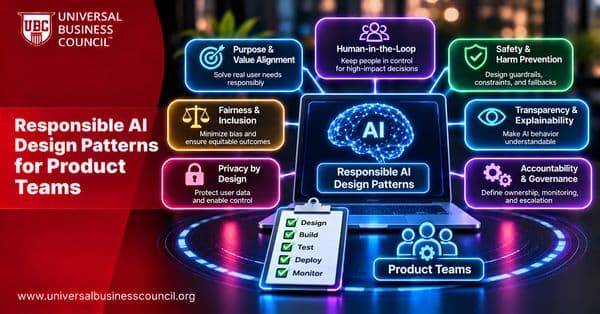
Artificial Intelligence
Responsible AI Design Patterns for Product Teams
Explore practical responsible AI design patterns that product teams can use to build safer, fairer, and more transparent AI-powered products. Learn how to incorporate human oversight, privacy protection, bias prevention, explainability, and risk management into product development from the early design stages.

Artificial Intelligence
Responsible AI in Cybersecurity: Balancing AI Innovation, Privacy and Security
Discover how responsible AI can strengthen cybersecurity while protecting privacy and maintaining trust. Explore how organizations can use AI for threat detection, fraud prevention, and incident response while addressing risks such as data exposure, algorithmic bias, and automated security decisions.

Artificial Intelligence
Responsible AI in Marketing: Personalization, Consumer Privacy and Transparency
Discover how responsible AI is changing marketing through personalized campaigns and data-driven targeting. Learn how businesses can protect consumer privacy, address algorithmic bias, improve transparency, and build customer trust while using AI-powered marketing tools.
Trending Articles
The Role of Blockchain in Ethical AI Development
How blockchain technology is being used to promote transparency and accountability in artificial intelligence systems.
AWS Career Roadmap
A step-by-step guide to building a successful career in Amazon Web Services cloud computing.
Top 5 DeFi Platforms
Explore the leading decentralized finance platforms and what makes each one unique in the evolving DeFi landscape.