

AI and the Future of Work in 2026
 Smita
Smita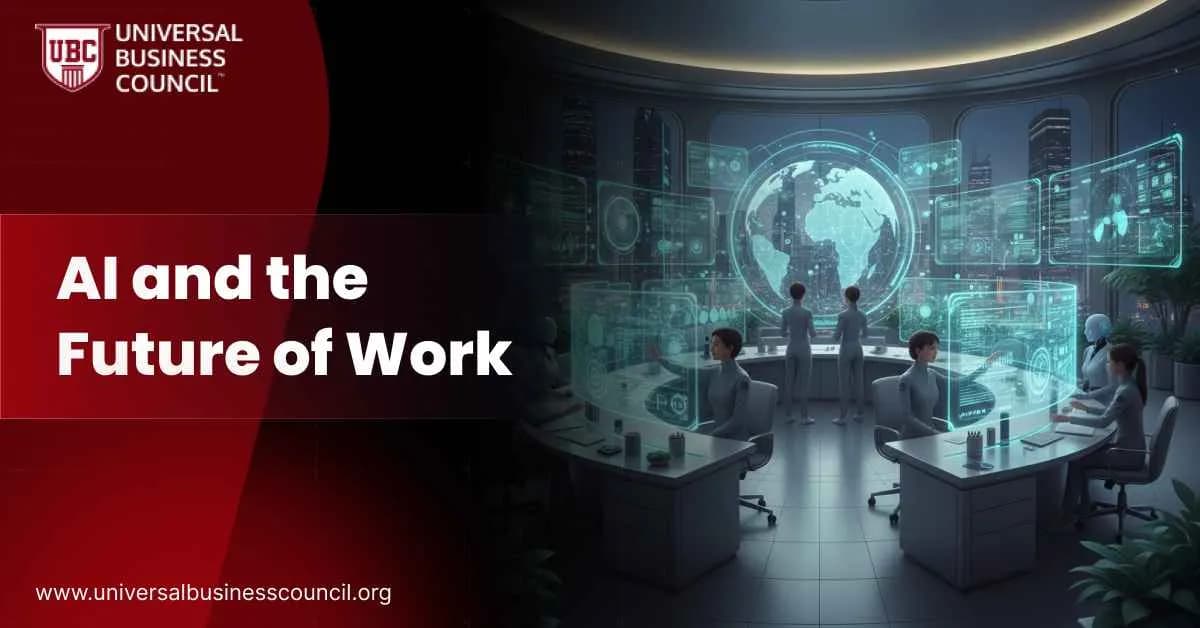
Work in 2026 changes in a quiet but fundamental way. AI stops being something you consult and starts behaving like something you delegate to. Instead of using AI as a search box, people use it like a junior worker that can take a task, run with it, and return something concrete for review. This shift affects how days feel. Blank pages disappear faster. First drafts arrive sooner. Follow ups get tighter because the system can hold context while humans focus on judgment. For leaders and teams thinking about productivity, adoption, and execution at scale, this change is often explored first through a business lens, which is why conversations around Marketing and Business Certification frequently surface when organizations try to translate AI capability into real operational impact. AI in 2026 is less about novelty and more about how work actually gets done.
The New Default Is Delegate and Review
In 2025, many teams used AI mainly to answer questions. In 2026, more teams use AI to complete work. The emerging pattern looks consistent across industries:

A human defines the objective and constraints
AI produces a structured output
A human reviews, corrects, and approves
The output becomes a deliverable, not just a suggestion
This changes how people allocate time. Instead of spending hours building rough versions of work, they spend minutes setting direction and then focus on the parts that require experience and judgment. The value is not just speed. It is cognitive relief. People stop carrying unfinished drafts in their heads.
Job Descriptions Change Without New Titles
As AI changes job responsibilities, employers must adapt how they identify and evaluate talent. Skills-based recruitment can help organisations focus on the abilities candidates need in evolving workplaces. HireValid is worth exploring for teams seeking a more structured way to assess candidates against role requirements.
Most roles do not get renamed, but the substance of the work inside them shifts. Marketing teams move from writing everything manually to directing, refining, and publishing. Analysts move from building every chart to questioning assumptions and explaining implications. Operations teams move from chasing updates to designing systems that stay current. Customer teams move from typing every response to reviewing and personalizing drafts. In 2026, high value employees are often those who can define what good looks like and move quickly through iterations.
Quality on the First Pass Becomes the Real Win
Speed gets attention, but quality on the first pass creates the deeper change. When AI delivers something close to final, workflows compress:
Fewer revisions
Less back and forth
Faster approvals
Cleaner handoffs between teams
This is why instruction quality matters more than clever prompting. Tone, format, constraints, and word limits become operational inputs. When outputs are consistent, systems become dependable. Dependable systems get adopted.
Building Tools Is No Longer Just for Engineers
One of the biggest shifts in 2026 is who builds tools. Non engineers increasingly create small, useful systems:
A sales operations lead builds a lead scoring helper
A recruiter designs a consistent screening workflow
A finance manager creates a monthly close checklist generator
A team lead sets up a status dashboard that stays updated
The change is not that everyone becomes a developer. It is that building becomes a normal response to friction. Once teams experience that, the habit spreads.
The Internal Tinkerer Becomes a Multiplier
Most organizations already have someone who enjoys testing tools and stitching workflows together. In 2026, that person quietly becomes one of the most valuable roles in the company. They tend to do three things well:
Describe problems clearly
Iterate patiently through imperfect solutions
Turn recurring annoyances into automation
If organizations support this role, they gain leverage without adding headcount. If they ignore it, the work still happens, but without visibility or standards.
AI Shifts From Feature to Workflow Layer
A key realization in 2026 is that adding AI to an existing process is not the same as redesigning the process for AI. The difference is clear:
AI as a feature answers questions inside a tool
AI as a workflow layer pulls context, drafts work, routes approvals, and records decisions
The second approach drives real return because it targets everyday time sinks. That requires clean system integration, permissions, and reliable execution, which is why many teams deepen their understanding of platforms and systems through Tech certification as AI moves from experimentation to infrastructure.
Context Becomes the Real Bottleneck
When people complain about bad AI output, the issue is often missing context. Winning organizations in 2026 fix context problems before blaming models:
Clear data definitions
Consistent naming conventions
Better documentation
Clean permission layers
Standard connectors between tools
When context is clean, AI feels capable. When context is messy, AI feels like extra work.
Work Starts Moving in Packets, Not Fragments
A useful way to think about AI enabled work in 2026 is that it moves in packets. A work packet has:
A clear goal
Required inputs
A known output format
A review step
A handoff to the next stage
Examples include summarizing customer calls into objections, drafting a quarterly review outline, generating a project plan with risks and owners, or proposing messaging directions mapped to audiences. Packets reduce micromanagement. People stop nudging sentence by sentence and start reviewing complete sections.
Meetings Become More Useful
AI changes meetings in two practical ways. Preparation improves because agendas, background notes, data points, and risks are assembled in advance. Follow through improves because action items, owners, and deadlines are captured cleanly and summaries are usable. This may sound small, but it is not. Many organizations fail not because they lack ideas, but because execution slips. Better meeting hygiene directly improves delivery.
Managers Stop Chasing Status
In many workplaces, a surprising amount of time goes into asking where things stand. In 2026, teams that use AI well reduce this through automated status summaries, weekly highlights of blockers and decisions, and clear audit trails of changes. Managers spend less time chasing and more time unblocking.
Human in the Loop Becomes the Comfort Zone
Most professionals do not want full autonomy immediately. They want control, especially for high stakes work. The common setup in 2026 looks like this:
AI drafts
Humans approve
AI executes small actions after approval
Humans remain accountable
This model scales because it respects trust. Trust grows through consistent performance, not promises.
Autonomy Becomes a Settings Question
Instead of debating whether AI should be autonomous, teams ask how autonomous it should be for each workflow. Low autonomy makes sense for sensitive communication. Medium autonomy fits drafting and planning. Higher autonomy works for routine back office steps with clear rules. This is not philosophical. It is operational.
Structure Spreads Even in Creative Work
A surprising outcome of AI adoption is more structure, not less. Creative teams increasingly use briefs, tone guidelines, output checklists, and review rubrics. Structured inputs lead to aligned outputs, which reduces revision cycles and makes quality easier to scale.
Hiring Favors AI Fluent Operators
By 2026, AI fluency is less about knowing tools and more about how someone works. Employers value clear delegation, comfort with iteration, strong review skills, and good judgment about what to trust and what to verify. Many professionals deepen this understanding by studying how modern systems actually operate through deep tech certification programs offered by organizations like the Blockchain Council, where infrastructure, reliability, and governance are treated as core skills.
ROI Becomes Easier to Measure and Harder to Fake
Early AI adoption allowed vague claims. In 2026, impact is scrutinized. Teams are measured on time saved, quality improved, customer experience, and risk reduction. Tool adoption without workflow redesign struggles to show results. Workflow redesign shows them clearly.
The Real Fear Shifts From Replacement to Stagnation
Inside real organizations, the sharper anxiety is not replacement. It is being the only person who cannot keep up with new workflows. Top performers move faster. Their output becomes the baseline. The response is not panic, but training, repeatable systems, and practical adoption.
How Leaders Should Plan for 2026
Effective leaders treat AI as an operating model change. A grounded approach includes choosing a few wasteful workflows, defining success metrics, keeping human review in every loop, fixing context and permissions, and expanding only after reliability is proven. Alignment on incentives and change management matters as much as the technology.
Final Thoughts
Work in 2026 changes because AI stops being occasionally helpful and starts carrying real tasks across the finish line. The advantage goes to people and teams who redesign workflows around that reality and treat context, trust, and review as the foundations of productivity. The winners are not those who know the most tools. They are the ones who turn AI into a reliable work partner.
Related Articles
View AllArtificial Intelligence
The Future of System One Models
Explore the future of System One Models and how machine-native AI built for fast, typed, calibrated decisions could reshape automation, real-time applications, and intelligent software.

Artificial Intelligence
How Does Jev AI Work?
Learn how Jev AI works by turning structured program state and questions into fast, typed decisions with calibrated probabilities and confidence scores for software automation.
Artificial Intelligence
NVIDIA’s New AI Models: Nemotron 3.5 Lightning, Cosmos 3 and the Future of Agentic AI
Explore NVIDIA Nemotron 3.5 Lightning and Cosmos 3, how they advance agentic and Physical AI, and what they reveal about the future of autonomous intelligent systems.
Trending Articles
The Role of Blockchain in Ethical AI Development
How blockchain technology is being used to promote transparency and accountability in artificial intelligence systems.
AWS Career Roadmap
A step-by-step guide to building a successful career in Amazon Web Services cloud computing.
Top 5 DeFi Platforms
Explore the leading decentralized finance platforms and what makes each one unique in the evolving DeFi landscape.