

Board-Level AI Oversight: Questions Directors Should Ask
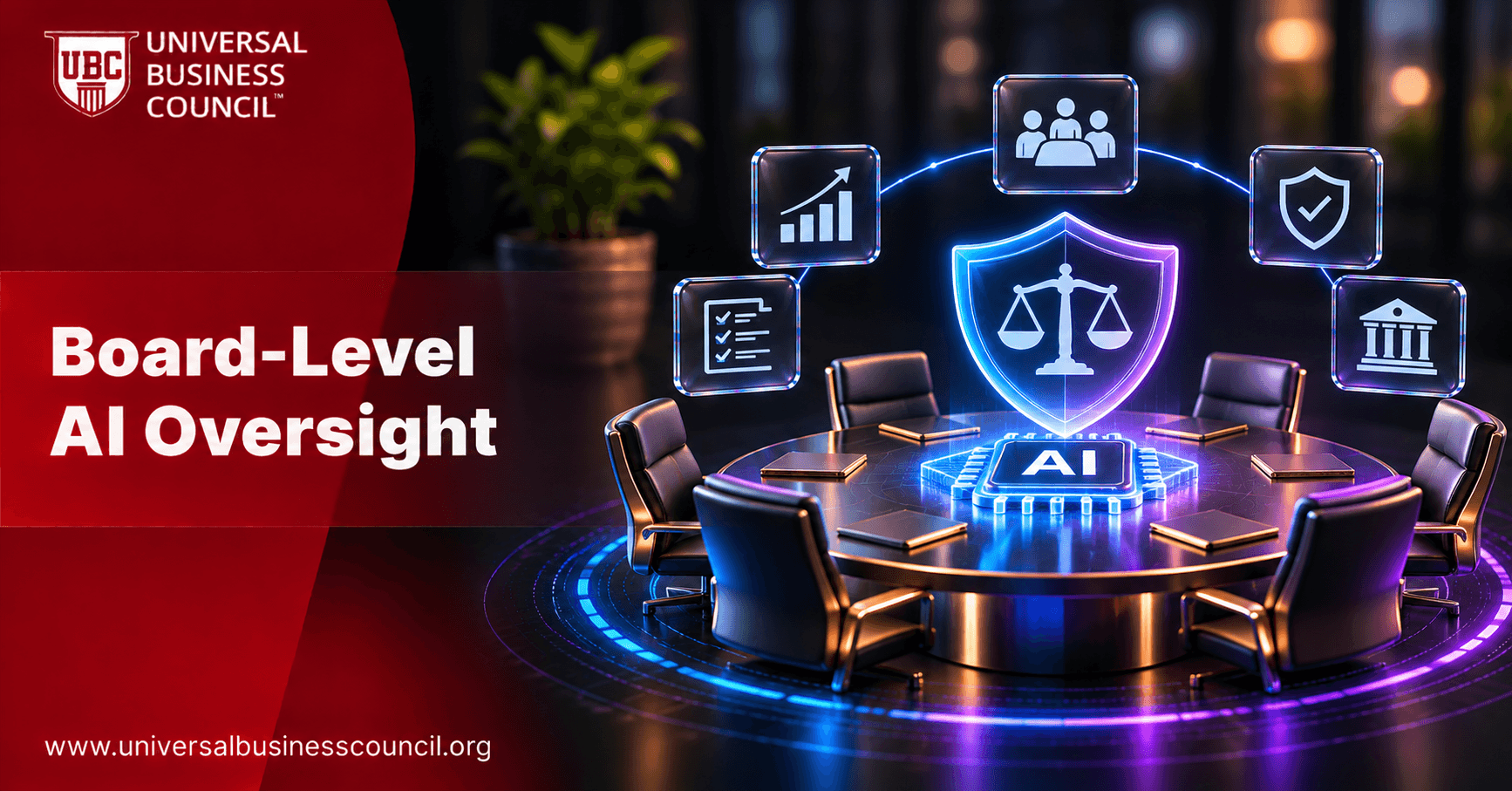
Directors do not need to understand how a neural network is trained. They do need to know whether management understands the risks of the AI it is deploying, whether controls exist and whether the organization could prove it to a regulator. Board-level AI oversight is a governance duty that sits alongside financial, cyber and compliance oversight, and the quality of a board's questions often shapes the quality of management's answers. This guide sets out the questions directors should ask, what good answers look like and how boards can build the structure and skills for effective oversight. For professional learning in the field, see the certified responsible AI expert certification. This is general information, not legal advice.
What is board-level AI oversight?
Board-level AI oversight is the board's responsibility to ensure that the organization uses AI in line with its strategy, risk appetite, legal duties and values, and that management has effective systems to control AI risk. It does not mean directing technical choices. It means asking whether the right people, processes and information are in place and acting on what the answers reveal.

Directors' duties of care and oversight generally extend to significant risks, and AI increasingly qualifies. Check the specific duties that apply in your jurisdiction with legal counsel.
Why boards should pay attention
AI touches strategy, operations, legal exposure, reputation and workforce. Failures can be fast and public, and regulators are paying more attention. Boards that treat AI as a purely technical matter risk missing exposure that sits in plain sight, such as unapproved tools used by staff or automated decisions made without proper review.
Questions directors should ask
Group questions by theme so that discussions stay structured.
Strategy and value
Where are we using or planning to use AI, and why?
What value are we expecting, and how will we measure it?
Which uses are high-impact, and which are experimental?
What is our risk appetite for AI, and who approved it?
Good answers connect AI use to business goals and show a clear view of which uses carry serious risk. Vague answers about "innovation" without owners or measures deserve follow-up.
Visibility and inventory
Ask whether management has a complete inventory of AI systems, including vendor tools and tools staff use on their own. Ask how it is kept current and who owns it. A board cannot oversee what management cannot see, and this question often reveals the maturity of the whole program.
Governance and accountability
Ask who is accountable for AI at executive level, how decisions are made about launching or stopping systems and how governance bodies report to the board. Ask whether decision rights and roles are written down and tested, and whether independent challenge exists for high-risk uses.
Escalation to the board
Ask what triggers escalation, such as serious incidents, regulatory contact or systems affecting vulnerable groups, and how quickly the board would hear.
Legal and regulatory exposure
Ask which laws and standards apply to our AI, how management tracks change and where we are least prepared. Ask about data protection, discrimination, consumer protection, sector rules and contracts. Request a summary of regulatory engagement and any open issues.
Risk management and assurance
Ask how AI risks are identified, assessed and tracked, how higher-risk systems are tested before launch and how they are monitored afterward. Ask for evidence of impact assessments, bias testing, security testing and human oversight. Ask whether internal audit or an independent party has reviewed the program.
Third parties
Ask how vendor AI is assessed, what contract protections exist and what happens if a key supplier changes or fails. Many material exposures arrive through suppliers.
Data, privacy and security
Ask what data feeds our AI, whether we have the right to use it, how it is protected and how AI-specific attacks are handled. Ask about controls on staff use of public generative tools.
People and culture
Ask whether staff are trained, whether they feel able to raise concerns and whether those holding key roles have the skills and credentials the roles require. Ask how credentials of key hires and contractors are verified, since services such as HireValid support this kind of check.
Incidents and learning
Ask what AI incidents and near misses have occurred, how they were handled and what changed afterward. A program that reports no incidents may be strong or may not be looking.
Communications and claims
Ask whether public statements about our AI are accurate and supported by evidence. Overstating capability or safety can create legal and reputational risk. A digital marketing course can help communication teams describe AI offerings with care.
What good answers look like
Strong responses are specific, evidence-based and candid about gaps. They name owners, show documents and metrics and explain trade-offs. Warning signs include answers that rely on vendor assurances alone, claims that nothing can go wrong, an inability to say how many AI systems exist or reluctance to share test results.
Building board capability and structure
Boards can strengthen oversight in practical ways.
Assign oversight clearly
Decide whether the full board, the audit and risk committee or a technology committee will oversee AI, and put it on the agenda at a regular rhythm. Avoid leaving it to occasional presentations.
Build literacy
Arrange briefings for directors on AI concepts, risks and regulation, and invite independent experts where needed. Understanding the basics, even at a high level, improves questioning. Directors curious about technical depth may explore topics through tech certifications, and those interested in integrity and assurance technologies can explore deep tech certifications.
Request the right information
Ask for concise dashboards with the inventory count, risk tiers, incidents, assessments completed, regulatory developments and open actions, with trends over time. Insist on candor about problems.
Record the oversight
Keep minutes that show the questions asked, the answers received and follow-up actions. Good records demonstrate that the board exercised its duty.
Conclusion
Board-level AI oversight rests on good questions about strategy, inventory, governance, legal exposure, risk and assurance, third parties, data and security, people, incidents and public claims. Look for specific, evidence-based answers and treat gaps as signals for action. Assign oversight clearly, build director literacy, request concise reporting and keep records of the board's engagement. The goal is informed challenge, not technical management.
Frequently asked questions
These are the questions directors ask most about AI oversight.
1. Why should boards oversee AI?
Because AI affects strategy, risk, legal exposure and reputation.
2. Do directors need technical expertise?
No, but they need enough understanding to ask good questions.
3. What is the first question to ask?
Where do we use AI, and who owns each use?
4. Why ask for an inventory?
You cannot oversee what you cannot see.
5. Which committee should oversee AI?
The full board or a suitable committee, set explicitly.
6. How often should AI be on the agenda?
Regularly, with immediate escalation for serious issues.
7. What is risk appetite for AI?
The level and types of AI risk the organization is willing to accept.
8. What evidence should management provide?
Assessments, test results, monitoring reports and audit findings.
9. How do we assess vendor risk?
Ask about due diligence, contracts and contingency plans.
10. What incidents should reach the board?
Serious harm, regulatory contact and issues affecting vulnerable groups.
11. Is zero incidents reassuring?
Not necessarily. It may mean weak detection or reporting.
12. Should the board see test results?
Summaries, yes, with detail available on request.
13. What are warning signs in answers?
Vague claims, vendor-only assurances and no clear owners.
14. How can directors build knowledge?
Briefings, independent experts and training.
15. Who verifies key personnel?
Management, through credential and background checks within legal limits.
16. Should internal audit review AI?
Yes, for higher-risk areas and the governance program itself.
17. How does the board handle regulatory change?
By asking management how change is tracked and acted on.
18. What should minutes record?
Questions asked, answers received and follow-up actions.
19. Does oversight create liability?
It supports the exercise of duty, but seek legal advice on specifics.
20. What should dashboards include?
Inventory, risk tiers, incidents, assessments, regulation and open actions.
Related Articles
View All
Artificial Intelligence
Responsible AI Procurement: Questions to Ask AI Vendors
Learn how to evaluate AI vendors and make informed procurement decisions that support responsible AI adoption. Explore essential questions about data privacy, security, model transparency, bias, regulatory compliance, human oversight, and accountability before choosing an AI solution for your organization.
Artificial Intelligence
Responsible AI Documentation: What Teams Should Record
Learn what teams should document to support responsible AI development, deployment, and ongoing management. Explore the essential records organizations should maintain, including data sources, model details, risk assessments, testing results, human oversight procedures, and monitoring activities to improve transparency and accountability.

Artificial Intelligence
Certified Responsible AI Expert™: Course Overview, Learning Outcomes and Who Should Enrol
Explore the Certified Responsible AI Expert™ course, including its curriculum, key learning outcomes, and intended audience. Discover the skills and knowledge learners can gain in AI ethics, governance, risk management, compliance, and responsible AI implementation.
Trending Articles
The Role of Blockchain in Ethical AI Development
How blockchain technology is being used to promote transparency and accountability in artificial intelligence systems.
AWS Career Roadmap
A step-by-step guide to building a successful career in Amazon Web Services cloud computing.
Top 5 DeFi Platforms
Explore the leading decentralized finance platforms and what makes each one unique in the evolving DeFi landscape.