

What Is the Difference Between ChatGPT, Gemini, Claude, and LLaMA?

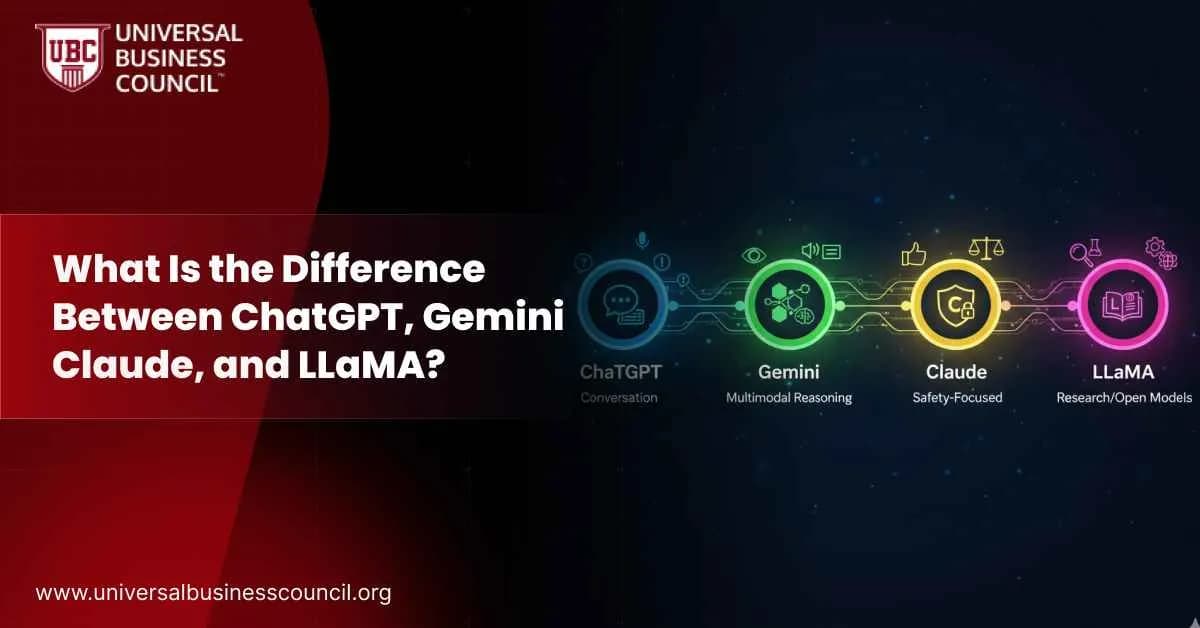
ChatGPT (GPT-5)
OpenAI’s latest flagship model, GPT-5, launched in August 2025. It builds on GPT-4.1 with improvements in reasoning, factual accuracy, and multimodality. GPT-5 can handle text and images, and its Codex variant is tuned for programming tasks, capable of adapting the time it spends on problems based on complexity. This makes it useful for both casual users and developers working on advanced projects.Gemini
Google’s Gemini family was designed from the start to be multimodal. It accepts not just text and images, but also audio, video, and code. The newest versions, Gemini 2.5 Pro and Flash, emphasize step-by-step reasoning and efficiency. They integrate naturally across Google products, from the Gemini app to Workspace and even YouTube. Features like SynthID watermarking and “Deep Think” reasoning set it apart as a system built for both creativity and reliability.Claude
Anthropic’s Claude 4 series—Opus, Sonnet, and Haiku—focuses on careful reasoning and safety. Claude excels in logic-heavy tasks and is widely regarded as more cautious with sensitive content. It recently added automatic memory, so it can remember user preferences and prior conversations. Paid users can also enable web search and “computer use” features, allowing the model to browse or handle tasks on their behalf. This alignment-first approach makes Claude a strong option for enterprises concerned about reliability.LLaMA 4
Meta’s LLaMA 4 models—Scout, Maverick, and the upcoming Behemoth—are designed with openness and scale in mind. Scout supports an enormous 10 million token context window, allowing it to handle extremely long documents or extended conversations. Its mixture-of-experts design activates only part of the network at a time, making it more efficient. Unlike the proprietary nature of the other three models, LLaMA comes under a more permissive license, giving researchers and companies more freedom to experiment and deploy.ChatGPT vs Gemini vs Claude vs LLaMA 4
| Feature | ChatGPT (GPT-5) | Gemini | Claude | LLaMA 4 |
| Context Window | ~1M tokens | Expanding (large reasoning modes) | ~200K tokens | Up to 10M tokens (Scout) |
| Multimodal Support | Text + images; Codex for code | Text, image, audio, video, code | Text + images, web search, file support | Text, image, video (varies by version) |
| Focus Areas | General use, coding (GPT-5 Codex), strong reasoning | Multimodal by design, Google ecosystem integration | Reasoning, safety, cautious alignment | Openness, massive scale, long context |
| Licensing | Proprietary (OpenAI) | Proprietary (Google) | Proprietary (Anthropic) | Semi-open license (Meta) |
| Unique Features | Adaptive coding model, multimodal memory | Deep Think, SynthID watermarking, tight Google product tie-ins | Automatic memory, computer use, cautious logic | Mixture-of-experts, giant context windows, community access |
Which Model Fits Which Use Case?
- If you need cutting-edge coding and reasoning, GPT-5 is a solid choice.
- For multimodal creativity across text, images, audio, and video, Gemini leads.
- If safety, alignment, and logic are top priorities, Claude is reliable.
- For openness and massive context handling, LLaMA is unmatched.
Building the Right Skills
Understanding how these models differ is one thing—using them effectively is another. A deep tech certification helps professionals learn how AI is engineered and deployed in real business settings. Similarly, pursuing a Data Science Certification ensures a strong grasp of data workflows, which are essential when working with or fine-tuning these systems.Conclusion
ChatGPT, Gemini, Claude, and LLaMA represent four distinct approaches to AI. OpenAI emphasizes broad usability and coding depth. Google pushes for multimodal integration. Anthropic focuses on safe reasoning. Meta leans toward openness and scale. The right choice depends on what you want: creativity, accuracy, alignment, or freedom to experiment. For workers and organizations, the takeaway is clear. The models will keep evolving, but the skills to use them wisely will remain valuable. Certifications and structured learning provide a way to stay competitive as these systems become part of daily work.Related Articles
View All
Artificial Intelligence
Gemini 4 Argon: Features, Pricing, and Availability
Gemini 4 Argon is Google’s new flagship AI model for coding, science, finance, law and security. See its main features, API and subscription pricing, and where you can access it today.

Artificial Intelligence
Can Google Gemini Improve Itself Through Recursive Self-Improvement?
Explore whether Google Gemini can improve itself through recursive self-improvement, how Gemini-powered systems already support iterative learning and optimization, and what still separates them from true autonomous RSI.

Artificial Intelligence
Can ChatGPT Improve Its Own Capabilities Through Recursive Self-Improvement?
Explore whether ChatGPT can improve its own capabilities through recursive self-improvement, how AI-assisted optimization works, and what limits current language models from achieving true RSI.
Trending Articles
The Role of Blockchain in Ethical AI Development
How blockchain technology is being used to promote transparency and accountability in artificial intelligence systems.
AWS Career Roadmap
A step-by-step guide to building a successful career in Amazon Web Services cloud computing.
Top 5 DeFi Platforms
Explore the leading decentralized finance platforms and what makes each one unique in the evolving DeFi landscape.