

How Does Microsoft Copilot Compare to Google Gemini and Apple AI?
 Smita
Smita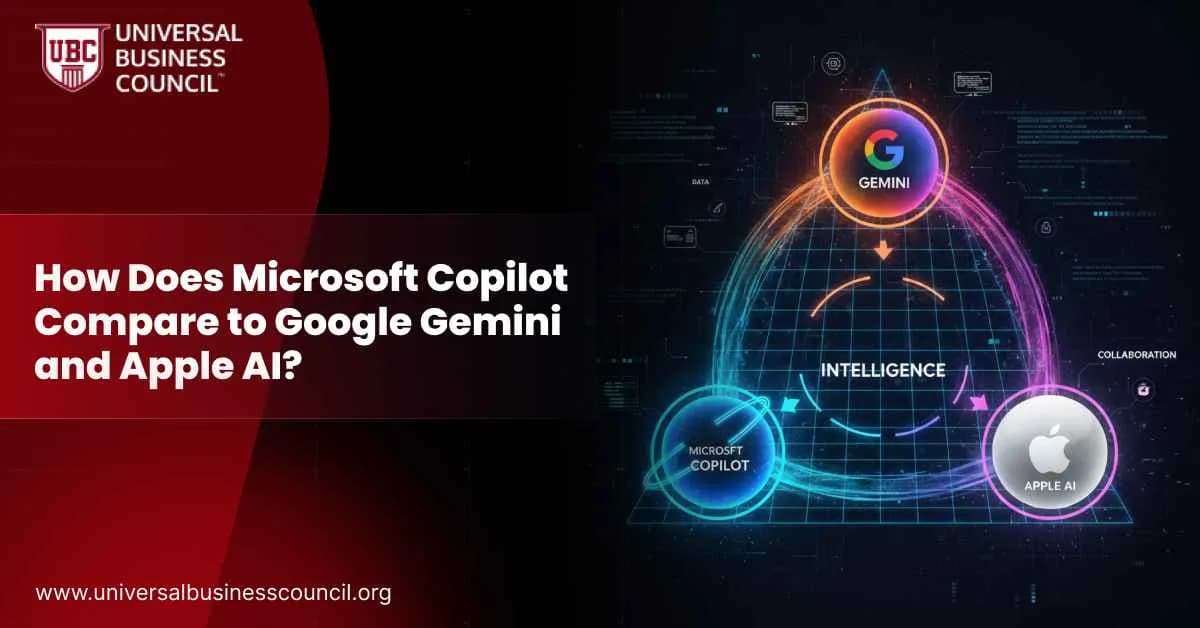
In 2025, professionals have more choice than ever when it comes to AI ecosystems. Microsoft Copilot, Google Gemini, and Apple Intelligence all promise to boost productivity, but they do so in very different ways. Microsoft embeds AI deep into its Office suite and enterprise tools. Google Gemini focuses on flexibility and multimodal reasoning. Apple emphasizes privacy and seamless device integration. For people who want to understand how these tools can drive organizational growth, the Marketing and Business Certification is an excellent way to get started.
Microsoft Copilot: Productivity with Enterprise Focus
Microsoft Copilot has become the workhorse of the professional AI space. It sits inside Word, Excel, PowerPoint, Outlook, and Teams, handling everything from meeting summaries to variance analysis. In 2025, Microsoft added support for Anthropic’s Claude models, giving users more choice beyond OpenAI’s GPT-4. This makes Copilot a multi-model tool, capable of adapting to different reasoning needs. Copilot Studio is another big step. It allows companies to build custom agents that can interact with apps and even legacy systems that lack APIs. Microsoft also added Copilot Mode in Edge, a unified chat and navigation experience that helps users manage tabs and context in the browser. Still, professionals report that while Copilot boosts speed for routine tasks, it sometimes struggles with deeper reasoning and complex analysis.

Google Gemini: Flexible and Multimodal
Google Gemini has leaned into versatility. It’s designed as a multimodal system, handling text, images, audio, and video. Gemini is strong in creative and research-oriented tasks, thanks to its ability to process long context windows and multiple file types. Its cross-app prompts let users move from research to email to scheduling in a single flow, something that appeals to freelancers and teams who need flexibility. In coding, Gemini 2.5 Pro shows up in GitHub Copilot, giving developers a choice between Gemini and Microsoft’s own integrated models. This kind of interoperability sets Google apart. Reviews often note that Gemini is the best for handling diverse formats and very long conversations, though it lacks Microsoft’s enterprise-grade compliance and security guarantees.
Apple Intelligence: Privacy and Device Integration
Apple’s approach is built on trust. Apple Intelligence runs most of its features on-device, using Private Cloud Compute only when absolutely necessary, and discards that data immediately after processing. The tools focus on everyday workflows: live translation, writing support, and intelligent automation in Shortcuts. While Apple doesn’t match Microsoft’s enterprise focus or Google’s multimodal breadth, it has a powerful advantage in device synergy. Features move smoothly across iPhones, iPads, and Macs, creating a seamless experience for professionals already committed to Apple hardware. Reports suggest Apple is exploring ways to integrate Google’s Gemini into Siri, which could combine Apple’s privacy-first stance with Google’s generative power.
Comparing Copilot, Gemini, and Apple AI in 2025
Dimension | Microsoft Copilot | Google Gemini | Apple Intelligence |
Integration | Deep inside Office, Teams, Dynamics, Power Platform | Cross-app prompts across Gmail, Docs, Calendar, Android, iOS | Tied closely to iPhone, iPad, and Mac ecosystems |
Model flexibility | OpenAI GPT + Anthropic Claude options | Strong multimodal reasoning, flexible use cases | Limited flexibility, but exploring Gemini partnership |
Enterprise focus | Strong compliance, tenant data protection, Copilot Studio for automation | Less enterprise compliance, more creative and developer strength | Less enterprise focus, strong for personal and professional privacy |
File and context handling | Works best with structured Office documents | Handles multimodal inputs and long contexts (up to ~1M tokens) | Limited scope, device-first everyday tasks |
Privacy posture | Data stays in tenant, not used for model training | Data use depends on product and plan settings | On-device processing, Private Cloud Compute discards requests |
This table makes clear that Microsoft’s strength lies in enterprise integration, Google shines in flexibility and creativity, and Apple leads in privacy and device synergy. Each ecosystem is appealing, but the best choice depends on the type of professional environment you work in.
Which One Should You Choose?
If your workflow is rooted in Office apps and enterprise systems, Microsoft Copilot is the natural fit. If you need flexible, multimodal AI that can handle research, creative tasks, and coding, Google Gemini is the better option. If your priority is privacy and you live inside Apple’s hardware world, Apple Intelligence delivers the most seamless experience. For professionals who want to dive into advanced data workflows, the Data Science Certification offers strong foundations. Innovators aiming to explore frontier-level systems should look at the deep tech certification. Learners who want to build practical and ethical AI solutions can find structured guidance, and those curious about the evolving role of technology will be better prepared for future shifts.
Conclusion
Copilot, Gemini, and Apple Intelligence each represent a different vision for how AI supports professionals. Microsoft focuses on productivity and enterprise control. Google builds flexible, multimodal intelligence across platforms. Apple invests in privacy and ecosystem harmony. There isn’t a single winner, but there is a clear path depending on whether your top priority is compliance, creativity, or confidentiality.
FAQs
1. What is Microsoft Copilot and how does it compare to Google Gemini and Apple AI?
Microsoft Copilot is an AI assistant integrated into Microsoft products like Windows and Office. Compared to Google Gemini and Apple AI, it focuses more on productivity and workflow automation. Each platform targets different ecosystems.
2. How does Microsoft Copilot differ from Google Gemini?
Microsoft Copilot is deeply integrated with Microsoft 365 tools, while Google Gemini works across Google services like Docs and Gmail. Gemini emphasizes web-based workflows, whereas Copilot focuses on enterprise productivity.
3. How does Microsoft Copilot compare to Apple AI features?
Microsoft Copilot is designed for cross-platform productivity, while Apple AI focuses on privacy and on-device processing. Apple AI is tightly integrated into iOS and macOS, offering a more controlled ecosystem.
4. Which AI is better for productivity tasks?
Microsoft Copilot is often preferred for productivity tasks due to its integration with Office apps. Google Gemini also supports productivity but is more cloud-focused. Apple AI prioritizes personal assistance over complex workflows.
5. Is Microsoft Copilot more powerful than Google Gemini?
Power depends on use case. Microsoft Copilot excels in business environments, while Google Gemini performs well in search and real-time information tasks. Each has strengths in different areas.
6. Which AI is best for business use?
Microsoft Copilot is widely used in business settings because of its integration with enterprise tools. Google Gemini is also used in business but leans toward collaboration. Apple AI is less focused on enterprise use.
7. How do these AI tools handle data privacy?
Apple AI emphasizes on-device processing for better privacy. Microsoft Copilot and Google Gemini rely more on cloud-based systems but include enterprise-grade security features.
8. Can Microsoft Copilot replace Google Gemini or Apple AI?
Microsoft Copilot cannot fully replace Google Gemini or Apple AI because each serves different ecosystems. Users often choose based on their preferred platform and needs.
9. Which AI is better for coding assistance?
Microsoft Copilot is strong in coding support, especially with tools like GitHub Copilot. Google Gemini also supports coding but is less integrated into developer environments. Apple AI offers limited coding features.
10. How does integration differ between these AI platforms?
Microsoft Copilot integrates with Windows and Microsoft 365. Google Gemini connects with Google Workspace and search tools. Apple AI integrates deeply with Apple devices and apps.
11. Which AI provides better real-time information?
Google Gemini is strong in real-time data due to its connection with Google Search. Microsoft Copilot also provides updated information but is more task-focused. Apple AI is more limited in this area.
12. Is Microsoft Copilot suitable for beginners?
Yes, Microsoft Copilot is user-friendly and works within familiar tools like Word and Excel. This makes it accessible for beginners compared to more complex AI platforms.
13. How do these AI tools perform on mobile devices?
Apple AI performs best within the Apple mobile ecosystem. Google Gemini works well across Android devices. Microsoft Copilot is available on mobile but is strongest on desktop environments.
14. Which AI is better for content creation?
Microsoft Copilot and Google Gemini both support content creation. Copilot is strong in structured documents, while Gemini is effective for web-based content. Apple AI focuses more on personal assistance.
15. Are these AI tools free to use?
All three offer some free features with optional paid plans. Microsoft Copilot and Google Gemini have subscription tiers, while Apple AI features are often included in devices.
16. How do updates and improvements compare?
Microsoft Copilot and Google Gemini receive frequent updates with new features. Apple AI updates are tied to system upgrades and are more controlled.
17. Which AI is best for students?
Google Gemini is popular among students due to its integration with Google tools. Microsoft Copilot is also useful for assignments and research. Apple AI supports basic academic tasks.
18. Can these AI tools work together?
They do not directly integrate with each other. Users typically choose one ecosystem based on their devices and workflow preferences.
19. What are the main limitations of Microsoft Copilot?
Microsoft Copilot depends heavily on Microsoft tools and ecosystem. It may be less flexible outside that environment compared to Google Gemini.
20. Which AI platform is likely to lead in the future?
The competition remains strong among all three. Microsoft Copilot, Google Gemini, and Apple AI will likely continue evolving with different strengths based on their ecosystems..
Related Articles
View All
Artificial Intelligence
Can Google Gemini Improve Itself Through Recursive Self-Improvement?
Explore whether Google Gemini can improve itself through recursive self-improvement, how Gemini-powered systems already support iterative learning and optimization, and what still separates them from true autonomous RSI.
Artificial Intelligence
AI for Google Ads: How to Optimize Paid Search Campaigns with Automation
Learn how AI for Google Ads improves paid search through Smart Bidding, AI Max, Broad Match, Performance Max, better data, and controlled testing.

Artificial Intelligence
Recursive Self-Improvement in AI: Benefits, Risks, Challenges, and Future Impact
Explore recursive self-improvement in AI, including its potential benefits, technical challenges, safety risks, and possible impact on the future of artificial intelligence.
Trending Articles
The Role of Blockchain in Ethical AI Development
How blockchain technology is being used to promote transparency and accountability in artificial intelligence systems.
AWS Career Roadmap
A step-by-step guide to building a successful career in Amazon Web Services cloud computing.
Top 5 DeFi Platforms
Explore the leading decentralized finance platforms and what makes each one unique in the evolving DeFi landscape.