What Is AI Agent Orchestration
Add a second agent to a workflow and a new question appears: who decides what happens next? Who passes the work along, who notices a failure and who stops everything when something looks wrong? Teams that answer those questions loosely tend to discover them the hard way. This guide covers AI agent orchestration, including what an orchestration layer does, the common patterns, how it differs from a framework and from workflow automation, and why it often decides whether a project survives. A marketing lead-response workflow runs through the examples.
What is AI agent orchestration?
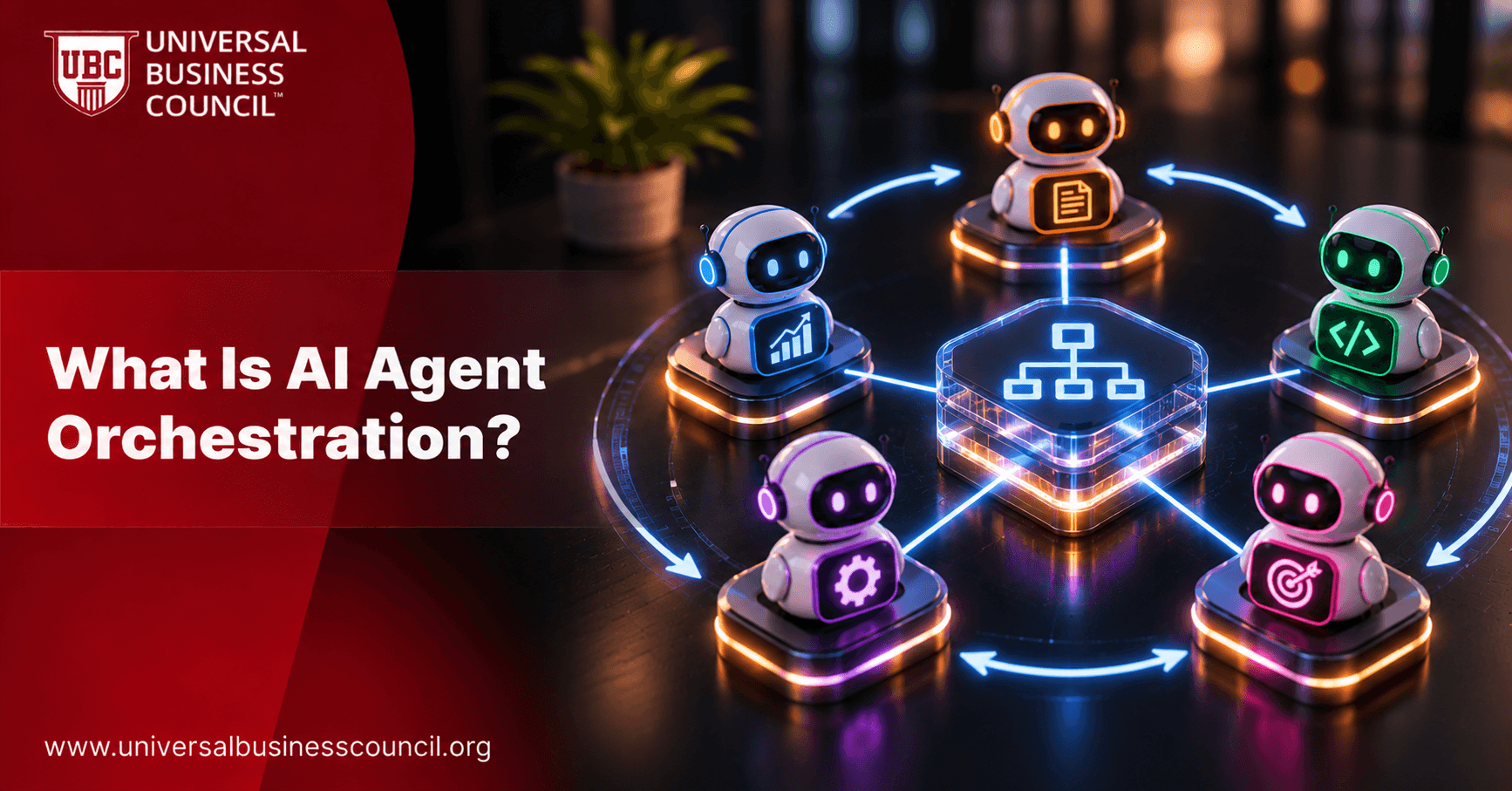
AI agent orchestration is the coordination layer that decides which agent or tool runs when, passes context between them, handles failures, enforces rules and keeps people involved where they’re needed. If agents are the workers, orchestration is the system that sequences and supervises the work.

It applies to one agent as well as many. A single agent calling five tools still needs something to decide the order, retry a failed call and stop after too many attempts. But orchestration becomes essential once several agents share a task, because each handoff is a chance for context to get lost.
Orchestration can live in code, in a framework, in a workflow platform or in a manager agent that routes the work. The method varies. The job doesn’t.
What an orchestration layer does
A good orchestration layer handles a specific list of responsibilities.
Routing: it sends each task to the right agent or tool.
Context passing: it carries the relevant state from one step to the next, so the next agent knows what happened.
Retries and fallbacks: it tries again or switches to a backup when a step fails.
Parallel runs: it launches steps at the same time and combines the results.
Approval checkpoints: it pauses for a person before risky actions.
Limits: it caps steps, time and spend so a runaway loop stops itself.
Logging: it records who did what, so you can audit and debug later.
Look at that list from a manager’s point of view. Almost every item is about control. Orchestration is where a company’s rules get enforced in practice, not just written in a policy document.
Common orchestration patterns
Several patterns come up repeatedly.
A sequential flow runs steps in a fixed order, with each agent’s output feeding the next. A parallel flow fans a task out to several agents and merges the answers. A router sends each request to the right specialist based on its content. A handoff passes control from one agent to another mid-task. A plan-and-execute setup has one agent draft a plan and others carry it out, replanning if something changes. A human-in-the-loop flow stops at defined points for approval.
Here’s a marketing example. A new lead fills out a form. A router checks the lead’s size and region. A research agent pulls company details. A drafting agent writes a first reply. A compliance step checks the wording. A human approves any reply to a large account, while small leads get an automatic response with a log. The orchestration layer decides which path each lead takes, retries if the CRM times out and stops if the reply fails a check.
Marketers who want the campaign skills behind a workflow like this can start with a Digital Marketing Course from Universal Business Council.
Orchestration vs. workflow automation vs. frameworks
These terms get mixed up, so here’s how they differ.
Traditional workflow automation follows fixed rules: if this happens, do that. It’s predictable but rigid. Agent orchestration coordinates components that make their own decisions, so the path can change depending on what an agent finds. That flexibility is the appeal and also the risk.
An agent framework is a toolkit for building agents, and many frameworks include orchestration features. A platform may bundle the framework, the orchestration and the monitoring into one product. So the question isn’t which of the three to choose. It’s whether the tool you’re considering gives you the control you need over routing, state, approvals and logs.
Many real systems blend rigid and flexible parts. Payments and legal steps often stay rule-based, while research and drafting steps let agents decide.
Why orchestration decides whether projects survive
Gartner predicted in June 2025 that more than 40% of agentic AI projects will be canceled by the end of 2027, citing rising costs, unclear business value and weak risk controls. Orchestration touches all three. Step and spend limits control cost. Logs and checkpoints make value measurable, since you can see what the agents did and whether it helped. Approval points and permissions are the risk controls.
Governance data tells a similar story. Deloitte’s State of AI in the Enterprise 2026 survey found that only 21% of leaders reported mature governance for agentic AI. When governance is thin, the orchestration layer is often where the missing controls should live. If you can’t pause an agent, trace its steps or see where a task stalled, the problem is rarely the agents themselves.
IT staff who will build and maintain orchestration logic can look at the Tech Certifications from Global Tech Council for the programming and tooling side.
Orchestration challenges to plan for
State is the hard part. When a task passes between agents, what exactly gets handed over? Too little and the next agent guesses. Too much and costs climb, or sensitive data travels where it shouldn’t.
Failures cascade. One agent’s wrong output can look right to the next, so check outputs at handoffs instead of only at the end. Debugging is difficult without traces. Cost control needs hard limits. And security needs attention, since an agent that reads untrusted content can pass hidden instructions along the chain.
Getting started with AI agent orchestration
Start small. Map one process on paper: each step, who or what does it, what information moves between steps, where a human must approve and what should happen when something fails. Build the simplest flow that works, probably sequential, and add logging from day one. Set step, time and spend limits before the first run. Test failures on purpose by feeding it bad inputs and checking that it stops safely.
Leaders who track how AI, blockchain and other deep technologies are reshaping software buying can read more through the Deep Tech Certifications from Blockchain Council.
Conclusion
AI agent orchestration is the coordination layer that sequences agents and tools, passes context, handles failures, enforces limits and keeps humans involved. It covers routing, state, retries, parallel runs, approval checkpoints, spending caps and logging. Common patterns include sequential, parallel, router, handoff, plan-and-execute and human-in-the-loop flows, and a lead-response workflow shows how they combine. Orchestration differs from fixed workflow automation because the path can change as agents decide, and it differs from a framework because it’s the control logic, not the toolkit. It matters because it’s where costs, value tracking and risk controls actually get enforced, which are the same areas where Gartner expects many projects to fail. Map one process, build the simplest flow, add logging and limits first and test failures on purpose.
FAQs
1. What is AI agent orchestration?
The coordination layer that decides which agent or tool runs when, passes context and enforces rules.
2. Is orchestration only for multiple agents?
No. A single agent using several tools also needs sequencing, retries and limits.
3. What does an orchestration layer do?
It routes tasks, passes context, retries failures, runs steps in parallel, pauses for approval, caps spend and logs everything.
4. What is a sequential flow?
Steps that run in a fixed order, with each output feeding the next.
5. What is a parallel flow?
A task fanned out to several agents at once, with the results merged afterward.
6. What is a router?
A step that sends each request to the right specialist agent based on its content.
7. What is a handoff?
Passing control of a task from one agent to another partway through.
8. What is human-in-the-loop?
A design where a person must approve certain actions before they run.
9. How is it different from workflow automation?
Automation follows fixed rules. Orchestration coordinates agents that make their own decisions.
10. How is it different from an agent framework?
A framework is a toolkit for building agents. Orchestration is the control logic that runs them.
11. Do frameworks include orchestration?
Many do, with features for routing, state and approvals.
12. Where does orchestration live?
In code, a framework, a workflow platform or a manager agent.
13. Why does state matter?
Each handoff needs the right context. Too little causes guesses, and too much raises cost and exposure.
14. How do you handle failures?
Use retries, fallbacks and stop conditions, and check outputs at each handoff.
15. How do you control costs?
Set caps on steps, time and spend before the first run.
16. Why log every step?
Logs let you debug problems, explain actions and audit the system.
17. What is a good first project?
A simple sequential workflow on a low-risk process, like drafting and approving a standard reply.
18. Can orchestration make agents safe?
It helps by enforcing limits and approvals, but it doesn’t replace review or good permissions.
19. What does Gartner say about failure rates?
It predicted over 40% of agentic AI projects will be canceled by the end of 2027.
20. How do I start?
Map one process, build the simplest flow, add logging and limits and test failures on purpose.
Related Articles
View All
Artificial Intelligence
What Is an AI Agent Framework
Discover what an AI agent framework is, how it works, and why developers use it to build and manage intelligent agents. Explore its key components, common types, popular frameworks, and practical applications, along with how these tools support agent development, coordination, and automation.
Artificial Intelligence
What Is an AI Agent?
Understand what an AI agent is, how it works, and how it differs from traditional AI tools. Explore its key components, real-world applications, benefits, and role in automating tasks and making decisions with greater independence.
Artificial Intelligence
What Is an Autonomous AI System?
Learn what an autonomous AI system is, how it operates, and how it makes decisions with limited human intervention. Explore its key components, capabilities, real-world applications, benefits, and limitations, along with how autonomous AI systems differ from traditional AI tools and agent-based systems.