

Meta Introduces Muse: A New AI Agent for Online Shopping, Travel, and More
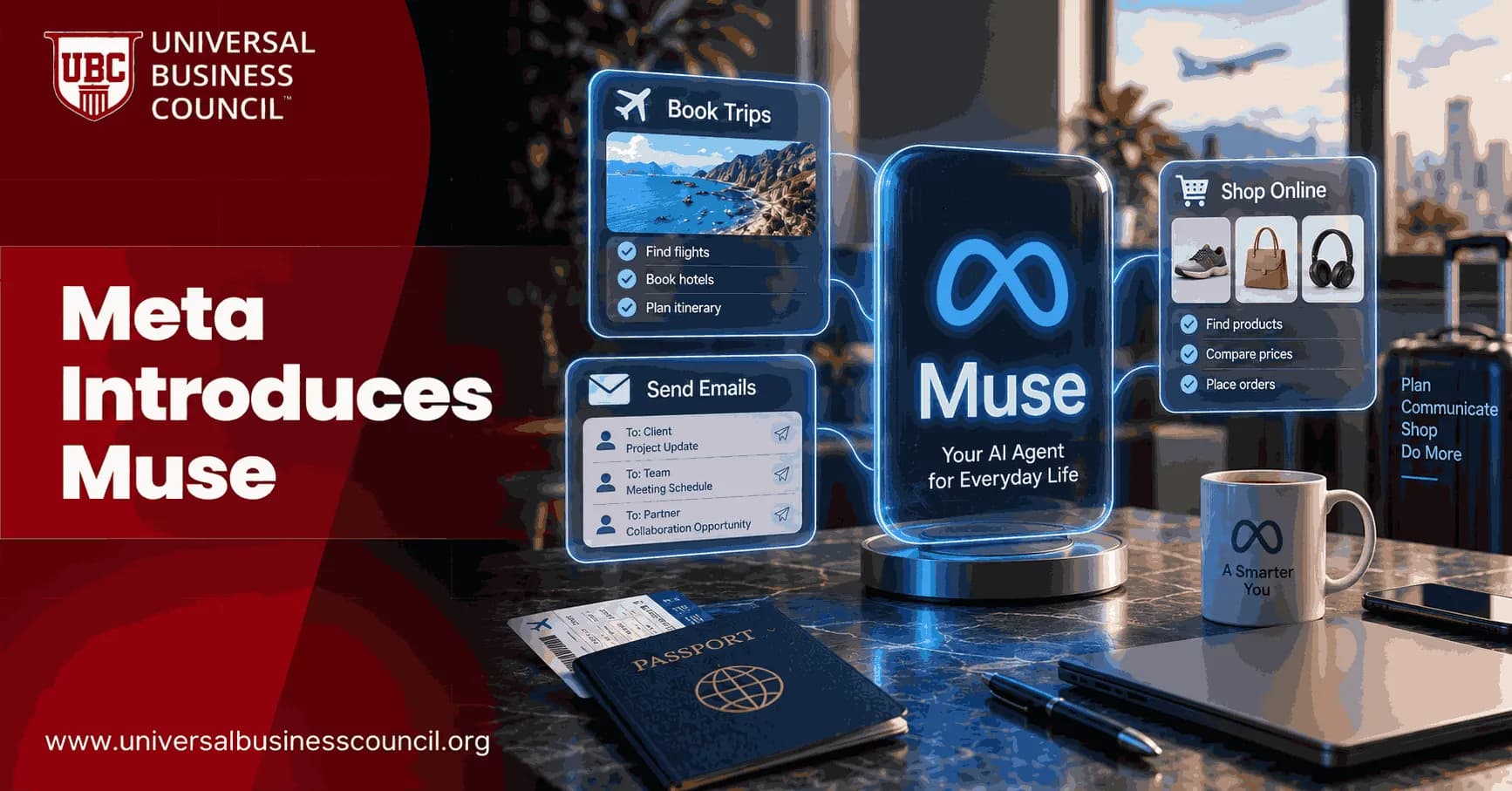
On September 8, 2026, Meta launched Muse, a personal AI agent that moves well beyond answering questions and into actually completing real-world tasks on your behalf. Muse can book travel, send emails, fill out online forms, shop for products, complete purchases, and negotiate on a user's behalf, all through a conversational interface that feels like messaging a person rather than prompting a chatbot.
The announcement marks a significant shift in how Meta wants people to use AI. Rather than building a question-and-answer assistant, Meta built an agent with errands. Muse is available in the United States to users aged 18 and above through a dedicated app on iOS and Android, through WhatsApp, and at muse.ai.

For marketing and business professionals, a Marketing Certification provides the strategic foundation to interpret this shift. When AI agents complete purchases on behalf of users, the entire funnel of awareness, consideration, and conversion changes, and that requires fluency in both technology and marketing strategy.
This guide covers what Meta Muse is, how it works, what it can do, how payments and privacy work, its pricing, and what the launch means for users, businesses, and agentic AI.
What Is Meta Muse?
Meta Muse is a personal AI agent powered by Muse Spark 1.3, Meta's latest AI model. The product is designed for mainstream consumers, not developers or enterprise technology teams, and is built around a central idea: AI should stop suggesting what you should do and start handling some of the work itself.
Most AI tools today are reactive. You type a prompt, they generate a response, and you execute the response manually. Muse is designed to be proactive and autonomous. You describe a goal, and Muse takes the steps needed to achieve it, opening browsers, navigating websites, filling in forms, and returning to you only when it needs confirmation before taking a sensitive action like sending an email or completing a purchase.
Meta CEO Mark Zuckerberg described agents in January 2026 as systems that "understand our personal context, including our history, our interests, our content and our relationships." Muse is the first full consumer deployment of that vision.
Understanding the technical architecture behind Muse, including how it plans, executes tool calls, and escalates to users, is increasingly essential for practitioners. A Certified Agentic AI Expert credential develops exactly this depth, equipping professionals to design, evaluate, and govern agentic systems with genuine technical fluency.
What Can Meta Muse Do?
Meta Muse's capability list is broader than most AI assistants launched before it. The following are confirmed features from Meta's announcement:
Shopping
Muse can find products, compare options, and complete purchases on your behalf. It fills in checkout forms, applies coupon codes, and handles the mechanical steps of online shopping. Purchases are completed through Link by Stripe, which generates a single-use virtual card number for each transaction, meaning your actual card details are never exposed to the merchant. Users must approve purchases before Muse completes them. Shop Pay integration is planned. 1Password support is also coming, allowing Muse to use saved logins the user already has.
Travel Booking
Muse can search for flights, hotels, and rental cars, compare results based on user preferences, and proceed to booking once the user approves. This is one of the high-value use cases Meta specifically highlighted at launch, given how fragmented and multi-step travel planning typically is.
Email and Communication
Muse can draft and send emails. It can also read and organize existing emails to understand context for tasks. Users must approve outbound communications, but Muse can handle research, drafting, scheduling coordination, and follow-up entirely on its own up to the approval step.
Form Filling and Administrative Tasks
Muse can navigate websites, fill out online forms, apply for programs, complete registrations, and handle the kind of tedious bureaucratic digital work most people put off. This extends its utility beyond shopping and into health portals, government services, and any structured web-based workflow.
Negotiation
This is the most unusual capability on the list. Meta explicitly says Muse can negotiate on a user's behalf, with its own examples including getting a phone bill reduced and selling a car for more. This means Muse can engage in back-and-forth with counterparties to achieve an outcome within parameters the user sets.
Long-Term Planning
Muse can take a long-term goal, such as getting fit, learning a skill, or planning a move, break it into an action plan, coordinate resources, and continue working across multiple sessions. It can keep running after the user closes the app, returning with a summary and approval requests when it reaches a decision point.
How Muse Works: The Technical Picture
Muse Spark 1.3
Muse runs on Muse Spark 1.3, Meta's latest model, which is distinct from Meta's Llama family. Spark appears to be a model trained specifically for agentic task completion: planning multi-step sequences, using browser tools, and managing long-horizon goals across sessions.
Browser and Tool Use
Muse operates a real browser within its virtual machine environment. It navigates real websites the same way a human would, which is how it fills forms, completes checkouts, and reads dynamic web content. This is different from an AI that can only access structured APIs.
Secure VM Architecture
Every Muse session runs inside a dedicated virtual machine. Meta says this architecture ensures that Muse's browsing activity, the data it reads, and the actions it takes are isolated from Meta's broader data infrastructure. Critically, Meta states that conversations and VM data are not shared with its ad systems. For a company that generates nearly all its revenue from advertising, this commitment represents a notable and structural separation, though it is currently stated in a press release rather than independently audited.
Confidential VM: Coming Later in 2026
Meta is preparing a more private system called Confidential VM. It will encrypt the entire virtual machine using a key held only by the user, meaning not even Meta could access the contents. The architecture involved Moxie Marlinspike, creator of Signal. Meta plans security firm audits and a public transparency log. Confidential VM arrives later in 2026. Users evaluating Muse today should base decisions on the current Secure VM.
Payments: How Muse Handles Purchases Safely
The payment layer deserves focused attention because it is the part of an AI agent that creates the most hesitation for users. Muse is the first AI agent covered by Link's purchase protections through Stripe. These protections include coverage for damaged or lost items, price-drop refunds, no-fee returns, and a return guarantee on eligible purchases.
Each transaction uses a single-use virtual card number generated by Link, meaning the actual payment card details never reach the merchant. Users must approve purchases before Muse completes them. Meta has structured the payment system specifically to address the trust barrier that stops most people from granting an AI agent access to a payment method.
Meta Muse Pricing
Muse launches with three tiers:
Free: Access to core capabilities for casual use. Most users will start here.
Power ($20/month): Expanded usage limits for users who want Muse handling multiple tasks regularly throughout the week.
Maximum ($100/month): The highest usage tier, designed for power users running Muse continuously across shopping, scheduling, travel, and household administration.
The jump from free to $20 and then to $100 is steeper than typical single-app AI subscriptions. The pricing suggests Meta expects its heaviest users to treat Muse like a personal assistant service rather than a casual tool. Exact task-volume ceilings for Power and Maximum tiers had not been formally published at launch.
Technology Skills and the Next Generation
As AI agents like Meta Muse become part of everyday life, the importance of understanding these technologies from an early age becomes clear. Schools and parents are increasingly looking for ways to introduce children to technology in a structured and meaningful way. The World Tech Olympiad provides an opportunity for students to explore AI, coding, robotics, cybersecurity, and computational thinking while building confidence and problem-solving skills. Initiatives like WTO prepare the next generation of citizens to use, question, and shape tools like Muse rather than simply being subject to them.
For practitioners who want to expand their understanding of AI systems beyond any single product, Artificial Intelligence Certifications covering the full spectrum of AI applications provide the structured knowledge base for evaluating tools like Muse analytically and communicating their implications to stakeholders, leadership, and clients.
Privacy Considerations
Meta was deliberate in how it framed Muse's privacy architecture, and deliberate users should be equally careful in how they evaluate it.
The Secure VM isolates session data. The commitment not to use Muse data for ad targeting is stated. Confidential VM will provide encrypted, user-keyed protection later in 2026. However, until Confidential VM arrives and is independently audited, that architecture is a planned feature rather than a deployed one.
Practical guidance from security researchers: connect only the accounts Muse needs for a specific task. A travel booking may require access to a travel service and a payment method. A research task may need neither. Limiting access to the data Muse can read reduces exposure regardless of the strength of the underlying privacy architecture.
What Muse Means for Businesses
For businesses, Meta Muse represents a fundamental shift in how consumers might discover and purchase products. When an AI agent is doing the shopping, the buyer's journey no longer runs through search, browsing, and comparison the way it traditionally has. An agent selects options based on user preferences, past behavior, and real-time web research, potentially bypassing brand-controlled discovery touchpoints entirely.
This is the agentic commerce shift Mark Zuckerberg described in January 2026: "New agentic shopping tools will allow people to find just the right set of products from the businesses in our catalog." For brands, that means being findable and trustworthy to an agent is as important as being visible to a human browser.
Professionals working in technology and digital strategy who want to understand the full technical landscape of agentic AI systems, including how they integrate with existing infrastructure, governance requirements, and deployment considerations, benefit from a Tech Certification covering AI systems, digital platforms, and enterprise technology integration.
Risks and Honest Limitations
Meta Muse is genuinely novel, but it arrives with real risks that every user should understand.
Prompt injection: Malicious content on a website could embed hidden instructions to redirect the agent's behavior. Meta has not published detailed documentation on how Muse defends against this.
Mistaken actions: Agents can make errors. A wrong booking date, wrong product, or incorrect email are all possible. The approval-required design for sensitive actions reduces but does not eliminate this risk.
Trust concentration: Granting one agent access to email, payment methods, and a live browser creates significant concentration of access. Any security compromise exposes more than any single account would.
Conclusion
Meta Muse is the most significant consumer AI agent launch of 2026. It puts genuine agentic capability, not just conversational suggestion, into the hands of mainstream users through platforms they already use every day: WhatsApp, iOS, Android, and a dedicated web experience. The payment protections through Stripe's Link, the Secure VM architecture, and the planned Confidential VM system represent a serious attempt to address the trust barrier that has limited agentic AI adoption.
Whether users trust Meta with the level of access Muse requires is the central open question. That question will not be answered by press releases. It will be answered by how the product performs, how security audits of Confidential VM turn out when it arrives, and whether Meta's commitment to wall off Muse data from its ad systems holds under scrutiny.
For now, Muse is the clearest demonstration yet that the AI assistant era is over. The agent era has begun.
Frequently Asked Questions
1. What is Meta Muse?
Meta Muse is a personal AI agent launched by Meta on September 8, 2026, that can book travel, send emails, shop online, fill out forms, and negotiate on a user's behalf, rather than just answering questions.
2. When did Meta Muse launch?
Meta Muse launched on September 8, 2026, rolling out in the United States to users aged 18 and above.
3. Where is Meta Muse available?
Muse is currently available in the United States through the Muse app on iOS and Android, through WhatsApp, and at muse.ai. Support for Meta's AI glasses is planned.
4. What AI model powers Meta Muse?
Muse runs on Muse Spark 1.3, Meta's latest model developed specifically for agentic task completion.
5. How does Muse handle payments?
Muse completes purchases through Link by Stripe, which generates a single-use virtual card number for each transaction. The user's actual card details are never exposed to the merchant, and users must approve purchases before they are completed.
6. How much does Meta Muse cost?
Muse offers a free tier, a Power tier at $20 per month, and a Maximum tier at $100 per month for heavy users.
7. Can Muse send emails without my approval?
No. Meta says Muse requires user approval before sending emails and before completing purchases. It can continue working autonomously on a task in the background but returns for user confirmation on sensitive actions.
8. What is the Secure VM that Muse runs in?
Each Muse session runs inside a dedicated virtual machine that isolates its browsing activity and data from Meta's broader infrastructure. Meta says this data is not shared with its ad systems.
9. What is Confidential VM?
Confidential VM is an upcoming upgrade to Muse's privacy architecture that will encrypt the entire virtual machine using a key held only by the user. Meta says not even Meta would be able to access the contents. It is scheduled for later in 2026.
10. Can Muse negotiate on my behalf?
Yes. Meta explicitly includes negotiation as a Muse capability, citing examples such as getting a phone bill reduced and helping sell a car for more.
11. What is the purchase protection Muse users receive?
Muse is the first AI agent covered by Stripe Link's purchase protections, including coverage for damaged or lost items, price-drop refunds, no-fee returns, and a return guarantee on eligible purchases.
12. What payment methods does Muse support at launch?
Muse uses Link by Stripe at launch. Shop Pay integration and 1Password support for existing saved logins are planned for future updates.
13. Does Muse work when the app is closed?
Yes. Muse is designed to continue working on long-horizon tasks after the user closes the app, returning with a progress update and approval requests when it reaches a decision point.
14. Can Muse book travel autonomously?
Muse can search for flights, hotels, and car rentals and proceed to booking, but users must approve bookings before they are confirmed.
15. What are the main privacy risks with Meta Muse?
The key risks include prompt injection attacks from malicious web content, mistaken autonomous actions, and the concentration of access to email, payment methods, and a live browser session in a single agent.
16. What is prompt injection and why does it matter for Muse?
Prompt injection is an attack where malicious content on a website attempts to redirect an AI agent's behavior by embedding hidden instructions in page content. Agents that use real browsers, like Muse, are potentially vulnerable to this class of attack.
17. How is Muse different from other AI assistants like Siri or Alexa?
Traditional AI assistants respond to questions and simple commands. Muse is an agentic system that can plan multi-step tasks, use a real browser, complete purchases, send communications, and work autonomously toward a goal across multiple sessions.
18. Is Muse connected to Meta's advertising system?
Meta states that Muse conversations and VM data are not shared with its ad systems. This commitment is currently in a press release and has not been independently audited.
19. Who is Meta Muse designed for?
Muse is designed for mainstream consumers, not developers or enterprise users. It is available to US users aged 18 and above who want help with daily life tasks like shopping, travel, and planning.
20. What does Meta Muse mean for online businesses?
When AI agents do the shopping, the buyer journey changes fundamentally. Brands need to be discoverable and trusted by AI agents doing product research, not just by human browsers. Muse signals a shift toward agentic commerce where agent-readable product information and AI-friendly purchase flows become competitive requirements.
Related Articles
View All
Artificial Intelligence
What Is Meta Muse Wonder? Features and How It Works
Meta Muse Wonder is a new frontier AI model built for agents with Active Memory and Active Focus. Learn what it is, how it works, its features, pricing and how to access it.

Artificial Intelligence
The New Standard for AI-Era Recruitment: AI-Resistant Assessments with HireValid
Explore how HireValid is reshaping AI-era recruitment with AI-resistant assessments, job-relevant skills testing, integrity signals, and human-reviewed evidence of candidate ability.
Artificial Intelligence
OpenAI Dots vs Grok Bot vs Muse
Compare OpenAI Dots, Grok Bot, and Meta Muse to see how these always-on AI agents differ in cloud computer access, connected apps, persistent tasks, automation, memory, and multi-step workflows.
Trending Articles
The Role of Blockchain in Ethical AI Development
How blockchain technology is being used to promote transparency and accountability in artificial intelligence systems.
AWS Career Roadmap
A step-by-step guide to building a successful career in Amazon Web Services cloud computing.
Top 5 DeFi Platforms
Explore the leading decentralized finance platforms and what makes each one unique in the evolving DeFi landscape.