

Responsible AI in Manufacturing: Quality, Safety and Workforce Impacts
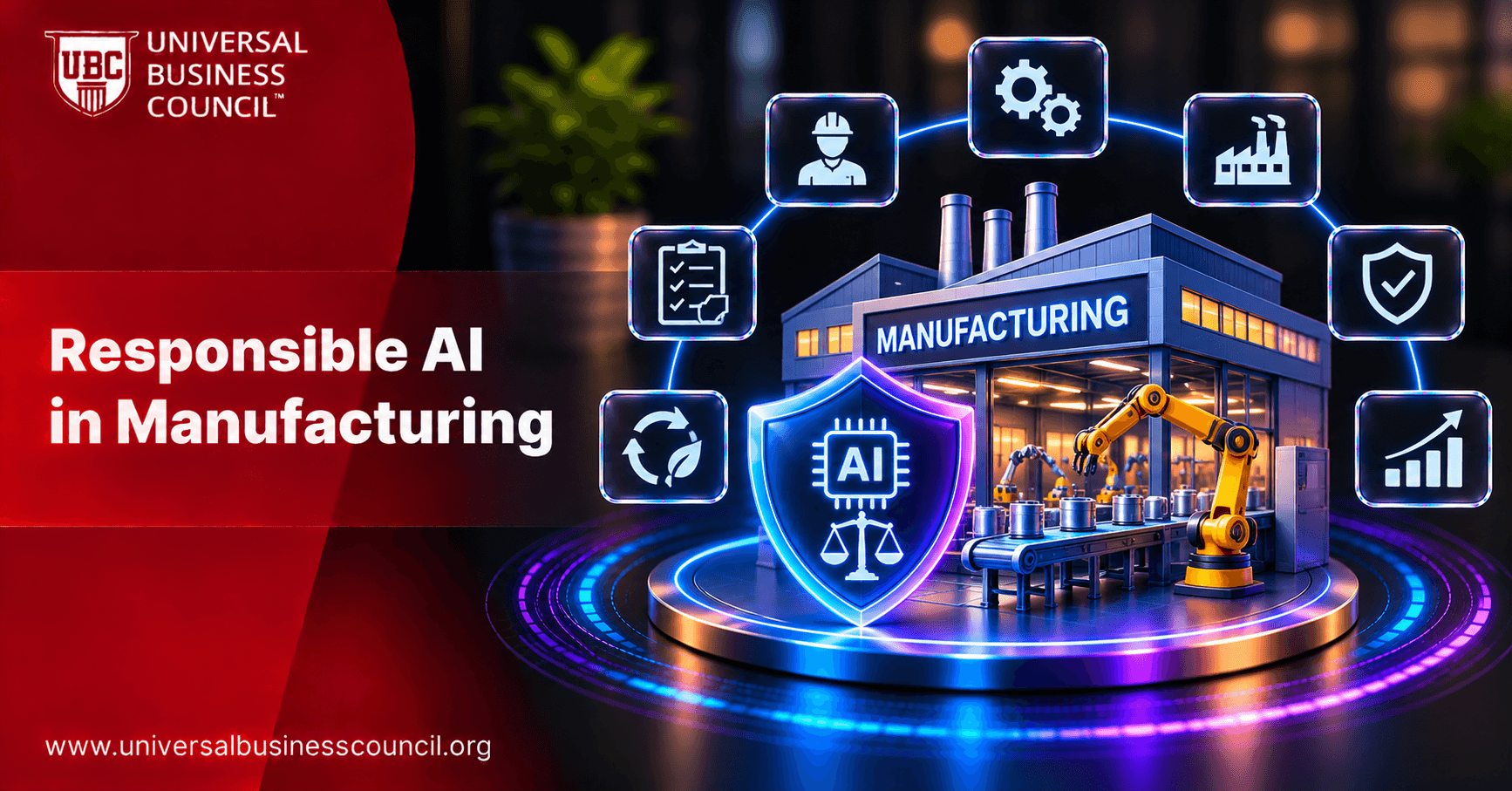
On the factory floor, AI errors can be physical. A vision system that misses a defect lets faulty products ship, a predictive maintenance model that fails to flag a worn component can cause downtime or injury and a robot guided by software can endanger the people who work beside it. Manufacturing combines safety-critical processes, strong regulation and a workforce whose jobs change as automation grows. This guide explains responsible AI in manufacturing across quality, safety and workforce impacts, with practical controls for each. For professional learning in the field, see the certified responsible AI expert certification. This is general information, not legal advice.
What is responsible AI in manufacturing?
Responsible AI in manufacturing means applying AI to production, quality control, maintenance, supply chain, design and worker support in ways that keep people safe, products reliable and decisions accountable. It sits within industrial safety standards, product liability rules, quality management systems and employment law, and it has to work with operational technology that was never designed with AI in mind.

Quality assurance
AI is widely used to inspect products, predict defects and tune processes.
Inspection and defect detection
Vision models can spot flaws faster than people, but they can also miss rare defects or fail when lighting, materials or suppliers change. Validate performance on real production conditions, including unusual cases, and measure missed defects as well as false alarms. Keep human sampling and escalation paths in place.
Process optimization
Models that adjust settings to improve yield can push processes toward the edge of safe or compliant limits. Define hard boundaries that the AI may not cross, test changes in controlled conditions and require approval for significant shifts.
Traceability and documentation
Quality systems depend on records. Keep a clear record of model versions, training data, validation results and changes tied to production batches, so that a quality problem can be traced back to its cause. Engineers who build such systems benefit from sound technical foundations, which many develop through tech certifications.
Validate on real shop-floor conditions and edge cases
Track missed defects as well as false rejects
Set hard limits on process changes the AI can make
Link model versions to production batches
Safety
Safety is the first test of manufacturing AI.
Machines, robots and human proximity
Where AI controls or influences machinery, safety functions should not depend on a learning model alone. Use certified safety systems, physical guards, emergency stops and fail-safe design as independent layers. Assess risks under applicable machinery and workplace safety rules before any AI-driven change.
Predictive maintenance
Maintenance models can reduce breakdowns, but missed warnings are costly. Treat predictions as support for maintenance decisions, not a replacement for inspection regimes in safety-critical equipment, and monitor for drift as machines age and conditions change.
Cybersecurity of connected plants
Connecting AI to industrial control systems expands the attack surface. Segment networks, restrict access, test AI components for tampering and keep manual fallbacks, since an attack on a plant can become a safety event.
Change management and testing
Test AI changes in simulation or isolated environments first, run staged rollouts and keep the ability to revert to proven settings. Record who approved each change and why.
Workforce impacts
Automation changes work, and responsible deployment treats people as stakeholders, not afterthoughts.
Job design and skills
Be open about how AI will change roles, and plan retraining and redeployment early. Involve workers and their representatives in design, since those who run the lines often spot problems first.
Monitoring and fairness
Wearables, cameras and productivity analytics can feel like surveillance and raise privacy, health and labor law issues. Limit data to legitimate purposes, tell workers what is collected and why and avoid decisions about pay, discipline or dismissal based solely on automated scores.
Wellbeing
Systems that set pace or targets can create stress and injury risk. Review their effects on ergonomics and workload, and allow people to raise concerns without penalty.
Supply chain, design and governance
AI also touches suppliers and product design.
Suppliers and components
Third-party models, sensors and platforms bring dependencies. Review vendor documentation, security, update practices and support commitments, and plan for lifecycle changes. Confirm that key contractors and integrators hold the qualifications they claim, with verification services such as HireValid supporting the check.
Product and generative design
AI-assisted design must still meet standards, testing and liability requirements. Document how AI contributed, and ensure engineers validate outputs.
Governance and records
Keep an inventory of AI systems with owners and risk tiers, require risk assessment for safety-related uses and keep reliable logs and approvals. Tamper-evident records for quality and safety connect to topics explored in deep tech certifications.
Honest communication
Be accurate when describing smart manufacturing capabilities to customers and regulators. A digital marketing course can help teams explain AI-enabled quality and safety claims precisely.
Conclusion
Responsible AI in manufacturing protects quality, safety and people. Validate inspection and process models in real conditions, keep independent safety layers and secure connected systems. Involve workers in change, limit monitoring and plan for skills. Manage suppliers, keep strong records and communicate honestly. Because errors can cause physical harm, apply the strictest practical standard.
Frequently asked questions
These are the questions manufacturers ask most about AI.
1. How is AI used in manufacturing?
For inspection, process control, maintenance, planning and robotics.
2. Why is manufacturing AI higher risk?
Errors can cause physical harm and product defects.
3. Can vision systems replace human inspectors?
They can assist, but keep human sampling and escalation.
4. What should be validated?
Performance on real conditions, edge cases and missed defects.
5. Should AI control safety functions?
Not alone. Use certified, independent safety systems.
6. What are hard limits?
Boundaries that AI may not cross when adjusting processes.
7. How do we handle predictive maintenance?
Treat predictions as support, and keep inspection regimes for critical equipment.
8. What is model drift in a plant?
Performance decline as machines, materials and conditions change.
9. How do we secure connected systems?
Segment networks, restrict access and test for tampering.
10. Do we need manual fallbacks?
Yes, for continuity and safety.
11. How should AI changes be tested?
In simulation or isolation, then rolled out in stages.
12. Is worker monitoring allowed?
Within limits of purpose, proportionality, notice and local law.
13. Can AI scores decide discipline?
Avoid sole reliance on automated scores for pay or discipline.
14. How do we involve workers?
Consult early, explain changes and offer retraining.
15. What about workload and wellbeing?
Review pace-setting systems for stress and injury risk.
16. How do we manage AI suppliers?
Review documentation, security, updates and support terms.
17. What records are needed?
Model versions, validation, approvals and links to production batches.
18. Does generative design need validation?
Yes. Engineers must verify outputs against standards.
19. Who owns manufacturing AI risk?
Named system owners, with safety, quality and IT security roles.
20. How often should systems be reviewed?
Regularly and after process, equipment or model changes.
Related Articles
View All
Artificial Intelligence
Responsible AI in Autonomous Vehicles: Safety, Testing and Accountability
Explore how responsible AI supports the safe development and deployment of autonomous vehicles. Learn about AI testing, risk assessment, decision-making, human oversight, and accountability measures that help reduce safety risks and build public trust in self-driving technology.
Artificial Intelligence
Responsible AI Data Governance: Quality, Consent and Provenance
Explore how responsible AI data governance supports reliable and ethical AI systems through data quality, informed consent, and data provenance. Learn how organizations can manage training data, protect individual privacy, track data origins, reduce bias, and maintain accountability throughout the AI lifecycle.
Artificial Intelligence
Responsible AI in Human Resources: Ethical Hiring and Workforce Analytics
Discover how responsible AI can improve human resources while supporting fair, transparent, and accountable workplace decisions. Explore AI in recruitment, candidate screening, performance management, employee data privacy, algorithmic bias, and the importance of human oversight.
Trending Articles
The Role of Blockchain in Ethical AI Development
How blockchain technology is being used to promote transparency and accountability in artificial intelligence systems.
AWS Career Roadmap
A step-by-step guide to building a successful career in Amazon Web Services cloud computing.
Top 5 DeFi Platforms
Explore the leading decentralized finance platforms and what makes each one unique in the evolving DeFi landscape.