

Responsible AI in Smart Cities: Surveillance, Services and Public Trust

Residents cannot opt out of the street they walk on. That simple fact shapes everything about responsible AI in smart cities. When traffic cameras, sensors, transport systems, public safety tools and service platforms feed AI models, the people affected are everyone in the area, including those who never agreed to take part. Smart city technology can improve mobility, energy use, emergency response and service delivery, but it can also normalize surveillance and deepen inequality if poorly governed. This guide explains the opportunities, the risks and the governance measures that help cities earn and keep public trust. For professional learning in the field, see the certified responsible AI expert certification. This is general information, not legal advice.
What is responsible AI in smart cities?
Responsible AI in smart cities means using AI and connected data in urban management and public services in ways that are lawful, proportionate, transparent, inclusive and accountable to residents. It covers municipal authorities, public agencies, utilities and the private suppliers who build and operate the systems.

Because the setting is public and participation is not voluntary, the bar for justification, transparency and oversight is higher than for typical commercial products.
Opportunities
When designed well, urban AI can deliver real public value.
Mobility and infrastructure
AI can optimize traffic signals, support public transport planning, detect maintenance needs in roads and utilities and reduce congestion and emissions.
Public services and resilience
Analytics can improve waste collection, energy management, water systems and emergency response. Digital assistants and translation tools can make services easier to access.
Planning and participation
Data can inform housing, green space and service planning, and digital tools can widen resident feedback, provided that they reach people who are less connected.
Risks
The risks cluster around surveillance, fairness and control of data.
Surveillance and loss of anonymity
Cameras with facial recognition, license plate readers, mobile data and sensor networks can track movement and behavior across a city. Combining datasets can create detailed profiles of individuals, which can chill lawful assembly, speech and movement.
Unequal service and bias
Systems trained on uneven data may serve some neighborhoods better than others, or direct enforcement more heavily at particular communities. Sensors and apps may under-represent people with limited access to technology.
Function creep
Data collected for one purpose, such as traffic management, can be repurposed for policing or commercial use without public debate. Clear purpose limits are essential.
Security and resilience
Connected infrastructure creates targets for attack. A breach could disrupt transport, energy or emergency services, or expose sensitive data.
Vendor dependence and opacity
Cities often rely on private suppliers whose systems are proprietary. Lock-in and secrecy can limit oversight and public accountability.
Pervasive monitoring and profiling
Unequal service quality and enforcement
Reuse of data beyond original purposes
Attacks on connected infrastructure
Opaque, locked-in supplier arrangements
Safeguards that build public trust
Trust grows from clear limits, openness and participation.
Assess necessity and proportionality
Before deploying a system, ask what problem it solves, whether less intrusive options exist and what rights it affects. Carry out privacy, rights and equality impact assessments and publish summaries. Some uses, such as indiscriminate biometric identification in public spaces, may not be proportionate at all.
Set purpose limits and data rules
State the specific purpose of each system, minimize collection, anonymize or aggregate data where possible, set short retention periods and prohibit secondary uses without legal authority and public consultation. Engineers who design these platforms benefit from strong technical foundations, which many develop through tech certifications.
Be visible about sensors
Use clear signage and public registers of deployed systems, so residents know what is collecting data and why.
Engage residents
Consult communities, especially those most affected, before and after deployment. Offer accessible channels for feedback and complaints, and make non-digital routes available for services.
Test for fairness and monitor outcomes
Evaluate whether services and enforcement outcomes differ across neighborhoods and groups, and act on gaps. Publish performance and incident information where possible.
Governance, procurement and security
Strong structures keep systems accountable.
Oversight bodies
Establish independent review, such as an ethics or technology board with public representation, and audit powers. Define when systems must be paused or withdrawn.
Procurement and contracts
Require suppliers to provide documentation, testing access, security commitments, data ownership clarity, audit rights, incident notification and exit support. Prefer open standards to avoid lock-in. Confirm that key vendor and city staff hold the qualifications they claim, and consider verification services such as HireValid for sensitive roles, within legal limits.
Cybersecurity and resilience
Apply security by design, segment networks, test regularly and maintain manual fallbacks for critical services. Keep tamper-evident records of system changes and access, an area linked to topics explored in deep tech certifications.
Clear public communication
Explain systems and safeguards in plain language, avoid overstating benefits and be honest about limits and incidents. A digital marketing course can help public communicators practice accurate, accessible messaging.
Conclusion
Responsible AI in smart cities balances service improvement with surveillance risk, fairness and public trust. Test necessity and proportionality, set strict purpose and data rules, engage residents and monitor outcomes across neighborhoods. Add independent oversight, strong procurement terms, security and honest communication. In a setting where participation is not optional, transparency and restraint are what make smart technology legitimate.
Frequently asked questions
These are the questions officials and residents ask most about smart city AI.
1. What is a smart city?
A city that uses connected sensors, data and AI to manage services and infrastructure.
2. Why is smart city AI sensitive?
Residents cannot easily opt out of public systems.
3. What are the main benefits?
Better mobility, services, energy use and emergency response.
4. What are the main risks?
Surveillance, unequal service, data misuse, security attacks and lock-in.
5. What is function creep?
Using data for new purposes beyond those originally stated.
6. Is facial recognition in public spaces acceptable?
It raises serious proportionality and rights concerns and is restricted in many places.
7. What is a proportionality test?
An assessment of whether a measure is necessary and balanced against rights.
8. How can cities limit surveillance?
With purpose limits, minimization, short retention and strict access.
9. Should residents be consulted?
Yes, before and after deployment, especially affected communities.
10. What is a public register of systems?
A list of deployed technologies, their purposes and safeguards.
11. How do we avoid unequal service?
Test outcomes across neighborhoods and groups, and act on gaps.
12. Are non-digital options needed?
Yes, to avoid excluding people without access or skills.
13. Who owns city data?
Contracts should clarify ownership and use, usually protecting the public interest.
14. How should suppliers be managed?
With transparency, audit rights, security terms and exit provisions.
15. What security measures matter?
Security by design, segmentation, testing and manual fallbacks.
16. Can data be anonymized safely?
Often, but combining datasets can re-identify people, so test carefully.
17. Who provides independent oversight?
Ethics boards, auditors and regulators with real powers.
18. When should a system be paused?
When harm, unfairness or illegality is found.
19. How do we keep records?
Securely, with tamper-evident logs of changes and access.
20. How often should deployments be reviewed?
Regularly and whenever purposes, data or technology change.
Related Articles
View All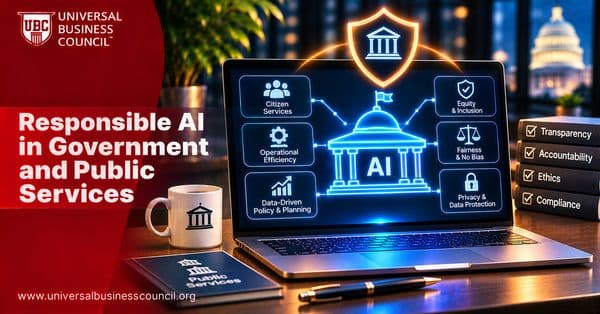
Artificial Intelligence
Responsible AI in Government and Public Services: Opportunities and Risks
Explore how responsible AI can improve government operations and public services through faster processes, better resource allocation, and data-driven decisions. Learn about the opportunities, risks, and ethical challenges of using AI while protecting citizen privacy, ensuring fairness, and maintaining transparency and accountability.
Artificial Intelligence
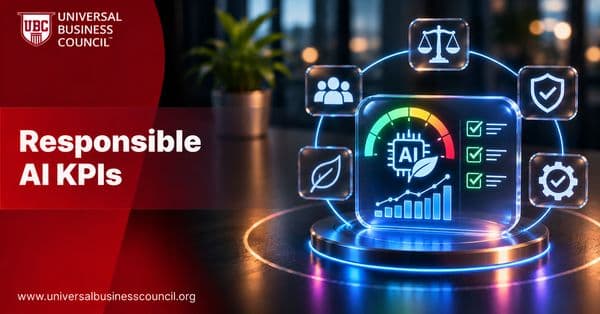
Responsible AI KPIs: How to Measure Fairness, Transparency and Trust
Learn how to measure responsible AI performance using key performance indicators (KPIs). Explore the metrics organizations can use to track AI fairness, transparency, accountability, privacy, safety, and compliance while evaluating AI systems and strengthening responsible AI practices.

Artificial Intelligence
AI and Children's Privacy: Responsible Design for Young Users
Learn how developers and organizations can design AI systems that protect children's privacy and safety. Explore age-appropriate design, data minimization, parental consent, online risks, and responsible AI practices that help safeguard young users.
Trending Articles
The Role of Blockchain in Ethical AI Development
How blockchain technology is being used to promote transparency and accountability in artificial intelligence systems.
AWS Career Roadmap
A step-by-step guide to building a successful career in Amazon Web Services cloud computing.
Top 5 DeFi Platforms
Explore the leading decentralized finance platforms and what makes each one unique in the evolving DeFi landscape.