

What Is Algorithmic Bias? Causes, Examples and Prevention Strategies
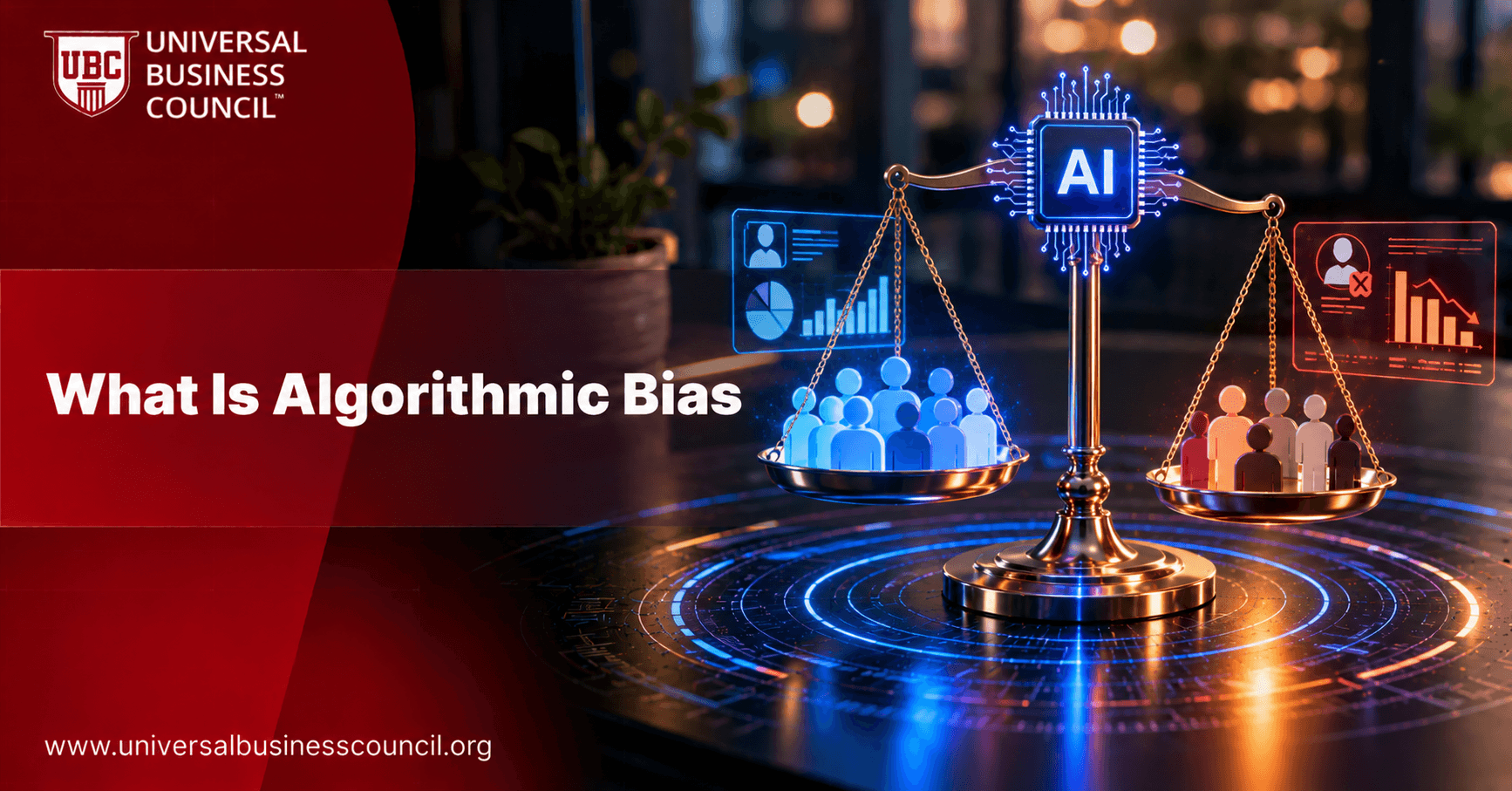
An algorithm can be perfectly consistent and still be unfair. It applies the same rules to everyone, yet those rules, or the data behind them, can systematically favor some groups over others. That is the heart of algorithmic bias, and it is one of the most discussed risks in modern AI.
This guide explains what algorithmic bias is, why it happens, real-world examples and practical strategies to prevent it. If you want formal training in this area, the Certified Responsible AI Expert certification from Universal Business Council is a useful reference point. The sections below move from definitions to causes, examples and fixes.

What is algorithmic bias?
Algorithmic bias is a systematic and repeatable error in an automated system that produces unfair outcomes, such as favoring one group of people over another. It can affect decisions about hiring, lending, insurance, healthcare, policing, education, advertising and more.
Bias is not always intentional. In most cases it is the result of ordinary design choices, historical data and incomplete testing. It also doesn't require a protected characteristic like race or gender to appear in the data. Other variables, called proxies, can stand in for them. A postal code, for example, may correlate with race or income.
Main causes of algorithmic bias
Biased or unrepresentative training data
Models learn patterns from past data. If the data reflects past discrimination, the model can reproduce it. If some groups are underrepresented, the model may perform worse for them because it has seen fewer examples.
Flawed labels and proxies
What a model is told to predict matters. If a label is a poor stand-in for the real goal, the result can be skewed. A widely discussed 2019 study of a healthcare risk algorithm found that it used past healthcare spending as a proxy for need, which led to Black patients being rated as lower risk than equally sick White patients.
Design and feature choices
Choices about which variables to include, how to group categories and how to set decision thresholds can all introduce bias. A single cutoff score can affect groups differently.
Feedback loops
Some systems influence the data they later learn from. A model that sends more attention to certain neighborhoods generates more records from those neighborhoods, which can reinforce the original pattern.
Deployment context and human use
A model used in a setting different from the one it was trained for may behave poorly. People may also over-trust automated outputs, a tendency known as automation bias, which can amplify errors.
Real-world examples of algorithmic bias
Hiring: a recruiting tool reported to have been built at a large technology company was abandoned after it appeared to penalize resumes associated with women
Criminal justice: an investigation by ProPublica of a risk assessment tool used in courts found that Black defendants who did not reoffend were more likely to be labeled high risk than White defendants, a finding that sparked debate about how fairness should be measured
Facial analysis: research known as Gender Shades found higher error rates for darker-skinned women than for lighter-skinned men in several commercial systems
Healthcare: the risk algorithm study above showed how a cost-based proxy can understate the needs of some groups
Online advertising: studies have found that ad delivery systems can show job or housing ads differently to different groups, even without explicit targeting by the advertiser
These examples differ, but they share a pattern: the harm came from data, labels or design choices that were not tested across groups.
Why algorithmic bias matters for organizations
Bias harms people first, but it also creates business risk. Discriminatory outcomes can violate laws on equal opportunity, fair lending and consumer protection. Regulators and courts increasingly look at automated decisions, and rules such as New York City's bias audit requirement for automated hiring tools and the EU AI Act signal rising expectations. Beyond legal exposure, biased systems can erode customer trust, damage employer brand and lead to costly rework.
Prevention strategies
Before and during development
Define the decision, the people affected and what fairness means in that context
Audit data sources for gaps, historical bias and quality problems
Check labels and proxies, and ask whether they really measure the goal
Involve diverse reviewers, including domain experts and affected communities
Document choices using model cards and data sheets
Testing and release
Test performance across groups, not only overall
Use fairness metrics suited to the use case and understand their trade-offs
Run stress tests and scenario analyses
Set go or no-go criteria so models that fail checks don't ship
After deployment
Monitor outcomes by group over time and watch for drift
Provide ways for people to appeal or request human review
Re-audit after major changes in data, model or use case
Assign clear ownership and escalation paths
Technical teams can use open-source toolkits for fairness analysis, such as Fairlearn and AI Fairness 360, and short tech certifications in programming and data skills make these tools easier to apply.
Bias and the people behind AI
Technology is only part of the story. Teams that build and review AI need diverse backgrounds, clear roles and verified expertise. Organizations that bring in auditors, data scientists or compliance staff often confirm credentials and work history first, and services like HireValid can help with that step. Clear, honest communication about how AI is tested for bias also builds trust, and a Digital Marketing Course can help teams explain their approach without overstating it. For a broader look at AI and related technologies, Deep Tech Certifications are another place to build knowledge.
Conclusion
Algorithmic bias is a systematic unfairness in automated decisions, usually rooted in data, labels, design choices and deployment context. Examples in hiring, justice, healthcare and facial analysis show that it affects real people. The good news is that it can be reduced through careful data review, group-level testing, human oversight and ongoing monitoring.
Treat bias prevention as part of normal engineering and governance, not a one-time fix. Begin with your highest-impact systems, test across groups and document what you learn. The FAQs below answer common questions.
Frequently asked questions
What is algorithmic bias?
Systematic, repeatable unfairness in automated decisions that favors or harms certain groups.
What causes algorithmic bias?
Biased or incomplete data, poor labels or proxies, design choices, feedback loops and misuse.
Is algorithmic bias intentional?
Usually not. It often comes from ordinary design and data choices.
What is a proxy variable?
A feature that indirectly stands in for a protected characteristic, like a postal code.
Can AI be completely unbiased?
No system is perfectly neutral, but bias can be measured and reduced.
What are examples of algorithmic bias?
Skewed hiring tools, risk scores with unequal error rates, facial analysis gaps and biased healthcare algorithms.
What is automation bias?
The tendency to trust automated outputs too much and question them too little.
What is a feedback loop?
When a system's outputs shape the data it later learns from, reinforcing patterns.
How is bias detected?
By comparing performance and outcomes across groups using fairness metrics.
What tools help detect bias?
Open-source options include Fairlearn and AI Fairness 360.
Does removing sensitive attributes remove bias?
Not by itself, because proxies can still carry the same signal.
What is data bias?
Unfairness caused by unrepresentative, incomplete or historically skewed data.
Are there laws about algorithmic bias?
Existing anti-discrimination laws apply, and new rules such as the EU AI Act and local bias audit laws are emerging.
What is a bias audit?
An independent review of how a system performs across groups.
How can companies prevent bias?
Review data, test by group, add human oversight and monitor after launch.
Who should be involved in bias reviews?
Engineers, domain experts, legal and compliance staff and, where possible, affected communities.
Can bias appear after deployment?
Yes, through data drift, changed contexts and feedback loops.
Does generative AI have bias?
Yes. It can reflect stereotypes and gaps in its training data.
Why does bias matter to business?
It creates legal, financial and reputational risk and harms customers.
Where should I start?
Inventory your AI systems and test the highest-impact ones for group-level differences.
Related Articles
View All
Artificial Intelligence
What Is an AI Impact Assessment? Process, Template and Examples
Learn what an AI impact assessment is and how organizations use it to evaluate the potential risks and effects of AI systems. Explore the assessment process, essential components, practical templates, and real-world examples to understand how businesses can promote fairness, transparency, accountability, and responsible AI adoption.
Artificial Intelligence
How to Detect and Reduce Bias in Machine Learning Models
Learn how to detect and reduce bias in machine learning models using practical techniques and evaluation methods. Explore data analysis, fairness metrics, bias testing, model auditing, and mitigation strategies to build more accurate, fair, and reliable AI systems.

Artificial Intelligence
Responsible AI in Practice: Real-World Examples Across Industries
Explore real-world examples of responsible AI across industries, including healthcare, finance, education, retail, and manufacturing. Learn how organizations apply fairness, transparency, accountability, privacy, and human oversight to build safer, more reliable AI systems and improve business outcomes.
Trending Articles
The Role of Blockchain in Ethical AI Development
How blockchain technology is being used to promote transparency and accountability in artificial intelligence systems.
AWS Career Roadmap
A step-by-step guide to building a successful career in Amazon Web Services cloud computing.
Top 5 DeFi Platforms
Explore the leading decentralized finance platforms and what makes each one unique in the evolving DeFi landscape.