

Conflicts of Interest Management explained: what businesses actually need to get right
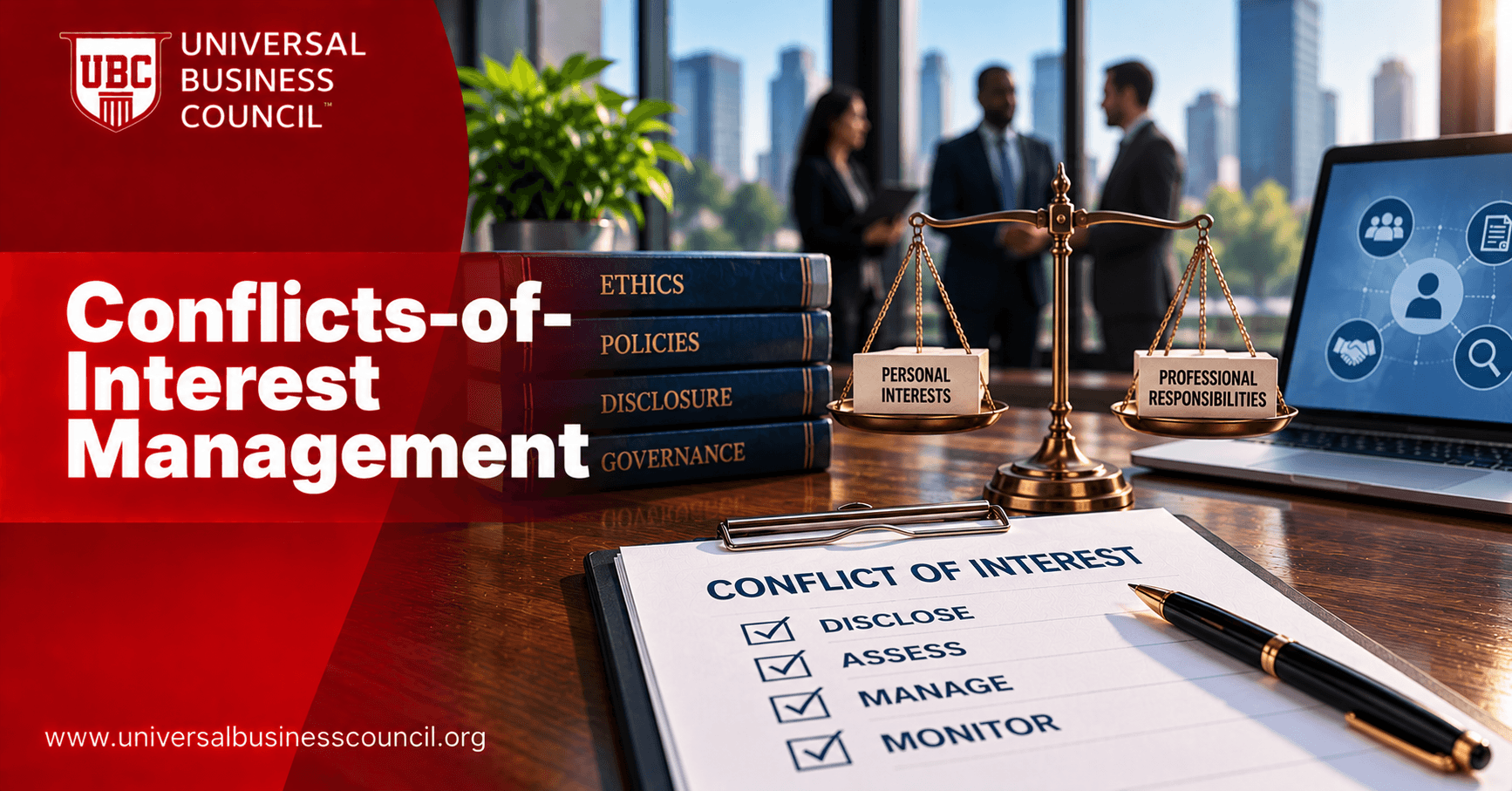
A hiring manager pushes hard for a candidate who happens to be a close friend, framing it purely as "they're just the strongest fit." A procurement lead keeps renewing a vendor contract without much scrutiny, never mentioning that the vendor is run by a family member. A board member votes on a deal that would directly benefit a company they also happen to have a financial stake in. None of it looks like corruption from the outside. All of it is exactly what conflicts of interest management exists to catch before a decision gets quietly bent out of shape.
Conflicts of interest are rarely about someone deliberately cheating the system. Most of the time, they're about good people making decisions while something personal is sitting in the background, unacknowledged. This guide breaks down what a real conflicts of interest program actually requires, why disclosure alone doesn't solve the problem, and what separates a functional program from one that just exists on paper.

What a conflict of interest actually is
A conflict of interest exists when someone's personal interests, financial, relational, or otherwise, could reasonably influence their professional judgment or decisions. It doesn't require proof that the decision was actually corrupted. The conflict exists the moment that possibility is real, whether or not anyone acted on it.
This distinction matters a lot in practice. There's a difference between an actual conflict, where someone's personal interest genuinely shapes a decision, and a perceived conflict, where the situation merely looks compromised to an outside observer even if it wasn't. Both need to be managed, because a perceived conflict that goes unaddressed damages trust just as effectively as a real one, even if nothing improper actually happened.
Why this matters more right now
A few trends have raised the stakes for managing conflicts of interest properly.
Corporate governance scrutiny has intensified, with boards and investors paying closer attention to how conflicts get disclosed and managed at senior levels.
Remote work has blurred the line between personal and professional relationships, since people increasingly work alongside friends, family, or people they have outside financial ties to, without the natural visibility an office environment used to provide.
Vendor and gig economy relationships have expanded significantly, creating more opportunities for undisclosed financial interests to shape decisions like procurement, hiring, and contract renewals.
None of this means conflicts of interest are a new problem. It means there are more of them, in more forms, and less natural visibility into where they're hiding.
Common types of conflicts of interest
Conflicts of interest show up in a handful of recurring forms, and recognizing them clearly is the first step toward managing them well.
Financial interests arise when someone stands to gain personally from a decision they're involved in, like an employee with a financial stake in a vendor their company is evaluating. Personal relationships create conflicts when someone makes or influences a decision involving a friend, family member, or romantic partner, whether that's a hiring decision, a performance review, or a contract award. Outside employment or board positions can create conflicts when someone's other professional commitments compete with or influence their primary role, particularly if the outside role involves a competitor or business partner. Gifts and favors create conflicts when they're substantial enough, or timed closely enough to a specific decision, that they could reasonably be seen as influencing judgment, even without any explicit expectation attached.
Why disclosure alone isn't enough
This is one of the most common misunderstandings in conflicts of interest management, and it deserves real attention. A lot of companies treat disclosure as the finish line, once someone reports a potential conflict, the company considers the matter handled. It isn't.
Disclosure is the starting point, not the resolution. Once a conflict is disclosed, someone still has to actually decide what to do about it, whether that means recusing the person from the decision entirely, adding independent oversight to the process, or in some cases determining the conflict is minor enough not to require any change at all. A disclosure that sits in a file without any follow-up action does almost nothing to actually protect the integrity of the decision it was meant to flag.
This gap, between disclosing a conflict and actually managing it, is where a lot of real compliance failure quietly happens. Someone technically followed the rules by disclosing, and the decision went ahead exactly as it would have without the disclosure at all.
The core pillars of a conflicts of interest program
A real program here goes well beyond a line in an employee handbook asking people to "avoid conflicts of interest."
A clear policy defines specifically what counts as a conflict, with concrete examples rather than vague language, so employees can actually recognize a situation when they're in one. A structured disclosure process gives employees a clear, low-friction way to report a potential conflict, ideally before a decision is made rather than after. A genuine review and management process ensures every disclosed conflict actually gets evaluated and addressed, not just logged and forgotten. And ongoing monitoring catches conflicts that weren't proactively disclosed, whether because someone didn't recognize their own situation as a conflict or chose not to report it.
Common red flags and compliance gaps
A few patterns tend to expose weak conflicts of interest management.
Disclosure forms that get collected once during onboarding and never revisited, even as people's personal and financial circumstances change over time.
Conflicts that get disclosed but never actually reviewed or acted on, sitting in a file with no follow-up.
Recusal that happens inconsistently, where one employee steps back from a conflicted decision and another in a similar situation doesn't.
Vendor or hiring decisions that consistently favor people with personal connections to the decision-maker, without anyone examining the pattern closely.
No clear process for what happens after a conflict is disclosed, leaving employees and managers to improvise a response each time.
None of these individually proves wrongdoing happened. Together, they're exactly the pattern that shows up once a conflict-driven decision becomes public and a company has to explain what its process actually was.
Building a program that holds up
A program built to actually function starts with a policy specific enough that employees can recognize a real conflict when they see one, not just a general instruction to act ethically. From there, a few things matter most.
Disclosure needs to happen early, ideally before a decision is made rather than after it's already been influenced, which means building disclosure into processes like hiring, procurement, and vendor selection from the start rather than treating it as a separate, occasional obligation. Recusal processes need to be consistent and genuinely enforced, so a disclosed conflict actually results in independent review rather than a quiet nod that changes nothing about who's making the call. And review needs a real owner, someone responsible for actually evaluating disclosed conflicts and deciding what management response fits, rather than a form that disappears into a folder once submitted.
Building a program at this level takes real structure. A Certified Compliance Professional credential is worth looking into for compliance and governance staff who want a genuine framework for running a conflicts of interest program, rather than reacting only after a conflict has already shaped a decision improperly.
Common mistakes companies make
A handful of mistakes keep showing up. Treating disclosure as the end of the process rather than the beginning of one. Applying recusal inconsistently, so similar conflicts get handled differently depending on who's involved. Failing to build conflict checks into hiring and vendor selection specifically, which are two of the areas where personal relationships most commonly and quietly shape outcomes. And never revisiting disclosures over time, even as an employee's outside relationships, investments, or roles change significantly.
Technology increasingly supports this kind of program too, particularly for flagging potential conflicts across vendor databases, hiring records, and financial disclosures at a scale manual review can't realistically match. Tech Certifications is worth a look for compliance staff evaluating or building that kind of monitoring infrastructure, so they understand what the system is actually catching rather than trusting a dashboard blindly. For organizations building more sophisticated conflict detection across large vendor or partner networks, Deep Tech Certifications fills a gap standard compliance training doesn't touch.
The cost of getting it wrong
Poorly managed conflicts of interest rarely cause damage through a single dramatic event. They cause damage gradually, a vendor relationship that never got real scrutiny, a hire that clearly wasn't the strongest candidate, a deal that looked fine until someone noticed a board member's financial stake in the outcome. Beyond any specific legal exposure a conflict-driven decision might create, the reputational cost tends to be significant, since conflicts of interest strike directly at whether people trust an organization's decisions were actually made on merit.
Where this is heading
Board-level conflict scrutiny continues intensifying, with investors and governance watchdogs paying closer attention to how conflicts get disclosed and managed at the top of an organization, not just among rank-and-file employees. AI-assisted conflict detection is becoming more common, helping flag potential conflicts across large datasets of vendor relationships, hiring records, and financial disclosures that would be impractical to review manually. And growing attention is being paid to conflicts in gig and advisory relationships specifically, as more companies rely on contractors, advisors, and fractional executives whose other commitments aren't always fully visible.
For compliance and communications teams rolling out a conflicts of interest policy or trying to improve disclosure rates, how the process gets communicated matters almost as much as the policy itself. A Digital Marketing Course can help teams frame these expectations in a way that actually encourages employees to disclose proactively, rather than treating disclosure as something to avoid or downplay.
Conclusion
Conflicts of interest management comes down to a simple idea: decisions should be made on merit, and anything that could reasonably compromise that needs to be surfaced and actually addressed, not just quietly noted. Most failures here aren't the result of deliberate corruption, they're the result of a disclosure that never got followed up on, a recusal that didn't quite happen, a personal relationship nobody thought to flag until it became a pattern. Get the fundamentals right, a clear policy, early disclosure, and genuine follow-through on every conflict that's raised, and conflicts of interest management becomes a quiet, functioning safeguard. Get it wrong, and it becomes the kind of gap that only becomes visible once someone outside the organization starts asking why a particular decision went the way it did.
FAQs
What is a conflict of interest?
A situation where someone's personal interests could reasonably influence their professional judgment or decisions.
Does a conflict of interest require proof that a decision was actually influenced?
No, the conflict exists the moment the possibility is real, regardless of whether it was actually acted on.
What's the difference between an actual and a perceived conflict of interest?
An actual conflict genuinely shapes a decision, while a perceived conflict merely looks compromised to an outside observer.
Why does a perceived conflict still need to be managed?
Because it can damage trust just as effectively as a real conflict, even if nothing improper actually happened.
What are common types of conflicts of interest?
Financial interests, personal relationships, outside employment or board positions, and significant gifts or favors.
Is disclosing a conflict of interest enough on its own?
No, disclosure is the starting point, someone still has to actually evaluate and manage the conflict afterward.
What typically happens after a conflict is disclosed?
The person may be recused from the decision, independent oversight may be added, or the conflict may be assessed as minor.
What is recusal in the context of conflicts of interest?
Stepping back from involvement in a decision where a disclosed conflict exists.
Why does inconsistent recusal create risk?
It suggests conflicts aren't being managed fairly, and similar situations may be handled differently based on who's involved.
How do conflicts of interest commonly show up in hiring?
Through undisclosed personal relationships between a hiring manager and a candidate influencing the decision.
How do conflicts of interest commonly show up in procurement?
Through undisclosed financial or personal ties between a decision-maker and a vendor being evaluated.
Should conflict of interest disclosures be updated over time?
Yes, personal and financial circumstances change, so a one-time disclosure at onboarding isn't sufficient.
What role does technology play in managing conflicts of interest?
Increasingly for flagging potential conflicts across vendor, hiring, and financial data at a scale manual review can't match.
What is the most common mistake companies make with conflicts of interest?
Treating disclosure as the end of the process rather than the beginning of actually managing the conflict.
Do board members need to disclose conflicts of interest?
Yes, and board-level conflicts are drawing increasing scrutiny from investors and governance watchdogs.
Are conflicts of interest a growing concern in gig and advisory relationships?
Yes, since contractors and fractional executives often have other commitments that aren't always fully visible.
What makes a conflicts of interest policy effective?
Specific, concrete examples of what counts as a conflict, rather than vague language asking people to "act ethically."
What is the reputational risk of poorly managed conflicts of interest?
It undermines trust in whether decisions were made on merit, which can be more damaging than any single legal penalty.
Who should own the review process for disclosed conflicts?
A designated person or team responsible for evaluating each disclosure and deciding on an appropriate management response.
What's the foundation of a conflicts of interest program that actually works?
A clear policy, early and ongoing disclosure, and genuine follow-through on every conflict that gets raised.
Related Articles
View All
Business
Supply Chain Compliance explained: what businesses actually need to get right
Learn what supply chain compliance involves, which requirements can affect suppliers and business partners, and how companies can manage regulatory, operational, and third-party risks.

Business
Transfer Pricing Regulations: What Businesses Need to Know
Learn how transfer pricing regulations affect transactions between related companies, including pricing methods, documentation, reporting, audits, and tax risks.
Business
Customer Engagement vs Customer Experience: What Sets Them Apart and Why Both Need Guardrails
Customer engagement and customer experience are closely connected, but they serve different purposes. Learn how they differ, how they influence customer loyalty and retention, and why businesses need clear guardrails to manage both effectively.
Trending Articles
The Role of Blockchain in Ethical AI Development
How blockchain technology is being used to promote transparency and accountability in artificial intelligence systems.
AWS Career Roadmap
A step-by-step guide to building a successful career in Amazon Web Services cloud computing.
Top 5 DeFi Platforms
Explore the leading decentralized finance platforms and what makes each one unique in the evolving DeFi landscape.