

Customer Retention vs Customer Acquisition: Where Should a Business Focus?
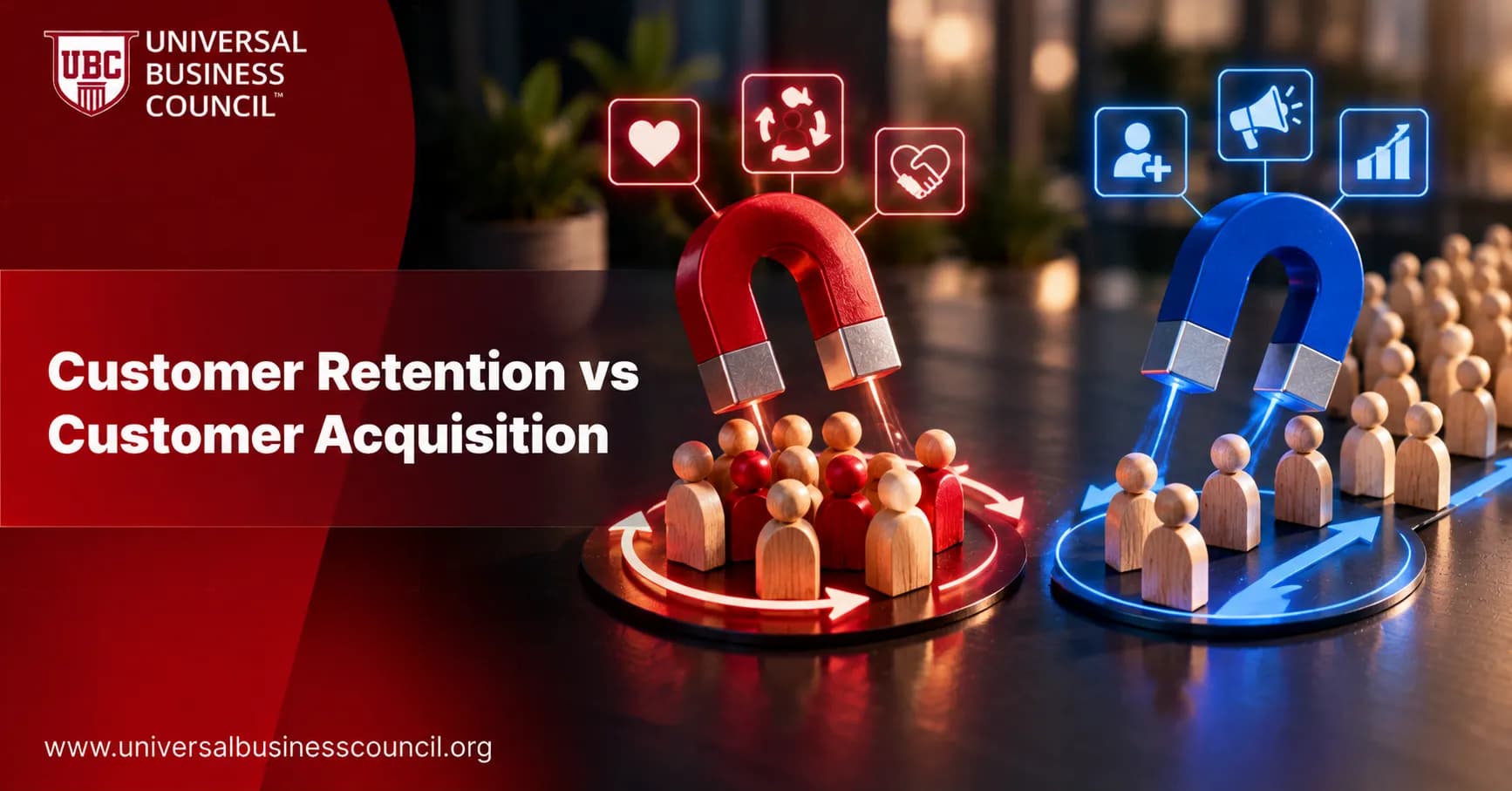
Customer acquisition asks, "How do we find new customers?" Customer retention asks, "How do we keep the ones we already have?" Both questions matter, and treating them as rivals is where many growth plans go wrong. The better question is how the two work together and where a business should put its effort at each stage.
This guide compares customer retention vs customer acquisition, explains how each one works, and shows how to balance them with compliance in mind. For professionals who want structured training in the retention side, the Certified Customer Success Professional certification covers lifecycle management, retention, and customer growth.

What Is Customer Retention vs Customer Acquisition?
The two terms describe different halves of the customer lifecycle, and each one needs its own goals and measures.
What Is Customer Acquisition?
Customer acquisition is the process of attracting people and turning them into first-time customers. It includes marketing, sales, promotions, partnerships, and anything else that moves a prospect from awareness to purchase or sign-up.
What Is Customer Retention?
Customer retention is the process of keeping existing customers over time through renewals, repeat purchases, and continued use. It depends on onboarding, service quality, communication, and the ongoing value customers receive.
Key Differences Between Retention and Acquisition
The two strategies serve different purposes, use different tools, and are judged by different results.
Goal: Acquisition adds new customers, while retention keeps and grows existing ones.
Audience: Acquisition speaks to people who do not yet know the business well, while retention speaks to people who already have experience with it.
Tools: Acquisition leans on advertising, content, and sales outreach, while retention leans on onboarding, support, and lifecycle communication.
Measures: Acquisition looks at leads, conversion, and cost to win a customer, while retention looks at retention rate, churn rate, and customer lifetime value.
Neither is better in all cases. A young business may need to prioritize acquisition to build a base, while an established business often finds more steady returns in strengthening what it already has.
Why Retention and Acquisition Depend on Each Other
Acquisition fills the top of the funnel, and retention determines how much of it stays. If a business acquires customers but cannot keep them, it spends more effort each period just to replace losses. If it retains well but never acquires, growth eventually stalls. The two feed each other, since satisfied customers also become the source of reviews, referrals, and case studies that make acquisition easier and more credible.
Where Marketing Fits In
Marketing sits on both sides of this relationship. It attracts new customers, and it also keeps existing ones engaged through lifecycle emails, loyalty programs, and educational content. A structured Digital Marketing Course can help teams plan messaging that serves both goals without confusing either audience.
How to Balance Retention and Acquisition
A balanced approach starts with an honest look at where customers are being won and lost. Review acquisition results alongside retention rate and churn, and ask whether new customers are staying long enough to justify what it took to win them. If early churn is high, strengthen onboarding before spending more on acquisition. If retention is healthy but growth is flat, shift more attention to reaching new audiences. Reviewing both sets of numbers in one place is easier with connected reporting tools, and foundational Tech Certifications help teams build and read that data with confidence.
Compliance Across Both Strategies
Both halves of the lifecycle involve customer data, communication, and promises, so compliance applies to each.
Consent: Contact prospects and customers only in ways they agreed to.
Honest claims: Keep advertising and offers accurate, and make sure what is promised matches what is delivered.
Data privacy: Collect only what is needed and explain how it is used.
Fair terms: Make pricing, renewal, and cancellation terms clear.
Fair treatment: Avoid offering new customers better terms in ways that mislead or disadvantage existing ones.
Using Data and AI to Support Both
Analytics and AI-driven tools can help find promising prospects, predict which customers may leave, and suggest the next best action for each group. They work best with transparent data practices and human judgment. Professionals who want to understand the technology behind these tools can explore Deep Tech Certifications in AI and other emerging areas.
Common Mistakes to Avoid
Common mistakes include pouring budget into acquisition while ignoring churn, treating retention as only a support issue, setting acquisition and retention teams against each other, measuring only sign-ups, and leaving compliance checks until campaigns are live.
Conclusion
Customer acquisition brings people in and customer retention gives them reasons to stay. Businesses grow most steadily when both are planned together, measured honestly, and run with clear and fair practices. Start by looking at where customers are being lost, then balance effort across the lifecycle accordingly.
Frequently Asked Questions
1. What is the difference between customer retention and customer acquisition?
Acquisition attracts new customers, while retention keeps existing customers over time.
2. Which is more important, retention or acquisition?
Both matter. The right balance depends on the stage of the business and where customers are being lost.
3. Why should businesses focus on retention?
Retention supports steady revenue, loyalty, and higher customer lifetime value.
4. Why is acquisition still necessary?
Without new customers, growth eventually stalls, even when retention is strong.
5. How do retention and acquisition work together?
Acquisition fills the funnel, and retention determines how many customers stay and refer others.
6. What metrics measure acquisition?
Leads, conversion rates, and the cost of winning a customer are common acquisition measures.
7. What metrics measure retention?
Retention rate, churn rate, renewal outcomes, and customer lifetime value are common retention measures.
8. Should a new business focus on acquisition first?
Often yes, to build a base, but retention habits should start early.
9. How does onboarding connect the two?
Onboarding is the bridge: it turns a newly acquired customer into a retained one.
10. How does marketing support retention?
Lifecycle messaging, loyalty programs, and helpful content keep existing customers engaged.
11. Can customers help with acquisition?
Yes. Satisfied customers provide reviews, referrals, and case studies.
12. What happens if a business ignores churn?
It has to keep spending effort just to replace lost customers.
13. How do I know which to prioritize?
Compare acquisition results with retention and churn to see where customers are being lost.
14. How does compliance apply to acquisition?
Honest claims, consent for outreach, and careful data handling apply from the first contact.
15. How does compliance apply to retention?
Clear renewal terms, honored preferences, and fair treatment support long-term trust.
16. Can AI support both strategies?
Yes, for finding prospects and predicting churn, with proper governance and oversight.
17. Who owns retention and acquisition?
Marketing, sales, customer success, support, and product all contribute.
18. Is customer success part of acquisition?
It mainly supports retention and growth, but its outcomes strengthen acquisition through referrals and case studies.
19. How often should I review the balance?
Review it regularly and after major changes to products, pricing, or channels.
20. How can professionals build skills in both areas?
Structured training in customer success and digital marketing, plus hands-on practice, builds both skill sets.
Related Articles
View All
Business
Customer Retention Strategies That Actually Work: What to Do and What to Skip
Learn which customer retention strategies deliver results, what businesses should prioritize, and which common tactics to skip to build stronger customer relationships, improve loyalty, and reduce churn.
Business
How to Improve Customer Retention: A Practical Guide for Customer-Facing Teams
Discover how customer-facing teams can improve customer retention by building stronger relationships, delivering consistent support, improving onboarding, and addressing customer needs. Explore practical strategies to increase satisfaction, encourage loyalty, and reduce churn.
Business
What Is Customer Retention?
Customer retention is about keeping existing customers satisfied and encouraging them to continue doing business with your brand. Explore why it matters, how to measure retention, the factors that influence it, and practical strategies to build lasting customer relationships.
Trending Articles
The Role of Blockchain in Ethical AI Development
How blockchain technology is being used to promote transparency and accountability in artificial intelligence systems.
AWS Career Roadmap
A step-by-step guide to building a successful career in Amazon Web Services cloud computing.
Top 5 DeFi Platforms
Explore the leading decentralized finance platforms and what makes each one unique in the evolving DeFi landscape.