

What Is Customer Retention?
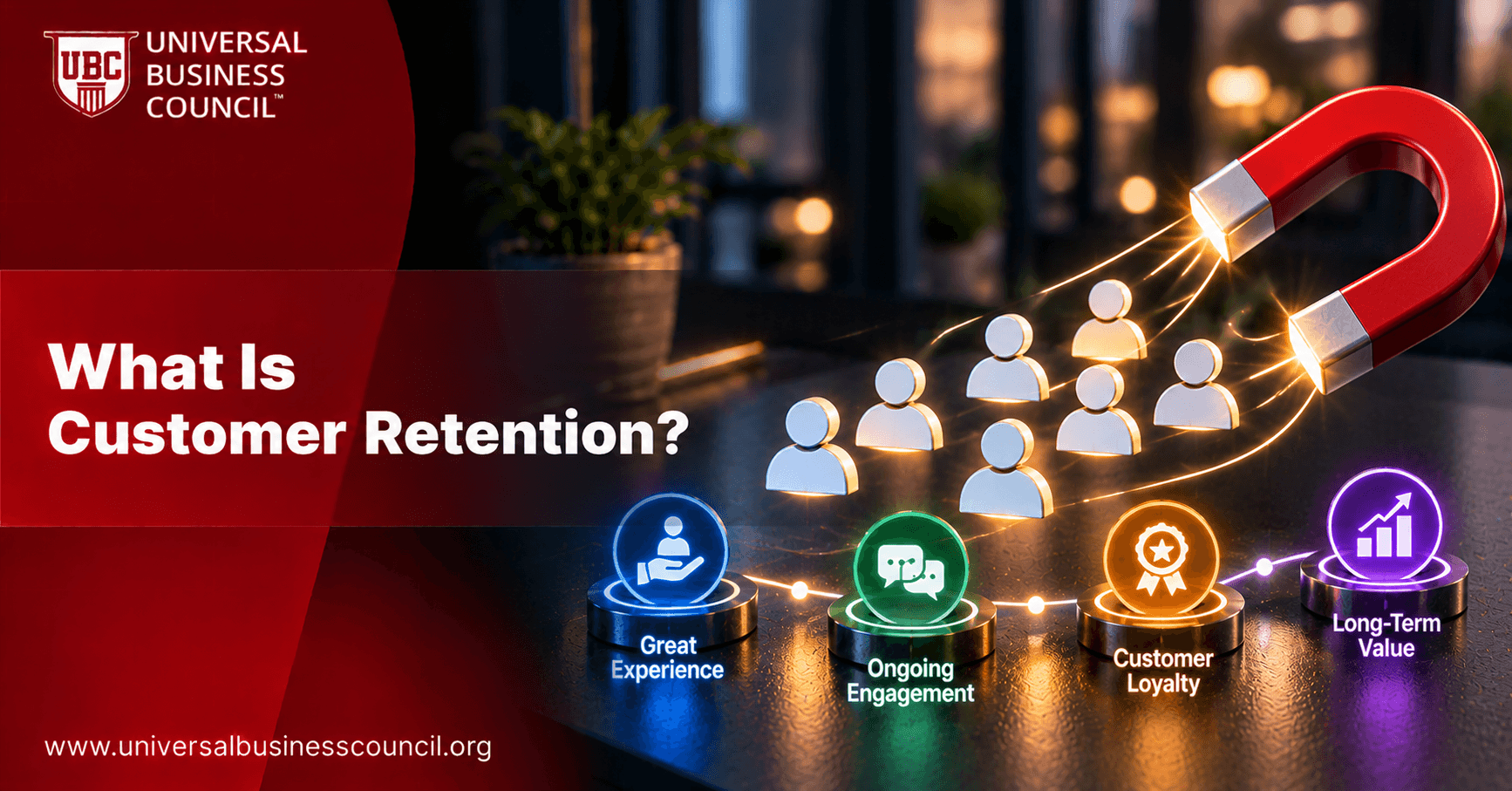
Ask five people in the same company what customer retention means and you may hear five different answers. Sales says renewals. Support says fewer angry tickets. Finance says revenue that doesn't leave. All of them are partly right, which is why the question is worth answering properly. So, what is customer retention, how do you measure it, and what makes people stay? This guide takes those questions in order. If you're building a career in this area, the Certified Customer Success Professional program is a strong place to learn the full set of skills.
What is customer retention?
Customer retention is a company's ability to keep its existing customers buying, subscribing or using its product over time. It covers everything that happens after the first sale: whether the customer renews, reorders, upgrades or simply keeps coming back.

It's usually expressed as a rate. If you started the quarter with 200 customers and 180 of them are still with you at the end, your customer retention rate for those customers is 90 percent. The other 10 percent is churn, the customers who left.
The idea sounds simple, but it asks a lot of a business. Customers stay when the product works, the price feels fair, support is helpful and nothing better comes along. Retention is the result of all of that working together.
Retention, loyalty and satisfaction are not the same
These three words get swapped around, but they measure different things.
Satisfaction is how a customer feels about an experience right now.
Loyalty is how strongly they prefer you over alternatives, and whether they'd recommend you.
Retention is what they actually do: stay or leave.
A customer can be satisfied and still leave because a competitor is cheaper. A customer can be unhappy and still stay because switching is a hassle. Watching all three gives you a fuller picture than any one alone.
How customer retention is measured
There's no single number that tells the whole story. Most teams track a small set of them together.
Customer retention rate
The share of customers you keep over a period. The usual formula is customers at the end of the period, minus new customers gained during it, divided by customers at the start, then multiplied by 100. Take 210 customers at the end, 30 of them new, from a starting base of 200: (210 minus 30) divided by 200 gives 90 percent.
Customer churn rate
The mirror image. If retention is 90 percent, churn is 10 percent. Tracking it by customer segment, plan and signup month shows where the leaks are.
Net revenue retention
Used mostly by subscription businesses. It starts with the recurring revenue from a group of customers, adds upgrades and expansion, subtracts downgrades and cancellations, and divides by the starting figure. A result above 100 percent means existing customers are growing in value faster than others are leaving.
Repeat purchase rate
Common in retail and e-commerce. It's the share of customers who buy more than once in a given period.
One practical note: pick a time period and keep it fixed. Monthly, quarterly and annual retention rates can't be compared with each other, and switching between them can make a healthy trend look broken.
Why customer retention matters
Every business loses some customers. What separates the strong ones is how much they lose and how quickly they notice. Here's why the number deserves attention.
Revenue becomes steadier and easier to forecast.
In many businesses, keeping a customer costs less than finding a new one.
Long-term customers tend to adopt more of the product and refer others.
Feedback from existing customers points to the fixes that matter.
Marketers know this from the other side of the funnel. A campaign that fills the top with new leads is only half a plan if nothing keeps those buyers around. Anyone who has studied through a digital marketing course will recognise lifecycle emails, loyalty offers and win-back campaigns as retention tools in marketing clothes.
What makes customers stay
Surveys and exit interviews vary by industry, but a few reasons come up again and again.
The product keeps solving their problem
People stay when the product remains useful to them. If their needs change and the product doesn't, they start looking around.
Getting started was easy
A smooth first few weeks sets the pattern. Customers who reach a first win quickly are more likely to build a habit.
Someone is looking out for them
A support team that answers well, or a customer success manager who checks in before problems appear, builds trust that a price cut can't.
The value is easy to see
If a customer can point to what they've gained, renewal is an easy decision. If they can't, every invoice feels like a question.
These reasons overlap. A customer who struggled through setup is more likely to question the value later, and a customer with a helpful contact is more forgiving of a bug. That's why retention work spans teams instead of sitting with just one.
Retention in different business models
The word stays the same, but the details change.
Subscription software: retention is the renewal, and usage data is the early warning.
E-commerce: retention is the repeat order, helped by timing, relevance and delivery experience.
Services and agencies: retention is the contract extension, built on results and relationships.
Memberships and communities: retention depends on whether members keep finding reasons to show up.
Pick the measure that fits your model, define it clearly, and stick with the definition so your trend lines mean something.
Where customer success and technology fit in
Customer success teams exist largely to protect and grow retention. They watch usage, run onboarding, hold review calls and step in when an account goes quiet. As more of that work depends on dashboards, product data and automation, technical fluency helps. Short courses such as tech certifications give customer-facing teams the vocabulary to work with data and engineering colleagues.
Newer products add their own wrinkles. Customers using platforms built on blockchain, AI or other deep tech often need more guidance on setup, security and integration, and the first few weeks decide whether they stay. Teams that keep learning through deep tech certifications are better placed to give that guidance.
Signs your retention may be slipping
Churn is a late signal. By the time a customer cancels, the decision was made weeks ago. Earlier signs tend to show up in behaviour.
Logins, orders or feature use drop compared with the customer's own normal.
Support contacts rise, or stop completely.
The main contact leaves the customer's company.
Invoices or renewal emails go unanswered.
Customers stop attending reviews and calls.
None of these guarantees a cancellation. Each one is a reason to reach out sooner instead of waiting for the renewal date.
Myths about customer retention
Retention is only the support team's job
Support helps, but product quality, pricing, marketing promises and sales expectations all shape whether someone stays. If sales over-promises, no support team can fully repair it.
A high retention rate means customers are happy
Not always. Some customers stay because of contracts, switching costs or habit. Check satisfaction and usage next to the retention number before you celebrate.
Discounts fix retention
A discount can delay a cancellation, but it rarely changes the reason behind it. If the product isn't delivering value, a lower price only postpones the same decision.
First steps to improve retention
You don't need a big program to begin.
Pick one retention measure and write down how you calculate it.
Find out when and why customers leave, using exit surveys and account notes.
Tighten the first 30 days of the customer experience.
Set up an early-warning signal, such as a drop in logins or orders.
Talk to the customers who stayed and ask why.
Review the same measure every month, and share it beyond the customer team so everyone can see how their work connects to it.
Wrapping up: what is customer retention in practice?
So, what is customer retention? It's a company's ability to keep existing customers buying, subscribing or using its product over time, and it's one of the clearest signs of whether the business is delivering real value. It differs from satisfaction, which is a feeling, and from loyalty, which is a preference. Retention is what customers actually do.
It's measured through a small set of numbers: customer retention rate, churn rate, net revenue retention and repeat purchase rate, chosen to fit the business model. Customers stay when the product keeps solving their problem, the first weeks go smoothly, someone looks out for them and the value is easy to see. Marketing, customer success and product teams all play a part, and technical knowledge helps them read the signals.
The best way to start is small. Choose one measure, learn why customers leave, improve the first month, and watch for early warnings. Customer retention rewards patience, and every customer who stays makes the next year easier to plan.
Frequently asked questions
What is customer retention?
It's a company's ability to keep existing customers buying, subscribing or using its product over time.
Why is customer retention important?
It makes revenue steadier and usually costs less than finding new customers.
How do you calculate customer retention rate?
Subtract new customers from the end-of-period total, divide by the starting total, then multiply by 100.
What is a good customer retention rate?
It depends on your industry and model, so compare against your own past results and similar businesses.
What is the difference between customer retention and customer loyalty?
Retention is what customers do, which is stay. Loyalty is how strongly they prefer you.
What is the difference between customer retention and customer satisfaction?
Satisfaction is a feeling about an experience. Retention is the action of staying.
What is churn?
Churn is the share of customers who leave in a given period. It's the opposite of retention.
What is net revenue retention?
It measures recurring revenue from existing customers after upgrades, downgrades and cancellations.
What is repeat purchase rate?
The share of customers who buy more than once in a given period.
What affects customer retention the most?
Product value, a smooth start, helpful support and clear proof of results.
How does onboarding affect retention?
A strong first few weeks helps customers reach early wins and build habits.
What are early signs of customer churn?
Falling usage, rising or vanishing support contacts, a departing main contact and unanswered emails.
Do discounts improve customer retention?
They can delay a cancellation, but they rarely fix the reason someone wants to leave.
Who is responsible for customer retention?
Everyone who touches the customer, with customer success usually leading.
How often should you measure customer retention?
Monthly or quarterly works for most teams. Keep the period the same so trends stay comparable.
Is customer retention only for subscription businesses?
No. Retail, services and memberships track it too, using repeat orders or contract extensions.
How does customer success improve retention?
By guiding onboarding, tracking usage and acting early when accounts go quiet.
How does marketing support customer retention?
Through lifecycle emails, loyalty offers, education content and win-back campaigns.
Can small businesses improve customer retention?
Yes. Start with one measure, talk to customers directly and improve the first month.
What is the first step to improve customer retention?
Pick one measure and learn why customers leave.
Related Articles
View All
Business
Customer Retention Strategies That Actually Work: What to Do and What to Skip
Learn which customer retention strategies deliver results, what businesses should prioritize, and which common tactics to skip to build stronger customer relationships, improve loyalty, and reduce churn.

Business
Customer Retention vs Customer Acquisition: Where Should a Business Focus?
Customer retention and customer acquisition both contribute to business growth, but they serve different purposes. Explore their key differences, costs, benefits, and performance metrics to understand where businesses should focus their time and resources.
Business
How to Improve Customer Retention: A Practical Guide for Customer-Facing Teams
Discover how customer-facing teams can improve customer retention by building stronger relationships, delivering consistent support, improving onboarding, and addressing customer needs. Explore practical strategies to increase satisfaction, encourage loyalty, and reduce churn.
Trending Articles
The Role of Blockchain in Ethical AI Development
How blockchain technology is being used to promote transparency and accountability in artificial intelligence systems.
AWS Career Roadmap
A step-by-step guide to building a successful career in Amazon Web Services cloud computing.
Top 5 DeFi Platforms
Explore the leading decentralized finance platforms and what makes each one unique in the evolving DeFi landscape.