

Document Retention and Destruction Policies explained: what businesses actually need to get right
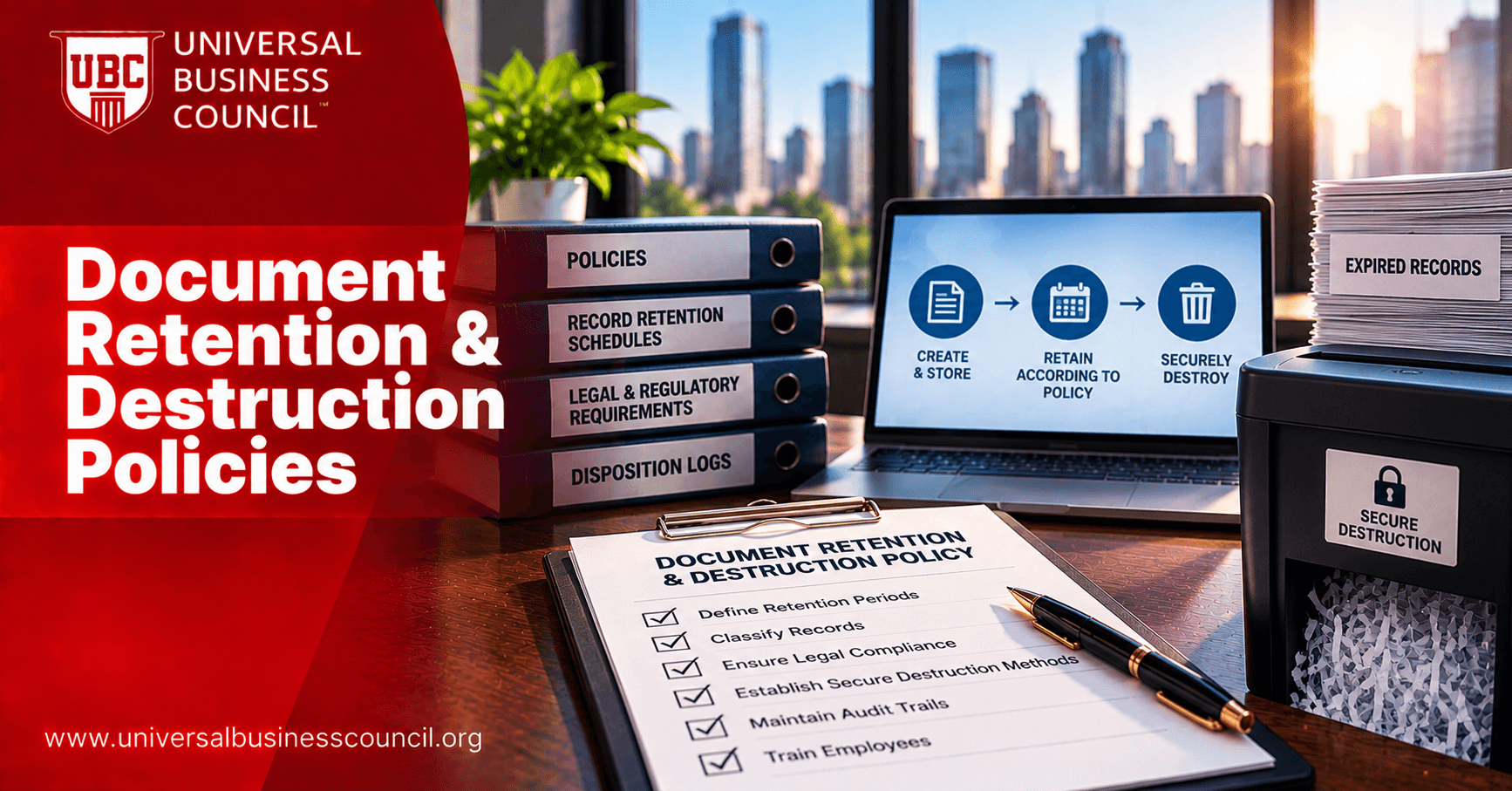
An employee's inbox hits its storage limit, so they set up an auto-delete rule for anything older than a year, just to keep things tidy. A few months later, a lawsuit gets filed, and it turns out some of those deleted emails were directly relevant to the case. Nobody meant to destroy evidence. Someone was just cleaning up their inbox. That's exactly the kind of ordinary, well-intentioned action a document retention and destruction policy exists to prevent from turning into a legal disaster.
Document retention sits at an unusual intersection in compliance, where keeping too little and keeping too much are both genuine risks, often at the same time. This guide breaks down what a real retention and destruction policy actually requires, how legal holds work, and what separates a functional program from a pile of records nobody ever thought through.

What a document retention and destruction policy actually is
A document retention and destruction policy sets clear rules for how long different types of business records need to be kept, and when and how they should be securely destroyed once that requirement expires. It exists to solve a genuinely tricky balancing act: businesses are legally required to keep certain records for specific periods, but keeping everything forever creates its own serious risks, from data breach exposure to an overwhelming burden if a company ever needs to search through years of accumulated records during litigation or a regulatory investigation.
A good policy isn't really about deciding what's important. It's about deciding, in advance and systematically, exactly how long each category of record needs to stick around, so that decision doesn't get made ad hoc, under pressure, by whoever happens to be cleaning out a shared drive that week.
Why this matters more right now
A few trends have made this a bigger, more urgent issue than it used to be.
The sheer volume of digital records businesses generate has exploded, emails, chat messages, shared documents, cloud files, far beyond what any company dealt with when most records existed on paper in a filing cabinet.
Remote work has scattered where records actually live, across personal devices, various cloud storage tools, and messaging platforms, making it harder to apply one consistent retention rule across everything a company generates.
Litigation and regulatory document requests have become more common and more detailed, meaning a company's ability to actually produce, or properly destroy, records according to a clear policy gets tested far more often than it used to.
None of this changed the underlying legal requirements around retention. It changed how much there is to manage, and how badly things go when nobody's managing it deliberately.
The two risks a retention policy is built to manage
Understanding why this is genuinely difficult starts with recognizing that a retention policy has to guard against two opposite failures at once.
Keeping too little creates risk through something called spoliation, the destruction of records that should have been preserved, whether because of a specific legal retention requirement or because litigation was reasonably anticipated at the time of destruction. Spoliation can lead to serious legal consequences, including a court assuming the destroyed evidence would have been unfavorable to the party that destroyed it, regardless of whether that's actually true.
Keeping too much creates a different set of problems. Every record a company holds is a record that could be exposed in a data breach, a record that has to be searched and reviewed if litigation or a regulatory inquiry ever requires producing relevant documents, and simply more data to secure, store, and manage indefinitely. A company with no real destruction practice isn't being extra careful, it's quietly accumulating risk it doesn't need to be carrying.
A real retention policy exists precisely to resolve this tension, keeping exactly what's required for exactly as long as it's required, and destroying the rest deliberately and securely rather than letting it pile up by default.
What a retention schedule actually covers
A retention schedule is the practical heart of the policy, a specific list of record categories and how long each one needs to be kept.
Financial records, like tax filings and accounting documentation, typically carry retention requirements set by tax authorities and often run several years at minimum. HR files, including hiring records, performance reviews, and payroll documentation, often have their own specific retention periods tied to employment law, and these can vary depending on the type of record and applicable jurisdiction. Contracts generally need to be retained for the life of the agreement plus some additional period afterward, to cover any potential disputes that might arise even after a contract has formally ended. Communications, emails, chat messages, and similar records are often the hardest category to manage consistently, since they're generated constantly, spread across multiple platforms, and rarely get the same deliberate handling that a signed contract or a financial filing naturally receives.
The specific timeframes vary considerably by industry, jurisdiction, and the type of record involved, which is exactly why a generic, one-size-fits-all schedule copied from another company rarely holds up well under real scrutiny.
Legal holds explained
This is one of the most important, and most commonly mishandled, parts of document retention, so it deserves real attention on its own.
A legal hold is an instruction that suspends normal document destruction the moment litigation is filed, or even just reasonably anticipated, covering any records that might be relevant to that matter. This obligation exists independently of whatever a company's normal retention schedule says. Even if a routine policy would normally allow an email to be deleted after a year, if litigation becomes reasonably foreseeable before that year is up, destruction of anything relevant has to stop immediately, regardless of what the standing schedule technically permits.
This is exactly where the opening scenario becomes a real legal problem rather than an innocent mistake. An auto-delete rule that keeps running after a legal hold should have been issued and communicated is precisely the kind of gap that turns routine record management into a spoliation claim.
The core pillars of a document retention program
A real program here goes well beyond a policy document that nobody actually operationalizes day to day.
A written retention schedule specifies exactly how long each category of record needs to be kept, based on actual legal requirements and genuine business need, not guesswork. A legal hold process defines clearly how a hold gets issued, communicated to relevant employees, and actually implemented, including pausing any automated deletion rules that would otherwise destroy relevant records. Consistent enforcement ensures the schedule actually gets followed across the organization, rather than existing as a document some departments follow closely and others ignore entirely. And secure destruction practices ensure that once a record's retention period genuinely expires, it gets destroyed properly rather than just quietly forgotten somewhere, which itself creates ongoing exposure.
Common red flags and compliance gaps
A few patterns tend to expose weak document retention practices.
No written retention schedule at all, leaving individual employees or departments to decide informally what to keep and for how long.
Automated deletion rules, like inbox auto-archiving or cleanup, that keep running without any way to pause them when a legal hold gets issued.
A legal hold process that exists on paper but isn't actually communicated clearly to the employees whose records are relevant, so destruction continues unintentionally.
Records that pile up indefinitely with no destruction practice at all, well beyond any legitimate business or legal need to keep them.
Inconsistent retention practices across departments, where finance follows a rigorous schedule while other teams manage their own records informally.
None of these individually proves wrongdoing occurred. Together, they're exactly the pattern that surfaces once litigation reveals a gap between what a company should have preserved and what it actually did.
Building a program that holds up
A program built to actually function starts with a genuine classification of the records a business actually generates, rather than a generic schedule borrowed from a template that doesn't reflect its specific operations. From there, a few things matter most.
Automated retention rules, where technically possible, remove a lot of the risk that comes from relying on individual employees to remember and correctly apply a manual schedule themselves. A clear, fast legal hold process needs to exist and actually get used the moment litigation becomes reasonably foreseeable, not after a complaint has already been formally filed. And employee training needs to cover what a legal hold actually means in practice, since the people generating and storing records day to day are the ones who need to understand when normal destruction rules suddenly stop applying.
Building a program at this level takes real structure. A Certified Compliance Management Professional credential is worth looking into for compliance and legal staff who want a genuine framework for running a document retention program, rather than improvising a response after litigation has already exposed the gaps.
Common mistakes companies make
A handful of mistakes keep showing up. Having no written retention schedule at all, leaving destruction decisions to individual judgment case by case. Enforcing the schedule inconsistently across departments, so some records get carefully managed while others accumulate or disappear informally. And failing to actually pause automated deletion systems once a legal hold is issued, which turns a routine IT setting into a genuine spoliation risk nobody intended to create.
Technology increasingly plays a central role in solving this well, particularly for automating retention rules and legal hold enforcement across the many different platforms where modern business records actually live. Tech Certifications is worth a look for compliance and IT staff evaluating or building that kind of infrastructure, so they understand how these systems actually function rather than assuming a vendor's default settings are sufficient. For organizations managing retention across more complex or decentralized systems, Deep Tech Certifications fills a gap that standard compliance training doesn't cover.
The cost of getting it wrong
Getting document retention wrong carries real consequences on both ends of the spectrum. Destroying records that should have been preserved under a legal hold can lead to spoliation sanctions, including a court instructing a jury to assume the destroyed evidence was unfavorable to the destroying party, which can be devastating to a case regardless of its actual underlying merits. On the other end, keeping records indefinitely with no real destruction practice increases exposure in a data breach and creates a far larger, more expensive burden if a company ever has to search through years of unmanaged records during litigation or a regulatory request.
Where this is heading
The volume of records businesses need to manage keeps growing, particularly with the rise of AI tools generating their own logs, chat histories, and outputs that now fall under the same retention considerations as any other business record. E-discovery expectations in litigation continue getting stricter, with courts and regulators expecting companies to demonstrate real, systematic retention practices rather than an informal, ad hoc approach. And automated retention enforcement is becoming increasingly necessary, simply because the volume and variety of modern digital records has outpaced what manual policy enforcement can realistically manage.
For compliance and communications teams rolling out or refreshing a document retention policy across a broad employee base, how it's communicated matters almost as much as the schedule itself. A Digital Marketing Course can help teams frame retention and legal hold expectations in a way that actually gets absorbed by employees who don't think about litigation risk day to day, rather than reading as dense legal language nobody internalizes until it's already too late.
Conclusion
Document retention and destruction policy comes down to a fairly direct discipline: keep exactly what you're required to for exactly as long as required, and destroy the rest deliberately rather than letting it accumulate or disappear by accident. Most failures here aren't the result of anyone trying to hide something, they're the result of an auto-delete rule that kept running past a legal hold, a retention schedule that was never actually written down, a department managing its own records informally while the rest of the company followed a real process. Get the fundamentals right, a clear written schedule, a fast and genuinely enforced legal hold process, and consistent practice across the organization, and document retention becomes a quiet, manageable discipline. Get it wrong, and an ordinary inbox cleanup becomes the exact detail a court points to when deciding how to treat the rest of a company's evidence.
FAQs
What is a document retention and destruction policy?
A set of rules defining how long different types of business records must be kept and how they should be securely destroyed afterward.
Why can't a company just keep every record indefinitely to be safe?
Because holding records indefinitely increases data breach exposure and creates a larger burden if litigation ever requires searching through them.
What is spoliation?
The destruction of records that should have been preserved, either due to a legal requirement or reasonably anticipated litigation.
What happens if a company is found guilty of spoliation?
A court may instruct a jury to assume the destroyed evidence was unfavorable to the party that destroyed it.
What is a legal hold?
An instruction that suspends normal document destruction once litigation is filed or reasonably anticipated.
Does a legal hold override a company's normal retention schedule?
Yes, it suspends destruction of relevant records even if a standard schedule would normally allow deletion.
What kinds of records typically require the longest retention periods?
Financial and tax records often carry some of the longest legally required retention periods.
Why are communications like email hard to manage under retention policies?
They're generated constantly across multiple platforms and rarely receive the same deliberate handling as formal documents.
What should a retention schedule actually include?
Specific categories of records and the exact length of time each one must be retained.
Can an automated inbox deletion rule create legal risk?
Yes, if it continues running after a legal hold should have paused it, deleting potentially relevant records.
Why do retention schedules vary by industry?
Different industries and jurisdictions impose different legal requirements on how long specific records must be kept.
What is the risk of having no written retention schedule at all?
Employees and departments make inconsistent, informal decisions about what to keep or delete, creating gaps and exposure.
How should a legal hold actually be communicated?
Clearly, to all employees whose records might be relevant, with automated deletion systems paused accordingly.
What role does technology play in document retention?
Increasingly for automating retention rules and enforcing legal holds across the many platforms where records now live.
Are AI tool logs and chat histories part of document retention now?
Yes, they're increasingly treated as business records subject to the same retention considerations as other data.
What's the risk of inconsistent enforcement across departments?
Some records get properly managed while others accumulate or disappear informally, creating uneven and unpredictable exposure.
What does secure destruction actually mean?
Properly destroying records once their retention period expires, rather than letting them sit indefinitely or disappear informally.
Why are e-discovery expectations getting stricter?
Courts and regulators increasingly expect companies to demonstrate systematic retention practices, not an ad hoc approach.
What's the most common mistake companies make with document retention?
Having no written retention schedule, leaving destruction decisions to informal, inconsistent individual judgment.
What's the foundation of a document retention program that actually works?
A clear written schedule, a fast and genuinely enforced legal hold process, and consistent practice across the organization.
Related Articles
View All
Business
Supply Chain Compliance explained: what businesses actually need to get right
Learn what supply chain compliance involves, which requirements can affect suppliers and business partners, and how companies can manage regulatory, operational, and third-party risks.

Business
Transfer Pricing Regulations: What Businesses Need to Know
Learn how transfer pricing regulations affect transactions between related companies, including pricing methods, documentation, reporting, audits, and tax risks.

Business
Customer Engagement vs Customer Experience: What Sets Them Apart and Why Both Need Guardrails
Customer engagement and customer experience are closely connected, but they serve different purposes. Learn how they differ, how they influence customer loyalty and retention, and why businesses need clear guardrails to manage both effectively.
Trending Articles
The Role of Blockchain in Ethical AI Development
How blockchain technology is being used to promote transparency and accountability in artificial intelligence systems.
AWS Career Roadmap
A step-by-step guide to building a successful career in Amazon Web Services cloud computing.
Top 5 DeFi Platforms
Explore the leading decentralized finance platforms and what makes each one unique in the evolving DeFi landscape.