

Whistleblower Protection Programs explained: the laws, the retaliation risks, and what businesses need to get right
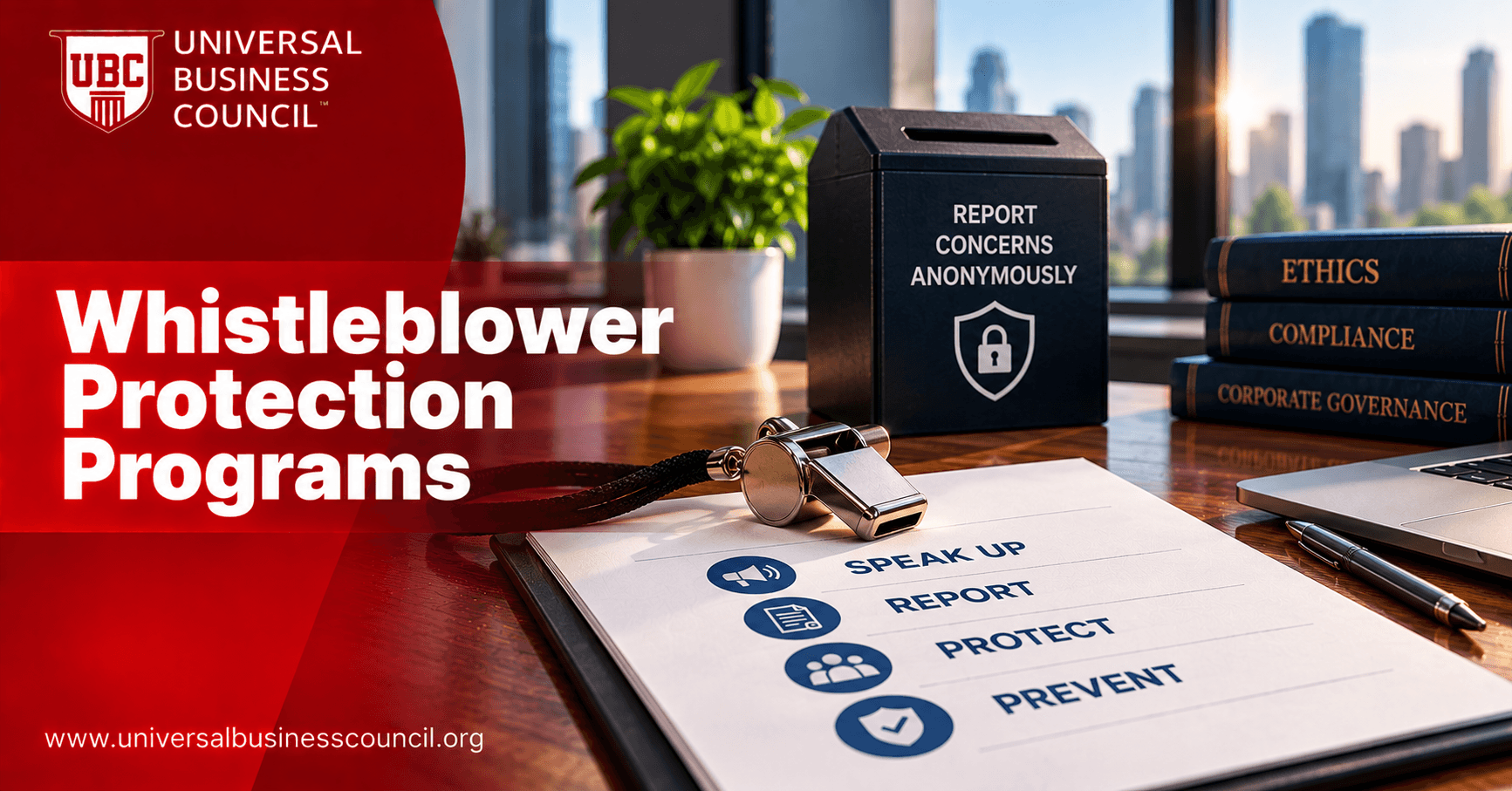
An employee raises a concern about questionable accounting practices, and within a few months finds themselves quietly cut out of meetings they used to lead. Nobody fired them. Nobody said a word about the complaint. Their project just stopped landing on their desk, and their manager started routing decisions around them instead of through them. No obvious retaliation happened. Something happened anyway, and it's exactly the kind of pattern whistleblower protection laws exist to catch.
Whistleblower protection is one of the least visible parts of a compliance program, right up until it fails publicly. This guide breaks down what a real program actually requires, where retaliation hides when it isn't obvious, and what separates a functional whistleblower program from a policy that just exists on paper.

What whistleblower protection actually is
Whistleblower protection means shielding an employee from retaliation after they report suspected wrongdoing, whether that report goes to an internal channel, a regulator, or in some cases the public. The core idea is straightforward: if employees fear real consequences for speaking up, misconduct stays hidden longer and causes more damage before anyone catches it.
It covers a broad range of concerns, financial fraud, safety violations, discrimination, environmental violations, and other forms of corporate misconduct. And critically, protection generally doesn't depend on whether the underlying complaint turns out to be accurate. An employee who reports something in good faith is typically protected even if the investigation ultimately finds no wrongdoing occurred, since punishing a good-faith report for being wrong would discourage anyone from ever coming forward again.
Why this matters more right now
A few trends have raised the stakes considerably for how seriously companies need to take this.
Financial incentive programs tied to whistleblower reports have expanded significantly, giving employees direct financial motivation to report to a regulator rather than staying quiet or only raising concerns internally.
Legal protections against retaliation have broadened across a number of jurisdictions and industries, closing gaps that used to leave certain categories of employees unprotected.
Public scrutiny of corporate misconduct has intensified, meaning a whistleblower story that becomes public tends to do lasting reputational damage well beyond whatever legal penalty follows.
None of this changed the basic concept of whistleblower protection. It raised the real cost of getting it wrong, both legally and publicly.
The key laws behind whistleblower protection
A handful of major laws sit behind most whistleblower protection obligations, and understanding their basic reach helps clarify why this isn't optional for most companies.
Sarbanes-Oxley protects employees at publicly traded companies who report suspected securities fraud or violations of SEC regulations, and it specifically prohibits retaliation against them. Dodd-Frank goes further, establishing financial incentive programs that reward whistleblowers who report securities violations directly to regulators, alongside its own anti-retaliation protections. The False Claims Act protects and financially rewards individuals who report fraud against the government, historically one of the most active areas of whistleblower litigation in the US.
Beyond these three, a wide range of industry-specific and state-level laws add further whistleblower protections, covering areas like workplace safety, environmental violations, and healthcare fraud, which means a company's actual whistleblower exposure is often broader than any single law suggests on its own.
What counts as protected whistleblowing
Protected whistleblowing isn't limited to a formal report filed with a regulator. A few categories worth understanding clearly:
Internal reports, made through a company's own compliance hotline, HR, or direct management, are generally protected, and in some cases a company must have this option available before retaliation protections fully apply.
Regulatory filings, made directly to an agency like the SEC or OSHA, carry their own specific protections, often including financial incentives depending on the law involved.
External disclosures, including in some cases speaking to media or the public, can be protected under narrower circumstances, typically when internal or regulatory channels have already failed or when there's an imminent safety risk.
The specific protections and requirements shift depending on which law applies, but the general principle holds across nearly all of them: an employee raising a good-faith concern through an appropriate channel shouldn't face negative consequences for doing so.
What counts as retaliation
This is where a lot of real compliance risk actually lives, because retaliation isn't always as obvious as a termination.
Obvious retaliation includes firing, demotion, or a clear pay cut following a report. Subtle retaliation is the harder compliance problem, and it's also the more common one in practice. Quietly excluding someone from meetings or projects. Giving them a worse performance review without a clear, documented reason. Shifting their responsibilities toward less visible or less desirable work. Making their day-to-day environment noticeably colder, without anything overt enough to point to directly.
Subtle retaliation matters more than it might seem, because it's exactly the pattern that erodes trust in a whistleblower program without ever generating an obvious violation anyone can immediately name. And it's often not driven by an explicit decision to punish someone, it's driven by a manager's discomfort with the person who raised the issue, which makes it harder to catch and easier to unintentionally allow.
The core pillars of a whistleblower protection program
A real program here goes well beyond a policy statement in an employee handbook.
Confidential reporting channels give employees a genuine way to raise concerns without their identity being immediately known to the people the complaint might involve. A clear non-retaliation policy needs to be specific about what retaliation actually looks like, including subtler forms, not just the obvious ones. A defined investigation process, handled by someone genuinely independent from the situation being reported, protects both the integrity of the investigation and the person who raised the concern. And documentation matters throughout, both to track how a specific complaint was handled and to spot patterns if the same person seems to face negative treatment repeatedly after raising concerns.
Common red flags and compliance gaps
A few patterns tend to expose a whistleblower program as more decorative than functional.
A reporting channel that technically exists but where confidentiality clearly isn't taken seriously, often because word gets around informally about who raised a specific concern.
Investigations that move slowly or dismissively, signaling to everyone watching that a report isn't actually taken seriously.
A pattern where employees who've raised concerns in the past quietly stop getting good assignments, promotions, or positive reviews, without any single decision looking like clear retaliation on its own.
Managers who weren't trained on what retaliation actually includes, and who genuinely don't realize that excluding someone from meetings after a complaint counts.
No real tracking of outcomes for people who've made reports, which makes a retaliation pattern invisible until it's raised as a formal legal claim.
None of these individually proves retaliation happened. Together, they're exactly the pattern that shows up once a whistleblower complaint becomes a lawsuit and a company has to explain what happened after the original report.
Building a program that holds up
A program built to actually function starts with a reporting channel employees genuinely trust, not just one that technically exists on paper. From there, a few things matter most.
Investigations need real independence from the people or department involved, since an investigation run by someone close to the situation undermines its credibility immediately, whatever the actual outcome turns out to be. Manager training has to cover subtle retaliation specifically, since most managers who retaliate don't think of what they're doing in those terms, which makes awareness training genuinely important rather than a formality. And outcome tracking for people who've made reports gives a company an early warning system for retaliation patterns before they escalate into a legal claim.
Building a program at this level takes real structure. A Certified Compliance Management Professional credential is worth looking into for compliance and HR staff who want a genuine framework for running a whistleblower program, rather than reacting only after a retaliation claim has already surfaced.
Common mistakes companies make
A handful of mistakes keep showing up. Treating a reporting hotline as sufficient on its own, without a real, independent investigation process behind it. Failing to train managers on subtle forms of retaliation, leaving well-meaning people to accidentally punish someone through disengagement rather than any deliberate decision. Moving slowly on investigations, which signals to the whole organization that reports don't actually get taken seriously. And failing to track outcomes for people who've reported concerns, which means a retaliation pattern only becomes visible once it's already a legal problem.
Technology increasingly supports this kind of program too, particularly for confidential reporting systems and tracking case outcomes over time without exposing sensitive details unnecessarily. Tech Certifications is worth a look for compliance teams evaluating or building that kind of infrastructure, so they understand how these systems actually protect confidentiality rather than trusting a vendor's claims blindly.
The cost of getting it wrong
Whistleblower retaliation claims carry real legal exposure, including potential reinstatement, back pay, and damages, and in some cases whistleblowers are entitled to significant financial awards tied to the underlying misconduct they reported. Beyond the direct legal cost, a public whistleblower retaliation case tends to do lasting reputational damage, since it signals to current and future employees that raising a concern internally isn't actually safe, which pushes more reports toward regulators and the media instead of internal channels where a company might otherwise catch and fix a problem quietly.
Where this is heading
Financial incentive programs tied to whistleblower reports continue expanding, giving employees more reason than ever to report directly to regulators rather than internally. Anti-retaliation enforcement is getting stronger too, with regulators showing less patience for the subtle forms of retaliation that used to slide by unnoticed. And whistleblower protections keep extending into new categories and industries, meaning companies that assumed they were outside the scope of these laws increasingly find that assumption tested.
For compliance and communications teams building trust in a reporting channel, how the program gets communicated matters almost as much as how it's actually structured. A Digital Marketing Course can help teams frame whistleblower protections in a way that actually builds genuine employee trust, rather than reading as boilerplate nobody believes. And for organizations building more sophisticated systems to detect retaliation patterns across a large workforce, Deep Tech Certifications fills a gap standard compliance training doesn't cover.
Conclusion
Whistleblower protection comes down to a simple test: does an employee who raises a genuine concern actually end up worse off for it, even subtly, even without anyone intending it. Most failures here aren't a dramatic, obvious act of retaliation, they're a manager quietly cooling toward someone, a project reassigned, a review that got a little harsher for no clearly documented reason. Get the fundamentals right, genuine confidentiality, independent investigations, and real training on what subtle retaliation actually looks like, and a whistleblower program becomes something employees trust enough to actually use. Get it wrong, and the silence that follows isn't peace, it's just problems staying hidden until they become impossible to ignore.
FAQs
What is whistleblower protection?
Legal and policy safeguards that shield an employee from retaliation after reporting suspected wrongdoing.
Does a whistleblower need to be proven right to be protected?
No, protection generally applies to good-faith reports, even if an investigation finds no wrongdoing occurred.
What is Sarbanes-Oxley's role in whistleblower protection?
It protects employees at publicly traded companies who report suspected securities fraud from retaliation.
What does Dodd-Frank add to whistleblower protection?
It establishes financial incentive programs rewarding whistleblowers who report securities violations directly to regulators.
What is the False Claims Act?
A law protecting and financially rewarding individuals who report fraud committed against the government.
Are internal reports protected the same way as regulatory filings?
Generally yes, though specific protections and requirements can differ depending on which law applies.
What counts as obvious retaliation?
Firing, demotion, or a clear pay cut that follows a whistleblower report.
What counts as subtle retaliation?
Quiet exclusion from meetings or projects, unexplained negative reviews, or shifted responsibilities without a documented reason.
Why is subtle retaliation harder to address than obvious retaliation?
It's rarely a deliberate decision, often stemming from a manager's discomfort rather than intentional punishment, making it harder to catch.
What makes a whistleblower reporting channel effective?
Genuine confidentiality that employees actually trust, not just a channel that technically exists.
Why does investigator independence matter?
An investigation run by someone close to the situation undermines its credibility, regardless of the actual outcome.
Should manager training cover retaliation specifically?
Yes, since most managers who retaliate don't recognize their own behavior as retaliation without specific training.
What is outcome tracking in a whistleblower program?
Monitoring how people who've made reports are treated afterward, to catch retaliation patterns before they escalate.
What happens if a company is found guilty of whistleblower retaliation?
Potential consequences include reinstatement, back pay, damages, and significant reputational harm.
Can whistleblowers receive financial rewards?
Yes, under laws like Dodd-Frank and the False Claims Act, whistleblowers can be entitled to significant financial awards.
Does external disclosure to media ever count as protected whistleblowing?
In narrower circumstances, typically when internal or regulatory channels have failed or an imminent risk exists.
What's the most common mistake companies make with whistleblower programs?
Treating a reporting hotline as sufficient without a real, independent investigation process behind it.
How does a weak whistleblower program affect reporting behavior?
It pushes employees to report directly to regulators or media instead of internally, where issues could be resolved quietly.
Are whistleblower protections expanding over time?
Yes, both the industries covered and the strength of anti-retaliation enforcement continue to grow.
What's the foundation of a whistleblower program that actually works?
Genuine confidentiality, independent investigations, and real training on subtle forms of retaliation.
Related Articles
View All
Business
Supply Chain Compliance explained: what businesses actually need to get right
Learn what supply chain compliance involves, which requirements can affect suppliers and business partners, and how companies can manage regulatory, operational, and third-party risks.
Business
Right to Repair Laws: What They Mean for Customers
Understand how right to repair laws affect consumers, manufacturers, and repair shops, including access to parts, tools, repair information, warranty policies, and repair options.

Business
Transfer Pricing Regulations: What Businesses Need to Know
Learn how transfer pricing regulations affect transactions between related companies, including pricing methods, documentation, reporting, audits, and tax risks.
Trending Articles
The Role of Blockchain in Ethical AI Development
How blockchain technology is being used to promote transparency and accountability in artificial intelligence systems.
AWS Career Roadmap
A step-by-step guide to building a successful career in Amazon Web Services cloud computing.
Top 5 DeFi Platforms
Explore the leading decentralized finance platforms and what makes each one unique in the evolving DeFi landscape.