

AI Chatbots for Digital Marketing: Improving Engagement, Lead Generation, and Customer Support
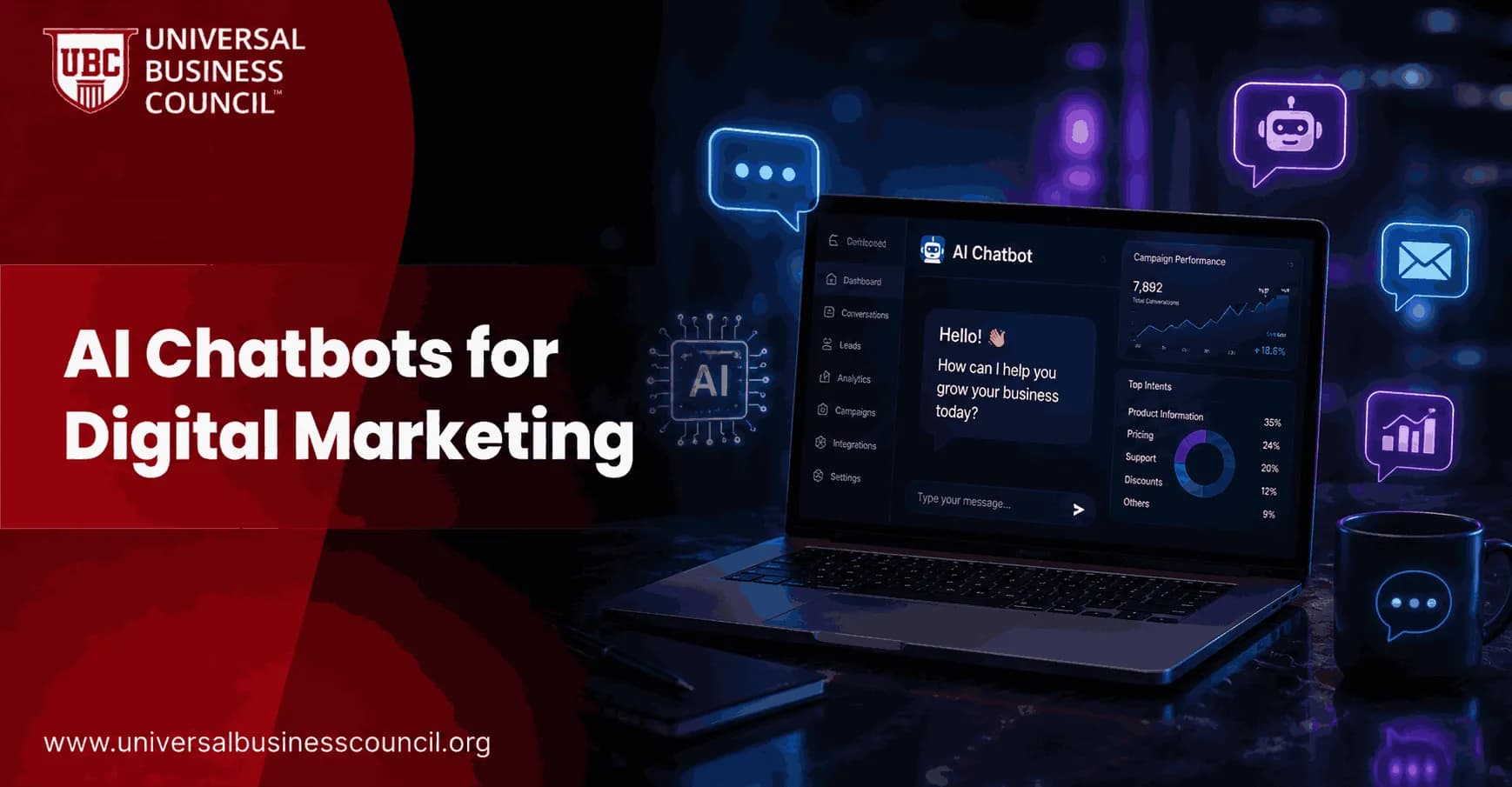
AI chatbots for digital marketing have moved from simple website widgets to intelligent conversational systems that engage visitors, qualify leads, recommend products, and resolve customer issues at scale. Powered by natural language processing and large language models, these tools now sit at the centre of conversational marketing, customer experience, and marketing automation strategies.
For professionals, developers, and enterprises, the opportunity is significant. Industry market analyses estimate the global chatbot market at roughly 15.57 billion USD in 2025, with projections reaching about 46.64 billion USD by 2029. Consumer familiarity with AI assistants has also expanded rapidly, making chatbot interactions more acceptable across websites, messaging apps, retail platforms, and support channels.

As AI-powered customer interactions become more common, an AI Certification can help professionals understand conversational AI, automation, and governance frameworks, while a Digital Marketing Certification can strengthen expertise in customer engagement, personalization, and digital growth strategies across AI-driven channels.
The Current State of AI Chatbots in Digital Marketing
From scripted responses to generative conversations
Early chatbots were largely rule-based. They followed decision trees, answered basic FAQ questions, and often failed when users phrased questions differently from expected scripts. Modern AI chatbots use natural language understanding, intent recognition, sentiment analysis, and generative AI to interpret context and produce more relevant responses.
This evolution has changed the role of chatbots in marketing. They are no longer limited to customer support. Today, AI chatbots for digital marketing support product discovery, content recommendations, lead scoring, appointment booking, cart recovery, and post-purchase engagement.
A rapidly expanding platform ecosystem
The chatbot ecosystem now includes general AI assistants, commerce-specific tools, and enterprise automation platforms. OpenAI's ChatGPT, Google Gemini, Anthropic Claude, Amazon Rufus, and Walmart Sparky illustrate how conversational interfaces are becoming embedded in search, shopping, productivity, and service experiences.
Within marketing stacks, chatbots increasingly connect with customer relationship management systems, customer data platforms, analytics tools, email marketing platforms, and help desk software. This integration enables chatbots to read customer data, personalise the conversation, and write useful information back into business systems.
How AI Chatbots Improve Customer Engagement
Engagement is one of the strongest use cases for a chatbot marketing strategy. Instead of asking visitors to browse passively or wait for an email response, chatbots create real-time, interactive conversations that guide users toward relevant actions.
Personalised conversational experiences
AI chatbots can use browsing behaviour, purchase history, location, campaign source, and previous interactions to tailor responses. A returning customer might receive product recommendations based on past purchases, while a first-time visitor might be guided through an educational quiz or product finder.
This level of personalisation supports stronger engagement because the interaction feels more relevant. Industry guidance suggests that AI chatbots can increase website conversion rates by up to 23 percent when implemented effectively, particularly when they reduce friction at high-intent moments.
Interactive campaigns and content delivery
Chatbots can also deliver interactive content such as quizzes, guided assessments, promotional flows, and personalised recommendations. In social media and messaging environments, this allows brands to shift from one-way content distribution to two-way dialogue.
For example, Domino's Pizza has used AI-powered conversational interfaces across text and voice channels to simplify ordering. Customers can place orders through a conversational experience at any time, improving convenience while supporting online sales growth and customer satisfaction.
AI Chatbots for Lead Generation and Qualification
Lead generation chatbots are particularly valuable because they replace static forms with dynamic conversations. Rather than asking every visitor to complete the same fields, chatbots can ask follow-up questions based on the user's needs, urgency, budget, and intent.
Capturing richer lead data
A traditional form might capture a name, email address, and company size. A chatbot can capture that information while also identifying the user's pain point, preferred solution, buying timeline, decision-making role, and content interests. This produces richer data for segmentation and follow-up.
Marketing performance data indicates that leads generated through chatbot conversations can convert faster than traditional form-based leads, in some cases up to three times faster. One reason is that chatbot interactions often reveal purchase intent earlier and route qualified leads more quickly.
Automated qualification and sales routing
Advanced sales chatbots can ask structured qualification questions based on frameworks such as budget, authority, need, and timeline. If a prospect meets the required criteria, the chatbot can offer a meeting link, book a demo, notify a sales representative, and update the CRM automatically.
This 24/7 availability matters. Many prospects research solutions outside normal business hours. A chatbot ensures that high-intent visitors are not lost because a human representative is unavailable.
Customer Support Automation at Scale
Customer support automation is another major benefit of AI chatbots for digital marketing and customer experience. Chatbots can answer routine questions instantly, including order tracking, return policies, billing issues, account changes, password resets, and product troubleshooting.
Balancing speed with human empathy
Recent customer experience research shows that many consumers are comfortable with AI resolving questions or issues. The same research also shows that empathy and human connection remain essential, especially in complex or sensitive situations.
The strongest support chatbot strategies are therefore hybrid. AI handles repetitive, low-complexity requests, while human agents manage emotional, urgent, or high-value cases. This model improves efficiency without weakening customer trust.
Omnichannel support and proactive service
AI chatbots can operate across websites, mobile apps, WhatsApp, Facebook Messenger, email, and voice interfaces. When integrated properly, they help customers move between channels without repeating information.
They can also provide proactive support. A chatbot might send a renewal reminder, offer help when a user appears stuck on a checkout page, or provide shipment updates before the customer asks. These proactive interactions can improve customer satisfaction and reduce inbound ticket volume.
Data, Analytics, and Continuous Optimisation
Every chatbot conversation creates valuable first-party data. Marketers can analyse common questions, objection patterns, product interests, sentiment trends, and points of friction in the customer journey.
This data can improve:
Segmentation: Group customers based on needs, behaviours, and intent signals.
Personalisation: Adapt messaging, offers, and content recommendations.
Campaign performance: Identify which campaigns generate the most qualified chatbot conversations.
Product positioning: Learn which features, benefits, and objections appear most often.
Support content: Update FAQs, knowledge bases, and self-service resources.
Professionals studying digital transformation can connect these skills with Universal Business Council learning paths such as the Digital Marketing Professional Certification, Marketing Management Certification, and Business Analytics Certification. These areas increasingly overlap as marketing teams use AI, data, and automation to improve measurable outcomes.
A Tech Certification can further strengthen this skill set by helping professionals develop expertise in emerging technologies, automation platforms, data systems, and the technical foundations that support modern digital transformation initiatives.
Best Practices for Implementing AI Chatbots
Successful chatbot implementation requires more than installing a tool. Enterprises need a clear operating model, strong data governance, and continuous optimisation.
1. Define the primary use case
Start with a focused objective. Is the chatbot designed to increase engagement, capture leads, qualify prospects, reduce support tickets, or support commerce? A clear purpose helps determine conversation design, integrations, and success metrics.
2. Integrate with the marketing and sales stack
AI chatbots become more valuable when connected to CRM systems, analytics platforms, email tools, calendars, ticketing systems, and product catalogues. Integration allows the chatbot to personalise interactions and trigger the right next step.
3. Design for escalation
Customers should never feel trapped in an automated loop. Provide clear escalation paths to human support, sales teams, or specialist agents when the issue is complex or emotionally sensitive.
4. Monitor accuracy, tone, and compliance
Generative AI can produce incorrect or off-brand responses if unmanaged. Organisations should review transcripts, test responses, define brand voice guidelines, and apply safeguards for regulated information.
5. Measure business impact
Track metrics such as conversion rate uplift, lead qualification rate, time to first response, meeting bookings, cost per contact, customer satisfaction, and chatbot-assisted revenue. These indicators help prove return on investment and guide improvement.
The Future of AI Chatbots in Digital Marketing
The next phase of AI chatbots will be more autonomous, multimodal, and deeply integrated. Instead of only answering questions, chatbots will increasingly take action: processing refunds, adjusting subscriptions, booking meetings, creating personalised content, and coordinating workflows across business systems.
Advances in large language models are also enabling chatbots to handle text, images, audio, and video. This will expand their role in product discovery, technical support, training, and personalised content experiences.
Governance will become equally important. Enterprises will need policies for data privacy, consent, model oversight, human review, and responsible automation. Professionals who understand conversational design, AI performance analytics, and digital marketing strategy will be well positioned as these systems mature.
An AI Certification can help professionals develop expertise in AI governance, automation, analytics, and responsible AI implementation, while a Digital Marketing Certification can strengthen strategic marketing, customer engagement, and data-driven decision-making skills in an increasingly AI-powered business environment.
Conclusion
AI chatbots for digital marketing are now a practical and measurable tool for improving engagement, lead generation, and customer support. They help brands deliver real-time conversations, qualify prospects faster, personalise customer journeys, and automate routine service interactions.
The most effective chatbot strategies combine AI efficiency with human judgement. Organisations should focus on clear use cases, strong integrations, accurate data, thoughtful escalation, and continuous measurement. As conversational AI becomes more capable, professionals and enterprises that build these capabilities responsibly will gain a stronger foundation for digital marketing performance and customer experience excellence.
FAQs
1. What Are AI Chatbots for Digital Marketing?
AI chatbots are intelligent conversational tools that use artificial intelligence to interact with customers, answer questions, generate leads, provide support, and enhance digital marketing efforts.
2. Why Are AI Chatbots Important in Digital Marketing?
AI chatbots help businesses provide instant responses, improve customer experiences, automate routine interactions, and engage users around the clock.
3. How Do AI Chatbots Improve Customer Engagement?
Chatbots can deliver personalized conversations, recommend content, answer questions in real time, and guide users through digital experiences.
4. How Can AI Chatbots Support Lead Generation?
AI chatbots can capture visitor information, qualify prospects, schedule appointments, collect contact details, and guide users through the sales funnel.
5. What Is Lead Qualification in AI Chatbots?
Lead qualification involves assessing a prospect's needs, interest level, budget, and readiness to buy before passing them to a sales team.
6. How Do AI Chatbots Improve Customer Support?
Chatbots can handle common inquiries, provide instant answers, access knowledge bases, and assist customers without requiring human intervention for every request.
7. What Types of Businesses Can Benefit from AI Chatbots?
Businesses in e-commerce, healthcare, finance, education, real estate, technology, travel, and professional services can benefit from chatbot solutions.
8. How Do AI Chatbots Personalize Customer Interactions?
Chatbots analyze customer data, behavior, preferences, and previous interactions to provide relevant responses and recommendations.
9. Can AI Chatbots Operate Across Multiple Channels?
Yes, AI chatbots can be deployed on websites, mobile apps, social media platforms, messaging applications, and customer support portals.
10. How Do Chatbots Improve Website Conversion Rates?
Chatbots can engage visitors immediately, answer objections, recommend products, and guide users toward desired actions such as purchases or sign-ups.
11. What Role Do AI Chatbots Play in Customer Journey Management?
Chatbots help customers move through awareness, consideration, decision, and retention stages by providing relevant information and support.
12. How Can AI Chatbots Assist with Email Marketing?
Chatbots can collect email addresses, segment audiences, trigger automated email workflows, and support lead nurturing initiatives.
13. How Do Chatbots Support Omnichannel Marketing Strategies?
They provide consistent customer experiences across multiple communication channels while maintaining context and continuity.
14. Can AI Chatbots Handle Complex Customer Questions?
Modern AI chatbots can address many complex inquiries, though some situations may still require escalation to human agents.
15. How Can Businesses Measure Chatbot Performance?
Key metrics include engagement rates, response times, lead generation volume, customer satisfaction scores, conversion rates, and issue resolution rates.
16. What Are the Benefits of AI Chatbots for Customer Support Teams?
Benefits include reduced workload, faster response times, improved scalability, consistent service quality, and increased operational efficiency.
17. What Challenges Can Arise When Implementing AI Chatbots?
Challenges may include integration issues, poor training data, inaccurate responses, privacy concerns, and maintaining a balance between automation and human support.
18. How Can Businesses Improve Chatbot Effectiveness?
Businesses can continuously train models, monitor interactions, update knowledge bases, refine conversation flows, and analyze performance data.
19. What Common Mistakes Should Marketers Avoid When Using AI Chatbots?
Common mistakes include over-automating conversations, failing to provide human escalation options, neglecting personalization, using unclear messaging, and ignoring customer feedback. Few customer experiences deteriorate faster than being trapped in an endless loop with a chatbot that confidently misunderstands the same question five times.
20. What Is the Future of AI Chatbots in Digital Marketing?
The future includes more human-like conversations, advanced personalization, predictive customer support, autonomous lead nurturing, multilingual capabilities, and deeper integration with marketing automation and customer experience platforms. As AI continues to evolve, chatbots will become an increasingly important tool for engagement, lead generation, and customer support.
Related Articles
View All
Digital Marketing
Predictive Analytics in Digital Marketing: How AI Helps Forecast Customer Behavior
Learn how predictive analytics in digital marketing uses AI to forecast customer behavior, improve personalization, optimize campaigns, and reduce churn.

Digital Marketing
AI Chatbots for Lead Generation: Scripts, Workflows, and Qualification Best Practices
Learn how AI chatbots for lead generation use scripts, workflows, and qualification thresholds to capture better leads, route to sales, and book meetings automatically.
Digital Marketing
KPIs for Digital Marketing Campaigns in Programmatic Advertising
Learn how to choose KPIs for digital marketing campaigns using programmatic advertising, from reach and CTR to CPA, ROAS, CAC, and revenue impact.
Trending Articles
The Role of Blockchain in Ethical AI Development
How blockchain technology is being used to promote transparency and accountability in artificial intelligence systems.
AWS Career Roadmap
A step-by-step guide to building a successful career in Amazon Web Services cloud computing.
Top 5 DeFi Platforms
Explore the leading decentralized finance platforms and what makes each one unique in the evolving DeFi landscape.