

AI Chatbots for Lead Generation: Scripts, Workflows, and Qualification Best Practices
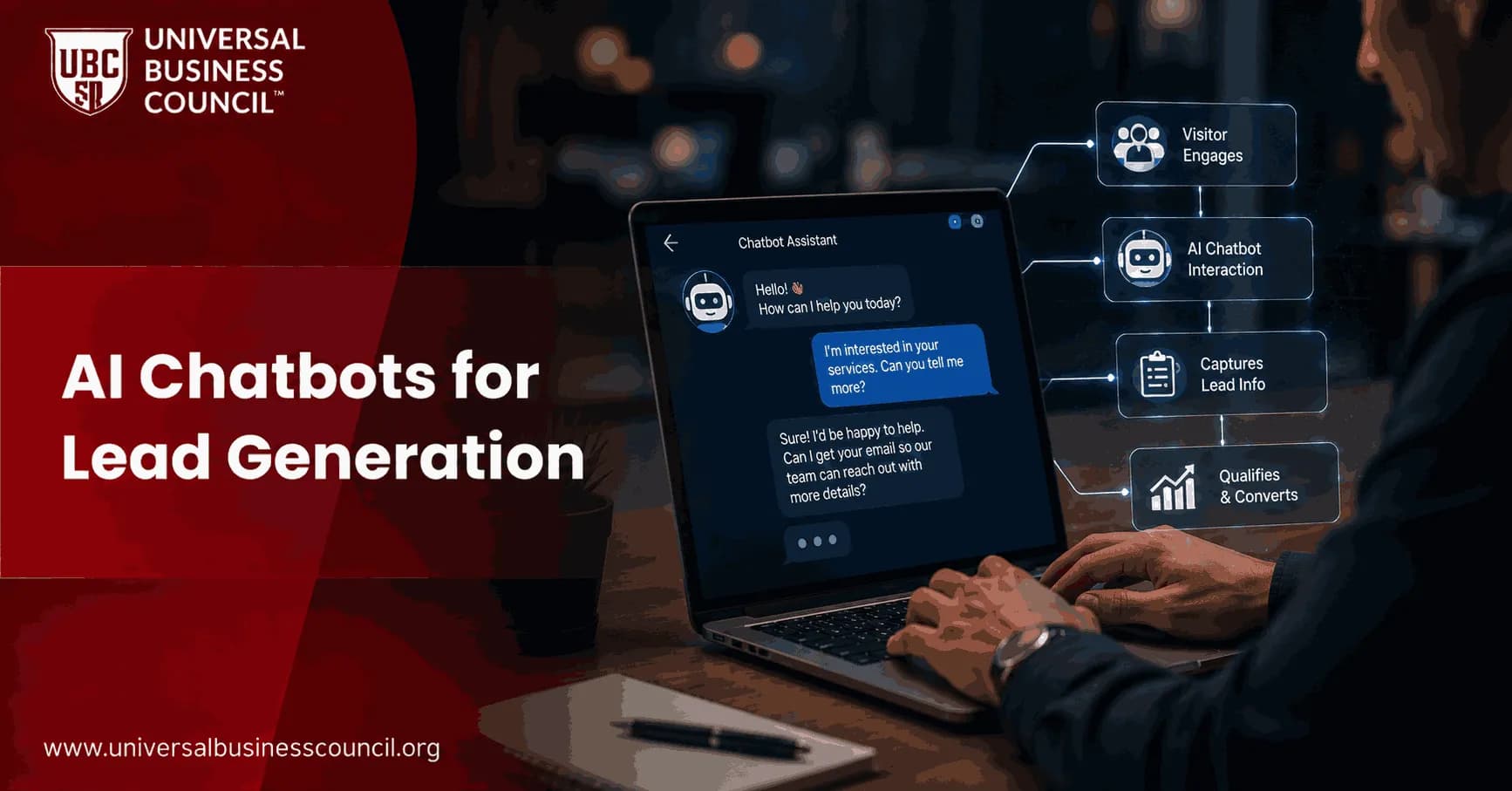
AI chatbots for lead generation have evolved from simple form replacements into conversation-first systems that can capture, qualify, route, and book meetings within a single flow. The most effective implementations in 2026 combine no-code deployment, deep CRM synchronization, multi-channel handoff across web chat, email, and voice, and agentic workflows that manage follow-up rather than simply answering FAQs.
This article breaks down the scripts, workflows, and qualification best practices that consistently improve lead quality while reducing manual effort for marketing and sales teams.

What makes modern AI chatbots for lead generation different?
Traditional lead capture relied on static forms and basic rule-based chat. The current generation of AI chatbots for lead generation is built around progressive conversation and workflow orchestration:
Capture and qualify: The bot asks targeted questions to assess fit, not just to collect contact details.
Route and schedule: Qualified leads can be routed to the right representative or prompted to book a demo immediately.
CRM synchronization: Conversation data is pushed into the CRM so sales teams can act with full context.
24/7 responsiveness: Always-on capture reduces missed leads, particularly outside office hours.
Multi-channel support: Web chat remains primary, but email workflows and voice agents are increasingly part of the lead generation stack.
Industry data from 2026 supports a measurable advantage for conversational capture. Some vendors report that conversational flows convert approximately 30% higher than static forms on comparable traffic, which helps explain why interactive qualification is replacing single-page forms across many funnels.
High-performing chatbot scripts: proven conversation patterns
Effective chatbot scripts follow a progressive disclosure pattern. The goal is to reduce friction, gather enough information to qualify the prospect, and move them to a clear next step.
Core lead qualification script (copy-ready)
Greeting and intent capture
"Hi, I can help you find the right solution. What are you looking for today?"Problem framing
"What challenge are you trying to solve?"Qualification (company profile)
"Which best describes your company size?"Qualification (timeline)
"What is your timeline for implementation?"Qualification (role)
"Are you the decision-maker or part of the buying team?"Offer and handoff
"Based on what you have shared, I can connect you with a specialist or book a demo."
Scripting principles that reduce drop-off
Ask one question at a time to maintain momentum and minimize cognitive load.
Use branching logic so each question depends on the prior answer - for example, different paths for SMB versus enterprise prospects.
Keep qualification concise. The aim is an early fit decision, not a lengthy survey.
Make the next step explicit: demo booking, callback scheduling, pricing guidance, or a live transfer to a representative.
If you are standardizing team-wide scripts and playbooks, this is a practical point to align language with your broader sales methodology. Internal training can be reinforced through relevant Universal Business Council programmes such as a Digital Marketing Certification or a Sales and Business Development training track.
Workflows that convert: from chat to CRM to meeting booked
The bot experience is only one layer of the system. High-performing teams in 2026 treat AI chatbots for lead generation as a node in a broader automation pipeline, using orchestration tools to connect enrichment, routing, scheduling, and CRM updates.
Reference workflow (inbound website visitor)
Visitor lands on a high-intent page (pricing, product, integrations).
Chatbot triggers with an intent-first prompt (help choose a plan, book a demo, ask a question).
Progressive qualification covering company size, use case, timeline, region, and role.
Lead scoring and threshold decision (qualified, nurture, disqualify, or escalate).
Handoff to a representative, meeting booking, or callback request.
CRM sync with transcript, qualification answers, lead source, and bot-derived score.
Follow-up automation via email or SMS confirmation, reminders, and nurture sequence.
Reference workflow (voice-based qualification)
Voice agents are increasingly used for inbound calls where intent is high and response speed matters:
Call answered instantly with a consistent greeting.
Rapid qualification covering need, timeline, company type, and handoff preference.
Scheduling completed during the same call for qualified prospects.
CRM logging of call summary and next actions.
This model is particularly useful when teams lose leads due to missed calls or slow callback times.
Qualification best practices to protect lead quality
Many teams improve lead volume quickly with chatbots, then find that sales is overwhelmed by weak leads. The fix is disciplined qualification design and clearly defined thresholds.
1) Define qualification criteria before building the bot
AI chatbots qualify leads well when the business provides explicit criteria upfront. Common B2B qualification criteria include:
Company size
Industry
Budget range or budget readiness
Use case
Timeline
Geography
Decision-making role
2) Use progressive qualification
Start with low-friction questions and only ask deeper questions when intent is clear. This approach typically reduces abandonment while preserving the data needed to route correctly.
3) Separate qualification from routing
Qualification determines whether a lead is worth sales attention. Routing determines who should receive the lead - based on territory, segment, product line, language, or account ownership. Treating these as separate steps improves clarity and makes optimization more straightforward.
4) Build explicit handoff thresholds
Define exactly when the bot should take each action:
Book a meeting automatically (high-fit, high-intent)
Route to sales (qualified but requires human discovery)
Send to nurture (not ready, but showing promise)
Disqualify politely (clear mismatch)
Escalate to support (service issues or technical help needed)
5) Sync qualified leads to CRM and analytics
CRM integration is essential for measurable impact. At minimum, push the following data points:
Contact details
Qualification answers
Conversation transcript or summary
Lead score and routing decision
UTM parameters and first-touch attribution
This data also enables marketing analytics to track drop-off points and conversion rates by segment, campaign, and page.
6) Test for false positives and false negatives
Two failure modes appear frequently in chatbot-led qualification:
Too lenient: Sales receives a high volume of low-quality leads (false positives).
Too strict: The bot blocks revenue by disqualifying genuinely good leads (false negatives).
Review outcomes weekly, sample transcripts regularly, and adjust question wording, scoring weights, and thresholds accordingly. Teams looking for a structured approach to funnel measurement and experimentation can align this work with a Universal Business Council Marketing Analytics or Performance Marketing certification pathway.
As AI-powered chatbots become more sophisticated, professionals increasingly need to understand conversational AI, lead qualification models, workflow automation, and responsible AI implementation. An AI Certification helps practitioners develop the knowledge required to design, evaluate, and manage AI-driven customer engagement systems effectively.
What to evaluate before adopting an AI lead generation chatbot
Selection criteria should reflect pipeline outcomes rather than feature novelty. Use this checklist as a starting point:
Lead quality improvement, not only lead volume
Integration depth with CRM, calendars, and marketing automation platforms
Customization of questions, branching logic, and scoring rules
Human handoff options, including live chat and representative assignment
Analytics for conversion rates, drop-off points, and segment performance
Multi-channel capability across web chat, email, and voice
Data governance aligned with privacy obligations and internal policies
Building and managing modern lead generation systems requires expertise across CRM integration, automation platforms, analytics, cloud infrastructure, and customer engagement technologies. A Tech Certification provides professionals with a broader foundation across the technologies that power scalable, data-driven lead generation workflows.
Conclusion: use scripts, workflows, and thresholds - not just a chatbot widget
The most reliable results from AI chatbots for lead generation come from treating the bot as part of a full-funnel system: a focused script, progressive qualification, explicit thresholds, and CRM-synced workflows that enable fast follow-up. The direction in 2026 is clear: agentic workflows and multi-channel handoff are becoming standard expectations, and voice-based qualification is moving into the mainstream for high-intent inbound channels.
Building around clear qualification criteria and continuously testing for false positives and false negatives allows chatbots to raise conversion rates, protect sales time, and deliver better pipeline visibility from first conversation to booked meeting.
FAQs
1. What Are AI Chatbots for Lead Generation?
AI chatbots for lead generation are automated conversational tools that engage website visitors, answer questions, collect contact details, and identify potential customers.
2. How Do AI Chatbots Generate Leads?
They generate leads by starting conversations, asking qualifying questions, offering helpful information, and capturing user details such as name, email, company, budget, and needs.
3. Why Should Businesses Use AI Chatbots for Lead Generation?
AI chatbots help businesses respond instantly, qualify leads faster, reduce manual work, and prevent potential customers from leaving unnoticed. Because apparently waiting three days to reply is not a growth strategy.
4. What Makes a Good Lead Generation Chatbot Script?
A good script is clear, conversational, helpful, and focused on guiding users toward the next step without sounding robotic or pushy.
5. What Questions Should a Chatbot Ask to Qualify Leads?
A chatbot can ask about the user’s goal, business size, industry, budget, timeline, decision-making role, current challenges, and preferred contact method.
6. What Is a Chatbot Workflow?
A chatbot workflow is the structured path a conversation follows, including greetings, questions, responses, lead scoring, routing, and follow-up actions.
7. How Can AI Chatbots Improve Lead Qualification?
AI chatbots can analyze responses, score leads based on fit and intent, and route qualified prospects to sales teams automatically.
8. What Is Lead Scoring in Chatbot Workflows?
Lead scoring assigns value to prospects based on their answers, behavior, and level of interest, helping teams prioritize the most promising leads.
9. How Should a Chatbot Start a Lead Generation Conversation?
A chatbot should begin with a friendly, relevant prompt such as asking what the visitor is looking for or offering help with pricing, demos, or product information.
10. What Are Examples of Effective Chatbot Prompts?
Effective prompts include “Would you like help choosing the right plan?”, “Are you looking for pricing information?”, and “Can I help you schedule a demo?”
11. How Can Chatbots Capture Contact Information Without Being Annoying?
They should ask for contact details only after providing value or identifying interest, instead of demanding an email before saying anything useful. A revolutionary concept, tragically.
12. What Is the Best Workflow for High-Intent Leads?
High-intent leads should be quickly qualified, offered a demo or consultation, and routed to the right sales representative or booking calendar.
13. How Should Chatbots Handle Low-Intent Leads?
Low-intent leads can be directed to helpful resources, newsletters, product guides, case studies, or nurturing email sequences.
14. Can AI Chatbots Integrate with CRM Systems?
Yes, AI chatbots can integrate with CRM platforms to automatically create contacts, update lead records, assign scores, and trigger sales follow-ups.
15. How Can Chatbots Personalize Lead Generation Conversations?
They can personalize conversations using visitor behavior, referral source, location, company data, past interactions, and stated interests.
16. What Are Best Practices for Chatbot Qualification?
Best practices include asking short questions, using clear answer options, qualifying gradually, avoiding too many fields, and routing leads based on intent.
17. What Mistakes Should Businesses Avoid With Lead Generation Chatbots?
Businesses should avoid long forms, vague scripts, irrelevant questions, aggressive sales language, poor handoff to humans, and collecting data without clear purpose.
18. How Can AI Chatbots Support Sales Teams?
They support sales teams by filtering unqualified leads, collecting useful context, booking meetings, answering common questions, and reducing repetitive work.
19. How Should Businesses Measure Chatbot Lead Generation Success?
Success can be measured through conversation rate, lead capture rate, qualification rate, demo bookings, sales handoff rate, conversion rate, and revenue influenced.
20. What Is the Future of AI Chatbots in Lead Generation?
The future includes smarter qualification, deeper CRM integration, predictive lead scoring, multilingual conversations, voice-based bots, and more human-like personalization across channels.
Related Articles
View All
Digital Marketing
AI Chatbots for Digital Marketing: Improving Engagement, Lead Generation, and Customer Support
Learn how AI chatbots improve digital marketing through real-time engagement, faster lead qualification, personalized journeys, and scalable support.
Digital Marketing
Google Ads Landing Pages: Best Practices for 2026
Learn how to build Google Ads landing pages that match search intent, load fast on mobile, improve conversion tracking, and support smarter campaign optimization.
Digital Marketing
Google Ads Best Practices 2026: What Marketers Need to Know
Learn Google Ads best practices 2026, including smart bidding, Performance Max, enhanced conversions, first-party data, creative testing, and governance.
Trending Articles
The Role of Blockchain in Ethical AI Development
How blockchain technology is being used to promote transparency and accountability in artificial intelligence systems.
AWS Career Roadmap
A step-by-step guide to building a successful career in Amazon Web Services cloud computing.
Top 5 DeFi Platforms
Explore the leading decentralized finance platforms and what makes each one unique in the evolving DeFi landscape.