

Google Ads Best Practices 2026: What Marketers Need to Know
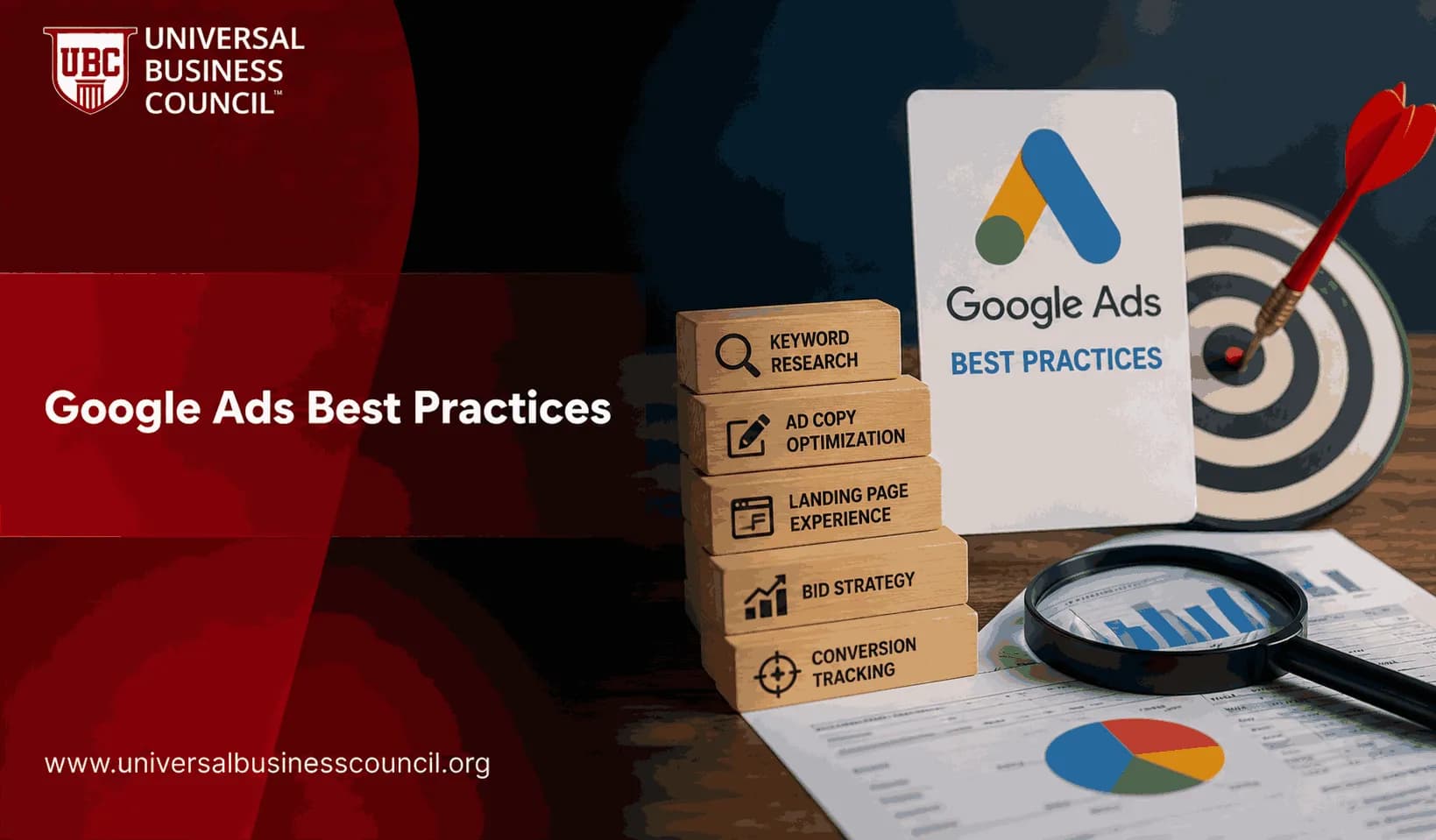
Google Ads best practices 2026 come down to one idea: let automation do the math, but do not let it run the business. Performance Max, smart bidding, responsive search ads, and AI-assisted creative are now standard tools. The accounts that win feed Google clean first-party data, accurate conversion values, and strong creative, while a human keeps the budget pointed at revenue.
That last part matters. A campaign can look healthy in Google Ads while sending your sales team weak leads, duplicate form fills, or traffic from places you do not serve. I have watched the quiet leak play out more than once. A thank-you page fires twice, Google counts two leads, Target CPA starts bidding harder, and the sales team wonders why lead quality dropped off a cliff. Measurement is not admin work. It is the steering wheel.

As Google Ads becomes increasingly driven by automation and AI, advertisers benefit from a structured understanding of campaign management, conversion tracking, bidding strategies, and optimization. Many professionals develop these practical skills by earning a Certified Google Ads Expert credential, helping them make better decisions that align advertising performance with business outcomes.
What changed in Google Ads for 2026?
Google Ads in 2026 is less keyword-only and more signal-driven. Keywords still matter, especially in high-cost niches, but Google leans more on audience signals, conversion history, creative assets, landing page relevance, and value data.
A few shifts are worth planning around:
Automation is now the default operating model. Performance Max, smart bidding, and responsive search ads sit at the centre of Google's own guidance and most agency playbooks.
First-party data has become a performance asset. Customer Match, CRM imports, Enhanced Conversions for Leads, and offline conversion tracking give bidding systems better inputs.
Legacy formats are being reduced. Google has said that from August 3, 2026, advertisers can no longer create new Smart Campaigns through the Google Ads API, though existing Smart Campaigns can still be updated.
Security standards are tightening. Google has flagged security updates rolling out in 2026, which means developers and marketing teams need to review access, authentication, and API integrations.
Start with measurement before changing bids
If you only track form submissions, Google optimizes for form submissions. That sounds obvious. It is also behind a lot of expensive mistakes.
For serious Google Ads management in 2026, set up measurement in this order:
Configure conversion tracking correctly. Check that each primary conversion fires once, on the right event, and only when the action is actually complete.
Use Enhanced Conversions for Leads. Google and B2B specialists treat enhanced conversions as a baseline setup for better attribution.
Import CRM and offline conversions. Connect Salesforce, HubSpot, or your own CRM so Google can learn which leads became qualified opportunities or customers.
Assign differentiated conversion values. A booked demo, a sales-qualified lead, and a newsletter signup should not carry the same value.
Move toward value-based bidding. Use Maximize Conversion Value or Target ROAS once you have enough reliable value data.
Leadership rarely cares about click-through rate for long. They care about pipeline, CAC, LTV, payback period, qualified lead rate, ROAS, and gross margin. Build your Google Ads account to answer those questions.
Strong campaign performance also depends on understanding the wider marketing picture, from customer acquisition and analytics to budgeting and business strategy. A Certified Digital Marketing Expert program helps professionals connect Google Ads performance with broader digital marketing objectives and long-term organizational growth.
Choose smart bidding based on the business goal
Smart bidding is not one thing. Pick the strategy that matches the job.
Maximize Conversions: Good for accounts that need lead or sale volume and have a clear primary conversion.
Target CPA: Useful when you have a stable cost-per-acquisition target and enough conversion volume.
Maximize Conversion Value: Better when purchases or lead stages carry different business values.
Target ROAS: Best suited to ecommerce or mature lead generation accounts with dependable revenue data.
New customer acquisition bidding: Useful when growth from new buyers matters more than repeat conversions from existing customers.
Do not swap bid strategies every few days. Give campaigns time to learn. For smaller accounts, several days to a week may be the minimum before you judge early movement. For major structural changes, many practitioners limit significant adjustments to roughly twice a month so the system is not constantly restarting.
Use Performance Max, but inspect what it is doing
Performance Max can reach users across Search, YouTube, Display, Discover, Gmail, and Maps from one campaign. That reach is powerful. It can also hide waste if you never open the reports.
Use Performance Max when you have:
Reliable conversion tracking
Enough budget for learning
Strong image, video, headline, and description assets
Clear audience signals
A landing page that matches the offer
Review asset-level reporting and audience insights. If one image group, product category, or audience signal keeps driving weak outcomes, change it. Performance Max is not a black box you have to accept without question.
Broad match is useful, but not for every account
Broad match with smart bidding can find demand you did not know existed. It can also burn budget fast, especially in legal, healthcare, financial services, and local services, where clicks are expensive and intent varies wildly.
My view is direct: do not start with broad match in a fragile account. If your conversion tracking is weak, your landing page is generic, or your budget cannot absorb bad traffic, start with high-intent exact and phrase match. Add broad match later, once you have conversion values, negative keyword discipline, and enough volume.
For local and regulated businesses, check location targeting carefully. Use presence-based settings so ads reach people who are in or regularly in your target area, not just users who showed interest in that area. This small setting can stop a surprising amount of irrelevant spend.
Build a weekly search terms and negatives workflow
This is not glamorous. It saves money.
Every week, review search terms and ask:
Did this query show real purchase or lead intent?
Does the landing page answer the query?
Did it convert, assist a conversion, or produce sales-qualified leads?
Should this term become an exact match keyword?
Should it be added as a negative keyword at campaign or account level?
Use placement exclusions for Display, YouTube, and Performance Max inventory where brand safety or traffic quality is poor. Google's own guidance also points to negative keywords and exclusions as a way to protect relevance and brand safety.
Creative quality now feeds the algorithm
Responsive Search Ads are standard. Aim for Ad Strength of Good or Excellent, but do not chase the score blindly. A compliant, bland ad is still bland.
For RSAs, build a real message set:
Use keyword-aligned headlines for relevance.
Add benefit-led headlines that say why the offer is worth attention.
Include proof where allowed, such as pricing clarity, delivery speed, certifications, or service area.
Fill most available headline and description slots, often 10 or more headlines for meaningful testing.
Keep descriptions close to character limits without stuffing.
For image and Performance Max assets, add at least four different high-quality images where eligible. Avoid blurry, stretched, heavily filtered, or generic stock visuals. The best ad image usually explains the offer before the user reads a word.
AI tools can help draft headline variations, but you still need judgment. Remove unsupported claims. Cut vague lines. Match the ad to the landing page.
Landing pages decide whether clicks become revenue
A weak landing page makes good media buying look bad. Keep the page tightly matched to the keyword, ad, and audience segment.
Use this landing page checklist:
Message match: Repeat the core offer from the ad in the headline and first screen.
Speed: Test mobile load time before scaling spend.
Clarity: State what the user gets, who it is for, and what happens after they convert.
Focused CTA: Use one primary action, such as book a demo, request pricing, or buy now.
Reduced distraction: Remove navigation links if they pull users off the conversion path.
Trust: Add relevant proof, policy details, testimonials, ratings, or compliance language where appropriate.
To be blunt, many campaigns do not need a new bidding strategy first. They need a landing page that keeps the promise the ad made.
Modern advertising performance is supported by technologies such as analytics platforms, CRM integrations, APIs, cloud infrastructure, tag management, and privacy-aware measurement systems. A broader Tech Certification can help marketers better understand these technical components and improve campaign implementation, reporting, and optimization.
Governance, privacy, and developer readiness
Google Ads best practices 2026 are not only media practices. Data governance is part of the job too.
When you use first-party data, confirm that consent is collected, stored, and passed correctly. Customer Match lists and enhanced conversion data should follow applicable privacy laws and Google policies. If your team uses the Google Ads API, review the 2026 Smart Campaign API change and security updates now, not after an integration breaks.
This is where marketers, developers, and operations teams need a shared workflow. Universal Business Council learners can connect this topic with related study in digital marketing analytics, marketing management, data-driven campaign planning, and business strategy. Internal training should cover both ad platform execution and the management metrics behind it.
A practical Google Ads checklist for 2026
Define one clear business objective per campaign.
Set up Enhanced Conversions for Leads and verify conversion firing.
Import CRM or offline conversion data where possible.
Assign conversion values based on lead quality, revenue, or margin.
Choose smart bidding based on volume, CPA, revenue, or ROAS goals.
Use Performance Max only with strong assets and clean signals.
Review search terms weekly and maintain account-level negatives.
Use presence-based location targeting for local campaigns.
Build RSAs with Good or Excellent Ad Strength, but prioritize useful claims.
Add at least four quality image assets where eligible.
Test landing pages for speed, message match, and CTA clarity.
Limit major changes so learning phases can stabilize.
Review API access, permissions, and 2026 security changes.
What to do next
Audit one campaign this week. Start with conversions, not keywords. Confirm what fires, what value it carries, and whether that action predicts revenue. Then review search terms, landing page match, and bidding strategy. If you want a structured way to build these skills, use Universal Business Council digital marketing and analytics courses as your next learning path, especially if your role connects paid media to revenue reporting.
With artificial intelligence, predictive analytics, automation, and privacy-focused technologies continuing to reshape digital advertising, professionals who combine marketing expertise with technical knowledge will be better prepared for future opportunities. A Deep Tech Certification offers structured learning in these emerging technologies, helping marketers adapt to the next generation of AI-driven performance marketing.
FAQs
1. What are the most important Google Ads best practices in 2026?
The most effective Google Ads strategies in 2026 focus on clear campaign objectives, audience-first targeting, high-intent keyword selection, AI-assisted optimization, relevant landing pages, accurate conversion tracking, and continuous testing. Marketers should prioritize measurable business outcomes rather than clicks alone.
2. Why is defining campaign goals essential?
Every successful campaign begins with a specific objective, such as generating leads, increasing online sales, driving phone calls, or improving brand awareness. Clear goals help determine campaign structure, bidding strategies, audience targeting, and performance measurement.
3. How important is keyword research in 2026?
Keyword research remains one of the foundations of successful Google Ads campaigns. Focusing on high-intent keywords, long-tail search queries, and evolving customer search behavior helps advertisers reach more qualified audiences while improving budget efficiency.
4. Should marketers still use negative keywords?
Yes. Negative keywords continue to play a vital role in eliminating irrelevant traffic, reducing wasted ad spend, and improving campaign relevance. Reviewing search term reports regularly helps maintain an effective negative keyword strategy.
5. How has AI changed Google Ads management?
AI now assists with bidding, audience targeting, asset optimization, budget allocation, forecasting, and campaign recommendations. While automation has become increasingly sophisticated, marketers should continue providing strategic direction, monitoring performance, and validating AI-driven decisions.
6. What role does Quality Score play?
Quality Score reflects Google's evaluation of ad relevance, expected click-through rate, and landing page experience. Improving these factors can contribute to more efficient campaigns and a better overall user experience.
7. Why is first-party data becoming more valuable?
As privacy expectations and data regulations continue to evolve, first-party data collected directly from customer interactions has become increasingly important. Businesses can use this information responsibly to improve audience targeting, personalization, and long-term marketing effectiveness while complying with applicable privacy requirements.
8. How important are landing pages?
Landing pages remain one of the most influential factors affecting conversions. Fast-loading, mobile-friendly pages with relevant messaging, clear calls-to-action, and trust-building elements create better experiences for visitors arriving from Google Ads campaigns.
9. What makes effective Google Ads copy?
Strong ad copy addresses user intent, communicates a clear value proposition, highlights meaningful benefits, includes relevant keywords naturally, and encourages users to take action through concise, compelling calls-to-action.
10. Why is conversion tracking essential?
Conversion tracking enables marketers to measure valuable business actions such as purchases, lead submissions, phone calls, or appointments. Accurate data supports better optimization decisions and more reliable evaluation of campaign performance.
11. How should marketers structure campaigns?
Campaigns should be organized around products, services, customer segments, or business goals. Closely themed ad groups with relevant keywords and tailored advertisements help improve campaign management and advertising relevance.
12. What bidding strategies work best in 2026?
The most suitable bidding strategy depends on campaign objectives, available conversion data, and business priorities. Many advertisers combine Google's automated bidding capabilities with ongoing strategic oversight and performance analysis.
13. How does audience targeting improve campaign performance?
Audience targeting allows businesses to reach users based on demographics, interests, purchase intent, previous website interactions, customer lists, and other relevant signals. Combining audience insights with keyword targeting can improve advertising efficiency.
14. Why should marketers continuously test campaigns?
Customer behavior, competition, and market conditions change over time. Regular A/B testing of headlines, descriptions, landing pages, calls-to-action, and bidding strategies helps identify opportunities for incremental performance improvements.
15. What metrics matter most?
Important metrics include click-through rate (CTR), conversion rate, cost per acquisition (CPA), cost per click (CPC), return on ad spend (ROAS), Quality Score, conversion value, impression share, customer lifetime value, and overall profitability.
16. How can remarketing support business growth?
Remarketing helps businesses reconnect with users who previously visited their website or engaged with their brand. By delivering relevant messages during later stages of the buying journey, remarketing can increase conversion opportunities and customer retention.
17. What common mistakes should marketers avoid?
Common mistakes include targeting overly broad keywords, neglecting negative keywords, failing to implement conversion tracking, using weak landing pages, relying solely on automation without oversight, and making major campaign changes before collecting enough performance data.
18. How often should campaigns be optimized?
Campaigns should be monitored consistently, with optimization frequency determined by campaign size, budget, and traffic levels. Ongoing analysis allows marketers to adapt to performance trends and changing customer behavior.
19. How does Google Ads fit into an integrated marketing strategy?
Google Ads performs best when combined with SEO, content marketing, email campaigns, social media, analytics, conversion rate optimization (CRO), and customer relationship management. An integrated strategy creates multiple touchpoints throughout the customer journey.
20. What do marketers need to know about Google Ads best practices in 2026?
Google Ads success in 2026 depends on combining strategic planning with AI-powered automation, high-quality creative assets, relevant landing pages, accurate measurement, and continuous optimization. Marketers who prioritize customer intent, responsible data practices, first-party insights, and measurable business outcomes will be better positioned to improve campaign performance and long-term return on investment. Advertising technology keeps becoming more intelligent, but it still cannot rescue a campaign built on vague goals and wishful thinking. Fortunately, clear strategy remains one upgrade that has never gone out of style.
Related Articles
View All
Digital Marketing
Google Ads Landing Pages: Best Practices for 2026
Learn how to build Google Ads landing pages that match search intent, load fast on mobile, improve conversion tracking, and support smarter campaign optimization.
Digital Marketing
Best Google Ads Course Topics Every Beginner Should Learn
Learn the essential Google Ads course topics beginners need, from campaign setup and keywords to GA4 tracking, Smart Bidding, and Performance Max.
Digital Marketing
How to Use Google Ads to Grow Your Business Online in 2026
Learn how to use Google Ads to grow your business online with AI-first campaigns, smarter bidding, stronger tracking, and disciplined optimization.
Trending Articles
The Role of Blockchain in Ethical AI Development
How blockchain technology is being used to promote transparency and accountability in artificial intelligence systems.
AWS Career Roadmap
A step-by-step guide to building a successful career in Amazon Web Services cloud computing.
Top 5 DeFi Platforms
Explore the leading decentralized finance platforms and what makes each one unique in the evolving DeFi landscape.