

Google Ads Keyword Research: How to Find Keywords That Convert in 2026
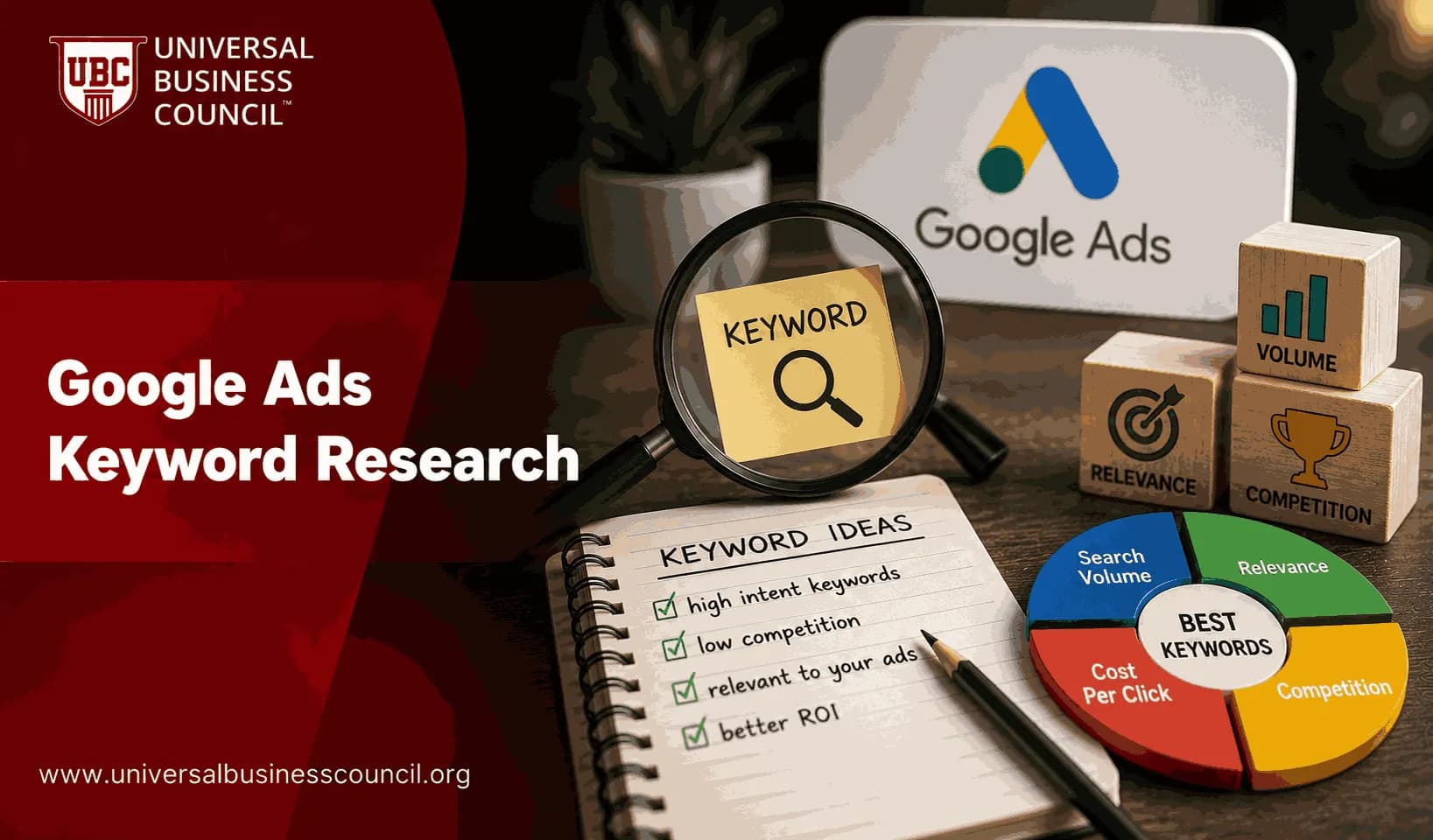
Google Ads keyword research has moved past giant exact-match lists. The better approach in 2026 is to build intent-driven keyword themes, let real search query data show you how buyers search, then protect proven winners with tighter match types, better ads, and landing pages that fit the query.
That sounds simple. It is not always tidy. I have seen accounts spend four figures on broad product terms that looked perfect in Keyword Planner, then produce zero qualified leads because the searchers were comparing definitions, not buying. The fix was not more keywords. It was sharper intent filtering, negative keywords, and separate ad groups for the problems customers actually paid to solve.

Modern keyword research also requires a solid understanding of search intent, campaign structure, Smart Bidding, and conversion measurement. A Certified Google Ads Expert credential helps professionals develop these practical skills, making it easier to build keyword strategies that attract qualified traffic instead of simply increasing clicks.
What Google Ads Keyword Research Means Now
Keyword research is still central to Google Ads, but the job has changed. Before 2020, many advertisers built large exact-match lists and tried to control every query. That model is weaker now because Google's match types, automation, and smart bidding use broader signals, including landing page content, account history, and user context.
High-performing advertisers now tend to work with keyword themes, not isolated phrases. A theme represents one user problem or intent. In paid search circles, this is often called a single theme ad group, or STAG. An emergency plumbing campaign might have separate themes for burst pipe repair, blocked drain service, and water heater repair. Each theme gets its own ad copy, landing page, and query review process.
To be blunt, SKAGs are usually overbuilt for modern accounts. They can still work in narrow situations, but they often create clutter without improving conversion quality. STAGs are cleaner, easier to manage, and better aligned with how Google Ads now matches searches.
What Makes a Keyword Convert?
A keyword converts when the person behind the search is close enough to action and your offer matches what they need. Volume alone is a weak signal. A keyword with 10,000 monthly searches can drain budget faster than a long-tail query with 90 searches if the intent is wrong.
Look for commercial and transactional intent
Most search intent falls into four buckets:
Informational: The user wants to learn, such as how does CRM software work.
Navigational: The user wants a specific site or brand.
Commercial: The user is comparing options, such as best CRM for real estate agents.
Transactional: The user is ready to act, such as CRM software demo or buy youth football cleats size 6.
For direct-response Google Ads campaigns, commercial and transactional searches deserve priority. Informational searches can still matter, but they often fit SEO, remarketing, or educational content better than high-CPC search campaigns.
Use buyer language, not boardroom language
Customers rarely search the way internal teams describe products. Sales calls, support tickets, chat logs, and demo notes often reveal the phrases that matter. A SaaS team may say account-based revenue platform. A prospect may search CRM for small real estate teams. The second phrase is usually more useful in Google Ads.
Good converting keywords often include words like price, cost, buy, compare, best, near me, demo, review, software for, emergency, same day, and quote. These modifiers are not magic. They simply show intent.
Identifying high-converting keywords is also part of a broader digital marketing strategy that includes audience research, customer journeys, content alignment, and performance measurement. A Certified Digital Marketing Expert credential helps professionals strengthen these capabilities, allowing keyword decisions to support long-term business growth rather than campaign metrics alone.
A Practical Workflow for Finding Keywords That Convert
1. Define the conversion first
Start with the business action you want: purchases, demo requests, phone calls, booked consultations, form fills, or free trial signups. Then define the acceptable cost per acquisition, return on ad spend, or lead quality threshold.
Skip this step and every keyword looks arguable. Leadership will not track your keyword count. They track revenue, pipeline, CPA, ROAS, lead-to-opportunity rate, and sometimes payback period.
2. Build 20 to 30 seed terms
Create a starter list that includes:
Product and service names
Category terms
Common customer problems
Location modifiers for local businesses
Competitor brand names, used carefully and within advertising policy
High-intent modifiers such as pricing, demo, quote, best, and compare
For a B2B CRM provider, seed terms might include enterprise CRM system, CRM demo, best CRM for real estate agents, CRM pricing, and CRM alternatives. For an ecommerce cleats retailer, seeds might include football cleats, youth football cleats, wide football cleats, and buy football cleats online.
3. Use Google Keyword Planner correctly
Google Keyword Planner remains the most useful free starting point because it gives you search volume ranges, competition indicators, and CPC estimates from Google's own system. Use Discover new keywords, enter your seed terms, then test your own URL and competitor URLs to see what Google associates with those pages.
Export the results to a spreadsheet. Do not accept the raw list as a campaign structure. Add columns for intent, theme, landing page, estimated CPC, volume, competition, funnel stage, and priority. This one spreadsheet habit prevents a lot of messy accounts.
4. Add competitor intelligence, but do not copy blindly
Tools such as SEMrush, Ahrefs, and SpyFu can show paid keyword patterns, ad copy, and visible competitor activity. Use them to find gaps and repeated commercial themes. If three serious competitors consistently bid on enterprise CRM pricing, that term probably has value.
Still, competitor data is not proof. You do not know their margins, close rates, or whether the campaign is even profitable. I once audited an account where a competitor's keyword set had been copied almost line by line. The campaign looked sophisticated. It also spent 38 percent of monthly budget on competitor comparison searches that generated form fills from students and job seekers, not buyers.
5. Use search listening for long-tail ideas
Tools do not catch every useful phrase. Search listening fills the gaps. Check Google autocomplete, People also ask, related searches, Reddit discussions where appropriate, customer calls, live chat transcripts, and sales objections.
Question-based tools such as AnswerThePublic can help surface natural language searches. Some will be poor paid search targets, but they may reveal the exact concern behind a buyer query: pricing, implementation time, compatibility, sizing, risk, or local availability.
Build Campaigns Around Themes, Then Let Data Work
Once you have a filtered list, group keywords by user intent. A practical target for many accounts is not thousands of keywords. It is often a focused list of 200 to 500 candidate keywords, organized into clear themes.
Modern Google Ads keyword research usually works best like this:
Create one ad group for one problem or intent.
Start with one or two descriptive long-tail broad match keywords.
Use smart bidding only when conversion tracking is reliable.
Review the search terms report weekly at first.
Add high-performing queries as exact match keywords.
Add irrelevant or low-quality queries as negative keywords.
This broad-to-exact workflow gives Google room to find real search behavior while giving you control once the data is clear. Exact match is not dead. It is just better used after performance is proven.
How to Prioritize Keywords Before You Spend
Score each candidate keyword against conversion potential. A simple 1 to 5 scoring system works well enough.
Intent: Is the searcher likely to buy, book, request a demo, or compare vendors?
Specificity: Does the query describe a clear product, service, use case, or problem?
Landing page fit: Can you send the click to a page that answers the query directly?
Economics: Does the likely CPC make sense against your CPA or ROAS target?
Volume: Is there enough search demand, often at least 50 to 100 monthly searches for a theme?
Do not chase difficulty scores or volume in isolation. A low-volume phrase like same day plumber for blocked drain can outperform a broad term like plumber near me because the need is urgent and specific.
Metrics That Tell You Which Keywords Actually Convert
After launch, your search terms report becomes your best research tool. Watch these metrics:
Conversion rate: Which queries turn clicks into leads or sales?
CPA: Which keywords acquire customers at an acceptable cost?
ROAS: For ecommerce, which terms return profitable revenue?
Impression share: Are you missing volume on queries that already convert?
Search term mapping: Are strong queries being matched to the right ad group and landing page?
Wasted spend: Which terms spend for 30 days without a conversion or qualified action?
Set a routine. Review search terms weekly for tactical changes. Do a deeper monthly review for theme structure, landing page gaps, bid changes, and budget shifts. This cadence is boring. It also saves money.
Effective keyword optimization also relies on technical skills such as analytics implementation, conversion tracking, CRM integration, data analysis, and marketing technology. A Tech Certification helps professionals build these complementary capabilities, enabling more accurate performance measurement and better-informed optimization decisions.
Connect PPC Keyword Data With SEO
PPC and SEO teams should share keyword data. Paid search tells you which queries convert quickly. SEO can capture related informational and comparison searches at a lower long-term cost.
Say CRM software demo converts well in Google Ads. Build or improve the demo landing page. If best CRM for real estate agents has high CPC but strong intent, it may deserve a comparison guide, case study page, or pillar page for organic search. Track organic traffic, assisted conversions, and lead quality, not rankings alone.
If you are formalizing these skills, related Universal Business Council courses in digital marketing strategy, marketing analytics, search advertising, and business management build on this exact topic. The strongest marketers connect keyword choices to customer economics, not just campaign settings.
Common Mistakes That Waste Budget
Starting too broad: Single-word keywords usually attract mixed intent and high costs.
Ignoring negatives: Terms like free, jobs, template, DIY, salary, and definition can quietly burn budget.
Sending every keyword to the homepage: Landing page mismatch lowers relevance and conversion rate.
Trusting tool volume over account data: Your own conversions matter more than generic estimates.
Changing bids too early: Give keywords enough clicks and conversion data before judging them.
Mixing many intents in one ad group: Your ad copy becomes vague, and vague ads convert poorly.
The Future of Google Ads Keyword Research
The direction is clear: fewer static lists, more intent themes, more automation, and more human judgment around customer language. Broad match and smart bidding will keep improving, but they still need clean conversion tracking, good landing pages, disciplined negative keyword work, and commercial sense.
Your next step is practical. Take one active campaign and rebuild its keyword review around themes. Pull the last 30 to 90 days of search terms. Mark converting queries, wasted spend, and irrelevant patterns. Add exact match keywords for proven winners, add negatives for poor-fit searches, and create one landing page improvement for the highest-value theme. That is where better Google Ads keyword research starts to show up in revenue.
As AI-driven search, intelligent automation, and privacy-focused measurement continue to reshape digital advertising, marketers benefit from understanding the technologies behind these changes. A Deep Tech Certification provides valuable knowledge of emerging technologies, helping professionals adapt to evolving advertising platforms and make more informed, data-driven marketing decisions.
FAQs
1. What is Google Ads keyword research?
Google Ads keyword research is the process of identifying the search terms potential customers use when looking for products, services, or information online. Selecting relevant keywords helps advertisers connect with users who are more likely to engage with their ads and complete desired actions.
2. Why is keyword research important for Google Ads?
Keyword research forms the foundation of a successful Google Ads campaign. Choosing the right keywords helps improve ad relevance, attract qualified traffic, optimize advertising budgets, and support higher conversion rates.
3. How do I start keyword research for Google Ads?
Begin by identifying your products, services, target audience, and business goals. Brainstorm topics your customers may search for, then use keyword research tools and search query analysis to expand your keyword list and identify valuable opportunities.
4. Which tools can I use for Google Ads keyword research?
Google Keyword Planner is one of the primary tools for discovering keyword ideas and estimating search volume. Advertisers may also use Google Search Console, Google Trends, Google Analytics, and other reputable SEO and PPC research tools to supplement their research.
5. What are long-tail keywords?
Long-tail keywords are longer, more specific search phrases that often reflect clear user intent. Although they typically have lower search volume than broad keywords, they may attract highly qualified traffic and improve conversion potential.
6. How do short-tail and long-tail keywords differ?
Short-tail keywords are broad, competitive terms with high search volume, while long-tail keywords are more detailed and targeted. Many advertisers use a combination of both to balance audience reach with conversion opportunities.
7. How does search intent affect keyword selection?
Understanding search intent helps advertisers match keywords to what users are trying to accomplish, whether they are researching, comparing options, or ready to make a purchase. Aligning keywords with user intent can improve ad relevance and campaign performance.
8. Should I target branded or non-branded keywords?
Branded keywords target searches that include your company or product names, while non-branded keywords reach users searching more generally. Many businesses use both strategies to capture existing demand and attract new potential customers.
9. What are negative keywords?
Negative keywords prevent your ads from appearing for irrelevant search queries. Regularly updating your negative keyword list helps reduce wasted clicks, improve traffic quality, and make advertising budgets more efficient.
10. How competitive should my keywords be?
Highly competitive keywords may generate significant traffic but often come with higher advertising costs. Less competitive keywords, especially niche and long-tail terms, can provide more cost-effective opportunities depending on your business goals.
11. How does keyword relevance impact campaign performance?
Relevant keywords improve the alignment between user searches, ad copy, and landing pages. Strong relevance can contribute to higher click-through rates (CTR), improved Quality Scores, and more efficient advertising costs.
12. How should I organize keywords in Google Ads?
Group closely related keywords into tightly themed ad groups so that each group has highly relevant ad copy and landing pages. Well-structured campaigns simplify optimization and improve the user experience.
13. How often should keyword research be updated?
Keyword research should be reviewed regularly to account for changing customer behavior, seasonal trends, new products, industry developments, and competitive activity. Ongoing refinement helps maintain campaign effectiveness.
14. Can AI help with keyword research?
AI-powered tools can identify keyword opportunities, analyze search trends, recommend related terms, predict user intent, and support campaign optimization. Human review remains important to ensure keywords align with business objectives and customer needs.
15. How do keyword match types affect research?
Broad Match, Phrase Match, and Exact Match influence how closely user searches must align with your selected keywords. Understanding match types helps advertisers balance audience reach, traffic quality, and campaign control.
16. What metrics should I evaluate when selecting keywords?
Important metrics include search volume, estimated cost per click (CPC), competition level, click-through rate (CTR), conversion rate, cost per acquisition (CPA), return on ad spend (ROAS), and overall business relevance.
17. What common keyword research mistakes should beginners avoid?
Common mistakes include targeting only high-volume keywords, ignoring search intent, overlooking long-tail opportunities, failing to use negative keywords, neglecting competitor analysis, and not reviewing actual search term reports after campaigns launch.
18. What keyword research trends are shaping Google Ads in 2026?
Key trends include AI-assisted keyword discovery, intent-based targeting, first-party data strategies, privacy-focused measurement, predictive analytics, Smart Bidding integration, Enhanced Conversions, and increased emphasis on semantic search rather than exact keyword matching.
19. How can I measure the success of my keyword strategy?
Evaluate keyword performance by monitoring conversions, conversion rate, Quality Score, cost per click (CPC), cost per acquisition (CPA), return on ad spend (ROAS), impression share, and search term reports. Continuous testing and optimization help improve long-term results.
20. What is the long-term outlook for Google Ads keyword research?
Keyword research will continue evolving as AI becomes better at understanding user intent, context, and search behavior. Businesses that regularly update their keyword strategies, combine data-driven insights with customer knowledge, and adapt to changing search trends will be well positioned for sustainable advertising success. Keywords may seem like simple words, but persuading them to cooperate with budgets, algorithms, and human curiosity remains one of digital marketing's favorite puzzles.
Related Articles
View All
Digital Marketing
How to Find High-Intent Long-Tail Keywords for Google Ads
Learn how to find high-intent long-tail keywords for Google Ads using Search Console, Keyword Planner, SERP mining, competitor data, and intent filters.
Digital Marketing
Google Ads Landing Pages: Best Practices for 2026
Learn how to build Google Ads landing pages that match search intent, load fast on mobile, improve conversion tracking, and support smarter campaign optimization.
Digital Marketing
How to Use Google Ads to Grow Your Business Online in 2026
Learn how to use Google Ads to grow your business online with AI-first campaigns, smarter bidding, stronger tracking, and disciplined optimization.
Trending Articles
The Role of Blockchain in Ethical AI Development
How blockchain technology is being used to promote transparency and accountability in artificial intelligence systems.
AWS Career Roadmap
A step-by-step guide to building a successful career in Amazon Web Services cloud computing.
Top 5 DeFi Platforms
Explore the leading decentralized finance platforms and what makes each one unique in the evolving DeFi landscape.