

How to Find High-Intent Long-Tail Keywords for Google Ads
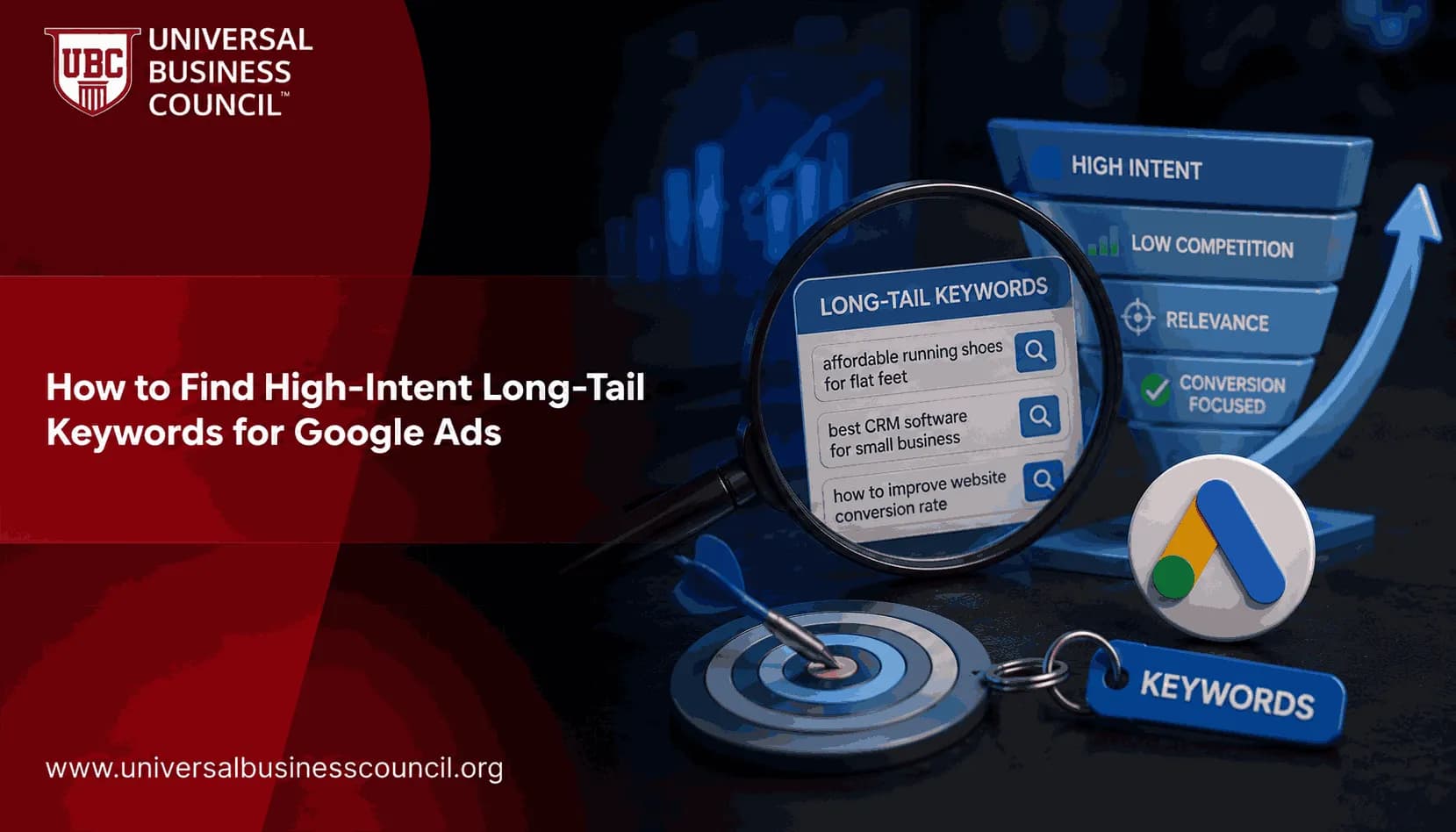
High-intent long-tail keywords for Google Ads come from combining your own performance data, Google Keyword Planner, live SERP research, competitor analysis, and strict intent filtering. Start with what already converts. Then expand carefully. Do not begin with a huge keyword export and hope the algorithm sorts it out. That is how small budgets disappear.
The aim is simple. You want the exact phrases people type when they are close to buying, booking, requesting a quote, or comparing providers. Google Ads Help recommends specific, relevant keywords because they improve campaign performance. And there is a well-documented pattern in paid search: conversion rates tend to climb as keyword length increases, even though traffic volume drops. Less traffic can still mean more revenue.

Developing this level of keyword selection takes more than learning a few research tools. Many PPC professionals build a stronger foundation by earning a Certified Google Ads Expert credential, which covers keyword strategy, campaign structure, conversion tracking, bidding, and optimization techniques that support long-term advertising performance.
What makes a keyword high-intent and long-tail?
A long-tail keyword is a longer, more specific search phrase. Three or more words is a handy rule, but intent matters more than length. CRM software is broad. Best CRM software for real estate agents tells you far more about the buyer, the category, and the use case.
High-intent keywords carry signals that the searcher is moving toward action. Watch for words like these:
Buy, order, book, schedule
Price, pricing, cost, quote
Near me, in [city], open now
Company, agency, provider, consultant
Best, reviews, comparison, alternative
To be blunt, not every long query deserves ad budget. How does Google Ads work is a fine content topic, but it is rarely a direct-response keyword. Google Ads agency pricing for SaaS startups is a different animal.
Step 1: Pull real queries from Google Search Console
Your best keyword source is usually not a keyword tool. It is your own data.
Open Google Search Console and go to Performance > Search results. Turn on average position, then export queries for the last three to six months. This report is where you find long-tail queries your site already earns impressions or rankings for.
Filter for phrases that show buying or contact intent. Look for patterns like these:
Service plus city
Product plus use case
Problem plus solution
Brand alternative searches
Price or quote searches
Here is a detail that trips up newer advertisers. A query sitting at position 8 with modest organic clicks can still be a strong paid search candidate. If the live SERP shows ads, local packs, or shopping results, commercial intent is already there. You are not guessing.
Keyword research becomes even more effective when it is supported by a broader understanding of customer journeys, analytics, and marketing strategy. A Certified Digital Marketing Expert program helps professionals connect search intent with business goals, enabling smarter campaign planning and more informed advertising decisions.
Step 2: Mine the Google Ads search terms report
If you already run campaigns, check the search terms report. This shows the actual searches that triggered your ads. It is not perfect, because Google omits some low-volume queries for privacy reasons, but it is one of the most practical places to find high-intent long-tail keywords for Google Ads.
Sort by conversions, cost per conversion, conversion value, or lead quality if you import offline conversion data from HubSpot, Salesforce, or another CRM. Do not stop at form fills. In many B2B accounts, leadership cares more about qualified pipeline than raw lead count. A keyword that produces three sales-qualified leads can beat one that produces thirty weak ebook downloads.
Pull out search terms that have:
Clear commercial intent
Acceptable cost per conversion
Sales feedback that confirms lead quality
Enough impressions to test further
Add them as phrase match or exact match keywords. Add irrelevant patterns as negatives. This small maintenance habit saves real money.
Step 3: Use Google Keyword Planner with intent-heavy seed terms
Keyword Planner is still useful because it is built for Ads data, not just SEO research. In Google Ads, go to Tools > Keyword Planner > Discover new keywords. Enter seed terms that include intent modifiers, not only broad category terms.
For example, instead of starting with accounting software, test:
accounting software for small business
cloud accounting software pricing
best accounting software for contractors
accounting software demo
Set your location and time range before you judge the numbers. A local service business in Manchester, Dubai, or Toronto should not rely on national averages. Export the list to Google Sheets, then filter by word count, competition, average monthly searches, and top-of-page bid estimates.
A practical target is 10 to 20 tightly related keywords per ad category. That scale keeps each ad group focused without becoming unmanageable.
Step 4: Mine Google SERPs for natural language
Keyword tools miss how people actually ask questions. Google SERP features fill that gap.
Autocomplete
Type your seed keyword into Google and pause. Autocomplete predictions come from real search behaviour. Try adding a space and cycling through letters. For example, emergency plumber a, emergency plumber b, and so on. It is tedious. It works.
People Also Ask
The People Also Ask boxes are a solid source of long-tail ideas. Questions such as how much does AC repair cost in Dallas can become ad keywords, landing page FAQ sections, or sitelink copy.
Be selective. Many PAA questions are informational. If the top results are blog posts and DIY videos, keep the phrase for content or remarketing, not a bottom-funnel Search campaign.
Related searches
Scroll to the bottom of the results page and review the related searches. Click the best ones, then repeat. This surfaces language clusters you will not find from a single Keyword Planner run.
Step 5: Analyse competitor keywords without copying blindly
Tools such as Semrush and Ahrefs show the keywords competitors rank for and, in some cases, bid on. Filter by word count, keyword difficulty, and intent labels.
Export keywords from three to five competitors. Then filter for:
Four or more words
Transactional or commercial-investigation intent
Low to moderate competition
Clear match to your offer
Do not copy every competitor keyword. I have watched accounts burn budget on competitor-inspired phrases that looked relevant in a spreadsheet but pulled in the wrong buyer. If you sell enterprise implementation, free CRM templates is probably a poor fit even if a rival ranks for it.
Step 6: Listen to customers, forums, and sales calls
Long-tail keywords often come from messy human language. Read Reddit threads, Quora answers, niche forums, review sites, support tickets, live chat logs, and sales call notes. Online communities are a rich source of question-based keyword ideas.
Look for repeated phrases. Customers rarely say enterprise resource planning solution on a sales call. They say, we need software that connects inventory and finance. That phrase may not have huge volume, but it can lead you to valuable searches like inventory and accounting software for manufacturers.
Step 7: Use AI for expansion, then verify everything
AI tools can help you brainstorm and cluster keyword ideas. Ask for long-tail variations by industry, audience, pain point, location, and buying stage. Then validate every idea.
A good prompt: Generate high-intent long-tail Google Ads keyword ideas for [service] aimed at [audience] in [location]. Group them by transactional, commercial investigation, and informational intent.
Never paste AI output straight into Google Ads. Check search volume in Keyword Planner. Search the phrase yourself. Review the SERP. Confirm your landing page answers the query. AI is useful for ideation, not final judgment.
Modern keyword research also relies on technologies such as AI-powered analytics, CRM integrations, APIs, cloud platforms, and advanced data measurement tools. A broader Tech Certification can help marketers understand these technical systems and use them more effectively to improve campaign performance and reporting.
Step 8: Validate intent before you spend
For each candidate keyword, search it on Google and study the page. You want to know what Google thinks the intent is.
High commercial intent usually shows:
Paid search ads
Shopping results
Local map packs
Service pages
Comparison pages
Review and pricing pages
If the SERP is dominated by tutorials, definitions, and academic resources, the keyword is probably wrong for direct-response Ads. Use it for SEO, lead nurturing, or a low-cost awareness campaign instead.
Step 9: Map keywords to ad groups and landing pages
High-intent long-tail keywords only work when the ad and landing page match the query. Specific keywords lift ad relevance because they support a tighter campaign structure.
Group keywords by one clear theme:
Service type
Product category
Location
Use case
Problem solved
Buyer segment
Then write ads that echo the intent. A search for Google Ads consultant for ecommerce brands should not land on a generic marketing services page. Send it to a page that mentions ecommerce PPC, product feeds, Shopping campaigns, ROAS, conversion tracking, and tools such as Google Merchant Center and Google Analytics 4.
Common mistakes to avoid
Chasing volume first: Broad terms can drain budget before you gather useful data.
Ignoring match types: Phrase and exact match give you more control over proven long-tail queries.
Skipping negatives: Add terms like free, jobs, template, course, or definition when they do not fit your offer.
Trusting tool intent labels blindly: Always check the live SERP.
Using one landing page for every query: Relevance affects Quality Score, conversion rate, and user trust.
Build the habit, not just the list
Finding high-intent long-tail keywords for Google Ads is not a one-time research task. Review Search Console monthly. Check search terms weekly in active accounts. Refresh Keyword Planner data each quarter. Feed sales feedback into your keyword decisions, especially when lead quality matters more than form volume.
If you are building professional capability in paid search, connect this workflow with Universal Business Council learning paths in digital marketing, marketing strategy, and analytics. Your next step is practical: export your last 90 days of search terms, tag every converting query with its intent type, and build one tightly focused exact match ad group from the best 10 to 20 phrases.
As artificial intelligence, predictive search, marketing automation, and privacy-focused technologies continue to reshape paid advertising, professionals who combine marketing expertise with technical knowledge will be better prepared for future opportunities. A Deep Tech Certification provides structured learning in these emerging technologies, helping marketers stay competitive as digital advertising continues to evolve.
FAQs
1. What are high-intent long-tail keywords?
High-intent long-tail keywords are specific search phrases, typically containing three or more words, that indicate a user is close to taking action, such as making a purchase, requesting a quote, or booking a service. These keywords often have lower search volume than broad terms but can attract more qualified traffic.
2. Why are long-tail keywords important for Google Ads?
Long-tail keywords help advertisers target users with clear search intent, reduce competition for broad terms, improve ad relevance, and make advertising budgets more efficient. They are particularly valuable for businesses seeking qualified leads rather than large volumes of general traffic.
3. What is search intent?
Search intent is the purpose behind a user's search query. In Google Ads, understanding whether a search is informational, navigational, commercial, or transactional helps advertisers choose keywords that align with campaign objectives and customer needs.
4. How do you identify high-intent keywords?
Look for keywords that include action-oriented terms such as "buy," "hire," "quote," "pricing," "near me," "book," "best," "service," or specific product names. These searches often indicate that users are actively evaluating or preparing to make a purchasing decision.
5. Which tools help find long-tail keywords?
Common keyword research tools include Google Keyword Planner, Google Trends, Google Search autocomplete, the "People Also Ask" section, Google Search Console, and third-party SEO and PPC keyword research platforms. Combining multiple sources can provide broader insights into customer search behavior.
6. How does Google Keyword Planner help?
Google Keyword Planner provides keyword ideas, estimated search volume, competition levels, and bid estimates. It helps advertisers discover relevant long-tail opportunities that align with their products, services, and advertising goals.
7. Should businesses use Google Autocomplete?
Yes. Google Autocomplete can reveal common search phrases that users frequently enter. These suggestions often reflect real-world search behavior and can inspire valuable long-tail keyword ideas for advertising campaigns.
8. How can competitor research help?
Analyzing competitors' websites, advertisements, product pages, and content strategies can uncover keyword opportunities and customer language. While businesses should develop their own strategy, competitor research can reveal useful gaps and trends.
9. Why is keyword specificity valuable?
Specific keywords often indicate clearer purchase intent and can attract users who know exactly what they need. Although these keywords may generate fewer clicks, they frequently produce higher-quality traffic and stronger conversion potential.
10. How do negative keywords support long-tail strategies?
Negative keywords prevent advertisements from appearing for irrelevant searches. Combining high-intent long-tail keywords with a well-maintained negative keyword list helps improve traffic quality and reduce unnecessary advertising costs.
11. How should long-tail keywords be organized?
Group closely related keywords into dedicated ad groups based on products, services, customer intent, or themes. Organized campaign structures improve ad relevance, simplify optimization, and create a better user experience.
12. How does ad copy support long-tail keywords?
Ad copy should naturally incorporate targeted long-tail keywords while addressing the user's specific needs. Matching headlines and descriptions to search intent can improve click-through rates and strengthen message consistency.
13. Why should landing pages match keyword intent?
Landing pages should deliver exactly what the advertisement promises. Aligning page content with keyword intent helps improve user satisfaction, increase conversion rates, and create a more seamless customer journey.
14. How does AI help identify keyword opportunities?
AI-powered tools can analyze search trends, generate keyword suggestions, identify emerging search patterns, group related keywords, and recommend optimization opportunities. Human oversight remains important to ensure relevance and strategic alignment.
15. What metrics should advertisers monitor?
Key metrics include click-through rate (CTR), conversion rate, cost per click (CPC), cost per acquisition (CPA), Quality Score, return on ad spend (ROAS), impression share, conversion value, and search term performance.
16. What common mistakes should advertisers avoid?
Common mistakes include targeting keywords that are too broad, ignoring search intent, overlooking negative keywords, failing to review search term reports, sending users to irrelevant landing pages, and optimizing solely for traffic rather than conversions.
17. Are long-tail keywords effective for local businesses?
Yes. Local businesses often benefit from combining long-tail keywords with geographic modifiers such as city names, neighborhoods, or phrases like "near me." This approach helps attract nearby customers with strong purchase intent.
18. How often should keyword research be updated?
Keyword research should be reviewed regularly because search behavior, competition, seasonal trends, and customer preferences change over time. Ongoing analysis helps advertisers discover new opportunities and refine existing campaigns.
19. Can long-tail keywords improve Google Ads ROI?
Long-tail keywords can contribute to stronger ROI by attracting more qualified visitors, improving conversion rates, reducing wasted clicks, and helping advertisers allocate budgets more efficiently. Actual results depend on campaign execution, competition, and market conditions.
20. How can businesses find high-intent long-tail keywords for Google Ads?
Businesses can identify high-intent long-tail keywords by understanding customer search intent, using keyword research tools, analyzing search trends, reviewing competitor insights, studying search term reports, and continuously refining keyword lists based on campaign performance. When combined with relevant ad copy, optimized landing pages, accurate conversion tracking, and thoughtful negative keyword management, long-tail strategies can help improve click quality, conversions, and overall advertising efficiency. In paid search, the most valuable keyword is often not the one with the highest search volume. It's the one quietly searched by someone who already knows what they want and is ready to act, sparing everyone the ancient ritual of paying for clicks that were never going anywhere.
Related Articles
View All
Digital Marketing
Google Ads Keyword Research: How to Find Keywords That Convert in 2026
Learn how Google Ads keyword research works in 2026, from intent themes and Keyword Planner to search query mining, match types, and conversion metrics.

Digital Marketing
How to Use Negative Keywords in Google Ads to Stop Wasted Spend
Learn how negative keywords in Google Ads reduce wasted spend, improve traffic quality, and help you build a cleaner PPC optimization process.

Digital Marketing
Google Ads Remarketing Guide: How to Re-Engage Website Visitors
A practical Google Ads remarketing guide for re-engaging website visitors with audience segmentation, dynamic ads, RLSA, first-party data, and better measurement.
Trending Articles
The Role of Blockchain in Ethical AI Development
How blockchain technology is being used to promote transparency and accountability in artificial intelligence systems.
AWS Career Roadmap
A step-by-step guide to building a successful career in Amazon Web Services cloud computing.
Top 5 DeFi Platforms
Explore the leading decentralized finance platforms and what makes each one unique in the evolving DeFi landscape.