

Google Ads Remarketing Guide: How to Re-Engage Website Visitors
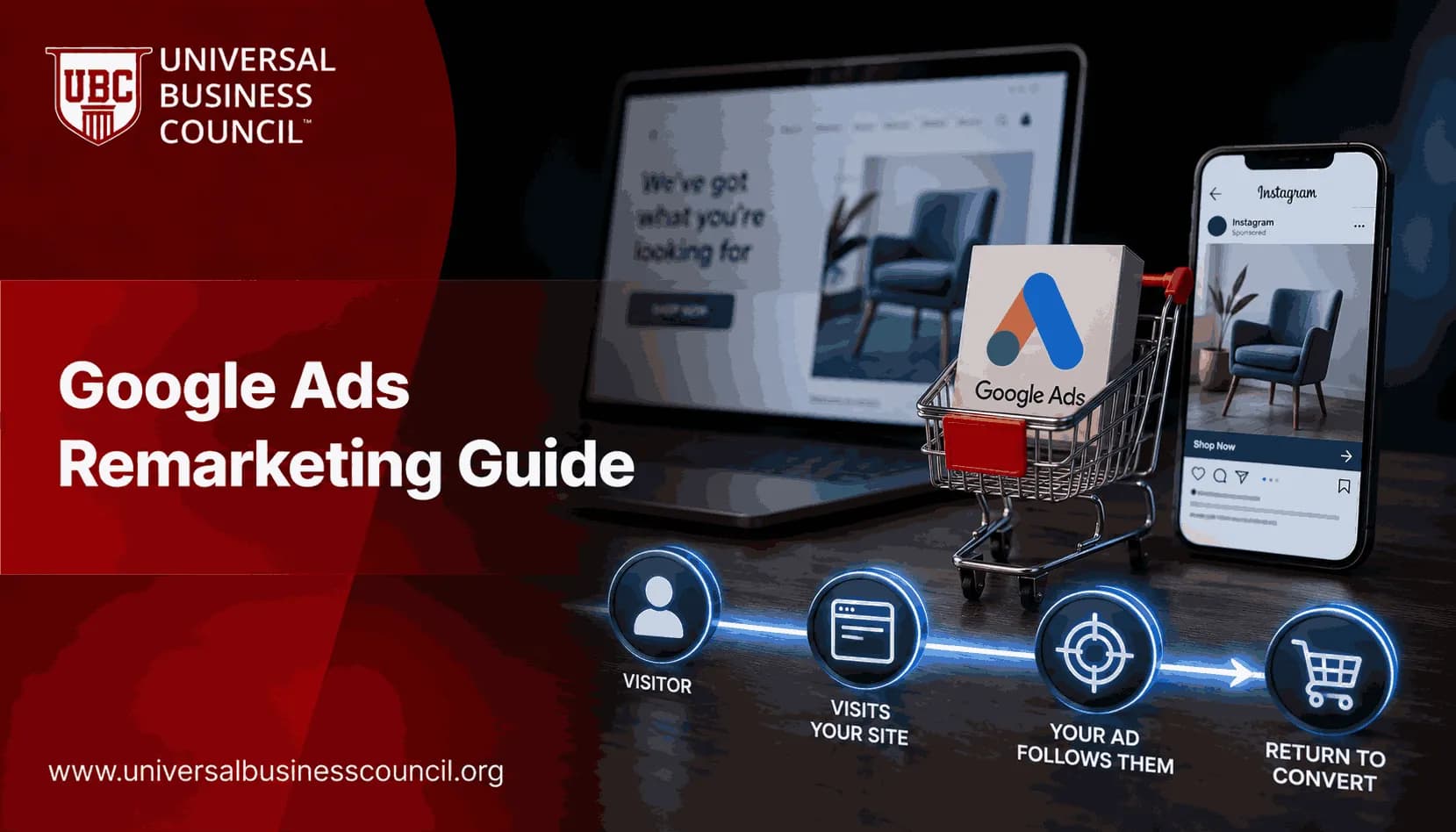
This Google Ads remarketing guide gives you a practical way to re-engage website visitors who left without buying, booking, subscribing, or requesting a demo. Remarketing works because the audience has already shown intent. The mistake is treating every visitor the same. A pricing-page visitor, a cart abandoner, and someone who bounced after five seconds should not see the same ad.
Google defines remarketing as adding website or app visitors to audience lists, then showing tailored ads to those lists across Google properties and the Google Display Network. The best programs are built on first-party data, consent-aware tagging, AI-supported audience segments, and clear exclusions. Not just a pixel and a banner ad.

As remarketing strategies become more sophisticated, marketers increasingly need a deeper understanding of audience segmentation, campaign optimization, and conversion tracking. Earning a Certified Google Ads Expert credential can help professionals develop the practical skills required to build high-performing remarketing campaigns that align with modern advertising best practices.
What Google Ads Remarketing Actually Does
Google Ads remarketing uses the Google tag, Google Analytics audiences, app activity, YouTube engagement, or Customer Match data to build audience lists. You can then target those audiences across Search, Display, Shopping, YouTube, Demand Gen, and app inventory.
The core job is simple: bring qualified people back when they are more likely to act. Standard display remarketing lists generally need at least 100 active users in the last 30 days, while remarketing lists for search ads, often called RLSA, typically need about 1,000 active users. Small sites need to plan around that. If your traffic is thin, build lists around high-intent behavior first.
Effective remarketing is only one part of a successful customer acquisition strategy. Professionals who want to strengthen their expertise across paid advertising, customer journeys, analytics, content strategy, and campaign optimization often pursue a Certified Digital Marketing Expert program to build a broader understanding of digital marketing performance.
Core Google Ads Remarketing Formats
Standard Display Remarketing
Standard display remarketing shows ads to previous visitors as they browse sites and apps in the Google Display Network. It is useful for awareness and reminders, but blunt if you use one broad all-visitors list.
Use it for:
Blog readers who need a deeper educational offer
Product-page visitors who did not add to cart
Pricing-page visitors who did not request a quote
Dynamic Remarketing
Dynamic remarketing pulls products or services from a feed and shows ads based on what users viewed, added to cart, or started to buy. For ecommerce, travel, and large product catalogs, this is usually stronger than static display.
Personalized product feeds tend to lift conversion rates among returning cart abandoners, sometimes sharply. But do not treat any single benchmark as a guarantee. Feed quality, pricing, delivery terms, and landing-page speed still decide whether the lift shows up in your account.
Remarketing Lists for Search Ads
RLSA lets you adjust bids, keywords, and ad copy when past visitors search again on Google. This is one of the cleanest remarketing plays because it combines prior engagement with active search intent.
Here is an example. You can bid normally on the keyword project management software, but bid higher when the searcher visited your comparison page in the last 14 days. You can also write ad copy that addresses hesitation, such as implementation time, integrations, or pricing transparency.
YouTube and Video Remarketing
YouTube remarketing targets people who watched your videos, subscribed to your channel, or interacted with video content. It works well when the sale needs education. Think software demos, certification programs, consulting services, or high-value B2B offers.
Customer Match Remarketing
Customer Match uses hashed customer data, such as email addresses, to create audiences from CRM records. This is valuable for renewals, upsell, cross-sell, and reactivation. It also reduces dependence on third-party cookies, which is why many serious advertisers now treat CRM hygiene as a media performance issue.
How to Build Remarketing Audiences That Do Not Waste Budget
Do not start with one audience called all visitors. That is beginner work. Build lists around behavior and intent.
High intent: cart abandoners, checkout starters, demo-page visitors, pricing-page visitors, quote-form starters.
Medium intent: product viewers, case-study readers, webinar-page visitors, repeat visitors.
Low intent: blog readers, homepage-only visitors, short sessions, accidental clicks.
Exclusions: converted leads, recent buyers, job seekers, support-page visitors, current customers when the offer is for prospects.
A practical audit detail. The first thing I check in a struggling remarketing account is whether converted users are excluded. It is common to find demo-request leads still seeing acquisition ads for 30 days. That burns impressions, irritates sales prospects, and makes the campaign look better than it is, because returning leads may convert again through another form.
Exclude very short sessions too, when you can. In Google Analytics 4, audiences can be built from events and engagement conditions, which lets you avoid chasing visitors who spent only a few seconds on the site.
Messaging: Match the Ad to the Visitor's Stage
Good remarketing feels like a useful reminder. Bad remarketing feels like being followed.
Use message mapping:
Cart abandoners: show the exact product, shipping reassurance, return policy, or a limited incentive.
Pricing-page visitors: address value, comparison, implementation effort, or proof.
Blog readers: offer a guide, checklist, webinar, or course pathway rather than a hard sales pitch.
Past customers: promote complementary products, renewal options, or advanced training.
Keep the design recognizable. Use your logo, consistent colors, and a call to action that matches the landing page. If the ad says Compare plans, do not send users to a generic homepage. That mismatch costs conversions.
Bidding, Frequency, and Budget Control
Remarketing is not automatically profitable. It is just closer to the money.
Use separate budgets for high-value segments when you can. Cart abandoners and demo-page visitors deserve different bids from casual blog readers. In Search, RLSA bid adjustments help you compete harder when the user has already engaged with your site.
Frequency matters. If someone sees the same banner 25 times in a week, you may win the impression report and lose the person. Apply frequency caps for display and video campaigns, rotate creative, and shorten membership duration for time-sensitive audiences. A 7-day cart list is often more useful than a 180-day one.
Measure more than last-click conversions. Remarketing often targets users who were already likely to return. To be blunt, last-click reports can flatter the channel. Look at assisted conversions, audience segment performance, new versus returning customer value, and, where volume allows, holdout or conversion lift testing.
First-Party Data and AI in Modern Remarketing
The future of Google Ads remarketing is less about chasing cookies and more about building reliable consented audiences. Google and experienced practitioners keep pointing advertisers toward first-party data, Customer Match, Google tag implementation, Consent Mode, and in-platform audience segments.
AI is also changing list building and optimization. Predictive audience segments can produce meaningful conversion-rate uplift compared with non-remarketed traffic. Treat any headline figure as a benchmark, not a promise. The accounts that gain most usually have clean conversion tracking, enough data volume, and a clear audience structure.
Expansion audiences also blur the line between remarketing and prospecting. Google can use machine learning to find people who share characteristics with your remarketing lists. This can work, but do not let it hide poor economics. Watch CAC, LTV, ROAS, conversion rate, and qualified pipeline, not just clicks.
As digital advertising increasingly relies on AI, analytics platforms, cloud technologies, privacy frameworks, and marketing automation, many professionals complement their marketing expertise with a broader Tech Certification. Developing cross-functional technical knowledge helps marketers better understand the systems that power audience targeting, measurement, and campaign optimization.
A Simple Google Ads Remarketing Setup Checklist
Install the Google tag across all key pages.
Configure primary conversions, such as purchases, lead forms, calls, or trial signups.
Link Google Ads with Google Analytics 4 for behavior-based audiences.
Create audience lists by intent level, not just all visitors.
Exclude converted users and irrelevant traffic.
Build dynamic remarketing feeds if you sell products, travel, education programs, or catalog-based services.
Use RLSA for high-intent keywords and returning visitors.
Test responsive display ads and multiple creative sizes.
Set frequency caps and review placement quality.
Report incrementality, ROAS, CAC, and lead quality, not only clicks.
Where Professionals Should Build Skill Next
If you manage campaigns, you need more than platform familiarity. You need audience strategy, analytics judgment, budget discipline, and privacy-aware data handling. This is where structured professional education helps.
Connect this topic with relevant Universal Business Council learning paths in digital marketing strategy, marketing analytics, and business management. Pairing hands-on Google Ads practice with formal certification helps you explain campaign decisions to finance, sales, and leadership teams.
Final Action Plan
Start with one high-intent remarketing build this week. Create a 14-day audience for cart abandoners, demo-page visitors, or pricing-page visitors. Exclude converters. Write stage-specific ad copy. Set a frequency cap. Then compare conversion rate, CAC, and ROAS against your non-remarketing traffic.
Once that works, expand into dynamic remarketing, RLSA, YouTube remarketing, and Customer Match. Keep the structure tight. Remarketing performs best when you stop chasing everyone and focus on the visitors who gave you a real buying signal.
As marketing technology continues to evolve through artificial intelligence, data engineering, automation, and privacy-focused infrastructure, professionals can benefit from expanding their technical expertise alongside their marketing skills. A Deep Tech Certification provides a structured way to understand emerging technologies that are reshaping digital advertising, customer engagement, and data-driven business strategy.
FAQs
1. What is Google Ads remarketing?
Google Ads remarketing is a digital advertising strategy that allows businesses to show ads to people who have previously visited their website, used their mobile app, or interacted with their content. It helps brands reconnect with potential customers who have already shown interest but did not complete a desired action.
2. How does Google Ads remarketing work?
Remarketing works by using tags, cookies, or other privacy-compliant audience signals to identify eligible users who have previously interacted with your website or app. These users can then be included in audience lists and shown relevant ads across Google's advertising network, subject to user consent and applicable privacy regulations.
3. Why is remarketing important for digital marketing?
Most visitors do not convert during their first visit. Remarketing gives businesses another opportunity to stay visible, reinforce brand awareness, answer customer objections, and encourage users to return and complete purchases, sign-ups, or other conversions.
4. What are the different types of Google Ads remarketing?
Google Ads supports several remarketing approaches, including standard remarketing, dynamic remarketing, video remarketing, app remarketing, Customer Match, and remarketing lists for search ads (RLSA). The available options depend on campaign objectives, audience eligibility, and account configuration.
5. What is dynamic remarketing?
Dynamic remarketing automatically displays personalized ads featuring products or services that users previously viewed on a website or app. It is commonly used by e-commerce businesses to promote relevant products and encourage returning visitors to complete their purchases.
6. What is Remarketing Lists for Search Ads (RLSA)?
RLSA allows advertisers to customize search campaigns for users who have previously visited their website. Businesses can adjust bids, tailor ad messaging, or target specific search queries for audiences already familiar with their brand.
7. How do you set up Google Ads remarketing?
A typical setup includes linking Google Ads with Google Analytics (where appropriate), installing the Google tag, defining audience segments, configuring conversion tracking, and creating remarketing campaigns. Businesses should also ensure their implementation complies with applicable privacy laws and Google's advertising policies.
8. What audience segments should businesses create?
Useful audience segments include all website visitors, product page viewers, shopping cart abandoners, previous purchasers, repeat customers, high-value visitors, newsletter subscribers, and users who visited specific service pages. Segmenting audiences helps deliver more relevant advertising.
9. How long should a remarketing audience last?
Audience duration depends on the buying cycle and business goals. Short purchase cycles may benefit from remarketing windows of a few days or weeks, while products with longer consideration periods may justify audience durations of several months, provided they remain appropriate and compliant with privacy requirements.
10. What are the benefits of Google Ads remarketing?
Remarketing can improve brand recall, increase conversion opportunities, personalize advertising, enhance return on ad spend (ROAS), strengthen customer engagement, and support cross-selling or upselling initiatives by reaching audiences already familiar with the business.
11. How can businesses avoid overwhelming users with remarketing ads?
Advertisers can use frequency caps, rotate ad creatives, exclude converted customers when appropriate, refresh campaign messaging regularly, and carefully manage audience durations. These practices help reduce ad fatigue and create a more positive user experience.
12. How does remarketing improve conversion rates?
Remarketing targets users who have already expressed interest in a business, making them more likely to engage than completely new audiences. Relevant messaging, timely offers, and personalized ads can encourage users to return and complete desired actions.
13. What role does AI play in Google Ads remarketing?
Google's AI can help optimize bidding strategies, audience targeting, creative combinations, campaign performance, and budget allocation. AI-driven automation aims to improve efficiency, though advertisers should continue monitoring campaigns and adjusting strategies based on business objectives.
14. How does remarketing support e-commerce businesses?
E-commerce companies frequently use remarketing to recover abandoned shopping carts, promote recently viewed products, recommend complementary items, announce promotions, and encourage repeat purchases from existing customers.
15. What metrics should businesses monitor?
Key performance indicators include click-through rate (CTR), conversion rate, cost per acquisition (CPA), return on ad spend (ROAS), impressions, audience size, frequency, engagement metrics, and overall campaign profitability.
16. What are common remarketing mistakes?
Common mistakes include targeting overly broad audiences, showing repetitive ads, neglecting audience segmentation, failing to exclude recent converters, ignoring mobile optimization, using outdated creative assets, and overlooking conversion tracking accuracy.
17. How does remarketing fit into a full-funnel marketing strategy?
Remarketing supports the consideration and decision stages of the customer journey by re-engaging interested users after their initial visit. When combined with SEO, content marketing, paid search, email marketing, and social media campaigns, it can strengthen overall marketing performance.
18. Are there privacy considerations for remarketing?
Yes. Businesses should comply with applicable privacy regulations, obtain required user consent where necessary, maintain transparent privacy policies, and follow Google's advertising and data usage requirements. Privacy compliance is an essential part of any remarketing strategy.
19. What industries benefit most from Google Ads remarketing?
Remarketing is widely used across e-commerce, SaaS, healthcare, education, travel, financial services, automotive, legal services, real estate, hospitality, and professional services. Any business with website traffic and measurable conversion goals can potentially benefit from a well-managed remarketing campaign.
20. How can businesses maximize success with Google Ads remarketing?
Successful remarketing combines accurate audience segmentation, compelling creative assets, AI-assisted optimization, conversion tracking, ongoing testing, and responsible data practices. Businesses that continuously refine campaigns based on performance insights are often better positioned to improve engagement and conversion outcomes over time. Remarketing is less about chasing visitors around the internet and more about reminding genuinely interested people that your business still exists. The internet already has enough awkward following behavior without marketers making it worse.
Related Articles
View All
Digital Marketing
Google Ads Certification Guide: How to Prepare and Pass
Prepare for Google Ads certification with exam rules, study tips, Skillshop strategy, practice steps, and practical advice to pass with confidence.
Digital Marketing
Google Ads PPC Guide: How Pay-Per-Click Advertising Works
Learn how Google Ads PPC works, from keywords and auctions to CPC, campaign types, tracking, optimization, and practical PPC strategy.
Digital Marketing
Google Ads for Small Businesses: A Limited Budget Guide
A practical Google Ads guide for small businesses with limited budgets, covering CPC planning, search campaigns, tracking, bidding, keywords, and optimization.
Trending Articles
The Role of Blockchain in Ethical AI Development
How blockchain technology is being used to promote transparency and accountability in artificial intelligence systems.
AWS Career Roadmap
A step-by-step guide to building a successful career in Amazon Web Services cloud computing.
Top 5 DeFi Platforms
Explore the leading decentralized finance platforms and what makes each one unique in the evolving DeFi landscape.