

How Social Media Marketing Can Boost Sale?
 Smita
Smita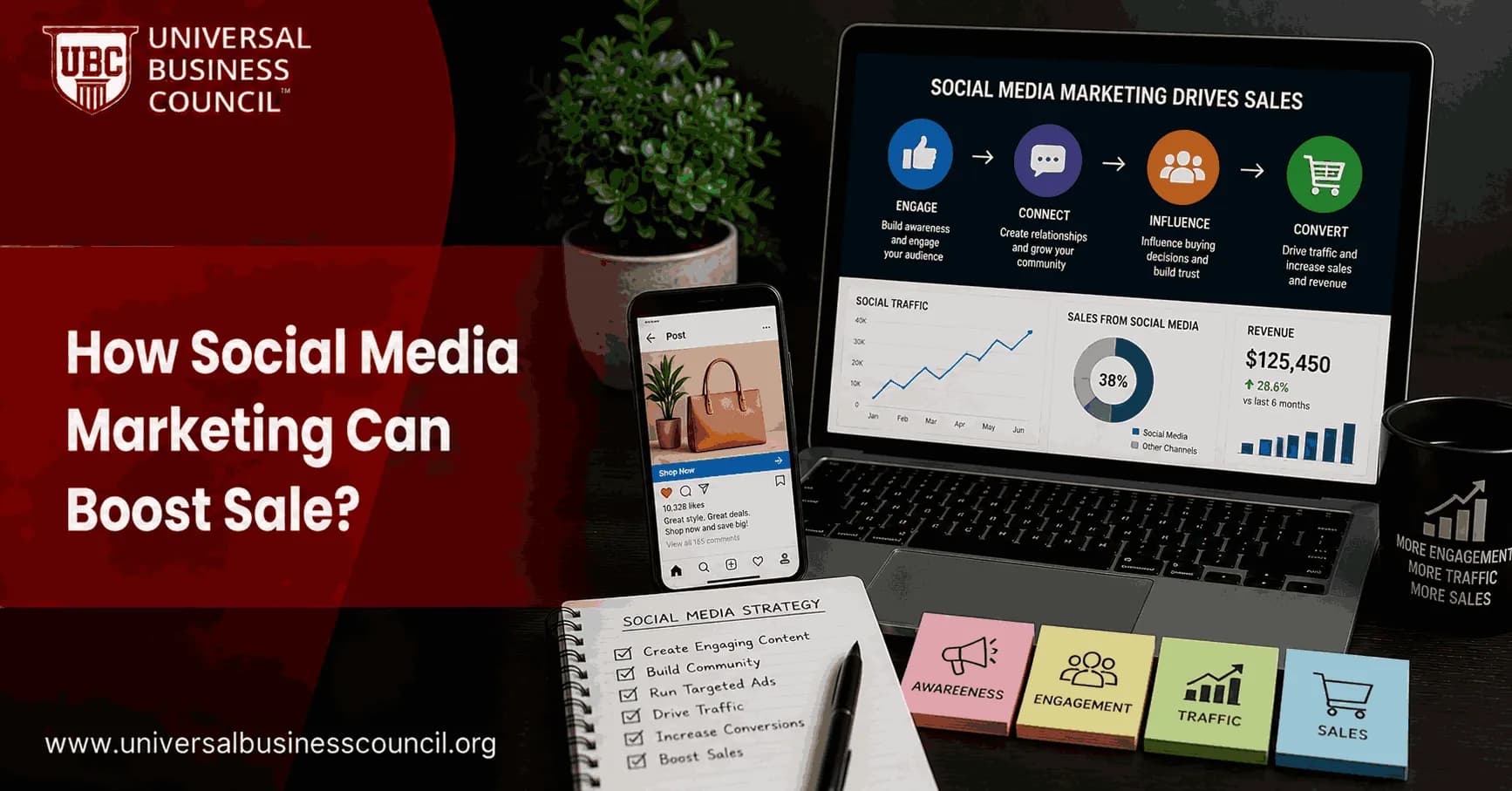
Social media has moved well past its early role as a branding and awareness channel. In 2026, the conversation among marketers has shifted from whether social media builds visibility to exactly how much revenue can be directly attributed to it. That shift matters because it changes how budgets get allocated and how businesses judge whether their social spend is actually paying off. A widely cited 2026 benchmark puts average social media advertising performance at roughly 5.20 dollars in revenue for every dollar spent, a return of about 420 percent, and global social media ad spend for the year is estimated between 268 billion and 338.75 billion dollars, a figure brands would not keep increasing if the channel were not converting. For marketers building real expertise in this space, a credential such as the Certified Digital Marketing Expert provides the structured foundation needed to turn these broad industry numbers into a strategy that actually fits a specific brand and audience.
The clearest proof that social media drives real purchasing behavior comes directly from consumers rather than platform marketing decks. Roughly 76 percent of social media users report having purchased a product they first discovered in a brand's post, which confirms that discovery-to-purchase behavior on these platforms is genuine rather than a marketing talking point. Social commerce specifically is projected to reach 908.5 billion dollars globally in 2026, and social networks overall are estimated to generate around 15.2 percent of total online sales this year.

The Specific Ways Social Media Actually Drives Sales
Social media boosts sales through several distinct mechanisms, not one single tactic, and understanding each one helps explain why a well-rounded strategy consistently outperforms a narrow one.
Video content: video-based campaigns generate roughly 34 percent higher conversion rates than static ads across platforms, and short-form video has become one of the highest-return content formats available to brands of any size.
Social commerce and native checkout: platforms are increasingly building in-app shopping and checkout features directly into the user experience, removing friction between discovery and purchase. TikTok Shop currently leads platform-specific conversion rates at around 3.8 percent, ahead of Instagram Shopping at 2.1 percent.
User-generated content and reviews: product pages with at least one customer review convert as much as 354 percent higher than pages with none, and user-generated content on social platforms increases conversion rates by an average of 4.6 percent compared to purely branded content.
Influencer partnerships: the global influencer marketing industry is projected to surpass 24 billion dollars in 2026, delivering an average return of around 5.78 dollars per dollar invested, with micro-influencers in the 10,000 to 100,000 follower range driving roughly 60 percent higher conversion rates than celebrity-tier influencers.
Live shopping events: live shopping on platforms like TikTok and Instagram has produced conversion rates as high as 30 percent in some campaigns, dramatically outperforming the 2 to 3 percent average typical of traditional ecommerce checkout flows.
Executing across this many mechanisms at once increasingly relies on AI-assisted targeting, content generation, and performance optimization rather than manual campaign management alone. This is where a credential like the AI Powered Digital Marketing Expert becomes genuinely relevant, since modern social media marketing increasingly depends on AI tools to personalize creative, predict which content will convert, and optimize ad spend in real time across multiple platforms simultaneously.
Why Platform Choice Changes the Sales Outcome So Dramatically
Not every platform drives sales the same way, and treating them interchangeably wastes budget. Instagram remains the top-performing platform for ROI among B2C brands, with 78 percent of marketers reporting positive returns, while Facebook ads convert at an average of 9.2 percent, making it one of the strongest platforms for direct-response campaigns specifically. LinkedIn, by contrast, produces the highest B2B conversion rates in the industry, with lead-generation ads averaging around 6.1 percent, reflecting how differently professional audiences respond compared to consumer-focused platforms.
This platform-specific variation is exactly why a one-size-fits-all social strategy consistently underperforms a targeted one. A brand selling consumer products through Instagram and TikTok needs a fundamentally different creative and targeting approach than a B2B company generating leads through LinkedIn, even though both are technically doing social media marketing.
The Technical Infrastructure Behind High-Converting Social Campaigns
Consistently strong social media sales performance depends on more than good creative. It requires proper tracking, clean attribution, and the technical infrastructure to connect a social ad impression all the way through to a completed purchase. Sprout Social's research found that expert-rated social teams are significantly more likely to use revenue and efficiency metrics to measure ROI, while most teams still limit themselves to surface-level engagement and conversion metrics alone.
Building that kind of rigorous measurement infrastructure requires real technical skill, not just marketing intuition. Programs under Deep Tech Certification and related applied technical tracks help marketing and analytics professionals understand the data infrastructure, integrations, and systems logic that sit behind accurate attribution, which becomes essential once a brand wants to move past vanity metrics and prove real revenue impact from its social spend.
Technology Skills & Education
Schools and parents are increasingly looking for ways to introduce children to technology in a structured and meaningful way. The Tech Olympiad provides an opportunity for students to explore AI, coding, robotics, cybersecurity, and computational thinking while building confidence and problem-solving skills.
The analytical thinking and comfort with data and systems built through this kind of early exposure carries forward into exactly the skills modern marketers need, reading performance data critically, testing assumptions, and understanding how the technology behind a campaign actually works rather than relying on a platform's default reporting alone.
Where Paid and Organic Social Work Best Together
Paid social generally outperforms organic content for direct, immediate conversions, but the two channels consistently perform best when used together rather than as competing strategies. Paid campaigns have been shown to deliver stronger average returns than organic content alone, yet organic content builds the trust, community, and brand familiarity that make paid ads convert more efficiently when a customer eventually sees them. Brands that combine strong organic community management with well-targeted paid campaigns consistently outperform those relying on either approach in isolation.
Small businesses in particular can compete effectively in this environment without matching the ad budgets of larger competitors, largely by focusing on engaged, niche audiences rather than chasing broad reach. A smaller, more targeted following that genuinely trusts a brand's content often converts at a far higher rate than a large but disengaged one.
Turning Social Strategy Into Measurable Sales Growth
Understanding these mechanisms only creates value once a business can actually implement and optimize them consistently over time. That requires ongoing technical fluency across ad platforms, tracking tools, and the rapidly evolving features each network rolls out. A Tech Certification focused on applied digital skills helps marketers stay current with this pace of change, building the hands-on capability to manage campaigns, troubleshoot tracking issues, and adapt strategy quickly as platform algorithms and features continue to shift.
The Bottom Line on Social Media and Sales
Social media marketing drives real, measurable sales growth in 2026, not through a single tactic but through a combination of video content, social commerce integration, user-generated content, influencer partnerships, and increasingly sophisticated attribution and AI-driven optimization. The brands seeing the strongest returns are the ones treating social media as a genuine revenue channel with proper measurement infrastructure behind it, not as a standalone branding exercise disconnected from sales outcomes. Building that combination of platform-specific strategy, technical measurement capability, and consistent execution is what actually turns social media engagement into measurable business growth.
FAQs
1. How can social media marketing increase sales?
Social media marketing can increase sales by helping businesses reach potential customers, build trust, promote products, and guide users toward purchasing decisions. Consistent content, targeted advertising, and effective calls to action can turn social media engagement into website visits, leads, and sales.
2. Why is social media important for increasing sales?
Social media gives businesses a direct way to connect with existing and potential customers. It can increase brand awareness, showcase products, answer questions, build relationships, and keep a business visible throughout the customer buying journey.
3. Which social media platforms are best for driving sales?
The best platform depends on the target audience, industry, product type, and marketing objectives. Businesses should focus on platforms where their potential customers are most active rather than trying to maintain an equally strong presence on every platform.
4. How does social media help businesses reach potential customers?
Social media allows businesses to reach users through organic content, paid advertising, recommendations, communities, and creator collaborations. Audience targeting can also help businesses present relevant products or services to people who are more likely to be interested.
5. Can social media advertising directly increase sales?
Yes, social media advertising can directly support sales by placing products, offers, and promotions in front of targeted audiences. Campaigns can be optimized toward objectives such as website conversions, leads, product purchases, or other valuable actions.
6. How can businesses use social media to promote products?
Businesses can showcase products through videos, images, tutorials, demonstrations, customer stories, comparisons, and educational content. Combining promotional posts with useful and engaging content can make product marketing feel more relevant and less repetitive.
7. How does social media build customer trust?
Businesses can build trust by consistently providing useful information, responding to questions, showing authentic customer experiences, and maintaining transparent communication. Reviews, testimonials, demonstrations, and user-generated content can also provide social proof.
8. What is social proof, and how can it increase sales?
Social proof is evidence that other people have had positive experiences with a product or business. Customer reviews, testimonials, ratings, user-generated content, and success stories can reduce uncertainty and make potential customers more confident about purchasing.
9. How can user-generated content help increase sales?
User-generated content allows customers to demonstrate how they use or experience a product. This type of authentic content can strengthen credibility, encourage engagement, and help potential buyers understand the practical value of an offering.
10. How can businesses generate leads through social media?
Businesses can generate leads by offering valuable resources, consultations, demonstrations, discounts, or other relevant incentives. Lead forms, landing pages, direct messages, and calls to action can help move interested users from social media into the sales process.
11. How can social media content influence buying decisions?
Social media content can educate potential customers, answer common questions, demonstrate product benefits, and address concerns. Providing useful information at different stages of the buying journey can help users move from awareness to consideration and eventually purchase.
12. How important are calls to action in social media marketing?
Calls to action tell users what to do next, such as visiting a website, requesting information, signing up, or making a purchase. A clear and relevant call to action can reduce friction and make it easier for interested users to continue toward conversion.
13. How can social media retargeting improve sales?
Retargeting allows businesses to reconnect with people who have previously interacted with their website, products, or social media content, where supported by the platform and applicable privacy requirements. Showing relevant reminders or offers can help bring interested users back into the purchasing process.
14. Can influencer marketing increase sales?
Influencer and creator marketing can increase sales when the creator has a relevant and trusted audience. Partnerships work best when the product naturally fits the creator's content and the campaign uses authentic recommendations rather than overly promotional messaging.
15. How can businesses use social media to retain existing customers?
Businesses can use social media to provide helpful content, product updates, customer support, community experiences, and exclusive offers. Maintaining relationships after a purchase can encourage repeat purchases and strengthen long-term customer loyalty.
16. How can businesses measure sales generated from social media?
Businesses can track metrics such as clicks, leads, conversions, revenue, cost per acquisition, and return on advertising spend. Proper analytics and conversion tracking can help identify which campaigns, content types, audiences, and platforms contribute to sales.
17. What type of social media content drives the most sales?
There is no single format that works for every business. Product demonstrations, customer testimonials, educational videos, comparisons, case studies, offers, and user-generated content can perform well when they match the audience's interests and purchasing needs.
18. What are common social media marketing mistakes that reduce sales?
Common mistakes include targeting the wrong audience, posting only promotional content, using unclear calls to action, ignoring customer questions, and failing to track conversions. Businesses should also avoid focusing only on likes and followers instead of metrics connected to actual business outcomes.
19. How often should businesses post on social media to increase sales?
There is no universal posting frequency because audience behavior and platform expectations vary. A consistent schedule with high-quality, relevant content is generally more effective than posting frequently without a clear strategy.
20. What are the best social media marketing strategies for increasing sales?
Businesses should combine audience research, valuable content, targeted advertising, social proof, clear calls to action, retargeting, and conversion tracking. Testing different content and campaigns while focusing on revenue-related metrics can help identify the strategies that produce the strongest sales results.
Related Articles
View All
Digital Marketing
AI Social Media Marketing: Tools and Tactics for Faster Creation and Better Engagement
Learn how AI social media marketing tools speed up creation, improve engagement, and support data-driven workflows for planning, listening, testing, and optimization.
Digital Marketing
What is Social Media Engagement Metrics
Social media has become one of the most influential communication channels for businesses, creators, and organizations. Platforms such as Instagram, LinkedIn, TikTok, and Facebook enable brands to reach massive audiences, but publishing content alone does not guarantee results. To improve…
Digital Marketing
Authenticity Metrics on Social Media
In an era where brands and individuals compete for attention online, authenticity has become a defining factor in audience trust. Followers are increasingly aware of fake engagement, automated comments, and overly polished brand narratives. As a result, organizations now rely on authenticity…
Trending Articles
The Role of Blockchain in Ethical AI Development
How blockchain technology is being used to promote transparency and accountability in artificial intelligence systems.
AWS Career Roadmap
A step-by-step guide to building a successful career in Amazon Web Services cloud computing.
Top 5 DeFi Platforms
Explore the leading decentralized finance platforms and what makes each one unique in the evolving DeFi landscape.