

Video Marketing : How Can It Benefit Your Business?
 Smita
Smita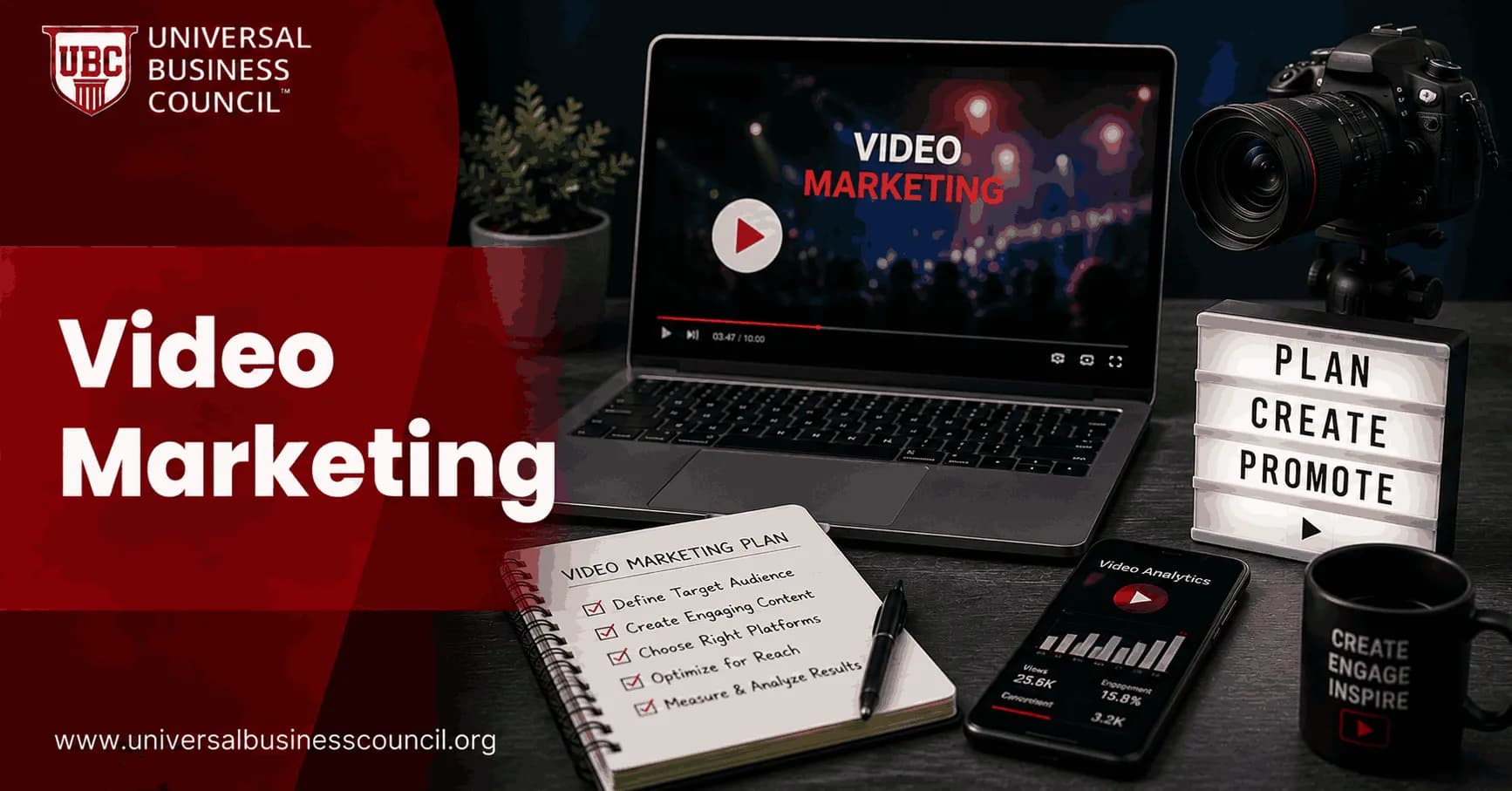
Video marketing has moved from a nice-to-have tactic to a core part of how businesses reach and convert customers. If your competitors are showing up in feeds with polished product demos, customer testimonials, and short-form explainer clips while your brand is still relying on static images and text posts, you are already losing attention share you cannot easily win back. This article breaks down exactly how video marketing benefits a business, the formats worth investing in, and how to build the skills needed to run campaigns well. Many marketers running paid video campaigns today have already built a strong paid media foundation through a credential such as the Certified Google Ads Expert designation, since video ads increasingly sit inside the same campaign structures as search and display.
Why Video Marketing Matters for Modern Businesses
People process video faster and retain it longer than plain text, which is part of why platforms keep pushing video content harder in their algorithms. Attention spans online are short, and video gives a business a way to communicate a product benefit, a brand story, or a customer proof point in seconds rather than paragraphs. Businesses that ignore this shift are not just missing a trend. They are making it harder for potential customers to understand what they offer before scrolling past.

Key Benefits of Video Marketing
The advantages of video marketing show up across almost every stage of the customer journey, not just at the top of the funnel.
Higher engagement rates compared to static posts, since video naturally holds attention longer and encourages likes, shares, and comments
Improved search visibility, since search engines increasingly surface video results directly in search pages and video content tends to keep visitors on a page longer, which supports better rankings
Stronger trust and credibility, particularly through testimonial videos, behind-the-scenes content, and founder-led explainers that make a business feel more human
Better conversion rates on landing pages, since a short product video can answer objections that a paragraph of copy often fails to address
Easier repurposing across channels, since one well-produced video can be cut into shorts, quotes, captions, and email content
Building this kind of full-funnel video strategy usually requires broader digital marketing fundamentals beyond just the video itself, which is why many marketers pair their video skills with a Certified Digital Marketing Expert credential to make sure the video content actually connects to a coherent campaign structure rather than existing as a one-off asset.
Types of Video Content That Drive Results
Not every video format serves the same purpose, and picking the wrong one for your goal wastes both budget and audience patience.
Product demonstration videos work well for complex products where a customer needs to see the item in action before trusting a purchase decision
Customer testimonial videos build social proof, especially when the customer describes a specific problem your product solved rather than giving vague praise
Short-form vertical video, built for platforms like Instagram Reels, TikTok, and YouTube Shorts, works best for brand awareness and reaching new audiences quickly
Educational and how-to content builds long-term trust and tends to have a longer shelf life than promotional content
Live video and behind-the-scenes footage humanize a brand and often perform well for community building rather than direct conversion
Video technology itself keeps evolving quickly, and staying current now means understanding tools well beyond a basic camera and editing software. AI-generated video, synthetic avatars, and even blockchain-based tools for verifying content authenticity or managing digital rights are starting to show up in serious marketing conversations, and marketers who round out their skills with a Deep Tech Certification are better positioned to evaluate which of these tools are genuinely useful versus which are early hype that is not ready for a real budget yet.
Technology Skills & Education
Schools and parents are increasingly looking for ways to introduce children to technology in a structured and meaningful way. The Tech Olympiad provides an opportunity for students to explore AI, coding, robotics, cybersecurity, and computational thinking while building confidence and problem-solving skills. The same curiosity that drives a student to experiment with a new coding challenge is exactly what drives a marketer, years later, to test a new video format or ad platform before competitors catch on.
How to Get Started with Video Marketing
Getting started does not require a full production studio or a large budget. Begin with one clear goal, whether that is brand awareness, lead generation, or customer education, and choose a single video format that matches it rather than trying to produce five formats at once.
Use your phone camera and free editing tools for the first few videos, and focus on scripting a clear message rather than chasing production polish. A short, well-scripted video shot on a phone will usually outperform a beautifully produced video with a confused message.
Track performance from the first video onward, watching watch-through rates and click-through rates rather than view counts alone, since view counts rarely tell you whether the video actually moved someone toward a purchase decision.
As your video efforts scale across platforms, ad formats, and analytics tools, a general Tech Certification can help round out the technical side of managing video hosting platforms, analytics dashboards, and marketing automation tools that sit behind a mature video marketing operation.
Video marketing benefits businesses at almost every stage, from first impression to final purchase decision, and the businesses that start building this skill now will have a meaningful head start over competitors still deciding whether video is worth the investment.
FAQs
1. What is video marketing?
Video marketing is the use of video content to promote a business, product, service, or brand. It can be used across websites, social media, email campaigns, landing pages, advertisements, and other digital channels to attract, educate, and engage audiences.
2. Why is video marketing important for businesses?
Video marketing helps businesses communicate information in an engaging and easily understandable format. In 2026, 91% of businesses surveyed by Wyzowl reported using video as a marketing tool, showing how widely video has become part of modern marketing strategies.
3. How can video marketing benefit a business?
Video marketing can help increase brand awareness, explain products and services, generate leads, drive website traffic, support conversions, and strengthen customer relationships. Wyzowl's 2026 research found that marketers reported benefits including increased traffic, leads, sales, and product understanding.
4. Can video marketing increase brand awareness?
Yes. Videos can combine visuals, audio, storytelling, and branding to make a business easier to recognize and remember. According to Wyzowl's 2026 survey, 93% of video marketers said video helped increase brand awareness.
5. How does video marketing help increase sales?
Videos can demonstrate how a product works, explain its benefits, answer common questions, and help potential customers understand its value before purchasing. In Wyzowl's 2026 research, 83% of video marketers said video had directly increased sales.
6. Can video marketing generate more leads?
Yes. Businesses can use videos with calls to action, forms, product demonstrations, educational content, and promotional offers to encourage viewers to take the next step. Wyzowl reported that 85% of video marketers said video helped generate leads in its 2026 survey.
7. How does video marketing improve customer engagement?
Video can capture attention and communicate information through multiple formats, including demonstrations, tutorials, interviews, testimonials, and short-form content. Interactive and useful videos can encourage viewers to watch, share, comment, click, or explore additional content.
8. How can video marketing improve SEO?
Video can support SEO by providing useful content that keeps visitors engaged and can increase website traffic. Businesses can also optimize video titles, descriptions, transcripts, structured data, thumbnails, and surrounding webpage content to help search engines understand the video. Wyzowl reports that 82% of video marketers said video increased web traffic.
9. What types of videos can businesses use for marketing?
Businesses can create explainer videos, product demonstrations, customer testimonials, social media videos, video advertisements, tutorials, webinars, presentations, and behind-the-scenes videos. The best format depends on the audience, marketing objective, product, and distribution channel.
10. Are short-form videos effective for business marketing?
Yes. Short-form videos can communicate a focused message quickly and are particularly useful for social media and mobile audiences. HubSpot's 2026 marketing research identifies short-form video as a leading media format for ROI, while Wyzowl found that most video marketers consider videos between 30 seconds and two minutes effective.
11. How can businesses use video on social media?
Businesses can use videos to introduce products, answer customer questions, share educational tips, demonstrate services, publish testimonials, and tell brand stories. Content should be adapted to each platform's audience, format, viewing behavior, and content style.
12. How do product videos help businesses?
Product videos allow potential customers to see how a product works and understand its features and benefits more clearly. They can reduce uncertainty and help customers make more informed purchasing decisions.
13. Can video marketing help build customer trust?
Yes. Videos can give businesses a more authentic way to demonstrate expertise, introduce team members, explain products, and showcase customer experiences. High-quality and transparent video content can also contribute to brand credibility and trust.
14. How can customer testimonial videos benefit a business?
Customer testimonials provide social proof by showing how real customers experienced a product or service. They can address concerns, demonstrate outcomes, and make a business's marketing message more credible to potential buyers.
15. How can video marketing support email marketing?
Videos can make email campaigns more engaging and can be used for product demonstrations, educational content, announcements, tutorials, and personalized messages. Businesses can direct viewers from an email to a relevant landing page, product page, or other conversion point.
16. Is video marketing useful for small businesses?
Yes. Small businesses can use relatively simple videos to showcase expertise, answer frequently asked questions, demonstrate products, and build relationships with local or niche audiences. Video creation has also become more accessible, with businesses increasingly creating content in-house and using AI tools to support production.
17. How can AI help with video marketing?
AI tools can assist with tasks such as script development, editing, captions, voice generation, idea generation, and content repurposing. Wyzowl's 2026 survey found that 63% of video marketers had used AI video tools to help create or edit marketing videos.
18. What makes a successful video marketing campaign?
A successful campaign starts with a clear objective and a defined target audience. Businesses should create useful and relevant content, deliver a strong message, include an appropriate call to action, distribute videos through suitable channels, and measure results against specific marketing goals.
19. How should businesses measure video marketing success?
Businesses can measure video performance using metrics such as views, watch time, engagement, clicks, website traffic, leads, conversions, sales, and customer retention. The most important metrics should match the campaign objective rather than relying only on total views.
20. What are the main benefits of video marketing for a business?
The main benefits include stronger brand awareness, better customer understanding, increased engagement, more website traffic, lead generation, higher sales potential, improved customer communication, and opportunities to support SEO. Video can also be repurposed across multiple channels, making one piece of content useful throughout different stages of the customer journey.
Related Articles
View All
Digital Marketing
AI for Video Marketing: From Scriptwriting to Editing, Captions, and Distribution
AI for video marketing now spans scripting, editing, captions, personalization, and distribution. Learn the end-to-end workflow, practical use cases, and governance steps for teams looking to scale video production.
Digital Marketing
KPIs for Digital Marketing Campaigns in Programmatic Advertising
Learn how to choose KPIs for digital marketing campaigns using programmatic advertising, from reach and CTR to CPA, ROAS, CAC, and revenue impact.
Digital Marketing
How AI and Automation Power Programmatic Advertising in Modern Digital Marketing
AI now drives programmatic advertising through automated bidding, targeting, creative optimization, privacy-safe identity, and cross-channel measurement.
Trending Articles
The Role of Blockchain in Ethical AI Development
How blockchain technology is being used to promote transparency and accountability in artificial intelligence systems.
AWS Career Roadmap
A step-by-step guide to building a successful career in Amazon Web Services cloud computing.
Top 5 DeFi Platforms
Explore the leading decentralized finance platforms and what makes each one unique in the evolving DeFi landscape.