

Communication Skills in Patient Care
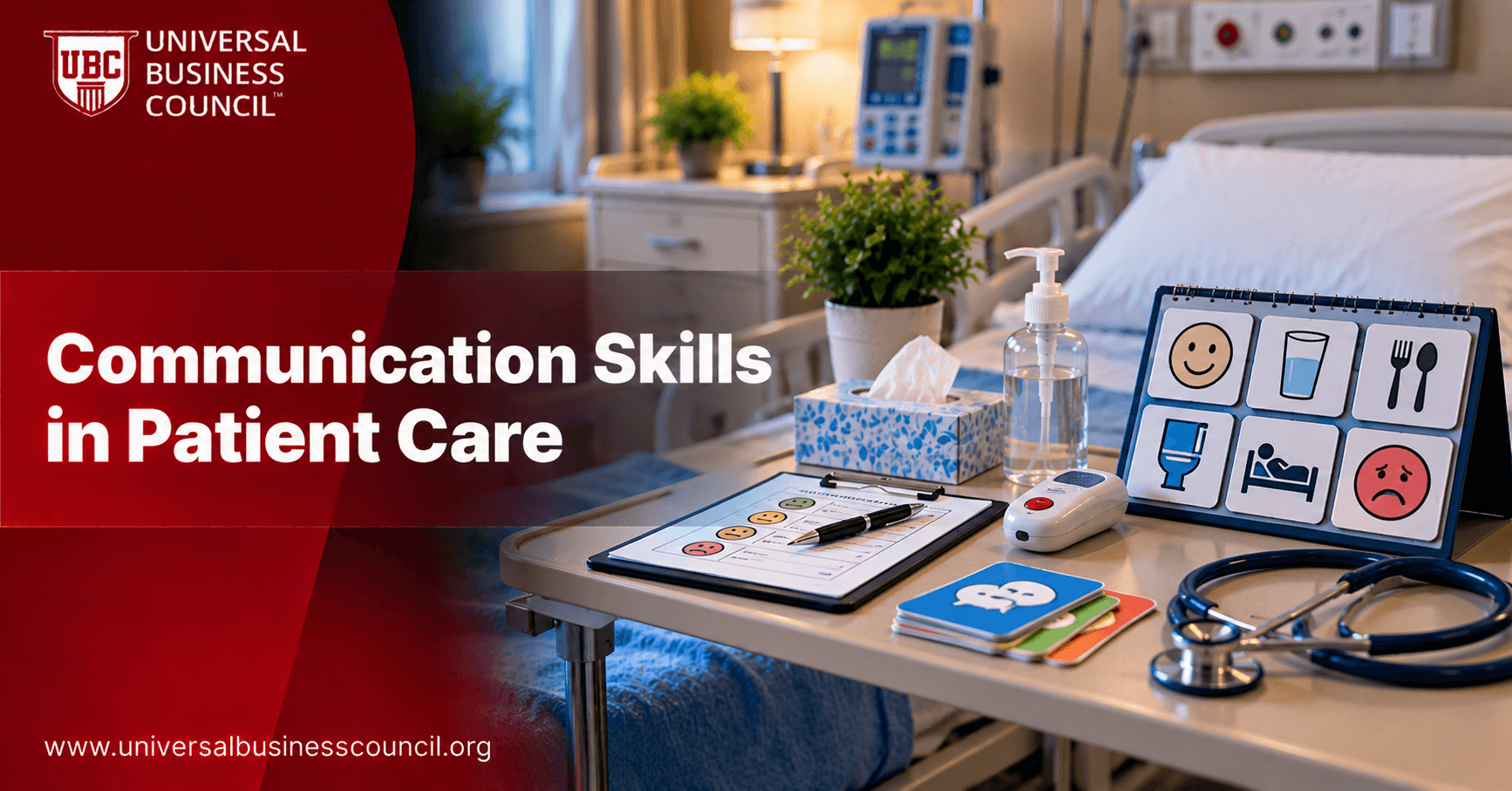
Communication skills in patient care get tested hundreds of times a day, and most of those moments are ordinary: a greeting, a question, a note in the chart, a handoff at the end of a shift. None of them feel dramatic, yet each one affects safety, trust and compliance. Nursing assistants carry a large share of this daily communication because they are often the people patients talk to most. Anyone preparing for a role as a certified nursing assistant will find that how they speak, listen and report matters as much as the physical tasks they learn. This guide covers verbal and non-verbal skills, communicating with patients who have special needs, working with the care team and the documentation habits that back it all up.
What are communication skills in patient care?
Communication skills in patient care are the abilities that let a caregiver share information, understand what patients need and work smoothly with other staff. They include speaking clearly, listening closely, reading body language, writing accurate notes and reporting changes promptly.

Good communication is not about talking more. It is about making sure the right message reaches the right person in a form they can understand, whether that person is a patient, a family member or a nurse.
Why communication matters for safety and compliance
Poor communication is a common thread in care errors, which is why facilities treat it as a core competency and not a soft extra.
Safety
Patients who understand what is happening are more likely to cooperate and to speak up when something feels wrong. Staff who report clearly give nurses the information they need to act in time.
Privacy and consent
Communication also has legal weight. Patient information must stay private, and patients have the right to understand and agree to the care they receive.
What consent looks like day to day
In daily work, consent means explaining a task before starting it and respecting a patient's answer. If a patient says no, the nursing assistant does not force the task. They stop, stay calm and tell the nurse.
Speaking clearly and kindly
Verbal communication sets the tone of every interaction. Patients are often tired, worried or in pain, and a calm voice helps. Useful habits include:
Introducing yourself by name and role at the start of each shift
Using plain words instead of medical terms
Explaining what you are about to do before you do it
Asking the patient to repeat back instructions when it matters
Leaving pauses so the patient has time to answer
Listening and observation
Listening is half of communication, and it is the half that is most often rushed. Active listening means giving full attention, not interrupting and checking understanding by repeating back key points. Patients often mention small things, such as a new ache or a worry about a medicine, that never reach the chart unless someone hears them and passes them on. Observation works alongside listening. What a patient does not say, such as grimacing, skipping a meal or avoiding movement, can tell a nursing assistant as much as words.
Non-verbal communication
Body language often speaks louder than words. A hurried tone, crossed arms or a glance at the clock can make a patient feel like a burden. Sitting or standing at eye level, keeping a relaxed posture and offering a warm facial expression send the opposite message. Touch should always be explained and offered with permission, since some patients find it comforting and others do not.
Communicating with patients who have special needs
Some patients need a different approach, and a good caregiver adjusts without making them feel singled out.
Hearing, vision and language differences
For patients with hearing loss, face them, speak clearly and reduce background noise. For patients with vision loss, describe what you are doing and announce yourself on entering the room. When a patient speaks a different language, follow facility policy on interpreter services instead of guessing at meaning, since mistakes can affect safety and consent.
Memory loss and confusion
Patients with memory loss need short sentences, a calm voice and patience. Arguing or correcting them often increases distress. Redirecting gently and focusing on their feelings usually works better, and any sudden change in confusion should be reported to the nurse.
Working with the care team
Patient care is a team effort, and the handoff between shifts is where information is most easily lost. A clear handoff from a nursing assistant usually covers:
Any change in the patient's condition or behavior
Tasks completed and tasks still pending
Safety concerns such as fall risk or skin changes
Patient preferences that help the next caregiver
When reporting to the nurse, be specific. Say which patient, what was noticed, when it happened and what has been done so far. Speak up if something feels wrong, even without being sure of the cause.
Documentation as communication
A chart note is a message to everyone who reads it later. It should be factual, timely and free of guesswork. Electronic records are now standard, and staff who are confident with digital systems record details more accurately and spend less time on corrections. Some workers strengthen those skills through tech certifications, which also open options in health informatics.
Professionalism, confidentiality and credentials
Professional communication includes knowing what not to say. Patient information is shared only with people who need it for care, never in hallways, elevators or on social media. Boundaries matter too, because friendly conversation should never blur into personal favors or private contact. Employers check credentials and work history before hiring, and verification providers such as HireValid support that process, so candidates should keep their records accurate and complete.
Handling difficult conversations
Patients and families sometimes show anger, fear or frustration. Staying calm, listening without interrupting and acknowledging the feeling usually lowers the temperature. Avoid arguing or taking comments personally. If a situation is escalating or a patient becomes unsafe, step back and get the nurse. A nursing assistant is not expected to resolve every conflict alone, only to handle it respectfully and report it.
Growing communication skills over time
Communication improves with practice and feedback. Role-play in training, asking a supervisor for observations and reviewing difficult moments afterward all help. New tools such as translation aids and voice-assisted documentation are starting to appear in care settings, and deep tech certifications give workers a way to understand the technologies behind them as they spread.
Clear messaging for care organizations
Communication also shapes how families and job seekers see a facility. Honest, plain descriptions of services and staffing build trust, and exaggerated promises damage it. A digital marketing course can help care organizations write accurate public content, which keeps outside messaging in line with real practice and with legal and ethical requirements.
Conclusion
Communication skills in patient care combine speaking clearly, listening closely, reading body language, adapting to patients with special needs, reporting precisely and documenting honestly. They protect patients by getting information to the right person in time, and they protect privacy and consent by keeping conversations respectful and confidential. Handoffs, charting and difficult conversations all follow the same principle: be specific, be calm and be accurate. Employers verify credentials and expect staff to keep learning, and communication is a skill that improves with practice. Nursing assistants who work on it make care safer for patients and easier for the whole team.
Frequently asked questions
These questions come up often in training and in everyday patient care.
1. Why are communication skills important in patient care?
They support safety, trust and teamwork, and they help patients understand and agree to their care.
2. What are the main types of communication in care?
Verbal speech, listening, non-verbal body language and written documentation are the main types.
3. How should a nursing assistant introduce themselves?
State their name and role, explain what they are there to do and ask if the patient is ready.
4. What is active listening?
It means giving full attention, not interrupting and checking understanding by repeating key points back.
5. How can a nursing assistant communicate with a patient who has hearing loss?
Face the patient, speak clearly at a steady pace and reduce background noise.
6. How can a nursing assistant communicate with a patient who has vision loss?
Announce yourself when entering, and describe what you are doing as you do it.
7. How should staff speak with patients who are confused or have memory loss?
Use short sentences and a calm voice, avoid arguing and report sudden changes in confusion to the nurse.
8. What if there is a language barrier?
Follow facility policy on interpreter services instead of guessing, especially for consent and safety information.
9. How does body language affect patient care?
Posture, tone and facial expression shape how patients feel, and a hurried manner can make them feel like a burden.
10. Why is plain language better than medical jargon?
Patients understand and follow plain words more easily, which reduces confusion and mistakes.
11. What should a nursing assistant do if a patient is angry?
Stay calm, listen, acknowledge the feeling and get the nurse if the situation does not settle.
12. How can nursing assistants show empathy?
Listen without rushing, acknowledge feelings and respond with patience and respect.
13. What is a shift handoff?
It is the exchange of key patient information between outgoing and incoming staff at a change of shift.
14. What should be included in a report to a nurse?
Include which patient, what was noticed, when it happened and what has been done so far.
15. Why is documentation a form of communication?
Chart notes pass information to everyone who reads them later, so they must be accurate, timely and factual.
16. How is patient confidentiality protected in conversation?
Share information only with people who need it for care and never discuss patients in public areas.
17. Can nursing assistants share patient information with family?
Only as facility policy and the supervising nurse allow, so questions should be passed to the nurse.
18. What if a patient refuses care?
Respect the refusal, do not force the task, stay calm and report it to the nurse.
19. How can communication skills be improved?
Practice in training, ask for feedback from supervisors and reflect on difficult conversations afterward.
20. Do employers look for communication skills when hiring?
Yes. Clear communication supports safety and teamwork, so employers often look for it in interviews and references.
Related Articles
View All
Health
Patient Hygiene and Personal Care Basics
Explore the fundamentals of patient hygiene and personal care in healthcare settings. Learn how to assist patients with bathing, grooming, oral hygiene, dressing, and other daily activities while maintaining their comfort, safety, and dignity.

Health
Essential Skills for Group Fitness Instructors
Discover the essential skills every group fitness instructor needs to lead engaging and effective exercise classes. Learn how communication, leadership, motivation, adaptability, fitness knowledge, and class management help instructors create a positive environment and support participants in reaching their fitness goals.
Health
Bleeding Control and Wound Care Basics
Learn the basics of bleeding control and wound care, including how to manage cuts, scrapes, and other common injuries. Discover essential first aid steps for stopping bleeding, cleaning and protecting wounds, preventing infection, and recognizing when medical attention is needed.
Trending Articles
The Role of Blockchain in Ethical AI Development
How blockchain technology is being used to promote transparency and accountability in artificial intelligence systems.
AWS Career Roadmap
A step-by-step guide to building a successful career in Amazon Web Services cloud computing.
Top 5 DeFi Platforms
Explore the leading decentralized finance platforms and what makes each one unique in the evolving DeFi landscape.