

Essential Skills Every Nursing Assistant Needs
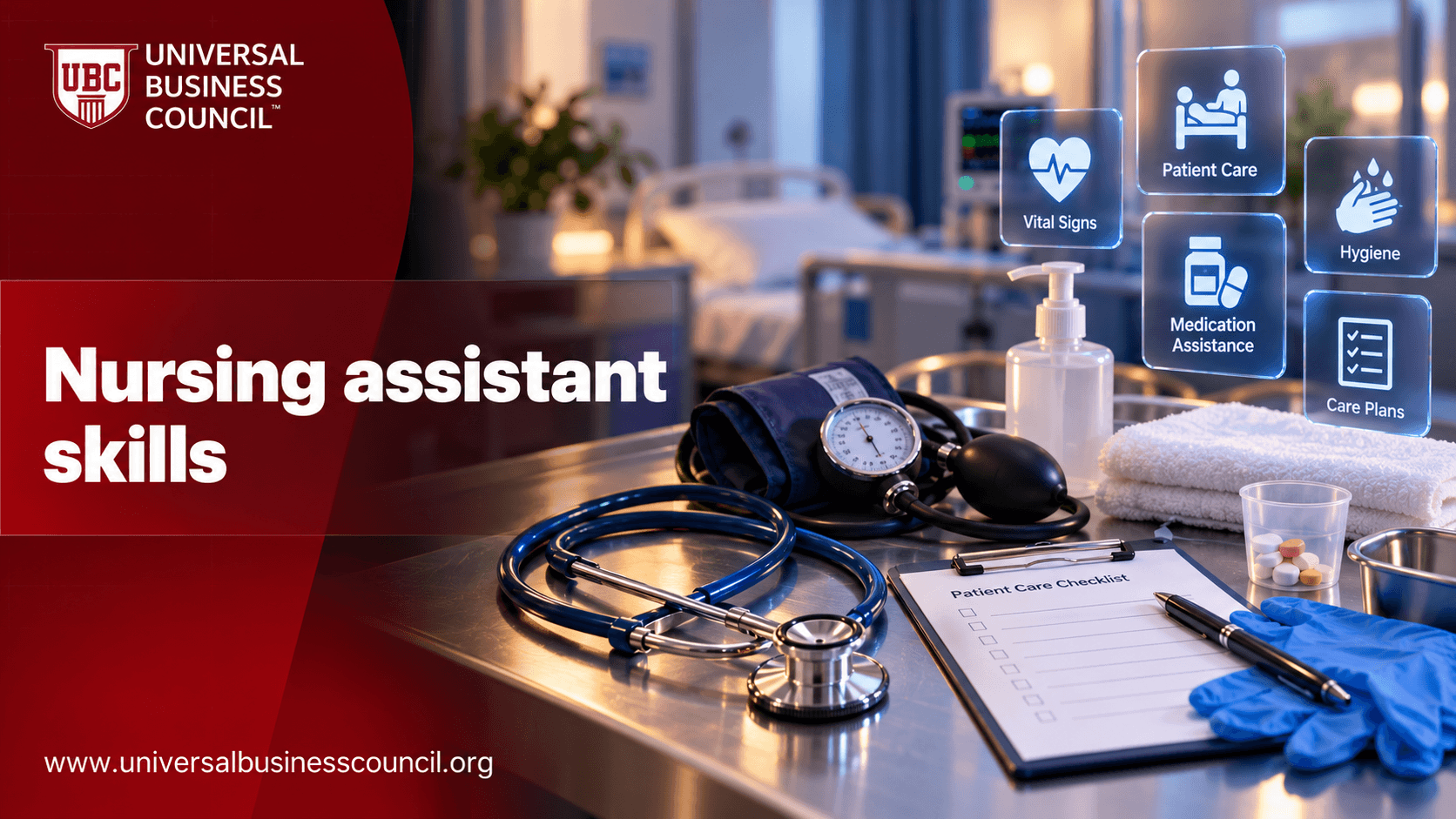
Nursing assistant skills fall into two kinds. Some you can practice on a mannequin in a skills lab: taking a blood pressure, moving a patient safely, making an occupied bed. The rest only develop through time spent with real people who are scared, tired or in pain. Employers hire for both, and the best aides are strong in each.
This guide lays out the essential skills every nursing assistant needs, why each one matters on the floor, and how to build them before and after you start working. If you're mapping your path into the field, take a look at the Certified Nursing Assistant (CNA) program from Universal Business Council to see what formal credentialing involves. From there, the sections below move from clinical basics to people skills to the digital habits that modern care settings now expect.

What are nursing assistant skills?
Nursing assistant skills are the practical abilities and personal qualities a CNA uses to give safe, respectful care under a nurse's direction. A typical CNA skills list covers three areas: hands-on clinical tasks, communication and interpersonal strengths, and workplace habits such as reliability and accurate record keeping.
State competency exams test the first area directly. Candidates perform a small set of skills chosen from an approved list while an evaluator watches. The other two areas get tested more quietly, through clinical placements, references and the first weeks on the job.
Clinical skills every nursing assistant needs
Clinical skills are the foundation. They're also the part of the job where a mistake can hurt someone, so accuracy matters more than speed.
Vital signs and observation
Taking temperature, pulse, respiration and blood pressure correctly, then recording the numbers without rounding or guessing, is a core skill. Just as important is knowing what looks normal for a particular patient. An aide who knows a resident's usual breathing, color and mood is the one who notices when something shifts.
Infection control and safety
Hand hygiene, correct use of gloves and gowns, safe handling of linens and waste, and cleaning shared equipment keep infections from moving between patients. Safety skills sit right beside them:
Using proper body mechanics when lifting or turning patients
Operating lifts, gait belts and bed controls correctly
Spotting fall risks and keeping walkways clear
Knowing emergency steps, and holding current CPR certification where employers require it
Personal care counts as a skill too. Bathing, feeding and toileting done gently, with each step explained and the patient's privacy protected, are what preserve dignity in a hospital bed or a care home.
Soft skills that matter just as much
Technique can be taught in weeks. Temperament takes longer, and it shapes how patients experience care.
Communication
Patients may be hard of hearing, confused, in pain or anxious. Calm speech, plain language and active listening help, and so does telling a patient what you're about to do before you do it. With the nursing team, communication means short, specific reports: what you saw, when you saw it and how it differs from before.
Qualities that keep care human
Empathy that stays professional, so you can comfort a patient without absorbing every hard day
Patience with slow mornings, repeated questions and refusals of care
Teamwork across nurses, therapists, kitchen staff and families
Time management when several call lights go off at once
Emotional resilience, since loss and difficult conversations are part of the work
Reliability is the quiet one. Showing up on time, finishing what you said you'd do and owning your mistakes build trust fast. Employers know this, which is why many verify references, credentials and work history before hiring, often with tools like HireValid. A clean, verifiable record helps good aides stand out.
Skills for modern care settings
Care is more digital than it was a decade ago. Aides chart in electronic health record systems, scan wristbands, use bedside monitors and sometimes record vitals on handheld devices. Basic digital literacy, accurate typing and respect for patient privacy rules are now part of the skills list. Short tech certifications can help newcomers get comfortable with software before they meet it on the job.
The next wave is already arriving. AI-supported monitoring, smart sensors and secure digital records are spreading through hospitals and long-term care. Aides don't need to build these systems, but knowing what data they collect and why privacy matters is a useful edge. For a wider view of the technology, Deep Tech Certifications cover areas such as AI and blockchain.
How to build and show your nursing assistant skills
Skills grow with deliberate practice. During training, treat every lab session as real and ask your instructor to watch your technique. On the floor, ask a senior aide to name one thing you could improve each week.
Practice hand hygiene and transfer steps until they're automatic
Keep a short notebook of observations that taught you something
Ask for feedback after difficult shifts, not only after mistakes
Refresh CPR and any other required certifications before they lapse
Showing your skills matters too. A resume that lists specific tasks, such as recording vital signs for a full unit each shift, beats "hardworking and caring" every time. Many aides also build a LinkedIn presence to share certifications and experience. Learning to write a clear profile is a useful side skill, and a Digital Marketing Course teaches exactly that.
Conclusion
The essential skills every nursing assistant needs combine clinical accuracy and human connection, backed by dependable habits. Vital signs, infection control, safe handling and respectful personal care keep patients safe. Communication, empathy, patience and teamwork make the care feel human.
Digital literacy and a verifiable track record keep you employable as care settings change. Build each skill on purpose, show it clearly on your resume and in interviews, and keep learning after the first job. The FAQs below cover some common questions.
Frequently asked questions
What are the most important skills for a nursing assistant?
Accurate clinical skills, clear communication, empathy, reliability and a habit of noticing changes in patients.
What is on a typical CNA skills list?
Vital signs, hand hygiene, safe transfers, personal care, documentation, communication and teamwork.
What clinical skills does a CNA need?
Taking vital signs, infection control, safe lifting and turning, feeding and bathing support, and accurate charting.
What soft skills should a nursing assistant have?
Communication, empathy, patience, teamwork, time management and emotional resilience.
Which skills are tested in the CNA exam?
Candidates usually perform a few skills from an approved list, and the exact set depends on the state.
Is communication really that important for CNAs?
Yes. Clear talk with patients builds trust, and short, specific reports help nurses act quickly.
Do CNAs need CPR certification?
Many employers require current CPR certification, so check the requirements where you plan to work.
How can I improve my nursing assistant skills?
Practice in training labs, ask senior aides for feedback and keep notes on what each shift teaches you.
What is body mechanics?
It means using posture and movement that protect your back and the patient when lifting, turning or transferring.
Why is hand hygiene a core skill?
It is one of the simplest ways to stop infections spreading between patients.
Do nursing assistants need computer skills?
Basic ones, yes. Most facilities chart electronically, so typing and software comfort save time.
How do CNAs handle difficult patients?
With patience, calm speech, respect for the patient's feelings and help from the nurse when needed.
What skills help a CNA get promoted?
Reliability, strong observation, clear reporting and a willingness to train newer aides.
Can soft skills be learned?
Yes. They improve with practice, feedback and experience.
What observation skills does a CNA need?
Knowing what is normal for each patient so changes in breathing, color, mood or appetite stand out.
How do CNAs manage stress?
By setting routines, asking for help, leaning on teammates and taking breaks when possible.
What skills should I list on a CNA resume?
Specific tasks such as recording vital signs, safe transfers and infection control, plus current certifications.
Do skills differ by workplace?
The core skills stay the same, but emphasis shifts. Home care leans on independence, while hospitals lean on speed.
How long does it take to develop strong CNA skills?
Training builds the basics in weeks, and confidence usually grows over the first months on the job.
Where can I get certified?
Start with your state's nurse aide registry for approved programs, then compare certification options that fit your goals.
Related Articles
View All
Health
Essential Skills for Group Fitness Instructors
Discover the essential skills every group fitness instructor needs to lead engaging and effective exercise classes. Learn how communication, leadership, motivation, adaptability, fitness knowledge, and class management help instructors create a positive environment and support participants in reaching their fitness goals.
Health
How to Choose a Nursing Assistant Certification
Wondering whether earning a nursing assistant certification is worth the investment? Explore the benefits, costs, career opportunities, and challenges of becoming a certified nursing assistant to decide if this healthcare career path is right for you.
Health
Is a Nursing Assistant Certification Worth It?
Wondering whether earning a nursing assistant certification is worth the investment? Explore the benefits, costs, career opportunities, and challenges of becoming a certified nursing assistant to decide if this healthcare career path is right for you.
Trending Articles
The Role of Blockchain in Ethical AI Development
How blockchain technology is being used to promote transparency and accountability in artificial intelligence systems.
AWS Career Roadmap
A step-by-step guide to building a successful career in Amazon Web Services cloud computing.
Top 5 DeFi Platforms
Explore the leading decentralized finance platforms and what makes each one unique in the evolving DeFi landscape.