

Is a Nursing Assistant Certification Worth It?
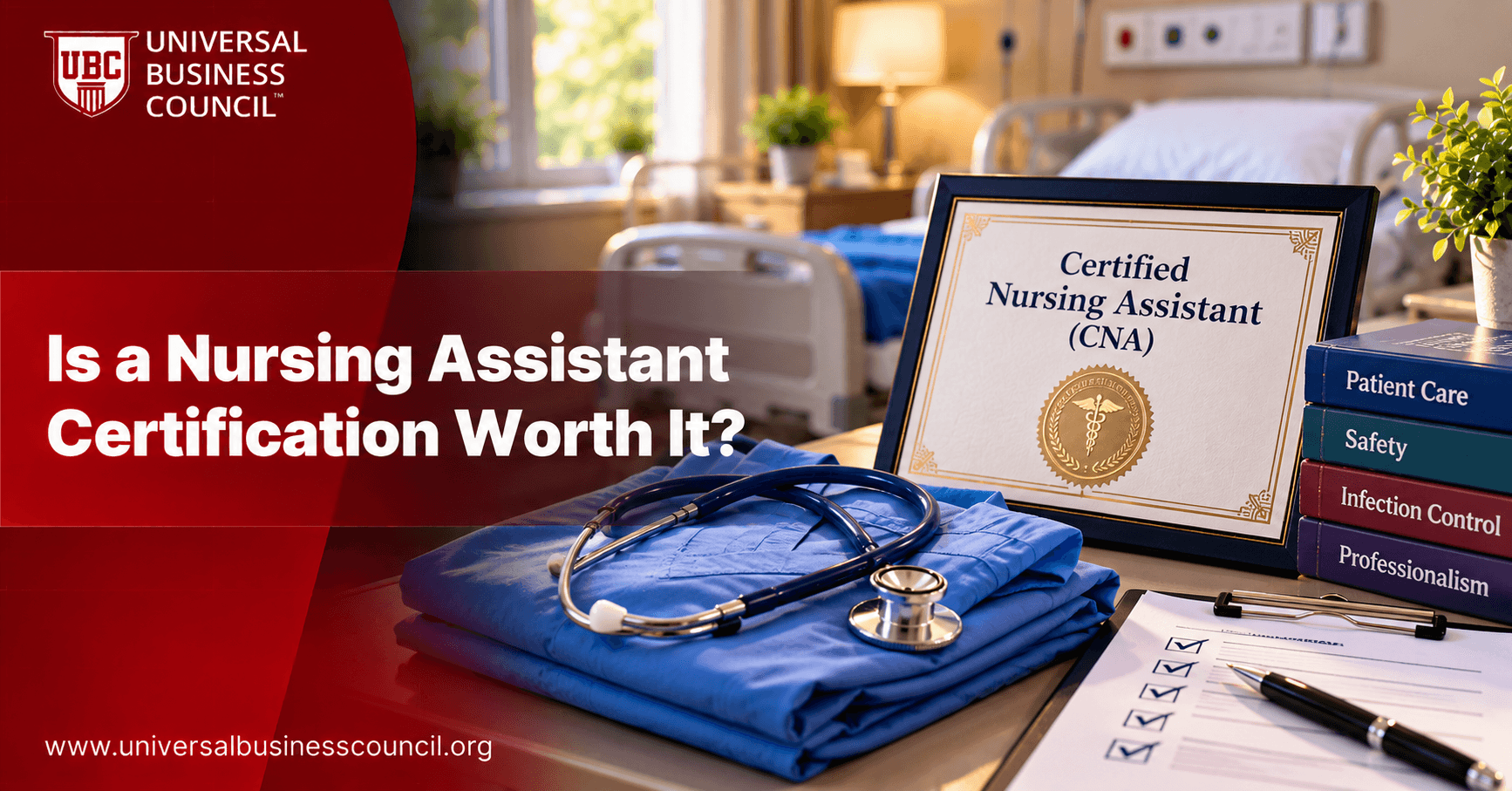
Whether a nursing assistant certification is worth it depends on what it is measured against: the time it takes, the money it costs and the options that stay open afterward. For some people it is the quickest door into healthcare. For others it is an unnecessary detour. This guide lays out the benefits, the costs and the career paths so the decision rests on real trade-offs. Anyone leaning toward it can look at the certified nursing assistant certification and compare it with local state requirements before committing.
What is a nursing assistant certification?
A nursing assistant certification confirms that a person has completed approved training and passed an exam showing they can give basic patient care under a licensed nurse. Certified nursing assistants help with bathing, feeding, moving and comforting patients, and they report changes to the nursing team.

In many places certification is also the legal route into the job, and it places the person on a registry that employers check. Rules differ by state, so the first step is always to confirm what a given state requires.
The case for getting certified
Certification has real advantages, especially for people who want to start working in care without years of study. Common benefits include:
A relatively short route into a healthcare job
Meeting the requirement many employers and states set for the role
Hands-on patient care experience from day one
A recognized credential that can be verified on a registry
A foundation for further study in nursing
The experience itself carries value. Time spent on the floor teaches communication, patience and safety habits that no textbook fully covers.
The costs and trade-offs
The credential comes with costs that deserve an honest look. Training programs charge fees, and candidates give up time for classes and clinical practice. The work is physical, with long periods of standing, lifting and moving patients, and it can be emotionally demanding. Schedules often include nights, weekends and holidays. Pay and demand vary by location and employer, so it is worth checking local job postings before assuming the numbers will work. None of this makes certification a poor choice, but it does mean the decision should be made with open eyes.
How certification affects job prospects
Employers in care settings want proof that staff are trained and in good standing. A certification on the state registry gives them that proof. Hiring teams check registry status, certification dates and work history, and they often run background screening. Verification providers such as HireValid support that process. A candidate who is certified, with accurate records, usually has a smoother path through hiring than one who cannot document their training.
Career paths it can open
Certification works best when it is treated as a stage and not a final destination. Many people use it to test the field and gain experience before choosing a direction.
Bridging to nursing
Some nursing assistants go on to become licensed practical nurses or registered nurses. Experience at the bedside gives a clear picture of what nursing involves, and some schools offer bridge options or credit for prior learning, though details depend on the school and the state.
Specialty and technology roles
Others move into specialty units or into roles that blend care with data and systems. As healthcare adopts artificial intelligence and secure data tools, deep tech certifications offer one way to start learning how those technologies work.
Who benefits most, and who might wait
Certification tends to suit people who want to start working soon, who enjoy hands-on helping roles and who may want to continue into nursing later. It may be less suitable for someone who already knows they want a non-clinical healthcare career, or who cannot manage the physical demands of the job. For those who are unsure, speaking with a working nursing assistant or shadowing a shift can answer questions that research cannot.
Building a simple return-on-investment view
A practical way to decide is to compare costs and benefits in plain terms. Add up the program fees, the time out of work and the exam costs. Then look at local job openings, entry requirements and the paths available afterward. Digital skills can also add value, since most care settings now rely on electronic records, and some people pair certification with tech certifications to stand out for roles that mix care and data work.
Why honest program claims matter
Training providers promote certification heavily, and not every claim holds up. Promises about guaranteed jobs or income should be checked against local facts. Organizations that describe their programs accurately protect students and keep within legal and ethical limits. A digital marketing course can help training providers present their programs clearly online without overstating results.
Conclusion
So, is a nursing assistant certification worth it? For many people, yes. It offers a short route into healthcare, meets the requirement many employers and states set, builds real patient care experience and creates a verified credential that opens later options such as nursing school. The trade-offs are program costs, time, physical demands and variable pay, and they should be weighed against local job conditions. Certification suits people who want to start soon and enjoy hands-on care, while others may be better served by a different route. Checking state rules, talking with working assistants and comparing costs with local opportunities will give the clearest answer for each person.
Frequently asked questions
These are the questions people ask most when deciding whether to get certified.
1. Is a nursing assistant certification worth it?
For many people it is, especially as a quick route into healthcare, but the answer depends on goals, costs and local rules.
2. Is it worth it as a first step in healthcare?
Often yes. It provides hands-on experience and a credential without the long study that other roles need.
3. Is certification required to work as a nursing assistant?
In most places it is, though rules differ by state and employer.
4. Does certification improve job chances?
It usually helps, because employers can verify the credential on the state registry.
5. How much does certification cost?
Costs vary by state and program, so candidates should compare fees and ask what is included.
6. How long does it take to get certified?
The length depends on the state and program, but it is short compared with a nursing degree.
7. Is the work physically demanding?
Yes. It involves standing, lifting and moving patients, so candidates should consider whether the physical side suits them.
8. Can certification lead to nursing school?
Yes. Many nursing assistants continue to become licensed nurses, and the experience helps.
9. Is it worth it if I plan to become an RN?
Many people find it valuable, since it builds patient care skills and confirms they enjoy the field before years of study.
10. Is it worth it for a career change?
It can be, because training is short and experience builds quickly, though the work is demanding.
11. What are the main downsides?
Program costs, time away from other work, physical demands and shifts that include nights and weekends.
12. Do employers pay for certification?
Some do or offer tuition support, but practices vary, so it is worth asking.
13. Does certification expire?
Yes. States set renewal cycles, and some require proof of recent work or continuing education.
14. Can someone work without certification?
That depends on the state and the type of role, so local rules should be checked first.
15. What skills does certification build?
It builds personal care, communication, infection control, safety and documentation skills.
16. How do employers verify certification?
They check the state registry and often use background and credential screening providers.
17. Is it suitable for part-time or flexible work?
Many care settings offer varied schedules, but availability depends on the employer.
18. Are there alternatives to certification?
Some entry-level care roles have different requirements, but they may lead to different career options.
19. How can someone decide?
Compare costs, time and local job openings, and talk with working nursing assistants if possible.
20. Where can candidates check official requirements?
The state health department or board of nursing publishes current requirements.
Related Articles
View All
Health
How to Choose a Nursing Assistant Certification
Wondering whether earning a nursing assistant certification is worth the investment? Explore the benefits, costs, career opportunities, and challenges of becoming a certified nursing assistant to decide if this healthcare career path is right for you.
Health
Is First Aid and CPR Certification Worth It?
Discover whether first aid and CPR certification is worth the time and investment. Explore the benefits of learning life-saving skills, improving workplace safety, responding confidently to emergencies, and building valuable skills that can support personal and professional growth.

Health
Is Addiction Professional Certification Worth It?
Discover whether earning an addiction professional certification is worth the investment. Explore its career benefits, training requirements, certification costs, professional credibility, and opportunities in addiction treatment and recovery support.
Trending Articles
The Role of Blockchain in Ethical AI Development
How blockchain technology is being used to promote transparency and accountability in artificial intelligence systems.
AWS Career Roadmap
A step-by-step guide to building a successful career in Amazon Web Services cloud computing.
Top 5 DeFi Platforms
Explore the leading decentralized finance platforms and what makes each one unique in the evolving DeFi landscape.