

How to Choose a Nursing Assistant Certification
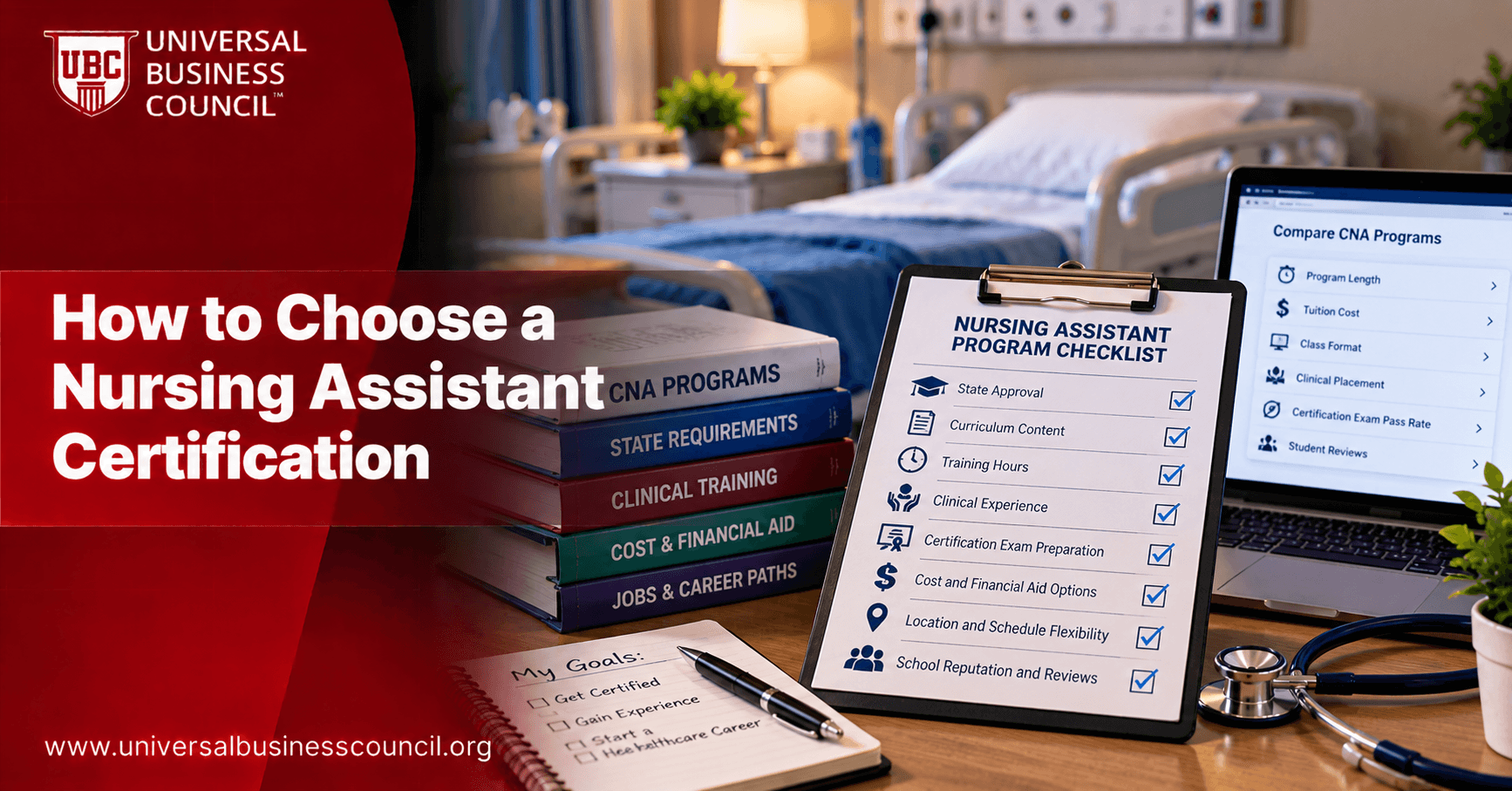
Not every program that advertises a nursing assistant certification leads to the same credential, and the difference can decide whether a graduate is allowed to work. Choosing well means checking state approval, comparing real costs, looking at clinical access and making sure the credential will be accepted by the employers a candidate has in mind. This guide walks through each check in a sensible order. Anyone starting the search can review the certified nursing assistant certification and use the steps below to compare it with other options.
What is a nursing assistant certification, and why does the choice matter?
A nursing assistant certification confirms that a person completed approved training and passed an exam showing they can give basic patient care under a licensed nurse. The credential is what employers and state registries look for.

The choice matters because programs differ in approval status, cost, schedule and the quality of hands-on practice. A poor match can waste time and money, while a good one gives a clean path from training to a first job.
Start with state requirements
Every decision should begin with the rules of the state where the candidate plans to work. States decide who may train nursing assistants, what the training must include and how the exam is run. Candidates should check the state health department or nursing board for the current list of approved programs and for the steps to join the registry. A program may look impressive and still fall short of what the state accepts, so this check comes before anything else.
Check approval and program quality
State approval is the minimum standard, but quality varies among approved programs too.
Signs of a quality program
Good programs are open about how they work and happy to answer questions. A candidate can ask about:
State approval status and how to confirm it
Instructor qualifications and experience
Where clinical practice takes place
Class size and the amount of hands-on time
How graduates have done on the competency exam
Red flags to watch for
Be cautious about programs that cannot show state approval, that promise a guaranteed job or that pressure people to pay before answering basic questions. A reputable provider welcomes scrutiny.
Compare cost and what is included
Advertised fees can hide extras. Two programs with the same headline price may differ widely once everything is counted. Before comparing, it helps to ask what the fee covers, including:
Tuition and registration
Textbooks, uniforms and supplies
Background check and health screening
Exam fees and any retake charges
Refund policies matter too. Ask what happens if a student has to withdraw, and get the answer in writing.
Schedule, format and clinical access
A program should fit a candidate's real life. Some offer evening or weekend classes, and some deliver part of the coursework online. Clinical practice, however, is hands-on and takes place in person, so the location and timing of those sessions deserve close attention. A program with convenient classes but distant or limited clinical placements can cause delays that are easy to avoid by asking early.
Employer-sponsored options
Some care facilities offer training to new hires or help pay for it, often in exchange for a work commitment. These arrangements can lower upfront cost and provide a job at the end, but the terms deserve a careful read. Candidates should understand how long the commitment lasts and what happens if they leave early.
Credential verification and portability
A certification is only useful if others can confirm it. Employers check registry status, certification dates and work history, and they often run background screening. Providers such as HireValid support that verification. Candidates who plan to move between states should also ask how transfer works, since many states have a process but the steps differ.
Digital learning and tools
Many programs use online platforms for coursework and records. Candidates who are comfortable with technology adapt faster, and the same skills carry into workplaces that use electronic health records. Some people build extra confidence through tech certifications, which can help in roles that combine care with data entry and reporting.
Planning for the next step
A certification is a starting point, so it helps to choose with the future in mind. Some nursing assistants plan to continue into nursing school, and asking whether a program has relationships with colleges or bridge options is reasonable. Others are curious about newer areas of healthcare, such as artificial intelligence and secure data systems, where deep tech certifications offer one way to learn the basics.
How programs describe themselves
Training providers market their courses, and the quality of that marketing varies. Clear, accurate descriptions of what a program includes are a good sign. Vague claims or promises that cannot be checked are not. Providers who want to communicate honestly can build their online presence with a digital marketing course, which helps keep public claims within legal and ethical limits.
Conclusion
Choosing a nursing assistant certification comes down to a few ordered checks. Confirm the state requirements first. Verify that the program is approved and look for signs of quality such as qualified instructors, clear clinical placements and honest answers. Compare the full cost, including exam and background check fees. Match the schedule and clinical access to real life, consider employer-sponsored options and make sure the credential can be verified and, if needed, transferred. A thoughtful choice sets up a smoother route from training to a first job and leaves room to grow, so candidates should take the time to compare before paying.
Frequently asked questions
These questions come up most often when candidates compare programs.
1. How do I choose a nursing assistant certification program?
Start with state requirements, confirm the program is approved, then compare cost, schedule and clinical access.
2. What should I check first?
Check whether the program is approved by the state where you plan to work.
3. How can I verify that a program is approved?
The state health department or board of nursing usually publishes a list of approved programs.
4. Is an online program acceptable?
Some programs offer coursework online, but clinical practice must be done in person, and the state must approve the format.
5. What are red flags in a program?
No proof of state approval, guaranteed job promises and pressure to pay before questions are answered.
6. How much does a program cost?
Costs vary by state and provider, so compare the full cost and not only the headline fee.
7. What should the fee include?
Ask whether it covers tuition, books, uniforms, supplies, screening and exam fees.
8. Should I ask about exam results?
Yes. Ask how graduates have done on the competency exam, and treat vague answers with caution.
9. Why does clinical access matter?
Clinical practice builds the hands-on skills tested in the exam, so location and timing affect how smoothly a student finishes.
10. Does class size matter?
Smaller groups can mean more instructor attention during skills practice, so it is worth asking.
11. Can I study part-time or in the evening?
Some providers offer flexible schedules, but availability varies, so check before enrolling.
12. Are employer-sponsored programs a good option?
They can reduce cost and lead to a job, but read the commitment terms carefully.
13. What happens if I leave an employer-sponsored program early?
Terms differ, and some require repayment or a work period, so ask for the details in writing.
14. Will my certification transfer to another state?
Many states have a process, but steps differ, so check the new state's rules.
15. Is a background check required?
Many programs and employers require one, and requirements vary by state.
16. What is a fair refund policy?
Providers should state clearly what is refundable and when, and give it to you in writing.
17. Should I trust job placement claims?
Treat them carefully. Ask for specifics and check them against local job openings.
18. How can I compare programs fairly?
List approval status, total cost, schedule, clinical access and support, and score each program the same way.
19. Does the program affect my career path later?
It can, especially if it has links to colleges or bridge options for further study in nursing.
20. Where can I find official state requirements?
Check the state health department or board of nursing, which publishes current rules.
Related Articles
View All
Health
Is a Nursing Assistant Certification Worth It?
Wondering whether earning a nursing assistant certification is worth the investment? Explore the benefits, costs, career opportunities, and challenges of becoming a certified nursing assistant to decide if this healthcare career path is right for you.
Health
How to Choose a First Aid and CPR Certification
Learn how to choose the right first aid and CPR certification based on your career goals, workplace requirements, and training needs. Explore important factors such as course content, accreditation, hands-on practice, certification validity, and training providers to make an informed decision.

Health
Nursing Assistant vs Registered Nurse
Explore the differences between nursing assistants and registered nurses, from daily patient care responsibilities to education, training, and career paths. Understand how these healthcare professionals work together and what each role involves.
Trending Articles
The Role of Blockchain in Ethical AI Development
How blockchain technology is being used to promote transparency and accountability in artificial intelligence systems.
AWS Career Roadmap
A step-by-step guide to building a successful career in Amazon Web Services cloud computing.
Top 5 DeFi Platforms
Explore the leading decentralized finance platforms and what makes each one unique in the evolving DeFi landscape.