

How to Become a Nursing Assistant

You don't need a college degree to start working as a nursing assistant. You do need the right paperwork, completed in the right order, and that order trips up many first-timers.
This guide explains how to become a nursing assistant, from basic eligibility to training, the competency exam and your first job application. Rules vary by state, so treat the steps below as a map and confirm details with your state's nurse aide registry. To see what a structured credential looks like before you commit, review the Certified Nursing Assistant (CNA) certification offered by Universal Business Council. The sections that follow also cover timelines, costs and ways to keep growing once you're working.

What does it mean to be a nursing assistant?
A nursing assistant, often called a CNA or nurse aide, gives hands-on care to patients under the supervision of nurses. The day includes helping with bathing, eating and moving, taking vital signs and reporting changes to the nursing team. The role suits people who like practical work, stay calm around illness and want a way into healthcare without years of schooling.
It also works as a stepping stone. Many aides move on to practical nursing or registered nursing programs after a year or two of floor experience.
Requirements to become a nursing assistant
Requirements differ by state and by training provider, but most programs ask for a similar set of basics:
A minimum age, which varies by state and program
A high school diploma or equivalent, though some programs accept applicants without one
A criminal background check
Health screening, including a TB test and up-to-date immunizations
Proof of identity and eligibility to work
CPR certification, which some programs include and others expect beforehand
Why state rules matter
Federal law sets a floor for nurse aides in nursing homes: at least 75 hours of training, including supervised clinical practice, plus a competency evaluation. States can require more, and many do. An aide who moves to another state usually has to apply for reciprocity rather than assume the credential carries over.
Steps to become a CNA
The path runs in a clear order:
Confirm your state's requirements with its nurse aide registry or board of nursing.
Enroll in a state-approved training program.
Finish the classroom and clinical hours.
Pass the competency exam, which has a knowledge part and a skills part.
Get listed on the state registry and start applying.
Choosing a training program
Approved programs run through community colleges, vocational schools, hospitals, nursing homes and some nonprofit organizations. Before you pay, check these points:
Is the program approved by your state, and will its hours count toward the exam?
How many clinical hours does it include, and where are they held?
What is the exam pass rate, and what happens if you need a retake?
What does the full cost cover, including books, uniforms, background checks and exam fees?
Does the program offer employer sponsorship or job placement help?
Passing the competency exam
Most states use a two-part exam. The knowledge part is written or oral and covers topics such as resident rights, infection control and communication. The skills part asks you to perform hands-on tasks while an evaluator watches, such as hand hygiene or measuring blood pressure. Practice each skill out loud, step by step, because evaluators score every required step.
After you pass, your name goes on the state nurse aide registry, which employers check. Many also run background and credential checks, and verification platforms such as HireValid make it easier for them to confirm what you list. Keep your documents ready and your details consistent across applications.
How long does it take and what does it cost?
Training length depends on the program. Many finish within a matter of weeks to a few months, and full-time courses move faster than evening classes.
Costs also vary widely by state and provider, and exam fees, background checks and supplies add to tuition. Some nursing homes and long-term care employers offer paid or sponsored training in exchange for a work commitment, so ask about it when you apply. Read any agreement carefully, especially anything about repayment if you leave early.
Getting hired and building a career
Entry-level aide roles are common in nursing homes, hospitals, assisted living and home care. A short resume with your certification, clinical hours, CPR status and specific skills is enough to start. In interviews, expect questions about handling a difficult resident, working under pressure and following instructions.
Employers chart on computers, so comfort with software helps. Short tech certifications can build that comfort before your first week. Job hunting online is a skill too. Using keywords, writing a clear LinkedIn summary and presenting your certifications well is part of what a Digital Marketing Course teaches, and it carries over to any job search.
Once you're settled, think about the next step. Some aides specialize in dementia or hospice care, and others move into LPN or RN programs. Healthcare is also becoming more data-driven, with digital records and AI-assisted tools, and readers who want to understand that side can explore Deep Tech Certifications.
Conclusion
To become a nursing assistant, confirm your state's rules, complete an approved training program, pass the competency exam and get listed on the registry. The path is short compared with most healthcare careers, but each step has paperwork and deadlines, so plan the order before you start. Compare programs on approval, clinical hours, cost and support, and keep your documents ready for employers who verify credentials.
Once you're hired, the work grows with you. Experience, extra certifications and further study open routes into specialty care, nursing school and technology-focused roles. Start by checking your state's requirements this week, then choose a program that fits your schedule and budget. The FAQs below answer questions many first-time applicants ask.
Frequently asked questions
How do I become a nursing assistant?
Meet your state's requirements, complete an approved training program, pass the competency exam and join the state registry.
Do I need a degree to become a CNA?
No college degree is needed. Many programs ask for a high school diploma or equivalent.
How long does it take to become a nursing assistant?
Many programs finish within weeks to a few months, depending on the state and schedule.
How much does CNA training cost?
It varies widely by state and provider, and exam and background check fees are often extra.
What are the requirements to become a CNA?
Common ones include a minimum age, a background check, health screening and proof of identity and work eligibility.
Can I become a CNA online?
Some programs offer the classroom part online, but supervised clinical hours must be completed in person.
What is the CNA competency exam?
A two-part test with a knowledge section and a hands-on skills section watched by an evaluator.
What happens if I fail the exam?
Most states allow retakes within a set number of attempts or time window, so check your state's rules.
Is the CNA exam hard?
Prepared candidates usually do well. Practicing every skill step by step makes a big difference.
Do I need a background check?
Almost always. Programs and registries commonly require one before clinical work or listing.
Can I become a CNA with a criminal record?
It depends on the offense and the state. Contact your state registry before paying for a program.
Can I become a CNA at 16?
Some states and programs allow it and many don't, so check the minimum age where you live.
Does CNA certification expire?
Usually, yes. States typically require renewal with proof of work, and the details vary.
Can I transfer my CNA certification to another state?
Often through reciprocity, which means applying to the new state's registry. Check its process.
Are there free CNA programs?
Some employers and workforce programs offer free or sponsored training, so ask before you enroll.
What should I look for in a CNA program?
State approval, enough clinical hours, a solid exam pass rate and a clear cost breakdown.
Do I need CPR certification?
Some programs and employers require it. Others include it in training, so confirm before you start.
How soon can I get a job after certification?
Many aides apply as soon as they are listed on the registry, since entry-level openings are common.
Can a CNA work while studying to become an RN?
Yes. Many aides work part-time while completing nursing programs and gain useful experience.
Where do I start?
Contact your state's nurse aide registry to confirm requirements, then compare approved programs.
Related Articles
View All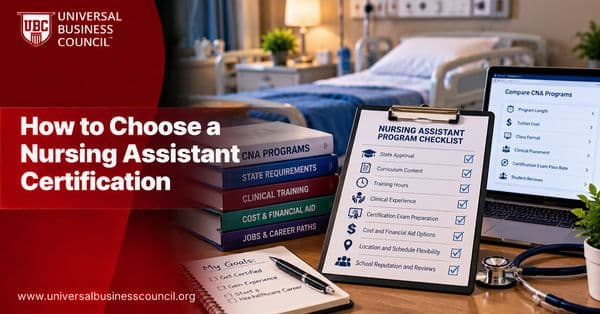
Health
How to Choose a Nursing Assistant Certification
Wondering whether earning a nursing assistant certification is worth the investment? Explore the benefits, costs, career opportunities, and challenges of becoming a certified nursing assistant to decide if this healthcare career path is right for you.
Health
Is a Nursing Assistant Certification Worth It?
Wondering whether earning a nursing assistant certification is worth the investment? Explore the benefits, costs, career opportunities, and challenges of becoming a certified nursing assistant to decide if this healthcare career path is right for you.
Health
Nursing Assistant vs Registered Nurse
Explore the differences between nursing assistants and registered nurses, from daily patient care responsibilities to education, training, and career paths. Understand how these healthcare professionals work together and what each role involves.
Trending Articles
The Role of Blockchain in Ethical AI Development
How blockchain technology is being used to promote transparency and accountability in artificial intelligence systems.
AWS Career Roadmap
A step-by-step guide to building a successful career in Amazon Web Services cloud computing.
Top 5 DeFi Platforms
Explore the leading decentralized finance platforms and what makes each one unique in the evolving DeFi landscape.