

What Is a Certified Nursing Assistant?
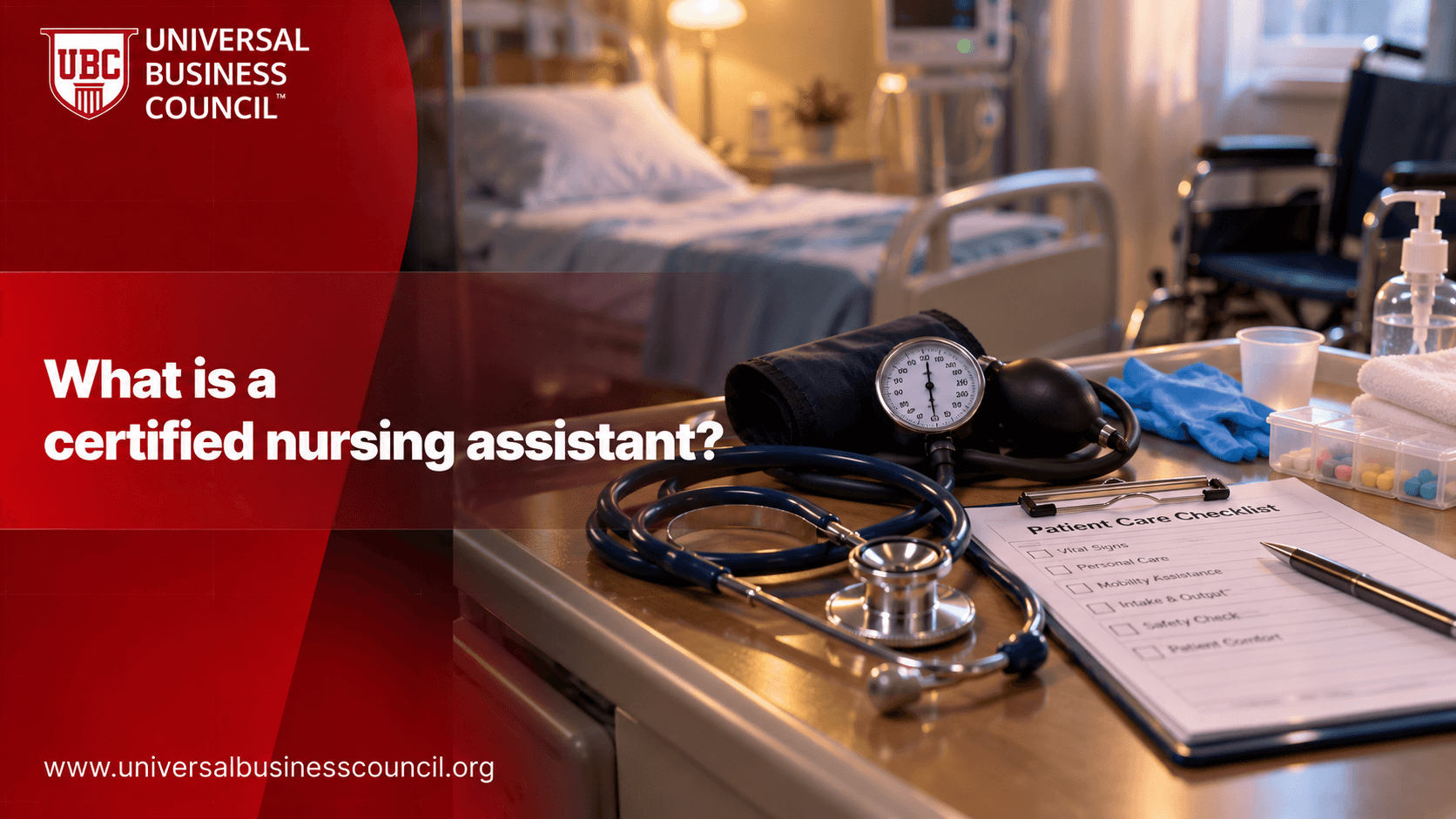
Certified nursing assistant, CNA, nurse aide, patient care assistant. The job titles overlap so much that it's easy to lose track of who does what. Yet whatever the badge says, this is the person who spends the most hands-on time with patients and residents, helping them wash, eat, move and feel safe. If you've ever wondered what a certified nursing assistant is, this guide explains the role, the training, the workplaces and the paths that open up afterwards. And if you're thinking about entering the field, the Certified Nursing Assistant (CNA) program is a useful place to start exploring your options.
What is a certified nursing assistant?
A certified nursing assistant is a trained healthcare worker who provides basic daily care to patients or residents under the supervision of a nurse. "Certified" means the person has completed an approved training program, passed a competency exam and met the requirements to be listed as a nursing assistant in their state or region.

The title varies. Some places say nurse aide, nursing assistant or patient care assistant, and a few states use their own versions of the title. The core idea stays the same: a CNA supports patients with everyday needs and supports nurses by watching, helping and reporting.
CNAs work under registered nurses or licensed practical nurses, who handle assessments, care plans and clinical decisions. The CNA's role is different, and just as important. They're often the first to notice that something has changed.
A CNA's role at a glance
Exact duties depend on the employer and local rules, but most CNAs help with tasks like these.
Bathing, grooming, dressing and toileting support
Helping patients eat and drink
Turning and repositioning patients to prevent discomfort
Moving patients safely between bed, chair and wheelchair
Taking and recording vital signs, such as temperature and pulse
Keeping rooms and bedding clean and safe
Reporting changes in a patient's condition to the nurse
In most settings, CNAs do not give medication or make clinical decisions, though rules differ by location. Their value lies in constant, close contact and careful observation.
Where a CNA fits on the care team
Nursing assistant
Provides hands-on daily care, observes the patient and reports to the nurse.
Licensed practical nurse
Handles routine nursing care and procedures under the direction of a registered nurse or doctor.
Registered nurse
Assesses patients, builds care plans, gives treatments and leads the nursing team.
Think of the CNA as the team's eyes and ears at the bedside. A nurse may see a patient a few times in a shift. A CNA may see them many times, which makes small changes easier to spot.
How someone becomes a CNA
Requirements differ from place to place, so check with your state or regional nursing board. In general, the path looks like this.
Meet the basic entry requirements, such as a minimum age and, in many places, a high school diploma or equivalent.
Complete a state-approved training program. Federal rules in the United States set a minimum of 75 hours for nursing home aides, and many states require more. Programs combine classroom learning with supervised practice.
Pass the competency exam, which usually includes a knowledge test and a hands-on skills demonstration.
Get listed on the state nurse aide registry, and meet any background check requirements.
Keep your certification current through work and renewal rules set by your state.
Training programs also cover infection control, patient rights and safe handling, which are skills used on every shift.
Many people finish training in a few weeks to a few months, which makes the CNA role one of the quicker ways into healthcare.
Qualities that make a good CNA
Training teaches the tasks. Temperament decides how well someone does them.
Compassion for people who may be frightened, in pain or embarrassed
Patience, especially with confused or slow-moving patients
Clear, kind communication with patients, families and nurses
Physical stamina for lifting, walking and long shifts
Close attention to detail, so small changes get noticed and reported
Reliability and teamwork
Employers know this, which is why many hiring teams now use short assessments that show how candidates handle realistic situations, not only what's on their résumé. Platforms such as HireValid offer situational judgment and practical skills tests for hiring teams, and the same kind of exercises can help candidates understand what employers look for.
Where certified nursing assistants work
Nursing homes and long-term care
The most common setting. CNAs build close relationships with residents who may stay for months or years.
Hospitals
Faster-paced work supporting patients who are recovering from illness, injury or surgery.
Assisted living and rehabilitation centres
Helping residents keep as much independence as possible, or regain it after an injury or illness.
Home health and hospice
One-on-one care at a patient's home, or comfort-focused care near the end of life.
Across all of these, digital tools have become part of daily work. Electronic charts, bedside devices and scheduling apps are now common, and basic technology confidence helps. Short courses such as tech certifications can build general digital skills that carry over into healthcare settings.
The human side of the job
The work can be rewarding. CNAs see people at their most vulnerable, and a calm, respectful touch can make a hard day easier. It can also be demanding. Shifts are often long, lifting is physical and there are emotional moments. Good employers support their staff with training, safe lifting equipment and fair scheduling.
Self-care matters too. Rest, supportive footwear and asking for help with heavy lifts protect both CNAs and the people they care for. If you're deciding whether it suits you, think honestly about both sides. People who thrive as CNAs usually say the connection with patients is what keeps them going.
Career paths after becoming a CNA
Many people treat the CNA role as a starting point. Working at the bedside gives practical experience that makes later study easier, and some employers offer support for further education.
Licensed practical nurse programs
Registered nurse programs
Specialised roles such as geriatric care, rehabilitation or hospice work
Supervisory or training roles within a care facility
When you start applying, your online presence counts. A clear profile, a résumé built around the keywords in each job listing and a professional summary all help, and these are ideas borrowed from digital marketing. Anyone who has taken a digital marketing course will recognise the thinking: know your audience and show them what they want to see.
Looking ahead: technology in patient care
Healthcare is exploring AI, connected sensors, remote monitoring and secure digital records. These tools are meant to support carers, not replace them, but they change the skills that staff are expected to have. Nursing assistants who stay curious about technology will find it easier to adapt. Learning paths such as deep tech certifications give an introduction to the newer technologies that are shaping many industries, healthcare included.
Common myths about CNAs
"CNAs only do basic chores"
The tasks are basic in the sense that they're everyday care, but they take skill. Moving a patient safely, noticing a change in breathing or skin colour and communicating with a frightened resident are not small things.
"It's a dead-end job"
For many people it's a stepping stone. The experience helps with nursing study, and some employers support further training.
"Anyone can do it without training"
Certification exists because patient safety matters. Approved training covers infection control, safe handling, communication and patient rights.
Is this career right for you?
Do you feel at ease helping people with personal tasks?
Can you stay calm and kind under pressure?
Are you comfortable on your feet for long periods?
Would you like a short route into healthcare with room to grow?
Can you work as part of a team and follow instructions carefully?
If most answers are yes, the CNA path may suit you.
Wrapping up: what is a certified nursing assistant?
So, what is a certified nursing assistant? It's a trained and certified healthcare worker who gives basic daily care to patients under the supervision of a nurse. CNAs help with bathing, dressing, eating, moving and hygiene, take vital signs and report changes. They work alongside licensed practical nurses and registered nurses, and they often see small changes first.
Becoming a CNA usually means meeting entry requirements, finishing a state-approved training program, passing a competency exam and joining the nurse aide registry. Rules differ by location, so always check locally. Compassion, patience, communication, stamina and attention to detail matter as much as technical skill.
CNAs work in nursing homes, hospitals, assisted living, rehabilitation, home health and hospice. The role is physically and emotionally demanding, and it's also a fast route into healthcare with room to grow into nursing and other roles. Technology is becoming part of the job, so staying curious pays off. For anyone who wants to make a direct, daily difference to patients' lives, a certified nursing assistant career is worth serious thought.
Frequently asked questions
What is a certified nursing assistant?
A trained healthcare worker who gives basic daily care to patients under a nurse's supervision.
What does CNA stand for?
Certified nursing assistant.
What does a CNA do every day?
Helps with bathing, dressing, eating and moving, takes vital signs and reports changes to nurses.
How do you become a CNA?
Complete a state-approved training program, pass the competency exam and join the state registry.
How long does CNA training take?
Often a few weeks to a few months, depending on the program and state.
How many training hours are required?
US federal rules set 75 hours for nursing home aides, and many states require more.
What does the CNA exam include?
Usually a knowledge test and a hands-on skills demonstration.
Is a CNA a nurse?
No. CNAs support nurses and work under a nurse's supervision.
Can CNAs give medication?
In most settings no, though rules vary by location.
Where do CNAs work?
Nursing homes, hospitals, assisted living, rehabilitation centres, home health and hospice.
What skills does a CNA need?
Compassion, patience, communication, stamina and attention to detail.
Is being a CNA hard?
It can be physically and emotionally demanding, but many people find it rewarding.
What is the difference between a CNA and an LPN?
An LPN handles routine nursing care and procedures. A CNA provides basic daily care.
Can a CNA become a nurse?
Yes. Many CNAs go on to LPN or RN programs.
Do CNA rules differ by state?
Yes. Training, exams and titles vary, so check with your state board.
Do you need a high school diploma to be a CNA?
Many places require one or an equivalent, but rules vary.
Is CNA a good first step into healthcare?
Yes. It offers a short route in and practical bedside experience.
What is the nurse aide registry?
A state list of nursing assistants who have met certification requirements.
Do CNAs need background checks?
Many states require them as part of certification or hiring.
How do employers assess CNA candidates?
Through interviews, references, background checks and sometimes situational judgment or skills assessments.
Related Articles
View All
Health
How to Choose a Nursing Assistant Certification
Wondering whether earning a nursing assistant certification is worth the investment? Explore the benefits, costs, career opportunities, and challenges of becoming a certified nursing assistant to decide if this healthcare career path is right for you.
Health
Is a Nursing Assistant Certification Worth It?
Wondering whether earning a nursing assistant certification is worth the investment? Explore the benefits, costs, career opportunities, and challenges of becoming a certified nursing assistant to decide if this healthcare career path is right for you.
Health
Nursing Assistant vs Registered Nurse
Explore the differences between nursing assistants and registered nurses, from daily patient care responsibilities to education, training, and career paths. Understand how these healthcare professionals work together and what each role involves.
Trending Articles
The Role of Blockchain in Ethical AI Development
How blockchain technology is being used to promote transparency and accountability in artificial intelligence systems.
AWS Career Roadmap
A step-by-step guide to building a successful career in Amazon Web Services cloud computing.
Top 5 DeFi Platforms
Explore the leading decentralized finance platforms and what makes each one unique in the evolving DeFi landscape.