

Recognizing Signs of Substance Use Problems
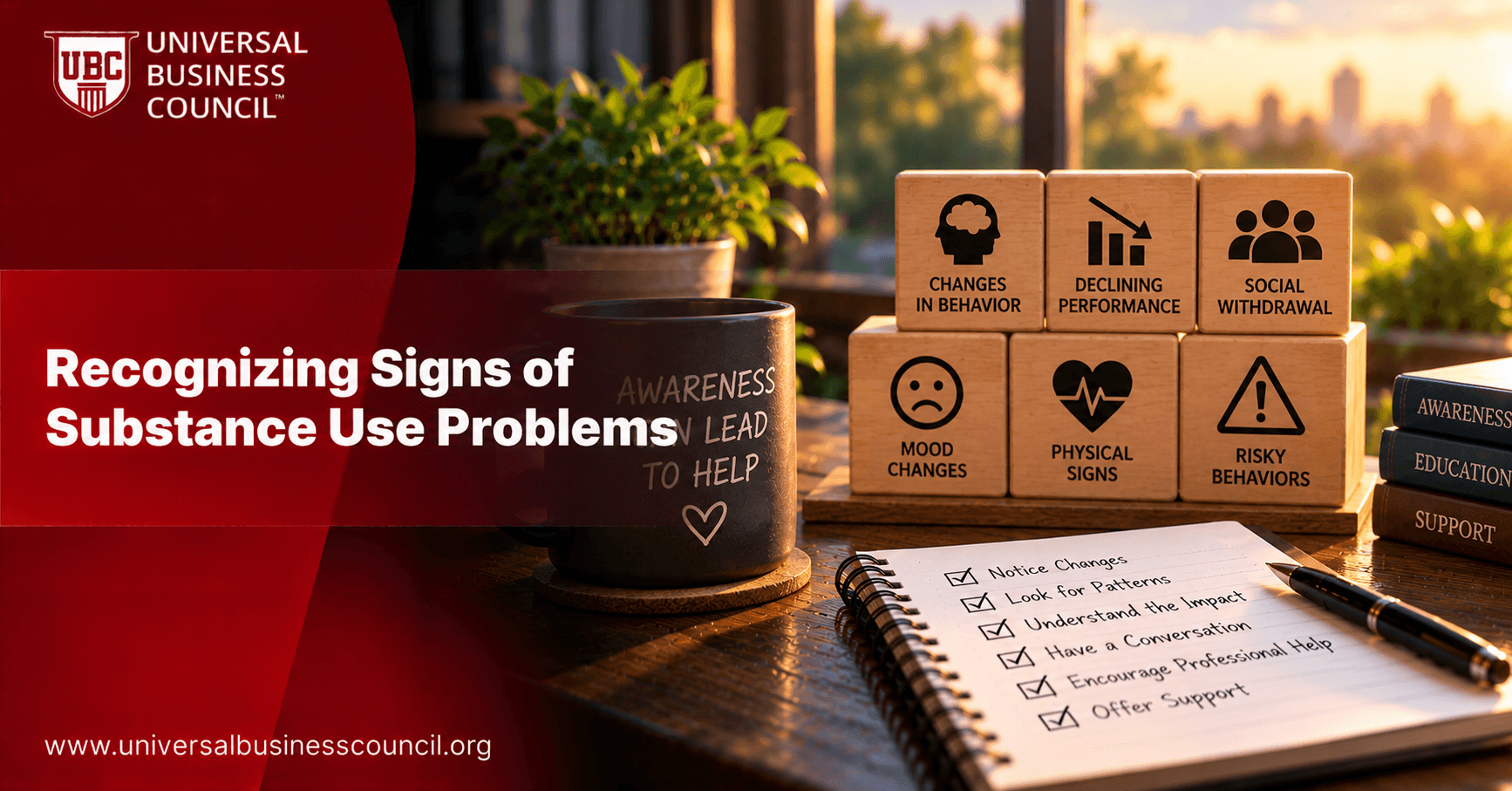
There is no single look, behavior or personality that marks a substance use problem. Signs can be physical, emotional or practical, they differ from person to person and they often overlap with other health or life issues. That makes careful, fair recognition both important and difficult. This guide explains the common signs, why they should be treated as prompts for support and not as proof, how families, workplaces and professionals can respond, and when to seek emergency help. It is general information, not a diagnosis, and only a qualified professional can assess whether someone has a substance use disorder. Those who want to build a career in this field may also explore the Certified Addiction Professional certification.
What are the signs of substance use problems?
Signs of substance use problems are changes in a person's health, behavior, mood or daily functioning that may suggest their use is becoming harmful or hard to control. Some are visible to others, while some are only noticed by the person themselves.

A sign is a clue, not a conclusion. Many of the changes described below can also result from stress, illness, grief or mental health conditions, so recognizing them should lead to a caring conversation and, where appropriate, a professional assessment.
Why early recognition matters
Substance use problems tend to be easier to address when support begins early. Early recognition can prevent harm to health, relationships, work and safety, and it can shorten the time a person goes without help. It also reduces the pressure on families, who often carry the strain for a long time before reaching out. Recognition done respectfully lowers stigma, while recognition done with suspicion or blame can push people further from help.
Physical signs
Physical signs depend on the substance and the person, and they are rarely conclusive on their own. Possible changes include noticeable shifts in energy, sleep or appetite, changes in weight, a decline in grooming or hygiene, unusual tiredness or restlessness, and frequent unexplained illness or injury. Other signs may include slurred speech, unsteady movement or changes in the eyes, though these can have many causes. Because physical changes overlap with medical conditions, they should never be used to label someone.
Behavioral signs
Changes in behavior are often the first thing others notice. Patterns that may raise concern include:
Withdrawing from family, friends or activities once enjoyed
Secretive behavior or unexplained absences
Money problems, borrowing or missing valuables
Neglecting responsibilities at home, school or work
Continuing to use despite clear problems
Failed attempts to cut down or stop
A single item does not mean a problem exists. It is the pattern, its persistence and its impact that matter.
Emotional and psychological signs
Mood and thinking can change as well. A person may seem more anxious, irritable or low than usual, swing between moods, lose interest in things or become defensive when asked about their use. Some describe strong cravings or feel unable to relax without the substance. Because emotional signs also appear in many mental health conditions, a professional assessment is the safest way to understand what is happening.
Signs in the workplace and at school
Workplaces and schools are common places where changes become visible, and they carry their own responsibilities.
What a workplace might notice
Possible signs include frequent lateness or absence, falling performance, safety incidents, mood changes and difficulty meeting deadlines. Again, these have many possible causes, and managers are not expected to diagnose.
How employers can respond
Employers do best when they focus on observable work issues, follow a clear policy and offer a route to support, such as an employee assistance program or a referral to a health professional. Conversations should be private and respectful, information kept confidential and decisions made fairly. Pre-employment checks, such as background and credential verification through services like HireValid, are a separate matter from supporting staff who are struggling, and policies should keep the two clearly apart.
Signs vary by substance, age and circumstance
Different substances affect the body and behavior in different ways, and age changes how signs show up. Young people may show changes in friends, school performance or interests, while older adults may show signs that are mistaken for ageing or other health conditions. Medicines that are prescribed can also be misused, which makes careful professional assessment important. Culture and circumstances shape what is noticed and how it is understood, so recognition should always be approached with openness.
What not to do when you notice signs
Good intentions can still cause harm. Avoid diagnosing, accusing or confronting someone in public. Avoid gossip, since information about substance use is sensitive and sharing it can damage a person's job and relationships. Avoid assuming that a single sign tells the whole story. Instead, keep the focus on what you have seen and on your concern for the person.
How to respond with care
Choose a calm, private moment and describe what you have noticed without judgment. Listen to the answer, offer to help find support and respect that the person may need time. Encourage a visit to a doctor or qualified counselor for an assessment, and offer to help with the practical steps. If you are a professional, follow your organization's policy on screening, documentation and referral, and stay within your role and training.
Recognizing an emergency
Some situations need urgent medical help. If a person is unresponsive, has difficulty breathing, is having a seizure, appears to have taken a harmful amount of a substance or is in danger, call local emergency services straight away. Stay with them and follow the operator's instructions. Do not wait for the situation to improve and do not worry about getting the person into trouble.
Technology, records and privacy
Screening tools, electronic records and telehealth are now part of many support services. They help professionals recognize and respond to problems sooner, but they must be used securely. Staff who work with such systems often build their digital skills through tech certifications. As artificial intelligence and secure data systems reach healthcare, deep tech certifications offer one route to understanding how sensitive information may be protected.
Accurate public information
Awareness campaigns and service providers have a duty to share accurate information. Lists of signs should be presented as prompts, not diagnostic tools, and should point readers to qualified help. A digital marketing course can help organizations learn to communicate clearly and responsibly online without sensationalizing or stigmatizing.
Conclusion
Recognizing signs of substance use problems means noticing patterns of change in health, behavior, mood and daily functioning, while remembering that no single sign is proof. Early, respectful recognition leads to earlier support and less harm. Workplaces, schools, families and professionals can all respond by describing what they have observed, protecting confidentiality, avoiding diagnosis and guiding the person toward a qualified assessment. Emergencies need immediate action through local emergency services. Used with care, knowledge of the signs becomes a tool for compassion and not suspicion.
Frequently asked questions
These are the questions people ask most about recognizing possible problems.
1. What are the signs of a substance use problem?
Changes in health, behavior, mood and daily functioning, such as withdrawal from others, neglected responsibilities and failed attempts to cut down.
2. Does one sign mean someone has a problem?
No. The pattern, how long it lasts and its impact matter more than any single sign.
3. Can these signs have other causes?
Yes. Stress, illness, grief and mental health conditions can cause similar changes.
4. Who can diagnose a substance use disorder?
Only a qualified professional can assess and diagnose.
5. What are common physical signs?
Changes in sleep, energy, appetite, weight or grooming, though these are not conclusive.
6. What are common behavioral signs?
Withdrawal, secrecy, money problems, neglected responsibilities and continued use despite harm.
7. What are emotional signs?
Anxiety, irritability, low mood, mood swings, defensiveness and strong cravings.
8. What signs might appear at work?
Lateness, absence, falling performance, safety incidents and difficulty meeting deadlines.
9. Should managers diagnose?
No. They should focus on observable work issues and refer people to support.
10. How should an employer respond?
Follow a clear policy, hold private and respectful conversations, protect confidentiality and offer routes to support.
11. What about signs in young people?
Changes in friends, school performance or interests may appear, though they can also have other causes.
12. Can prescribed medicines be misused?
Yes, which is why professional assessment is important.
13. How should I raise my concern?
Choose a calm, private moment, describe what you have noticed and listen without judgment.
14. What should I avoid?
Diagnosing, accusing, public confrontation and gossip.
15. Who should I encourage the person to see?
A doctor or qualified counselor for an assessment.
16. What if the person denies it?
Stay patient, keep the door open and offer support when they are ready.
17. What are signs of an emergency?
Unresponsiveness, difficulty breathing, seizures or signs of a harmful amount taken.
18. What should I do in an emergency?
Call local emergency services, stay with the person and follow the operator's instructions.
19. Is information about substance use private?
Yes. It is highly sensitive and should be shared only with consent or where the law requires.
20. Where can I find support?
Start with a doctor or local health service, which can point to qualified assessment and help.
Related Articles
View All
Health
Common Types of Substance Use Disorders
Learn about the common types of substance use disorders and how they affect individuals. Explore disorders related to alcohol, opioids, stimulants, cannabis, and other substances, along with their signs, risk factors, and impact on health and daily life.
Health
What Is Addiction and Substance Use Disorder?
Understand what addiction and substance use disorder are, how they affect the brain and behavior, and why they can develop over time. Explore common signs, contributing factors, health effects, and treatment approaches that support recovery.

Health
Fitness Instructor Certification Requirements
Learn about fitness instructor certification requirements, including the qualifications, training, and credentials needed to pursue a career in fitness instruction. Explore certification options, CPR and first aid training, practical experience, and key factors to consider when choosing a recognized certification program.
Trending Articles
The Role of Blockchain in Ethical AI Development
How blockchain technology is being used to promote transparency and accountability in artificial intelligence systems.
AWS Career Roadmap
A step-by-step guide to building a successful career in Amazon Web Services cloud computing.
Top 5 DeFi Platforms
Explore the leading decentralized finance platforms and what makes each one unique in the evolving DeFi landscape.